35,000+ smart investors are already getting financial news, market signals, and macro shifts in the economy that could impact their money next with our FREE weekly newsletter. Get ahead of what the crowd finds out too late. Click Here to Subscribe for FREE.
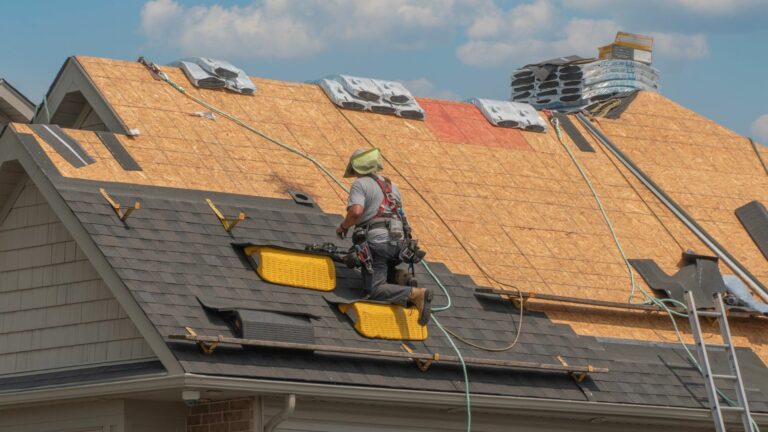
A fresh front in the U.S.-Canada trade fight is landing in one of the most sensitive parts of the American economy: housing. Alan Banks, CEO of Keystone Custom Homes Carolinas, says the latest tariffs could add roughly $15,500 to the cost of homes his company is building in Huntersville, North Carolina. That estimate is specific to his projects, but it arrives as builders nationwide are already wrestling with expensive materials, elevated mortgage rates and weak buyer affordability.
The newest U.S. measures place 50% tariffs on a range of Canadian goods that includes plywood, engineered wood products and cement, while other major building inputs such as Canadian softwood lumber, steel and aluminum are already covered by separate trade actions. For buyers already stretched by financing costs, even a partial pass-through could matter.
The $15,500 Warning Comes From a Real Project Pipeline
Trump’s Canada Trade War Could Add $15,500 to Cost of a U.S. Home, Builder Warns
- The $15,500 Warning Comes From a Real Project Pipeline
- Canada Is Deeply Embedded in the U.S. Building Supply Chain
- The New 50% Tariffs Reach Several Building Materials
- Canadian Lumber Was Already Facing a Steep Tariff Wall
- Material Costs Were Rising Before the Latest Escalation
- Buyers Have Little Affordability Room Left
- Builders Can Absorb Some Costs — But There Are Limits
- Research Shows Americans Often Bear Much of the Tariff Cost
- Canada’s Retaliation Adds Another Layer of Uncertainty
- Whether Buyers Actually Pay $15,500 Remains the Big Question
The $15,500 figure did not come from a national government forecast or a broad economic model. It came from Alan Banks, chief executive of Keystone Custom Homes Carolinas, who told Queen City News that the houses his team is working on in Huntersville could cost about $15,500 more to build under the new tariff environment. Banks framed the increase as another blow to first-time buyers in a market where affordability is already difficult.
That distinction matters. A custom or production builder’s material mix, suppliers, contracts and house designs can all change the effect of tariffs, so $15,500 should not be treated as a universal surcharge on every new U.S. home. Still, it is not wildly out of line with broader industry concerns. In a 2025 survey, the National Association of Home Builders said builders estimated the typical cost effect of recent tariff actions at $10,900 per home, with more than 60% reporting higher costs because of tariffs.
Canada Is Deeply Embedded in the U.S. Building Supply Chain
Canada’s role in U.S. homebuilding is much larger than a truckload of two-by-fours crossing the border. The National Association of Home Builders estimates that Canada supplies roughly 85% of U.S. softwood lumber imports and almost one-quarter of the total softwood lumber used in the United States. That dependence developed over decades because the two countries effectively operate as an integrated North American construction market.
The relationship extends beyond framing lumber. NAHB has estimated annual U.S. imports from Canada at about $4.6 billion for softwood lumber, roughly $478 million for asphalt and wood shingles and nearly $199 million for wooden doors. Those figures help explain why trade disruptions can show up in places consumers rarely associate with international policy. A builder may buy materials from a local distributor in North Carolina or Ohio, but the wood, panels, fasteners or other components may have crossed the Canadian border earlier in the supply chain.
The New 50% Tariffs Reach Several Building Materials
The latest tariff round adds pressure to categories that builders use throughout a project. NAHB says the new 50% U.S. tariffs on Canadian goods cover plywood and engineered wood products such as laminated veneer lumber and fiberboard, along with Portland cement. The White House has said the measures apply to selected Canadian products even when they would otherwise qualify for preferential treatment under the U.S.-Mexico-Canada Agreement.
There is an important limit to the new package: it does not simply place an extra 50% tariff on every Canadian construction product. Goods already subject to Section 232 national-security tariffs are excluded from the new Section 338 duties. That means softwood lumber, steel, aluminum and copper sit under separate tariff regimes. For builders, however, the distinction may feel academic when bids are assembled. A typical house combines structural wood, panels, concrete, metal products and manufactured components, so several different trade actions can affect the same project at different stages.
Canadian Lumber Was Already Facing a Steep Tariff Wall
Softwood lumber shows how complicated the cost stack has already become. Canadian lumber is subject to longstanding U.S. anti-dumping and countervailing duties tied to the softwood lumber dispute. Global Affairs Canada currently lists a combined 35.16% anti-dumping and countervailing duty rate for “all other” producers under the amended sixth administrative review, while company-specific rates vary. A separate 10% Section 232 tariff on Canadian lumber applies in addition, creating another layer of cost before material reaches a U.S. job site.
There is a possible easing on the horizon, but it is not guaranteed. Post-preliminary results from the seventh administrative review point to lower duty rates for some producers, yet those rates do not take effect until final results are issued. Meanwhile, framing lumber was priced at $529.75 per 1,000 board feet on August 21, according to NAHB’s tracking of Madison’s Lumber Price Index. That was 5.3% higher than a year earlier, even after two consecutive weekly declines.
Material Costs Were Rising Before the Latest Escalation
Tariffs are arriving at a moment when builders were already reporting renewed material inflation. An August NAHB analysis found that the median builder experienced a 6.7% increase in material costs for the same house over the previous 12 months. Nearly three-quarters of respondents said their material costs had risen by as much as 15%, showing how broad the pressure has become even before the newest U.S.-Canada measures are fully reflected in contracts and invoices.
Federal data point in the same direction. The Bureau of Labor Statistics reported that final-demand construction prices rose 2.2% in July 2026 alone. Within the goods data, lumber prices increased 5.0% for the month and steel mill products rose 3.9%. Those movements do not prove tariffs caused every increase; energy, capacity, transportation and demand also matter. But they leave builders with less room to absorb another round of higher input costs without changing prices, specifications, incentives or profit margins.
Buyers Have Little Affordability Room Left
For homebuyers, the timing is especially uncomfortable because the market is already struggling to clear at current prices and borrowing costs. The Census Bureau reported that new single-family home sales fell to a seasonally adjusted annual rate of 607,000 in July 2026, down 10.5% from June. The median sales price was $393,800, while the supply of new homes for sale rose to 9.6 months at the July sales pace, a sign that buyers have become increasingly selective.
Financing remains another barrier. Freddie Mac’s weekly survey put the average 30-year fixed mortgage rate at 6.65% on August 20. NAHB’s second-quarter affordability index found that a family earning the national median income of $106,800 needed 34% of its income to cover the mortgage payment on a median-priced new home. For households earning half the median income, the share was 67%. In that environment, an added construction cost does not land in a vacuum; it collides with already-tight monthly budgets.
Builders Can Absorb Some Costs — But There Are Limits
Builders do have choices when costs rise, but none is painless. Some can accept lower margins, negotiate with suppliers, redesign a home, substitute materials or offer fewer upgrades. Larger companies may also have more purchasing power. NAHB found that builders producing five or fewer homes in 2025 reported a median 9.1% material-cost increase over the following year, compared with just 1.8% among builders producing 100 or more homes. Long-term contracts and the ability to stockpile materials were cited as possible advantages for larger firms.
The sales side is just as constrained. In August, the NAHB/Wells Fargo Housing Market Index stood at 35, well below the 50 level at which more builders view conditions as good than poor. Thirty-five percent of builders reported cutting prices, with an average reduction of 6%, while 63% used sales incentives. That makes a tariff-driven cost increase awkward: builders are being asked to pay more for inputs while many are simultaneously discounting homes to attract buyers.
Research Shows Americans Often Bear Much of the Tariff Cost
Tariffs are collected from importers at the border, and research suggests much of the economic burden can remain inside the United States rather than being absorbed abroad. A February 2026 analysis from the Federal Reserve Bank of New York found that nearly 90% of the burden from the 2025 U.S. tariffs fell on U.S. firms and consumers. The share borne domestically was estimated at 94% in the first eight months of 2025 and 86% by November as foreign exporters absorbed somewhat more over time.
That does not mean every tariff becomes an equal retail price increase. Companies can compress margins, switch suppliers or delay adjustments. But a separate New York Fed analysis published in July found that 47% of tariff-paying service firms and 44% of tariff-paying manufacturers surveyed still expected additional tariff-related price increases. For housing, that lag matters because builders often work with contracts, inventories and supplier agreements negotiated months before a home closes. Cost pressure can therefore arrive gradually rather than all at once.
Canada’s Retaliation Adds Another Layer of Uncertainty
Canada’s response adds another layer of uncertainty to a supply chain built around two-way trade. Ottawa announced that, beginning September 8, it will impose counter-tariffs of 15%, 25% and 50% on C$27.6 billion worth of U.S. goods, matching the value of the new American measures. The targeted categories include steel and aluminum, dairy, appliances, agricultural equipment, pulp and paper, plastics and electronics.
Those Canadian tariffs do not directly tax a house being built in North Carolina, but retaliation can deepen the broader trade conflict and influence business planning on both sides of the border. U.S. exporters facing reduced Canadian demand may adjust output or pricing, while companies that operate integrated North American supply chains have to manage more policy risk. The dispute is also no longer limited to a single commodity such as lumber. It now touches autos, metals, wood products, food and manufactured goods, making it harder for builders and suppliers to assume that today’s tariff schedule will remain stable for the duration of a project.
Whether Buyers Actually Pay $15,500 Remains the Big Question
Whether the full $15,500 ultimately reaches a buyer will depend on how long the tariffs remain, which materials a builder uses and how suppliers respond. Lumber prices can fall even when duties are high; domestic producers can add supply; builders can change specifications; and foreign exporters can sometimes absorb part of a tariff through lower prices. The New York Fed’s recent work shows that pass-through is substantial but not mechanically one-for-one at the consumer level.
Policy can also change quickly. The current 50% Section 338 tariffs were delayed for several days in August before taking effect, and the governing proclamations give the president authority to modify, suspend or terminate them. NAHB continues to press the administration to exempt building materials because of the housing affordability problem. For now, the safest interpretation of the Huntersville estimate is not that every American home is about to become $15,500 more expensive, but that the trade war has created another potentially large cost that builders must either absorb, avoid or pass along.
This Options Discord Chat is The Real Deal
While the internet is scoured with trading chat rooms, many of which even charge upwards of thousands of dollars to join, this smaller options trading discord chatroom is the real deal and actually providing valuable trade setups, education, and community without the noise and spam of the larger more expensive rooms. With a incredibly low-cost monthly fee, Options Trading Club (click here to see their reviews) requires an application to join ensuring that every member is dedicated and serious about taking their trading to the next level. If you are looking for a change in your trading strategies, then click here to apply for a membership.