35,000+ smart investors are already getting financial news, market signals, and macro shifts in the economy that could impact their money next with our FREE weekly newsletter. Get ahead of what the crowd finds out too late. Click Here to Subscribe for FREE.
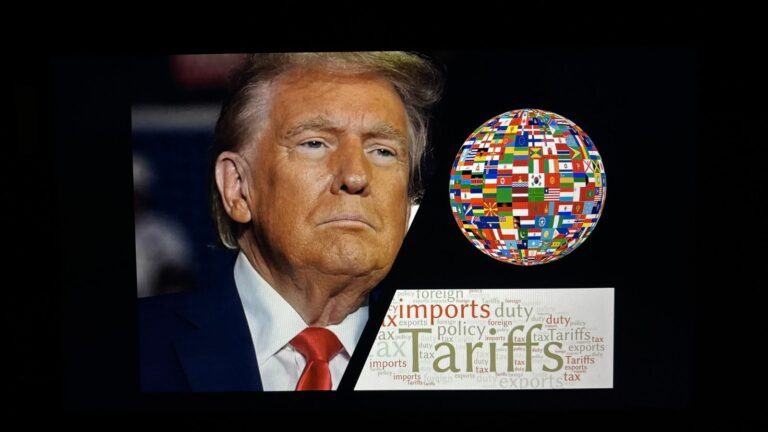
The warning could hardly have arrived at a more sensitive political moment. The Wall Street Journal Editorial Board has sharply condemned President Donald Trump’s renewed tariff confrontation with Canada, arguing that the escalation makes little economic or political sense with the U.S. midterm elections only about 10 weeks away. The criticism is notable not because the Journal suddenly discovered objections to tariffs—it has challenged Trump’s protectionism before—but because the latest dispute is unfolding while Americans remain intensely focused on prices and Republicans prepare to defend control of Congress. New 50% duties on selected Canadian products are already in place, Canada is preparing retaliation, and Trump has now threatened another major escalation involving automobiles and parts. What began as another trade negotiation is quickly becoming an economic and electoral test.
The Journal’s Warning Lands at a Politically Dangerous Moment
Wall Street Journal Editorial Board Turns on Trump’s Canada Tariffs 10 Weeks Before U.S. Midterms
- The Journal’s Warning Lands at a Politically Dangerous Moment
- This Is a Revival of an Old Fight, Not a Sudden Break With Trump
- The New 50% Tariffs Are More Than a Symbolic Warning
- Canada Is Too Integrated With the U.S. to Behave Like a Distant Trade Rival
- The Consumer-Price Argument Is Becoming Harder to Dismiss
- The Auto Threat Turns the Dispute Into an American Industry Problem
- The Midterm Problem Is Really a Cost-of-Living Problem
- Republican Dissent Matters Most Where Canadian Trade Is Local
- Canada’s Retaliation Makes Escalation Costlier for Both Sides
- The Bigger Question Is Whether North American Trade Can Still Be Predictable
The Wall Street Journal Editorial Board made its position unmistakable in an August 23 piece titled “The Dumbest Trade War Revisited.” Its central argument was unusually direct: escalating the tariff battle with Canada makes neither economic nor political sense. The editorial specifically highlighted the timing, noting that the dispute was intensifying roughly 10 weeks before the midterm elections. That calculation is accurate. The Federal Election Commission lists November 3, 2026, as the date of the next regularly scheduled federal general election, putting the confrontation squarely inside the final stretch of congressional campaigning.
That timing matters because Trump enters the fall with limited political room for an economic shock. A Reuters/Ipsos poll completed August 17 put his overall approval at 33%, with 64% disapproving. The same polling environment has shown persistent concern about household expenses. Tariffs may be promoted by the White House as tools for strengthening domestic industry, but anything that becomes associated with higher prices gives Democratic candidates another way to connect Washington policy with grocery bills, construction costs, vehicles and everyday household spending.
This Is a Revival of an Old Fight, Not a Sudden Break With Trump
Calling the Journal’s position a complete political conversion would overstate what happened. Its editorial page has criticized Trump’s tariff strategy for years, including the original confrontation with Canada and Mexico early in his second term. In February 2025, the editorial board warned that a prolonged North American trade war could rank among the “dumbest” in history. The August 2026 editorial deliberately returned to that language, arguing that the latest round had made an already questionable strategy even harder to defend.
The continuity is important because it changes the meaning of the criticism. This is less about a conservative newspaper suddenly abandoning Trump than about a traditionally pro-market editorial board reaching the same objection again after more than a year of tariff experimentation. Only days before the latest escalation, the Journal also warned that continual tariff threats were undermining the stability offered by the USMCA—the trade agreement Trump himself negotiated during his first presidency. By Monday, its editorial page was criticizing his new Canadian auto threat as potentially damaging to American carmakers.
The New 50% Tariffs Are More Than a Symbolic Warning
The immediate dispute concerns a new 50% tariff applied to selected Canadian imports after negotiations collapsed late Friday. Canada put the affected trade at roughly C$28 billion, while U.S.-dollar estimates place it near US$20 billion. The duties cover hundreds of product categories, including goods such as wine, hockey equipment, cement, paper products, textiles and other manufactured items. Crucially, these tariffs can apply even when products otherwise qualify under the USMCA, although important categories including energy and potash were excluded from this particular action.
The legal mechanism is also unusual. Trump invoked Section 338 of the Tariff Act of 1930, which permits additional duties of as much as 50% when a president determines another country discriminates against U.S. commerce. The statute has existed for nearly a century but had never previously been used by a president in this manner. Washington argues that Canadian policies affecting American dairy, automobiles and alcoholic beverages justify the action. Ottawa disputes that characterization and says the measures violate the spirit and commitments of the continental trading relationship.
Canada Is Too Integrated With the U.S. to Behave Like a Distant Trade Rival
One reason the Journal’s argument carries economic weight is the extraordinary scale of Canada-U.S. commerce. According to the Office of the U.S. Trade Representative, two-way goods and services trade with Canada totalled an estimated US$872.3 billion in 2025. American companies exported about US$333.6 billion in goods to Canada and imported US$381.9 billion. The United States also recorded a US$27.7 billion services surplus with Canada, partially offsetting its merchandise deficit.
The relationship is even more important from Canada’s side of the border. Statistics Canada reported that 71.7% of Canadian merchandise exports went to the United States in 2025, even after businesses increased efforts to diversify toward other markets. This is therefore not a conventional dispute in which tariffs can be imposed on a distant supplier without disturbing domestic production networks. American factories buy Canadian components, Canadian factories buy American inputs, and businesses have spent decades planning investment around relatively predictable cross-border access. Disrupting those relationships creates adjustment costs for companies on both sides, even when the stated objective is to shift production into the United States.
The Consumer-Price Argument Is Becoming Harder to Dismiss
Trump has repeatedly presented tariffs as payments imposed on foreign countries, but economic research shows that much of the cost can eventually appear inside the United States. Federal Reserve researchers examining the 2025 tariff increases found statistically significant price increases in tariff-exposed consumer goods, with later research concluding that price effects accumulated over time. A separate 2026 Federal Reserve study using household transaction data found that higher tariff exposure was associated with higher prices and reduced household spending, with lower-income households facing a disproportionate welfare burden.
That evidence matters in the current environment. U.S. consumer prices were 3.4% higher in July 2026 than a year earlier, according to the Bureau of Labor Statistics. Yale’s Budget Lab estimates that the broader tariff regime now in place could eventually raise consumer prices by about 0.7%, representing approximately $1,100 a year in costs for an average household. Those figures measure the overall tariff system rather than the Canada duties alone, but they explain why another escalation creates political risk: voters do not necessarily separate one tariff program from another when deciding whether everyday life feels more expensive.
The Auto Threat Turns the Dispute Into an American Industry Problem
The confrontation intensified again on August 24 when Trump said tariffs on Canadian automobiles, trucks, automotive parts and steel would rise to 50% beginning January 1, 2027. Canadian-made vehicles currently face a 25% U.S. tariff on their non-U.S. content, while steel is already subject to steep duties. The new threat would therefore push the auto dispute into another category entirely, potentially affecting some of North America’s most deeply integrated manufacturing networks.
Canada produced more than 1.2 million passenger vehicles in 2025, and the Canadian government says more than 90% of domestically produced vehicles and 60% of Canadian-made auto parts are exported to the United States. The sector supports approximately 125,000 direct Canadian jobs, but the exposure is hardly confined to Canada. Ford, General Motors and Stellantis all operate across the border, buying components and assembling vehicles through continental supply chains. The Journal responded to Trump’s announcement with another editorial whose headline captured its argument bluntly: a 50% Canadian auto tariff could end up punishing U.S. companies that the policy is supposedly intended to strengthen.
The Midterm Problem Is Really a Cost-of-Living Problem
The political vulnerability identified by the Journal becomes clearer when current voter priorities are considered. A Reuters/Ipsos poll conducted from July 29 through August 3 found that 48% of Americans considered the cost of living the most important factor in deciding their 2026 midterm vote. Democrats held an eight-point advantage over Republicans on that issue, with 35% preferring the Democratic Party’s approach and 27% preferring the Republican Party’s. Seventy percent disapproved of Trump’s handling of the cost of living and inflation.
Those numbers do not prove the Canadian tariff dispute will determine the election. Foreign policy, immigration, energy costs, candidate quality and local issues will all influence individual races. But they explain the Journal editorial board’s concern about timing. Republicans won in 2024 partly by attacking the previous administration over inflation. Fighting a new trade war while household affordability remains politically toxic makes that argument harder to deliver cleanly. Even if the tariffs eventually produce industrial gains, voters going to the polls in November may be more sensitive to immediate prices and uncertainty than to projected long-term manufacturing changes.
Republican Dissent Matters Most Where Canadian Trade Is Local
The political challenge becomes more tangible in states where Canada is not an abstract trading partner but part of the local economy. Republican Senator Susan Collins of Maine responded to the breakdown in negotiations by warning that tariffs would create higher costs, risk and uncertainty for businesses. Her office said Maine imports approximately $2 billion in non-petroleum products from Canada each year and reported concerns from farmers, lobstermen and businesses dependent on supply chains that cannot easily be replaced domestically.
Collins urged Washington and Ottawa to return to negotiations, arguing that many businesses would ultimately have little choice but to pass tariff expenses along to customers. Similar concerns are being watched in states such as Michigan and Ohio, where manufacturing supply chains and Canadian commerce intersect with competitive congressional contests. This does not amount to a broad Republican revolt against Trump’s trade agenda. Many Republican voters remain receptive to tariffs as a method of protecting American workers. But visible criticism from Republican officials gives the Journal’s warning a political dimension beyond editorial pages: economic disruption can become especially uncomfortable when it lands inside closely fought states.
Canada’s Retaliation Makes Escalation Costlier for Both Sides
Ottawa has chosen not to absorb the latest duties without responding. Prime Minister Mark Carney announced that Canada would match Washington’s new tariffs dollar for dollar, with countermeasures expected to take effect September 8. He identified sectors including steel, dairy, appliances, agricultural equipment, pulp and paper, and electronics as areas that could be targeted. Canada has also promised additional support for affected workers and businesses, building on approximately C$25 billion in measures the government says it has provided during the broader tariff confrontation.
Carney acknowledged something politicians sometimes avoid saying during trade disputes: retaliation carries costs at home as well. Countertariffs can increase prices and reduce consumer choice in Canada, just as American import tariffs can raise expenses for U.S. businesses and households. That is precisely why prolonged retaliation can become difficult to control. Each government tries to create enough pain to force concessions from the other, while attempting to shield its own politically sensitive industries. The result can be a cycle in which the original trade disagreement expands into products and communities that had little connection to the initial dispute.
The Bigger Question Is Whether North American Trade Can Still Be Predictable
Behind the newest tariffs sits a deeper problem: the future of the U.S.-Mexico-Canada Agreement. On July 1, the Trump administration declined to extend the USMCA during its first six-year joint review. That decision did not immediately terminate the agreement. Under Article 34.7, USMCA remains in effect for its existing 16-year term, which runs through 2036, while the three countries hold annual reviews unless they eventually agree to another 16-year extension.
That mechanism gives negotiators time, but businesses may find the uncertainty harder to tolerate. A factory, battery plant, steel mill or parts supplier makes investment decisions measured in decades, not election cycles. Repeated threats to alter tariff treatment can therefore matter even when particular duties are later reduced or withdrawn. That is the larger warning running through the Journal’s recent editorials. Ten weeks before Americans vote, the political question is not simply whether Trump can extract another Canadian concession. It is whether the economic disruption required to get it is becoming more visible to American companies and households than the eventual victory the administration promises.
This Options Discord Chat is The Real Deal
While the internet is scoured with trading chat rooms, many of which even charge upwards of thousands of dollars to join, this smaller options trading discord chatroom is the real deal and actually providing valuable trade setups, education, and community without the noise and spam of the larger more expensive rooms. With a incredibly low-cost monthly fee, Options Trading Club (click here to see their reviews) requires an application to join ensuring that every member is dedicated and serious about taking their trading to the next level. If you are looking for a change in your trading strategies, then click here to apply for a membership.