35,000+ smart investors are already getting financial news, market signals, and macro shifts in the economy that could impact their money next with our FREE weekly newsletter. Get ahead of what the crowd finds out too late. Click Here to Subscribe for FREE.
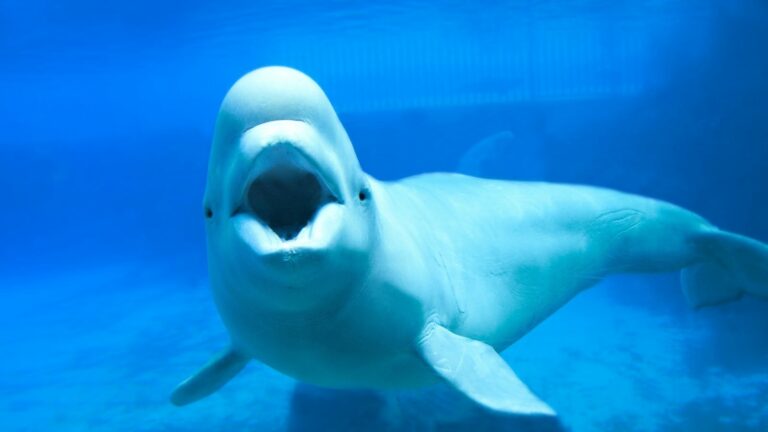
For years, Marineland’s beluga pools were among the most recognizable sights at the Niagara Falls attraction. Now, each departure makes the closed park feel more like a place being dismantled than a destination waiting to reopen. On Friday night, three male belugas — Cyprus, Jasper and Xavier — were lifted from Marineland into transport tanks for a flight bound for SeaWorld San Diego, marking the fourth major transfer since the relocation effort began in July. Their exit reduces Marineland’s remaining population to eight belugas and four bottlenose dolphins. The move is another step toward ending an extraordinary Canadian animal-welfare and regulatory saga involving a shuttered park, a rejected plan to send the whales to China, threats of mass euthanasia, and a cross-border effort involving U.S. aquariums, federal regulators and veterinary teams. Marineland says the remaining cetaceans are expected to leave by the end of August.
Cyprus, Jasper and Xavier Begin Their Journey to San Diego
Cyprus, Jasper and Xavier are not simply changing exhibits; they are crossing an international border as part of a highly specialized animal transport. Marineland said a team of specialists lifted the three males into tanks Friday evening before they were to be loaded onto an aircraft bound for SeaWorld San Diego. Xavier is 13 years old, while Cyprus and Jasper are nine, and all three were born at Marineland. SeaWorld San Diego had been identified in the U.S. authorization as the destination for these three males. The operation follows a process used during earlier departures: whales are guided into custom slings, hoisted by crane into purpose-built transport containers and accompanied by veterinarians and animal-care specialists. The first July transfer even required a slow, police-escorted convoy to Toronto Pearson International Airport before the whales boarded a Boeing 777 cargo jet, illustrating how carefully handling and travel conditions must be managed.
The latest departure is significant because it pushes the relocation effort well past the halfway point. Marineland had 30 belugas and four dolphins when the moves began on July 20. Six belugas left in the first wave, seven more departed on August 3, and another six were moved on August 12. With Cyprus, Jasper and Xavier now leaving in the fourth cohort, 22 of the original 30 belugas have been moved out of the Niagara Falls property. Eight belugas and four dolphins remain. Marineland has said two more transfer operations are planned, including an overnight journey involving belugas and dolphins destined for Oceanogràfic València in Spain. For workers and former staff who spent decades around the animals, the emptying pools carry emotional weight. One retired Marineland employee who watched an earlier transfer described seeing longtime animals leave for new homes as an opportunity to say goodbye to “old friends.”
Marineland’s Emptying Pools Mark the End of a Troubled Era
The urgency behind the moves comes from Marineland’s long decline. The park closed to the public in 2024 and has been trying to sell its sprawling property near Horseshoe Falls while maintaining animals that require expensive, continuous care. Marineland has said it is running out of money and cannot support the whales indefinitely. The closure followed years of scrutiny over animal welfare. In 2021, Ontario authorities determined that marine mammals at the facility were in distress and ordered improvements to the water system. Marineland later invested heavily in that system, and provincial officials have said water conditions were not responsible for the whale deaths recorded at the park. Even so, the mortality record remains stark: 20 whales — 19 belugas and Kiska, the park’s final killer whale — have died at Marineland since 2019, according to a Canadian Press tally built from provincial records and official statements.
Against that backdrop, the relocation has unfolded in increasingly large waves. The first six belugas left on July 20: four females — Sierra, Acadia, Osiris and Lillooet — went to Shedd Aquarium in Chicago, while males Bertie Botts and Frankie continued to SeaWorld San Antonio. Seven females — Xena, Gemini, Skyla, Meeka, Eve, Neva and Calypso — followed to San Antonio in early August. On August 12, six more belugas were transferred toward Shedd and Georgia Aquarium in Atlanta; that move briefly paused while veterinarians examined and treated a cut on one whale’s tail before clearing her to travel. Such moments show why the schedule cannot be treated like ordinary freight logistics. Each animal must be assessed individually, and organizers have said a whale can be held back if health concerns arise. Participating facilities also spent months reviewing health records, observing social relationships and preparing receiving habitats before departures began.
The Rescue Plan Grew Out of a Legal and Financial Standoff
The transfers are also the product of a legal problem created by Canada’s decision to phase out whale and dolphin captivity. Federal amendments adopted in 2019 made it an offence, with limited exceptions, to keep, breed or use cetaceans for entertainment in Canada. The Fisheries Act allows the minister to authorize export of a cetacean for scientific research or when continued captivity elsewhere is in the animal’s welfare interests. That standard became central in 2025, when Ottawa rejected Marineland’s proposed export of 30 belugas to Chimelong Ocean Kingdom in China. Federal material says the destination did not meet a policy requirement to prevent breeding and that officials were concerned the whales would likely be used for public entertainment. After Marineland warned that the whales faced euthanasia without another solution, Fisheries Minister Joanne Thompson conditionally approved transfers to identified U.S. facilities in January 2026, subject to health assessments and transport plans.
The U.S. side required an unusual regulatory pathway. NOAA Fisheries entered into a cooperative agreement with SeaWorld, Georgia Aquarium and Shedd Aquarium to import 28 Marineland belugas under a Marine Mammal Protection Act provision allowing emergency imports when medical treatment is not otherwise available. Two additional belugas are part of the planned move to Spain. Participating aquariums describe the undertaking as a rescue, while animal-welfare advocates have welcomed removal from Marineland but continue to question what captivity should look like. World Animal Protection Canada has urged receiving facilities not to breed the whales or use them in entertainment, arguing that the spirit of Canada’s 2019 law should follow the animals abroad. That debate will outlast the final truck leaving Niagara Falls. For now, the picture is clearer: Marineland’s once-large captive cetacean population is rapidly shrinking, and the final phase of its closure is becoming visible one whale at a time.
This Options Discord Chat is The Real Deal
While the internet is scoured with trading chat rooms, many of which even charge upwards of thousands of dollars to join, this smaller options trading discord chatroom is the real deal and actually providing valuable trade setups, education, and community without the noise and spam of the larger more expensive rooms. With a incredibly low-cost monthly fee, Options Trading Club (click here to see their reviews) requires an application to join ensuring that every member is dedicated and serious about taking their trading to the next level. If you are looking for a change in your trading strategies, then click here to apply for a membership.