35,000+ smart investors are already getting financial news, market signals, and macro shifts in the economy that could impact their money next with our FREE weekly newsletter. Get ahead of what the crowd finds out too late. Click Here to Subscribe for FREE.
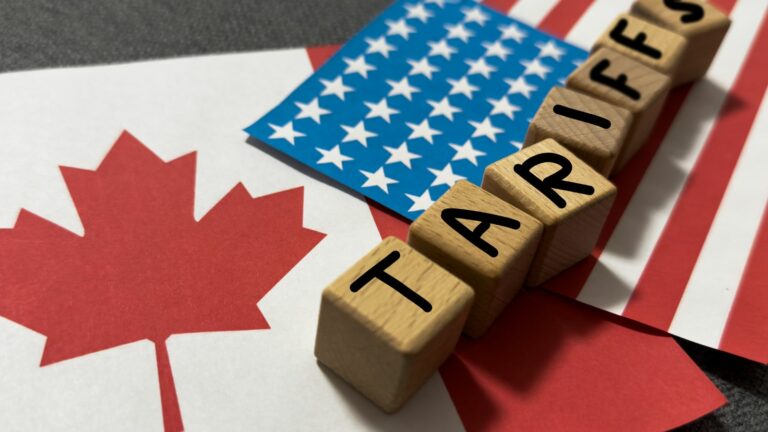
Canada’s latest trade confrontation with the United States has entered its most compressed phase yet. With President Donald Trump’s new 50% tariffs scheduled to take effect on August 19, Canadian negotiators have remained in Washington through the weekend, trying to narrow differences that officials still describe as substantial. The threatened duties would target nearly US$20 billion in Canadian imports and, unusually, reach some products that qualify for preferential treatment under CUSMA.
For Ottawa, avoiding Wednesday’s tariffs is only part of the challenge. Negotiators are also seeking relief from existing U.S. duties on major Canadian industries, while Washington is pressing Canada for movement on automobiles, dairy access and American alcohol. With only days remaining, an agreement increasingly depends on whether both governments can turn a collection of politically difficult concessions into a package their leaders are prepared to accept.
Weekend Negotiations Show How Little Time Is Left
Canada-U.S. Trade Talks Spill Into Weekend as Trump’s 50% Tariff Deadline Moves Within Three Days
- Weekend Negotiations Show How Little Time Is Left
- The 50% Tariff Is Different From Earlier U.S. Measures
- Washington’s Demands Centre on Autos, Dairy and Alcohol
- Canada Wants Relief From Tariffs That Are Already Biting
- The Direct Exposure Is Limited, but the Signal Is Much Bigger
- Brampton Shows Why Auto Tariffs Are More Than a Negotiating Detail
- Provinces and Dairy Producers Narrow Ottawa’s Room to Move
- August 19 Will Not Be the End of the Trade Fight
Canada-U.S. Trade Minister Dominic LeBlanc remained in Washington for the weekend with Chief Trade Negotiator Janice Charette and other senior officials after a week of intensified discussions. LeBlanc had met U.S. Trade Representative Jamieson Greer four times in roughly three weeks, while technical teams were communicating even more frequently. Multiple negotiating meetings were expected through the weekend, an unusual schedule that reflects how quickly the August 19 deadline is approaching. Only days earlier, a Canadian government source said Washington also wanted to reach an agreement before the tariffs took effect, suggesting that neither side viewed a last-minute settlement as impossible.
The encouraging language, however, has been accompanied by much more cautious assessments. LeBlanc reportedly told members of the Advisory Committee on Canada-U.S. Economic Relations that the countries remained far from a draft agreement that could receive final Canadian approval. That contrast—momentum at the negotiating table but significant disagreement over substance—helps explain the weekend push. Diplomats can meet repeatedly without resolving the hardest questions if concessions in one sector depend on concessions in another. The immediate objective appears to be an interim package broad enough to prevent another tariff escalation while addressing at least some of the duties already disrupting bilateral commerce.
The 50% Tariff Is Different From Earlier U.S. Measures
The threatened duties are significant not simply because the headline rate is 50%. The Trump administration’s proclamations say the new tariffs can apply to specified Canadian goods even when those products qualify as originating goods under the United States-Mexico-Canada Agreement. That distinguishes the August 19 measures from several earlier tariff actions that left large amounts of CUSMA-compliant Canada-U.S. trade protected. The White House says products covered by the new action range from wine and dairy goods to cement and other manufactured products, although exemptions include energy, potash, goods already subject to certain Section 232 measures and selected products such as fish and critical minerals.
The measures were announced under Section 338 of the Tariff Act of 1930, an obscure provision allowing additional duties when the president determines that another country discriminates against U.S. commerce. The Federal Register specifies that covered goods entered for U.S. consumption on or after 12:01 a.m. Eastern time on August 19 are subject to the additional 50% duty. For Canadian exporters, that creates a sharp operational deadline rather than a vague political threat. Importers must decide whether to accelerate shipments, absorb tariffs, renegotiate contracts or pass costs along. Even companies whose products are not directly listed face another layer of uncertainty about whether preferential North American trade rules will continue providing the predictability businesses once expected.
Washington’s Demands Centre on Autos, Dairy and Alcohol
The negotiations are not built around a single complaint. U.S. officials have repeatedly focused on Canadian treatment of American automobiles, administration of dairy tariff-rate quotas and restrictions that have kept U.S. alcohol out of some provincially controlled retail systems. The Trump administration has characterized those policies as discriminatory against American producers. Ottawa has discussed addressing some of these irritants as part of a broader agreement, including the possibility of changing Canadian tariffs on U.S. automobiles, reaching an accommodation over dairy quota allocation and seeking the return of American alcohol to shelves in major provinces.
Each issue carries a different political cost inside Canada. Automobile policy is tied directly to manufacturing investment and jobs in Ontario. Dairy touches the longstanding supply-management system and is particularly sensitive among producers who argue that Canada is already complying with the market-access commitments negotiated under CUSMA. Alcohol is complicated because provincial governments control much of retail distribution, meaning Ottawa cannot simply rewrite every provincial purchasing decision from a federal negotiating room in Washington. What may look like three items on an American negotiating list therefore crosses several layers of Canadian economic policy and government authority, making a rapid package harder to assemble than the tariff deadline suggests.
Canada Wants Relief From Tariffs That Are Already Biting
Ottawa is not negotiating merely to stop a future 50% tariff. Canadian officials are trying to use the talks to reduce existing U.S. sectoral duties that have already changed the economics of exporting to the American market. Federal briefing material identifies U.S. tariffs of 50% on Canadian steel, aluminum and copper products, 25% on autos and trucks and 10% on lumber, alongside duties affecting several other manufactured products. Canada has maintained counter-tariffs on approximately C$51.4 billion in annual U.S. steel, aluminum and automotive imports, giving Ottawa measures of its own that could become part of a negotiated exchange.
That creates the central bargaining problem. Canada could remove or modify some retaliatory measures, but Ottawa wants meaningful U.S. tariff relief in return rather than simply surrendering leverage to prevent an additional punishment. Reporting on the talks indicates that Washington has floated reductions, but Canadian negotiators have considered the proposed relief insufficient. Canada has also signalled that it could walk away if an agreement does not substantially improve conditions for key sectors. The difference between a politically defensible compromise and a deal seen as capitulation may therefore come down to existing tariffs rather than the August 19 threat alone. Avoiding one new tariff package while leaving the most damaging sectoral barriers untouched would offer limited comfort to producers already dealing with higher costs and weakened access.
The Direct Exposure Is Limited, but the Signal Is Much Bigger
The new tariff package is expected to cover nearly US$20 billion worth of Canadian imports, equal to roughly 5.2% of the approximately US$383 billion in goods the United States imported from Canada in 2025. That means most Canadian exports would not suddenly face the new 50% levy on Wednesday. Major categories such as energy are specifically excluded from the Section 338 measures, and CUSMA continues to protect substantial portions of bilateral commerce from other tariffs. Viewed purely by the dollar value immediately targeted, the new action is serious but not equivalent to placing a 50% tariff on everything Canada sells south of the border.
The broader economic message is harder to contain. Statistics Canada reported that 71.7% of Canadian merchandise exports still went to the United States in 2025, even after the share declined from 75.9% a year earlier. That dependence means uncertainty surrounding American market access can influence investment decisions well beyond the products on a tariff list. A manufacturer considering a new Canadian factory must think about what trade rules might look like five or ten years from now, not simply next Wednesday. When products qualifying under a continental free-trade agreement can still become targets of separate tariff actions, the perceived stability of cross-border production itself becomes part of the economic calculation.
Brampton Shows Why Auto Tariffs Are More Than a Negotiating Detail
The Canadian automotive industry provides a particularly visible example of what prolonged tariff uncertainty can mean on the ground. Federal government figures say the sector supports more than 500,000 workers, contributes more than C$16 billion annually to Canadian GDP and includes roughly 125,000 direct jobs. More than 90% of Canadian-made vehicles and about 60% of Canadian-made auto parts are exported to the United States. Those numbers make uninterrupted access to the American market central to the economics of assembling vehicles in communities across Ontario.
That connection became more tangible on Friday when Unifor said Stellantis had informed the union that the automaker was considering discussions that could lead to the closure and sale of its Brampton assembly plant. The facility employed about 2,200 workers before shutting for retooling. Stellantis previously paused those plans and moved future Jeep Compass production to Illinois after U.S. tariffs disrupted its Canadian strategy. The company has not issued a formal closure notice and says it is seeking a sustainable manufacturing solution for Brampton. Still, the situation gives Canadian negotiators a concrete example of what is at stake: trade policy decisions in Washington can quickly become questions about factory investment, bargaining-table leverage and whether thousands of Canadian manufacturing jobs have a long-term home.
Provinces and Dairy Producers Narrow Ottawa’s Room to Move
Trade negotiations are formally conducted by the federal government, but several concessions Washington wants require political cooperation far beyond Ottawa. LeBlanc briefed provincial and territorial trade ministers on August 14, the second such engagement in two weeks, while also updating the federal advisory committee on Canada-U.S. economic relations. Provincial involvement matters especially because U.S. alcohol was removed from shelves by provincial governments during earlier rounds of retaliation. Prime Minister Mark Carney has indicated that changes to those restrictions should be considered as part of a broader agreement rather than handed over in isolation.
The dairy sector is applying pressure from another direction. Dairy Farmers of Canada and the Dairy Processors Association of Canada publicly urged the federal government on August 13 to defend the sector during the talks, arguing that Canada continues to meet the dairy commitments negotiated under CUSMA. For federal negotiators, that creates an increasingly delicate domestic balancing act. A concession that helps preserve access for manufacturing exporters could be viewed by farmers as sacrificing an unrelated sector. Provincial governments may likewise resist reversing politically popular measures without meaningful American tariff relief. The final days before the deadline therefore involve negotiations on two fronts: finding terms Washington will accept while assembling enough support at home for Ottawa to say the bargain was worth making.
August 19 Will Not Be the End of the Trade Fight
Whether an agreement arrives before Wednesday or not, the Canada-U.S. trade relationship is unlikely to return quickly to the predictability of earlier years. The July 1 CUSMA review ended without the United States agreeing to extend the pact for another 16-year term. That decision did not terminate the agreement. CUSMA remains fully in force until 2036, and the countries can still agree to extend it. Without a consensus extension, however, the agreement enters annual reviews until the parties reach one or the pact reaches its scheduled expiry. The three North American economies conduct roughly US$1.6 trillion in annual goods trade, making the future structure of the agreement economically consequential far beyond this week’s negotiations.
An August 19 tariff implementation would therefore represent another stage in a much longer restructuring of North American trade rather than a final rupture. Canada could consider additional responses, continue negotiating tariff relief and pursue bilateral arrangements alongside the wider CUSMA process. A last-minute interim agreement could also postpone the immediate confrontation without resolving disagreements over autos, agriculture, metals and continental rules of origin. That is why the weekend talks matter so much. The negotiators are trying to solve an immediate tariff emergency, but every concession may also influence the bargaining positions that Canada, the United States and Mexico carry into years of negotiations over what comes after the current version of CUSMA.
This Options Discord Chat is The Real Deal
While the internet is scoured with trading chat rooms, many of which even charge upwards of thousands of dollars to join, this smaller options trading discord chatroom is the real deal and actually providing valuable trade setups, education, and community without the noise and spam of the larger more expensive rooms. With a incredibly low-cost monthly fee, Options Trading Club (click here to see their reviews) requires an application to join ensuring that every member is dedicated and serious about taking their trading to the next level. If you are looking for a change in your trading strategies, then click here to apply for a membership.