35,000+ smart investors are already getting financial news, market signals, and macro shifts in the economy that could impact their money next with our FREE weekly newsletter. Get ahead of what the crowd finds out too late. Click Here to Subscribe for FREE.
In British Columbia’s Golden Triangle, eye-catching gold grades are common enough to demand context. Goliath Resources’ latest results from the Surebet discovery provide both: drill hole GD-26-414 returned 65.65 grams per tonne gold over 0.75 metre inside a broader 5.00-metre interval grading 9.87 g/t gold, while a separate hole pushed the Golden Gate Zone 320 metres farther northeast.
The combination matters more than either number alone. One hole shows concentrated high-grade mineralization; the other suggests the mineralized system continues beyond its previously tested limit. With Goliath accelerating a roughly 50,000-metre 2026 program, the new assays add another piece to a much larger geological picture—one that is expanding quickly, but still needs a formal resource estimate and further technical work before its economic significance can be judged.
The 65.65 g/t Result Sits Inside a Broader Gold Interval
B.C. Golden Triangle Drilling Hits 65.65 g/t Gold as Mineralized Zone Pushes Farther Out
- The 65.65 g/t Result Sits Inside a Broader Gold Interval
- A Separate Hole Delivered the 320-Metre Step-Out
- Golden Gate Is Becoming a Much Broader Target
- The 2026 Drill Campaign Is Moving Quickly
- The Minerals in the Core Tell Part of the Story
- Directional Drilling Is Helping Test the Edges Faster
- Surebet Extends Well Beyond Golden Gate
- The Golden Triangle Has a Long Record of Major Discoveries
- Golddigger Has Some Important Infrastructure Nearby
- The Most Important Tests Still Lie Ahead
The headline grade came from GD-26-414, but the strongest way to read the result is from the outside in. Goliath reported 9.87 g/t gold over 5.00 metres from 509 to 514 metres downhole. Inside that interval was 17.61 g/t over 2.80 metres, which in turn contained the 0.75-metre interval grading 65.65 g/t gold. That layering shows the spectacular number was not presented as the grade of the entire five-metre intercept.
The same hole also cut mineralization much closer to surface in the Surebet Zone, returning 2.81 g/t gold over 4.00 metres, including 9.79 g/t over 1.00 metre. For exploration geologists, multiple mineralized intervals in one hole can be important because they help map separate structures and stacked lodes. For everyone else, the practical takeaway is simpler: the 65.65 g/t result is significant, but the broader intervals and their location within the system provide the more useful geological context.
A Separate Hole Delivered the 320-Metre Step-Out
The 320-metre expansion did not come from the same hole that produced the 65.65 g/t assay. Goliath’s drill table identifies GD-26-420 as the step-out hole that extended Golden Gate to the northeast. It returned 6.51 g/t gold equivalent over 5.73 metres, including 13.49 g/t AuEq over 2.73 metres and 36.27 g/t AuEq over 0.97 metre. The interval contained gold, silver and smaller amounts of copper, lead and zinc.
That distinction matters because exploration success is measured not only by grade but by where mineralization occurs. A high-grade interval inside an already known area can improve confidence in grade distribution, while a successful step-out can enlarge the known footprint. Here, the company is reporting both at once: strong assays within Golden Gate and a separate intercept hundreds of metres beyond its prior northeastern limit. The next test is whether additional holes can connect that step-out to the existing model with consistent geometry and grade.
Golden Gate Is Becoming a Much Broader Target
Golden Gate is increasingly being described as a broad, multi-lode target rather than a single narrow vein. After the latest expansion, Goliath says the zone has a strike extent of roughly 1.6 kilometres east-west and 1.5 kilometres north-south. Its pre-2026 model contained 18 lodes, with individual lodes up to 14 metres thick and a combined thickness reaching as much as 49 metres in parts of the system.
The historical benchmark inside Golden Gate remains drill hole GD-24-260, which the company previously reported at 34.52 g/t gold equivalent over 39 metres. That older intercept is much wider than the new 0.75-metre high-grade subinterval and helps explain why the company is focused on expanding the zone laterally, not simply chasing isolated spikes. Still, modeled dimensions are not the same thing as a mineral resource. More drilling is required to establish continuity, orientation, volume and grade distribution strongly enough for a formal estimate.
The 2026 Drill Campaign Is Moving Quickly
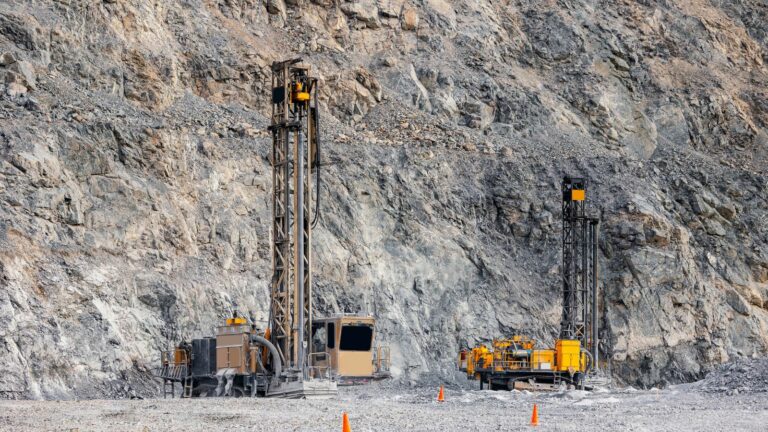
The pace of the 2026 campaign gives the latest assays additional weight. As of the August 10 release, Goliath said 44 of 98 planned holes had been completed, representing 23,863 metres of drilling. The broader program is expected to total about 50,000 metres and use seven drill rigs, with work aimed at extending known mineralization laterally and at depth while also testing targets interpreted as possible feeder structures.
That scale means the current release is a progress point rather than an endpoint. Only weeks earlier, the company was reporting early step-outs and pending assays from the opening phase of the season. Now, nearly half of the planned hole count has been drilled, and assay results are beginning to test whether visual mineralization translates into grade. For a project at this stage, the emerging pattern across many holes will ultimately matter more than any single intercept. Consistent step-outs can sharpen the geological model; misses can redefine its limits just as importantly.
The Minerals in the Core Tell Part of the Story
The core description helps explain why Golden Gate continues to attract attention. In GD-26-414, Goliath described the five-metre Golden Gate interval as quartz-sulphide veining with visible gold and lenses of semi-massive pyrrhotite, galena and sphalerite, plus minor chalcopyrite. The 320-metre step-out in GD-26-420 was also hosted in volcanic rocks and contained quartz-sulphide veins with visible gold alongside several of the same sulphide minerals.
Those minerals are not interchangeable with economic value, but they give geologists clues about the fluids, structures and metal associations that formed the system. Golden Gate’s expanded portions are described as veins and veinlets within andesitic volcanic rocks, a different setting from some of the sediment-hosted mineralization elsewhere at Surebet. That variety is one reason the project is being modeled as a stacked system with several mineralized styles. The visible gold is striking in photographs; the assays, structural measurements and continuity between holes are what determine how meaningful it becomes.
Directional Drilling Is Helping Test the Edges Faster
One less flashy part of the program may be just as important operationally: directional drilling. Goliath is using selected “mother” holes from which multiple branches can be drilled toward different targets. Instead of starting every hole from surface, crews can reuse part of an existing borehole and steer new branches deeper down. The company says the approach is intended to reduce drilling time and spending while improving targeting accuracy.
That technique is particularly useful when the geological question is whether a known lode continues several hundred metres away or at depth. A single surface setup can test multiple positions around a target, which can accelerate the feedback loop between geology, drilling and assay results. It does not guarantee successful intercepts, and cost savings depend on ground conditions and execution. But at Surebet, where Goliath is testing several stacked zones and aggressive step-outs during a large seasonal program, directional drilling can help convert more of the available field season into subsurface information.
Surebet Extends Well Beyond Golden Gate
Surebet is larger in concept than Golden Gate alone. Goliath’s geological model built before the 2026 season identified five principal mineralized zones—Bonanza, Surebet, Golden Gate, Whopper and Eldorado—containing 46 gold-rich lodes or veins, along with subvertical Eocene-aged dyke swarms. The discovery footprint has been described at about 1.8 square kilometres, with more than 156,000 metres drilled before the current campaign.
That stacked architecture is central to the exploration thesis. Rather than depending on one continuous orebody, the company is tracing multiple mineralized structures that overlap at different elevations and orientations. This can create more targets, but it also makes resource modeling more demanding because each lode needs its geometry and continuity constrained. Golden Gate currently accounts for 18 of the modeled lodes, making it one of the most structurally complex parts of the system. The new northeastern step-out therefore matters not just as another intercept, but as a potential change to the boundaries of one major zone.
The Golden Triangle Has a Long Record of Major Discoveries
The setting adds weight to any substantial discovery in this part of British Columbia. The provincial Geological Survey describes the Golden Triangle as a loosely defined region of northwestern B.C. containing significant gold, silver and copper deposits, largely within west-central Stikinia. Many deposits are associated with the Hazelton Group and related intrusions formed through a long history of terrane accretion, deformation and magmatism.
Mining history there stretches back well over a century. The B.C. Geological Survey says more than 150 mines have operated in the region since prospectors arrived near the end of the 19th century, with names such as Eskay Creek, Snip, Granduc and Premier among its better-known past producers. That pedigree does not make a new exploration project economic by association, but it explains why the Golden Triangle remains intensely explored. New discoveries are being evaluated in a district where major mineralizing systems, infrastructure investments and decades of geological work already exist.
Golddigger Has Some Important Infrastructure Nearby
Golddigger also has logistical advantages that are unusual for a remote mountain exploration project. Goliath says it now owns 100% of the 91,518-hectare property, which lies near tidewater and controls about 56 kilometres of the geological contact known as the Red Line. The company reports direct barge access toward Prince Rupert and proximity to the communities of Alice Arm and Kitsault, where existing roads, power and industrial infrastructure are present.
For drill crews, that does not eliminate the realities of steep terrain, helicopters and seasonal fieldwork. Core from the program is still moved by helicopter to a staging area before being trucked to the core shack. But regional access can become increasingly important if exploration progresses toward resource definition and more intensive technical studies. The company identifies the Dolly Varden Silver Mine Road roughly seven kilometres east of Surebet, the Alice Arm barge landing about 18 kilometres south and high-tension power approximately 25 kilometres east of the discovery.
The Most Important Tests Still Lie Ahead
The latest results strengthen the exploration case, but they do not yet answer the economic questions that ultimately define a mine. Goliath reports drill intervals as core lengths and estimates true widths at roughly 80% to 90% of those lengths. Its gold-equivalent calculations are presented for comparison and do not apply recovery factors because metallurgical work is still preliminary. Those details are important when comparing headline grades across projects.
The company’s sampling protocol adds useful controls: drill core is cut in half, certified reference materials, blanks and duplicates are inserted at a 10% rate, and gold is analyzed by MSALABS using photon assay. The August release says the technical disclosure was reviewed and approved by an independent qualified person under National Instrument 43-101. Even so, the major milestones remain ahead. A formal mineral resource estimate, tighter geological continuity, further metallurgy and eventually economic studies will determine whether Golden Gate’s expanding high-grade footprint can move from an exploration success toward a viable development story.
This Options Discord Chat is The Real Deal
While the internet is scoured with trading chat rooms, many of which even charge upwards of thousands of dollars to join, this smaller options trading discord chatroom is the real deal and actually providing valuable trade setups, education, and community without the noise and spam of the larger more expensive rooms. With a incredibly low-cost monthly fee, Options Trading Club (click here to see their reviews) requires an application to join ensuring that every member is dedicated and serious about taking their trading to the next level. If you are looking for a change in your trading strategies, then click here to apply for a membership.