35,000+ smart investors are already getting financial news, market signals, and macro shifts in the economy that could impact their money next with our FREE weekly newsletter. Get ahead of what the crowd finds out too late. Click Here to Subscribe for FREE.
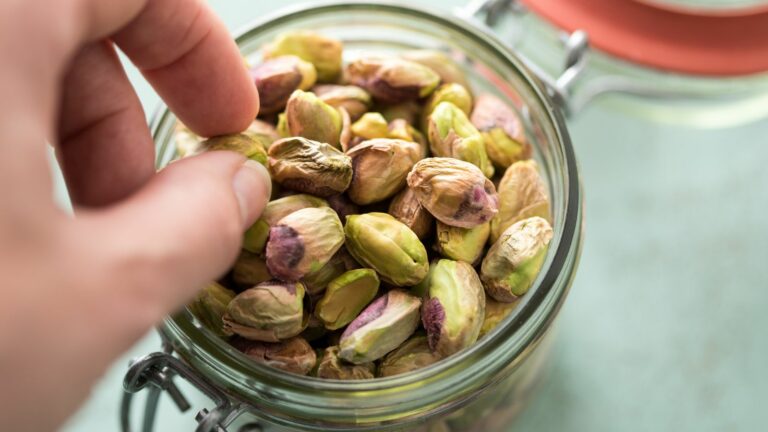
A package of pistachios can sit unnoticed in a pantry for months, which is exactly what makes a food-safety warning involving nuts unusually persistent. Canadian authorities have recalled pistachios distributed in British Columbia and Alberta because of possible Salmonella contamination, including bulk products supplied beyond ordinary grocery shelves.
The warning sits against the backdrop of a much larger Canadian pistachio investigation that ultimately involved 200 laboratory-confirmed illnesses and 26 hospitalizations. Although public-health officials declared that outbreak over in July 2026, recalled products can remain in homes, restaurants and institutional kitchens long after the illnesses themselves have stopped appearing.
The B.C. and Alberta Recall Reached Beyond Grocery Shelves
Californian Pistachios Recalled in B.C. and Alberta Over Salmonella Risk
- The B.C. and Alberta Recall Reached Beyond Grocery Shelves
- The Official Record Does Not Support a California Origin
- Canada’s Pistachio Outbreak Eventually Reached 200 Confirmed Cases
- Salmonella Can Be Present Without Changing a Food’s Appearance
- Pistachios’ Long Shelf Life Makes Old Recalls Relevant for Months
- Pistachios Became Ingredients in a Much Larger Recall Chain
- B.C. and Alberta Were Part of a National Supply-Chain Investigation
- Consumers Should Check Exact Product Information, Not Just Brand Names
- Restaurants and Retailers Face a Different Kind of Recall Challenge
- The Outbreak Is Closed, but the Recall Lessons Remain
One of the products listed by the Canadian Food Inspection Agency was unbranded raw pistachio kernels sold in large commercial formats. The affected kernels were listed in 10-kilogram and 30-pound packages under lot number 4245, carrying the code “01.08.2026.” Distribution included both British Columbia and Alberta. Importantly, the agency said the product was supplied not only to retail businesses but also to hotels, restaurants and institutions. That wider distribution makes a recall harder for individual consumers to recognize because the original bulk package may never have appeared on a household grocery shelf.
A restaurant customer, for example, may encounter pistachios as a garnish on a dessert rather than from a labelled bag. A bakery could turn bulk kernels into pastries, while another business might use them in ice cream, confectionery or sauces. This helps explain why regulators track ingredients through the commercial supply chain as well as through supermarkets. The CFIA has instructed businesses and consumers not to consume, use, sell, serve or distribute affected products. Recalled food should instead be discarded or returned to the place where it was obtained.
The Official Record Does Not Support a California Origin
The geographical wording matters because Canada’s recent pistachio problem has been tied specifically to another source. The CFIA states that the pistachios involved in its major food-safety investigation were imported from Iran. In September 2025, the agency introduced a temporary restriction affecting Iranian pistachios and pistachio products, along with additional conditions intended to prevent potentially contaminated products from entering distribution. That restriction was still in place when the Public Health Agency of Canada issued its final outbreak notice in July 2026.
That means describing the B.C. and Alberta recall as involving “Californian pistachios” creates a potentially significant factual problem unless separate documentation establishes California as the origin of a particular lot. No such confirmation appears in the federal Canadian records reviewed here. Origin is more than a geographical detail in a food recall: it allows regulators, importers, retailers and consumers to distinguish one supply-chain problem from another. Confusing California-grown nuts with Iranian-origin pistachios could lead consumers to avoid unaffected products while overlooking the specific products regulators have actually identified.
Canada’s Pistachio Outbreak Eventually Reached 200 Confirmed Cases
The scale of the broader investigation explains why pistachio recalls attracted so much attention. In its final update dated July 21, 2026, the Public Health Agency of Canada reported 200 laboratory-confirmed Salmonella infections associated with the outbreak. Quebec recorded the largest number, with 91 cases, followed by Ontario with 79. British Columbia recorded 16 cases, Alberta nine, Manitoba three and New Brunswick two. Twenty-six people were hospitalized, and public-health authorities reported no deaths. Patients ranged in age from one to 95 years, illustrating how broadly contaminated food can reach across a population.
The confirmed numbers probably represented only part of the true burden. PHAC noted that many people with relatively mild Salmonella infections never seek medical attention or undergo laboratory testing. The agency has cited research estimating that roughly 26 infections may go unreported for every reported Salmonella case. The pistachio investigation also involved multiple Salmonella types rather than one single strain. Authorities detected outbreak strains in samples of recalled pistachios and in recalled Dubai-style chocolate, strengthening the epidemiological link between illnesses and pistachio-containing foods.
Salmonella Can Be Present Without Changing a Food’s Appearance
Salmonella creates a frustrating food-safety problem because contamination is generally not something shoppers can detect with their senses. The CFIA warns that affected food may look and smell perfectly normal. A pistachio does not necessarily become discoloured, develop an unusual odour or taste obviously spoiled because Salmonella is present. That makes recall information — including product names, package sizes, lot numbers, UPCs and sales dates — much more important than a visual inspection of food sitting in a cupboard.
For people who develop salmonellosis, symptoms commonly include fever, chills, nausea, diarrhea, vomiting, stomach cramps and headache. The Public Health Agency of Canada says symptoms generally begin within six to 72 hours after exposure and usually last four to seven days. Many healthy people recover without specific medical treatment, but serious illness can occur. Young children, older adults, pregnant people and people with weakened immune systems face a greater risk of severe outcomes. Heavy diarrhea or vomiting can also result in dehydration, sometimes requiring medical care or intravenous fluids.
Pistachios’ Long Shelf Life Makes Old Recalls Relevant for Months
Fresh produce usually disappears from refrigerators relatively quickly, but dry nuts can remain in cupboards, stockrooms and commercial kitchens for a long time. The CFIA has specifically pointed to pistachios’ long shelf life as one reason the Canadian investigation became complicated. Products could remain available for months after their original distribution, while recalled kernels could also have been incorporated into foods with different labels, packaging and expiration dates. That characteristic extends the practical life of a recall far beyond the day a government warning first appears.
The affected bulk kernels distributed in B.C. and Alberta demonstrate the problem. A 10-kilogram or 30-pound box is more likely to be used gradually by a bakery, restaurant, institution or manufacturer than eaten immediately. Smaller portions may then move into finished foods before anyone handling the final product sees the original shipping information. For households, the same principle applies to bags transferred into jars or pantry containers. Authorities therefore advise checking recall identifiers carefully rather than assuming a product is safe simply because it was bought months earlier or has been stored without any visible sign of spoilage.
Pistachios Became Ingredients in a Much Larger Recall Chain
The investigation eventually grew far beyond bags of plain nuts. Canadian authorities issued warnings involving pistachio kernels and numerous foods made with pistachios, including chocolates, pastries, spreads, ice cream and other sweets. Dubai-style chocolate became particularly prominent during the outbreak because pistachio filling is a defining ingredient in many versions of the viral confection. PHAC reported that many people who became sick had consumed pistachios or foods containing them, while laboratory evidence also connected recalled pistachio products with outbreak strains.
This is a classic example of what food-safety officials call a secondary recall problem. A contaminated raw ingredient can move to several manufacturers, bakeries or food-service operators, where it becomes part of entirely different finished products. One bulk shipment can therefore create multiple consumer-facing recalls carrying unrelated brand names. CFIA said the unusually high number of pistachio recalls reflected both the long shelf life of the nuts and the complexity of tracing downstream products. For consumers, that means checking only packages labelled “pistachios” may not be enough when authorities identify desserts or other foods made with affected nuts.
B.C. and Alberta Were Part of a National Supply-Chain Investigation
Although several recalled pistachios were distributed specifically in British Columbia and Alberta, the broader investigation was national in scope. Products ultimately appeared through retail stores, online sellers, restaurants, bakeries, manufacturers and institutional food channels in multiple provinces. CFIA sampling and inspection work continued at different points in the supply chain while businesses were required to remove recalled products. Regulators also continued adding products as new links between suppliers and finished foods were discovered.
The human cases show the same geographic spread. British Columbia and Alberta together accounted for 25 of the 200 laboratory-confirmed illnesses identified in the final federal outbreak count. Ontario and Quebec accounted for the majority, but illnesses also appeared in Manitoba and New Brunswick. The distribution pattern demonstrates why provincial location alone cannot always identify the source of a foodborne outbreak. Ingredients routinely cross provincial boundaries before reaching consumers. Investigators therefore combine patient interviews, purchase histories, laboratory testing and supply-chain records to establish connections between illnesses and specific foods rather than assuming products sold in one province originated there.
Consumers Should Check Exact Product Information, Not Just Brand Names
The CFIA’s advice is deliberately specific: compare the product name, brand where applicable, package size, UPC and identifying codes with the information in the official recall notice. That becomes especially important when products are unbranded or sold in bulk. Someone may remember buying “raw pistachios” without remembering the supplier, while a restaurant or retailer may have repackaged kernels into a smaller container. When consumers cannot determine whether their pistachios came from an affected shipment, the agency recommends contacting the retailer or supplier for clarification.
Recalled products should not be eaten, served, sold, used in cooking or redistributed. Throwing them away or returning them to the seller prevents someone else from unknowingly consuming them. Anyone who believes illness began after eating a recalled product should contact a health-care provider. People experiencing gastrointestinal illness should also avoid preparing food for others, since Salmonella can continue to be shed after infection. Ordinary kitchen hygiene remains important, but washing or inspecting a recalled nut product is not a substitute for following a recall notice. Once a specific food has been recalled, the safest course is to remove it from use.
Restaurants and Retailers Face a Different Kind of Recall Challenge
For businesses, the practical work can be more complicated than removing a few packages from a shelf. A retailer may need to trace bulk lots that were repackaged under store labels. A bakery must determine whether recalled kernels were used in pastries that have already been sold. Restaurants may have used the ingredient in dozens of servings without identifying pistachios as a branded product on a menu. Institutions such as cafeterias or care facilities can face similar traceability questions when ingredients arrive through wholesale distributors rather than retail channels.
That is why the B.C. and Alberta distribution information is significant. The affected bulk kernels were specifically listed as being sold to hotels, restaurants, institutions and retail customers. CFIA’s investigation involved verifying that affected food was being removed from the marketplace, while businesses were expected to stop using and distributing recalled products. The broader pistachio episode shows how rapidly an ingredient-level problem can expand: once contaminated nuts enter commercial production, regulators may have to identify every downstream business and every finished food made from the affected lot.
The Outbreak Is Closed, but the Recall Lessons Remain
PHAC officially closed the pistachio outbreak investigation on July 21, 2026, saying the outbreak appeared to be over. Its final count stood at 200 laboratory-confirmed illnesses, 26 hospitalizations and no deaths. Closure means investigators were no longer seeing evidence that the outbreak remained active; it does not transform previously recalled products into safe food. PHAC continued advising people not to consume, sell, serve or distribute recalled pistachios and pistachio-containing products, and the federal restriction covering Iranian pistachio imports remained in effect at the time of the final notice.
For shoppers in British Columbia and Alberta, the practical lesson is straightforward but important: recall decisions should be based on exact government product information, not a broad assumption that all pistachios — or all pistachios from a particular country — are unsafe. The same principle applies to reporting on the episode. Federal evidence supports a serious Salmonella recall involving pistachios distributed in B.C. and Alberta, but it does not support identifying those affected nuts as Californian. Keeping that distinction intact helps consumers act on the products that actually pose the documented risk.
This Options Discord Chat is The Real Deal
While the internet is scoured with trading chat rooms, many of which even charge upwards of thousands of dollars to join, this smaller options trading discord chatroom is the real deal and actually providing valuable trade setups, education, and community without the noise and spam of the larger more expensive rooms. With a incredibly low-cost monthly fee, Options Trading Club (click here to see their reviews) requires an application to join ensuring that every member is dedicated and serious about taking their trading to the next level. If you are looking for a change in your trading strategies, then click here to apply for a membership.