35,000+ smart investors are already getting financial news, market signals, and macro shifts in the economy that could impact their money next with our FREE weekly newsletter. Get ahead of what the crowd finds out too late. Click Here to Subscribe for FREE.
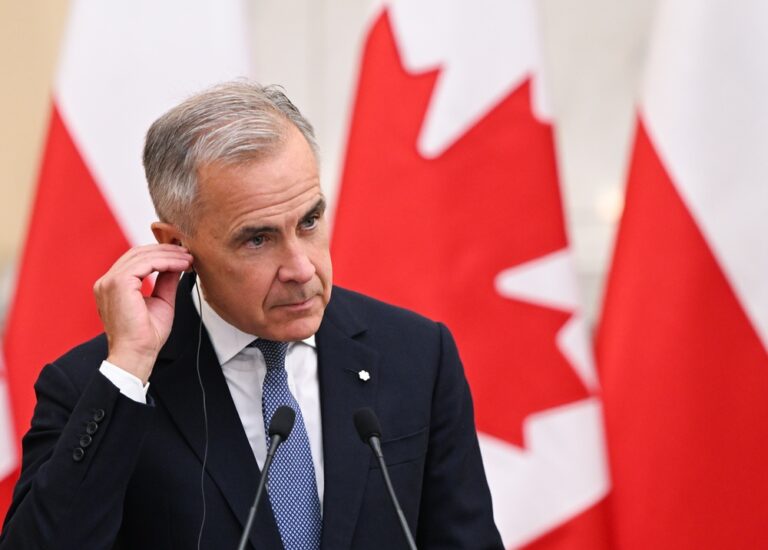
The most dangerous moment in a trade dispute is often the quiet stretch before a deadline. President Donald Trump has ordered a new 50 per cent tariff on a wide range of Canadian goods beginning Aug. 19, placing nearly US$20 billion in annual imports under threat. Prime Minister Mark Carney is refusing to retaliate before the measure takes effect, arguing that an early response would weaken negotiations rather than strengthen Canada’s hand.
That restraint is not the same as ruling out retaliation. Carney says every option remains available if talks fail, while premiers, exporters and workers are already debating how forcefully Canada should respond. The next few weeks will test whether Ottawa can turn a punitive deadline into an off-ramp—or whether another round of tariffs will deepen an economic conflict already reshaping North American trade.
The Deadline Was Built to Create Leverage
Carney Refuses Early Retaliation as Trump’s Aug. 19 Tariff Deadline Closes In
- The Deadline Was Built to Create Leverage
- Carney Is Choosing Restraint, Not Surrender
- The Target List Is Broad but Carefully Carved
- Washington’s Case Centres on Cars, Dairy and Alcohol
- Canada Already Has Retaliation in Place
- Premiers Agree on the Threat, Not the Weapon
- Businesses Feel the Cost Before Customs Collects It
- The Bigger Battle Is the Future of CUSMA
Trump’s proclamation uses Section 338 of the Tariff Act of 1930, a provision that allows a president to impose duties of up to 50 per cent against a country accused of discriminating against American commerce. The measure cannot begin earlier than 30 days after the proclamation, which is why Aug. 19 has become the central date in the dispute.
The legal design gives Washington both pressure and flexibility. The White House can suspend, amend or revoke the tariffs before they begin, making the deadline function like a negotiating lever rather than an unavoidable economic event. Reuters described the move as the first known use of Section 338 in nearly a century. For Canadian businesses, however, the distinction offers little comfort. Exporters must prepare pricing, shipping, staffing, financing and customer plans immediately, even though the policy could change before a single new duty is collected at the busy border itself tomorrow.
Carney Is Choosing Restraint, Not Surrender
Carney’s message after meeting Canada’s premiers was deliberately balanced: negotiations are intensifying, retaliation remains possible, but Canada will not strike first. He said responding before Aug. 19 would be counterproductive and suggested the outsized tariff could be part of a familiar American negotiating pattern in which a deadline is paired with a severe economic threat.
That approach gives Ottawa room to seek a comprehensive agreement instead of bargaining separately over each affected industry. It also reduces the risk that Canada becomes blamed for escalating the conflict before the U.S. measure begins. Still, restraint carries political danger. Businesses facing cancelled orders may interpret patience as passivity, while premiers demanding a tougher response can argue that Washington only respects leverage. Carney therefore has to make diplomacy look active: frequent talks, visible provincial coordination, clear public updates, business outreach and credible preparations for countermeasures if the deadline arrives without a workable deal.
The Target List Is Broad but Carefully Carved
The proposed tariff would cover roughly C$28 billion, or about US$20 billion, in annual Canadian exports. That represents only around five per cent of total U.S. goods imports from Canada, but the impact is concentrated across recognizable products and regional employers. The list includes wine, dairy goods, honey, cement, furniture, clothing, fishing rods, swimming pools, wigs and hockey equipment.
Several of Canada’s largest strategic exports are excluded, including energy, potash, fish and critical minerals. Products already facing U.S. national-security tariffs under Section 232 are also generally carved out. Those exemptions limit the immediate national shock, yet they do not make the measure harmless. A family-owned food producer or sporting-goods manufacturer cannot quickly replace the enormous American market as easily as an oil exporter can redirect output. The duties would also override CUSMA preferences for covered products, abruptly changing assumptions that shaped contracts, investments and supply chains.
Washington’s Case Centres on Cars, Dairy and Alcohol
The White House says Canada discriminated against American commerce through its treatment of vehicles, dairy products and alcohol. Its proclamation argues that Canadian auto tariffs and tariff-rate quotas favoured vehicles from other countries. It highlighted a 23.6 per cent increase in Canadian imports of Mexican vehicles and said non-U.S. vehicle imports rose by about US$2.85 billion.
Washington also points to provincial decisions to remove American alcohol from shelves after earlier U.S. tariffs. The administration says Canadian imports of U.S. alcoholic beverages fell 81 per cent over the past year. Ottawa rejects the accusation that Canada created the dispute. Carney’s government says its auto measures merely matched U.S. tariffs that violated CUSMA. That disagreement matters because the fight is not only about market access; it is about which country is retaliating, which rules still carry authority and which government broke those trade rules first.
Canada Already Has Retaliation in Place
Ottawa is not entering this deadline with a blank tariff schedule. Canada still applies 25 per cent counter-tariffs to selected U.S. steel, aluminum and automobile imports. Those measures remained after the federal government removed most broader retaliatory tariffs introduced in March 2025, effective Sept. 1 of that year.
That history helps explain Carney’s reluctance to announce another package immediately. Additional tariffs could raise costs for Canadian manufacturers that depend on American inputs, while hitting consumers through more expensive vehicles, equipment or building materials. Waiting gives officials time to design measures that create political pressure in the United States without causing unnecessary damage at home. The earlier rollback showed that tariffs can be adjusted to reward exemptions or negotiations. The challenge is credibility: Washington must believe Canada is prepared to respond, while Canadian firms must believe Ottawa will avoid countermeasures that hurt them more than the intended American targets themselves.
Premiers Agree on the Threat, Not the Weapon
The premiers emerged from talks with Carney united against the U.S. tariff threat, but divided over how Canada should fight back. Ontario Premier Doug Ford has called for matching American tariffs dollar for dollar. British Columbia Premier David Eby has raised using access to critical minerals as leverage. Alberta and Saskatchewan oppose export restrictions that could damage their energy and potash industries.
Those differences reflect the geography of Canadian trade. Ontario’s factories and Quebec’s manufacturers face a different risk profile than western commodity exporters whose products were exempted from the new duties. A retaliation plan that looks forceful in Toronto could look self-defeating in Edmonton or Regina. Prince Edward Island Premier Rob Lantz emphasized a united Team Canada approach, but unity will become harder if negotiations fail. Carney must craft a response that appears nationally powerful without making a province feel its workers are being sacrificed for another region’s dispute.
Businesses Feel the Cost Before Customs Collects It
Tariffs affect decisions before appearing on a customs invoice. An American buyer may delay an order rather than risk a sudden 50 per cent charge. A Canadian exporter may postpone equipment, hiring or expansion until the rules become clearer. The Bank of Canada says uncertainty and soft demand weigh on some investment plans, while firms’ hiring intentions have fallen below their historical average.
Canada has already expanded programs for workers affected by the wider trade conflict. By March 14, roughly 1,500 tariff-related Work-Sharing applications had covered more than 54,000 workers and were estimated to have prevented about 20,000 layoffs. Those figures show why the Aug. 19 threat matters beyond the C$28 billion directly targeted. A tariff can weaken confidence across suppliers, transportation firms and communities. For a worker on reduced hours, negotiating tactics are not abstract; they determine whether the next shift remains on the schedule.
The Bigger Battle Is the Future of CUSMA
The Aug. 19 deadline is part of a struggle over the future of North American trade. The United States declined on July 1 to extend CUSMA for another 16-year term. The agreement remains in force until 2036, but annual reviews will continue unless all three countries agree to extend it. That can prolong uncertainty even if the immediate tariff threat is removed.
Washington is also negotiating with Canada and Mexico separately, creating concern that concessions reached with one partner could become the benchmark for the other. Canada’s long-term defence is diversification. Data show exports to non-U.S. markets rose 11.1 per cent in 2025 and reached 32.8 per cent of total exports, the highest share in four decades. Yet diversification cannot replace the American market quickly. Carney’s immediate objective is narrower: secure an off-ramp before Aug. 19 without accepting terms that make Canada permanently weaker or dangerously dependent.
This Options Discord Chat is The Real Deal
While the internet is scoured with trading chat rooms, many of which even charge upwards of thousands of dollars to join, this smaller options trading discord chatroom is the real deal and actually providing valuable trade setups, education, and community without the noise and spam of the larger more expensive rooms. With a incredibly low-cost monthly fee, Options Trading Club (click here to see their reviews) requires an application to join ensuring that every member is dedicated and serious about taking their trading to the next level. If you are looking for a change in your trading strategies, then click here to apply for a membership.