35,000+ smart investors are already getting financial news, market signals, and macro shifts in the economy that could impact their money next with our FREE weekly newsletter. Get ahead of what the crowd finds out too late. Click Here to Subscribe for FREE.
The Gordie Howe International Bridge was supposed to be a clean symbol of cross-border co-operation: a new trade artery linking Windsor and Detroit after years of planning, construction, and political fighting. Instead, its final stretch has become a test of how much Canada is willing to concede to keep a major economic project moving.
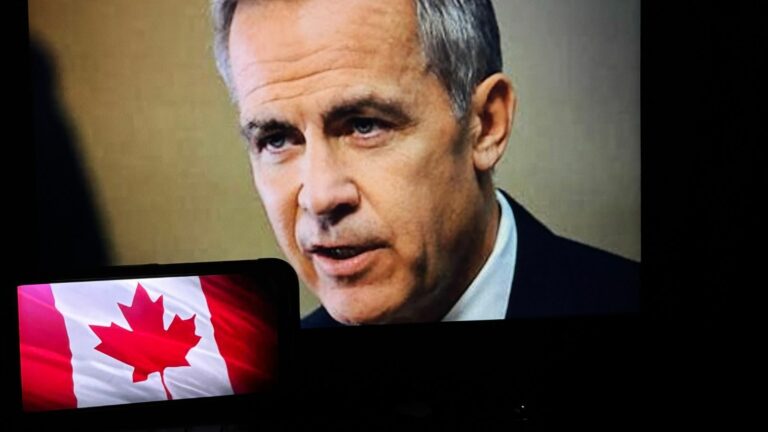
Prime Minister Mark Carney is now defending a revised Canada-U.S. arrangement that gives Washington access to a share of future operating profits. His argument is narrow but important: Canada is not splitting toll revenue before recovering its costs. The money, he says, flows first toward repayment and debt servicing, with only remaining profits subject to sharing for a limited period. That distinction may decide whether the deal is seen as a practical compromise or a costly political surrender.
What Carney Is Actually Defending
Carney Defends U.S. Cut of Gordie Howe Bridge Profits, Says Canada Gets Repaid First
- What Carney Is Actually Defending
- The Deal Turns on Net Profits, Not Gross Tolls
- Why Canada Paid Upfront in the First Place
- Why This Bridge Matters Beyond Windsor and Detroit
- The Political Optics Are Still Difficult
- Toll Governance Becomes the New Flashpoint
- What Local Drivers and Truckers Will Notice First
- The Bigger Test: Whether the Bridge Pays Off
Carney’s defence rests on a key distinction that can easily get lost in the political noise: toll revenue is not the same thing as profit. Drivers and truckers will pay tolls, but those funds first have to cover the bridge’s financial obligations, including the costs tied to construction, operations, maintenance, and repayment of Canada’s upfront investment. Only after those obligations are handled does the controversial profit-sharing question begin.
That matters because the public reaction has largely focused on the idea that Canada “paid for the bridge” while the United States gets a cut. Carney is trying to reframe the deal as a limited sharing arrangement after Canada is made whole, not a direct transfer of half the bridge’s income. His message is designed for Canadians who see the project as a national investment, especially in Windsor, where the bridge is more than a policy file. It is a visible skyline-changing structure built beside neighbourhoods, factories, and trucking routes that have waited years for relief.
The Deal Turns on Net Profits, Not Gross Tolls
The revised arrangement reportedly gives the United States access to 50 per cent of toll revenue profits, while the official Canadian announcement describes a 15-year economic development fund tied to a portion of bridge-operation profits. The word “profits” is doing a lot of work. Gross tolls are the money collected from users. Net profits are what remains after expenses and repayment structures are accounted for. Carney’s argument depends on Canadians understanding that difference.
That distinction does not erase the political problem. The original understanding was built around Canada financing the project and recouping costs through tolls over time. A new U.S. role in profit-sharing, even after repayment, gives critics an easy line of attack: Canada assumed the upfront risk while Washington negotiated a late-stage benefit. Still, if the bridge produces limited net profit in its early years because repayment and servicing costs come first, the practical cost of the concession could be smaller than the headline suggests. The harder question is whether future toll governance limits Canada’s flexibility.
Why Canada Paid Upfront in the First Place
Canada’s decision to finance the bridge was not charity. It was a strategic choice rooted in trade dependence. The Windsor-Detroit corridor is one of the most important land crossings on the continent, especially for auto parts, manufactured goods, agricultural products, and just-in-time supply chains. For years, Canadian governments saw a second major crossing as essential because a single overloaded or disrupted route can create costly delays on both sides of the border.
The project also reflects a long-standing Canadian frustration: the country’s economy depends heavily on smooth access to the U.S. market, but key border infrastructure is often shaped by American state politics, private interests, and federal priorities. By funding the bridge upfront, Ottawa reduced the chance that Michigan budget fights or Washington delays would derail the project entirely. That made economic sense, but it also created today’s political vulnerability. Once Canada became the visible funder, any later U.S. claim on profits was bound to feel like a concession extracted after the bills were already paid.
Why This Bridge Matters Beyond Windsor and Detroit
The Gordie Howe International Bridge is not just another border crossing. It is a six-lane, cable-stayed bridge with a main span of 853 metres and a total length of roughly 2.5 kilometres. It connects modern ports of entry on both sides of the Detroit River and is designed to provide direct highway-to-highway access between Ontario’s Highway 401 corridor and Interstate 75 in Michigan. For freight carriers, that kind of connection can matter as much as the bridge itself.
The economic case is built around reliability. A truck carrying auto parts does not only need to cross the border; it needs to cross at a predictable time. A delay can ripple through assembly plants, warehouse schedules, driver hours, and delivery contracts. Research on the corridor has emphasized that shorter and more reliable crossing times can reduce buffer time, limit detours, and support integrated North American manufacturing. That is why the bridge has been described as a supply-chain asset, not merely a construction milestone. For communities near the crossing, the promise is fewer bottlenecks and more economic activity tied to logistics, warehousing, and trade services.
The Political Optics Are Still Difficult
Even if Carney’s repayment argument is technically sound, the optics remain uncomfortable. The bridge was delayed after U.S. pressure, and reports say the final arrangement gave Washington a share of future profits and influence over some toll changes. In Canadian politics, that creates a ready-made narrative: the United States objected late, Canada wanted the bridge opened, and Ottawa agreed to revised terms to get the project moving.
That is why Carney’s language matters. He is not simply defending an infrastructure agreement; he is defending his broader approach to dealing with a more aggressive U.S. administration. The bridge dispute lands in the same emotional territory as tariffs, auto rules, dairy fights, procurement disputes, and cross-border political pressure. For Canadians already worried that the country gives too much ground to Washington, the bridge becomes a symbol. For business groups, manufacturers, and truckers, however, the most urgent concern is opening the route. A delayed bridge produces no tolls, no redundancy, and no supply-chain benefit.
Toll Governance Becomes the New Flashpoint
One of the most important issues now is toll governance. Canada’s official statement says the Windsor-Detroit Bridge Authority will work with the U.S. government on toll-rate adjustments and seek concurrence for certain non-market-related changes. Reports also suggest Washington secured veto power over toll increases above a certain threshold. That may sound technical, but toll policy affects repayment speed, traffic behaviour, and competition with existing crossings.
If tolls are too high, some drivers and carriers may stick with the Ambassador Bridge or the Detroit-Windsor Tunnel. If tolls are too low, repayment could take longer and operating margins could be thinner. The bridge authority has to balance public-interest goals with commercial reality: attract traffic, recover costs, maintain the asset, and avoid turning toll policy into a diplomatic fight. That balance becomes harder if another government has a formal say in certain adjustments. Carney’s defence may calm concerns about profit-sharing, but toll control could become the longer-running sovereignty issue.
What Local Drivers and Truckers Will Notice First
For everyday drivers, the bridge may initially feel like another option rather than a full replacement for existing crossings. Commuters, tourists, and occasional cross-border shoppers often choose routes based on convenience, inspection wait times, tolls, and where they are headed after crossing. The bridge’s location and highway connections make it especially important for commercial traffic, but passenger traffic will also respond if the crossing proves faster and easier.
For truckers, the appeal is more direct. A modern crossing with larger inspection plazas, highway-to-highway connectivity, and added capacity can reduce uncertainty. That does not mean every truck immediately shifts routes, but it does give logistics planners another tool. In industries where delivery windows are tight, a second bridge can reduce the need to build excessive buffer time into schedules. The biggest benefit may not appear in a single dramatic moment. It may show up gradually in fewer missed delivery windows, less congestion pressure, and a stronger sense that the Windsor-Detroit corridor has backup capacity when something goes wrong.
The Bigger Test: Whether the Bridge Pays Off
The debate over profit-sharing will likely continue, but the bridge’s long-term judgment will depend on whether it performs as promised. If the crossing speeds trade, supports manufacturing, strengthens redundancy, and helps Canada recover its investment, the concession may fade into the background. If toll governance becomes contentious or repayment takes longer than expected, critics will return to the question of why Washington received any share at all.
Carney is betting that the practical benefits of opening the bridge outweigh the political cost of the compromise. That is a risky but understandable calculation. A completed bridge that sits idle because of a diplomatic standoff would be hard to defend, especially in a corridor central to Canada-U.S. trade. Still, Canadians will expect more than reassurance. They will want clear accounting of toll revenue, repayment progress, profit-sharing amounts, and decision-making authority. The bridge may soon open to traffic, but the political toll of the deal is only beginning to be measured.
This Options Discord Chat is The Real Deal
While the internet is scoured with trading chat rooms, many of which even charge upwards of thousands of dollars to join, this smaller options trading discord chatroom is the real deal and actually providing valuable trade setups, education, and community without the noise and spam of the larger more expensive rooms. With a incredibly low-cost monthly fee, Options Trading Club (click here to see their reviews) requires an application to join ensuring that every member is dedicated and serious about taking their trading to the next level. If you are looking for a change in your trading strategies, then click here to apply for a membership.