35,000+ smart investors are already getting financial news, market signals, and macro shifts in the economy that could impact their money next with our FREE weekly newsletter. Get ahead of what the crowd finds out too late. Click Here to Subscribe for FREE.
Ottawa’s latest push toward France is not just diplomatic theatre. It is a sign of how quickly Canada is trying to widen its economic options as the Trump administration keeps pressure on North American trade. With tariffs still hanging over autos, steel, aluminum and other strategic sectors, the federal government is looking across the Atlantic for partners that can help anchor supply chains Canadians cannot afford to leave exposed.
France is a natural target. The two countries already share deep commercial, cultural and defence ties, but the new focus is more industrial than ceremonial. Critical minerals, aerospace and nuclear energy sit at the centre of a bigger strategy: build trusted supply chains, protect high-value jobs and reduce the risk of being boxed in by an unpredictable U.S. trade fight.
Critical Minerals Become the Backbone of a New Supply Strategy
Canada’s mineral wealth has moved from the resource pages to the centre of foreign policy. Ottawa identifies 34 minerals and metals as critical, including lithium, graphite, nickel, cobalt, copper, rare earths and uranium. These materials are not abstract commodities; they show up in electric vehicle batteries, smartphones, data centres, satellites, medical devices and defence applications. For France, which is trying to rebuild industrial capacity and reduce reliance on fragile supply chains, Canada offers something valuable: a democratic, resource-rich partner with mining expertise, environmental standards and access to North American production networks.
That is why Canada and France have been steadily building a critical minerals track. Their bilateral dialogue, launched in 2023, was designed to secure supplies, promote investment, support research and development, and raise environmental, social and governance standards. The latest move in Montreal, where Canadian and French ministers agreed to keep talking through sector-specific working groups, pushes that agenda into a more practical phase. For communities in Quebec, Saskatchewan, Ontario and the North, the issue is not just global strategy. It is whether mines, processing plants and battery-material projects can move fast enough to turn political interest into long-term jobs.
The timing matters because the global minerals race is becoming more concentrated and more political. China still dominates key parts of battery-material processing, especially graphite anode production, while Europe is trying to secure supplies for electric vehicles, defence systems and clean-energy infrastructure. France’s northern “Battery Valley” has attracted gigafactory investment, but factories need reliable feedstock to become more than ribbon-cutting projects. Canada can help fill some of those gaps, especially in graphite, nickel, cobalt and uranium, while also linking mineral production to allied manufacturing rather than raw exports alone.
Ottawa’s challenge is execution. Critical minerals projects often take years to permit, finance and build, while allies want secure supply now. The federal government has tried to answer that gap through the G7 Critical Minerals Action Plan and a broader production alliance meant to mobilize capital and bring projects into operation. France gives Canada another route into European supply chains, but the partnership will only matter if it produces offtake deals, processing capacity and infrastructure. In practical terms, the question is whether Canada can move from being a country with minerals in the ground to one that helps shape the industrial future those minerals make possible.
Aerospace Gives Canada and France a Ready-Made Industrial Bridge
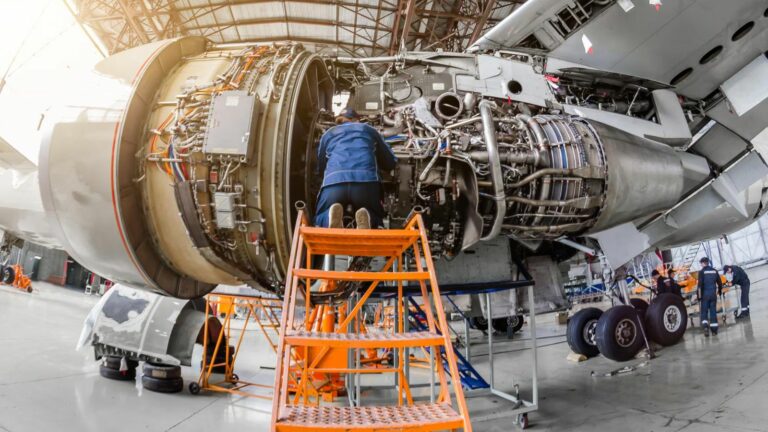
Aerospace may be the easiest part of the Canada-France relationship to understand because the connection is already visible on factory floors. Airbus has a major Canadian presence, with the A220 commercial aircraft program headquartered in Mirabel, Quebec. The plane began life as Bombardier’s C Series before Airbus took control of the program, creating one of the clearest examples of French-European industrial reach combining with Canadian design, workers and suppliers. In a period when trade politics can disrupt supply chains overnight, that kind of embedded partnership is hard to replace.
Canada’s aerospace sector is also too important to treat as a side issue. In 2024, the industry contributed more than $34 billion to GDP and supported roughly 225,000 jobs across the country. It is one of Canada’s highest-value manufacturing sectors, with a workforce heavy in engineering, science and skilled trades. For a family in Mirabel, Mississauga or Winnipeg, aerospace strategy can sound distant until it becomes a paycheque, an apprenticeship or a supplier contract. That is why Ottawa’s France outreach is not just about export statistics; it is about protecting a sector where Canada still competes near the top of the global market.
The A220 gives the partnership a fresh political lift. In May 2026, Ottawa welcomed AirAsia’s agreement to buy 150 Airbus A220-300 aircraft, described by the Prime Minister’s Office as the largest order for a Canadian-designed and produced aircraft in history. Each aircraft is to be assembled at Airbus Canada’s facility in Mirabel, reinforcing Quebec’s role as one of the world’s key aerospace hubs. For Ottawa, the order is exactly the sort of story it wants to tell during a trade fight: Canadian workers building advanced products for global customers, with a European partner helping open markets beyond the United States.
France also brings a broader aerospace and defence ecosystem, from Airbus and Safran to satellite, helicopter and avionics capabilities. Canada brings manufacturing depth, simulation, engines, components and a highly export-oriented aerospace base. Together, they can work on civil aviation, defence procurement, supply-chain resilience and lower-emission aircraft technologies. But the opportunity comes with pressure. Aerospace production has been strained by labour shortages, parts delays and rising costs. If Canada wants France to become a stronger industrial partner, it must keep investing in skills, suppliers and research so Canadian facilities remain indispensable rather than merely convenient.
Nuclear Ties Move From Energy Security to Strategic Sovereignty
Nuclear energy is where the Canada-France relationship becomes especially strategic. France relies heavily on nuclear power and has built one of the lowest-carbon electricity systems in the industrialized world. Canada, meanwhile, is one of the world’s major uranium producers and has decades of nuclear expertise through CANDU reactors, uranium mining, fuel supply and emerging small modular reactor projects. In an era of energy insecurity, nuclear cooperation is no longer just about electricity. It is about sovereignty, industrial capacity and trusted fuel chains.
The uranium link is already real. Canada’s uranium production is largely available for export, and Europe is a major destination under long-term commercial contracts. Saskatchewan’s uranium industry, led by operators such as Cameco and Orano Canada, sits at the heart of that story. Orano’s French roots make the connection more direct: Canadian uranium, mined and processed under strict regulatory oversight, can help support French and European nuclear needs at a time when dependence on unstable or adversarial suppliers is increasingly viewed as a security risk. For France, a reliable Canadian supply line is not just useful; it is part of keeping nuclear power politically and economically viable.
Canada is also trying to position itself in the next wave of nuclear development. Small modular reactors are planned at Ontario’s Darlington site, and Ontario Power Generation has selected fuel suppliers involving partners from Canada, the United States and France for the first unit of its four-unit Darlington New Nuclear Project. That is a small but meaningful example of how nuclear cooperation can move beyond uranium shipments into technology, fuel services and industrial planning. If the project succeeds, Canada would strengthen its claim as a serious nuclear innovator rather than simply a uranium exporter.
For Ottawa, France is attractive because it treats nuclear power as a core part of national strategy. That matters as Canada faces rising electricity demand from data centres, electrification, manufacturing and population growth. France has experience running a large nuclear fleet; Canada has uranium, regulatory knowledge and new reactor ambitions. The partnership will not solve every problem, especially around costs, timelines, waste management and public confidence. But it gives Canada a credible route to work with an ally that understands nuclear power as both an energy tool and an industrial asset. As the Trump trade fight drags on, that kind of dependable partnership is becoming harder to separate from economic security itself.
This Options Discord Chat is The Real Deal
While the internet is scoured with trading chat rooms, many of which even charge upwards of thousands of dollars to join, this smaller options trading discord chatroom is the real deal and actually providing valuable trade setups, education, and community without the noise and spam of the larger more expensive rooms. With a incredibly low-cost monthly fee, Options Trading Club (click here to see their reviews) requires an application to join ensuring that every member is dedicated and serious about taking their trading to the next level. If you are looking for a change in your trading strategies, then click here to apply for a membership.