
35,000+ smart investors are already getting financial news, market signals, and macro shifts in the economy that could impact their money next with our FREE weekly newsletter. Get ahead of what the crowd finds out too late. Click Here to Subscribe for FREE.
Across Canada, the search for breathing room has become more than a housing preference; it has become a lifestyle reset. High home prices, long commutes, crowded services, and the daily weight of big-city life have pushed many households to look beyond the country’s most expensive urban cores.
These 22 places in Canada stand out because they offer some combination of larger homes, calmer neighbourhoods, outdoor access, growing job markets, and more manageable day-to-day living. Some are fast-growing western hubs, others are Atlantic cities gaining momentum, and several are mid-sized communities where people can still imagine a full life without feeling squeezed at every turn.
Calgary, Alberta
22 Places in Canada Where People Are Moving for More Space and Less Stress
- Calgary, Alberta
- Edmonton, Alberta
- Airdrie, Alberta
- Cochrane, Alberta
- Red Deer, Alberta
- Saskatoon, Saskatchewan
- Regina, Saskatchewan
- Winnipeg, Manitoba
- Moncton, New Brunswick
- Fredericton, New Brunswick
- Halifax, Nova Scotia
- Charlottetown, Prince Edward Island
- Quebec City, Quebec
- Sherbrooke, Quebec
- Kingston, Ontario
- Peterborough, Ontario
- London, Ontario
- Kitchener-Waterloo-Cambridge, Ontario
- Barrie, Ontario
- Belleville-Quinte West, Ontario
- Kelowna, British Columbia
- Chilliwack, British Columbia
- Nanaimo, British Columbia
- Kamloops, British Columbia
- 19 Things Canadians Don’t Realize the CRA Can See About Their Online Income

Calgary has become one of Canada’s clearest relocation magnets for people who want more room without leaving big-city opportunity behind. Its job market still carries the weight of energy, logistics, finance, construction, and technology, while its suburban neighbourhoods offer the kind of detached homes and newer townhouses that feel out of reach in Toronto or Vancouver. Families often point to the combination of schools, parks, mountain access, and employment options as the reason Calgary feels practical rather than purely aspirational.
The city’s appeal has shown up clearly in population data. Calgary recorded especially strong growth in recent subprovincial estimates, and Alberta’s interprovincial migration gains helped reinforce the feeling that Canadians were voting with moving trucks. The stress trade-off is not perfect: housing costs have risen, and infrastructure is under pressure. Still, for many households, Calgary offers a rare mix of scale, space, and economic momentum.
Edmonton, Alberta

Edmonton attracts movers who want the advantages of a major city without quite the same intensity found in Canada’s largest metropolitan areas. The region offers universities, hospitals, government employment, industrial work, arts institutions, and an expanding food scene, all while maintaining access to more spacious housing in many suburban and outer communities. For households leaving higher-priced regions, Edmonton’s detached homes, wider lots, and calmer residential streets can feel like a meaningful upgrade.
The city has also benefited from Alberta’s broader population momentum. Recent demographic estimates showed Edmonton among the faster-growing large metropolitan areas, supported by both international and interprovincial movement. People do not move there only for cheaper housing; many are seeking a more workable daily rhythm. Winter is a serious consideration, but residents often trade that off against river valley trails, family-friendly neighbourhoods, and a lower-pressure version of urban life.
Airdrie, Alberta

Airdrie has grown from a Calgary-adjacent bedroom community into a major destination for people who want suburban space while staying close to a large employment market. Its appeal is easy to understand: more newer homes, quieter streets, family-oriented subdivisions, and a commute that can still connect workers to Calgary’s northern business districts and airport corridor. For households with children, the city’s schools, recreation centres, and community sports culture add to its pull.
The trade-off is that Airdrie’s popularity has made it busier and more expensive than it once was. Still, it remains attractive to buyers who want a bigger home and a less compressed lifestyle than central Calgary can offer. The city also reflects a broader Canadian trend: many movers are not abandoning metropolitan regions entirely, but shifting to outer-ring communities where space, parking, backyards, and quieter routines are easier to find.
Cochrane, Alberta

Cochrane draws people who want mountain-town atmosphere without fully detaching from Calgary’s economy. Set northwest of Calgary with views toward the Rockies, it has become especially appealing to households that value outdoor recreation, weekend hiking, and a slower residential feel. Detached homes, newer subdivisions, and access to trails give it a “more space” identity that is easy to market and easy to understand.
Its growth has also brought growing pains. More residents mean more traffic, more pressure on local services, and higher housing demand. Yet Cochrane continues to attract people because it offers a specific kind of stress relief: a smaller-town setting with big-city proximity. For remote and hybrid workers, the equation can be especially compelling. A person may only need to be in Calgary a few days a week, making Cochrane’s calmer pace feel like a reasonable trade.
Red Deer, Alberta

Red Deer sits almost exactly between Calgary and Edmonton, which gives it a practical advantage for people who want access to both major cities without living in either. Its location along the Queen Elizabeth II Highway supports transportation, trades, health care, retail, and regional services. Housing options often feel more spacious than those in larger urban centres, and nearby lakes, parks, and rural communities add to the sense of room.
The city’s appeal is strongest for people who want a mid-sized environment where errands, school runs, and commutes can feel less punishing. Red Deer is not immune to economic cycles, especially given Alberta’s resource-sector exposure, but it offers a grounded alternative to the higher costs and faster pace of Calgary or Edmonton. For many movers, it represents a compromise: urban services, regional employment, and a less crowded daily routine.
Saskatoon, Saskatchewan

Saskatoon has quietly become one of the Prairie cities people consider when affordability, space, and livability matter at the same time. The city has a strong university presence, a major health-care footprint, agricultural connections, mining-related employment, and a growing technology sector. Its river valley, bridges, and neighbourhood parks give it a visual identity that feels more relaxed than many people expect from a mid-sized inland city.
Population growth has strengthened Saskatoon’s profile, with recent estimates showing the city among Canada’s faster-growing metropolitan areas. The reason is not mysterious: it offers many large-city services at a scale that feels manageable. Housing has become more expensive, but buyers from Ontario or British Columbia may still see more room for the money. The stress reduction comes from shorter commutes, easier access to recreation, and a community size that remains navigable.
Regina, Saskatchewan

Regina appeals to movers who want capital-city stability with a slower pace than larger provincial hubs. Government employment, insurance, agriculture, education, and health services support the local economy, while the city’s grid layout and residential neighbourhoods make daily life relatively easy to navigate. For families leaving more congested markets, the prospect of a detached home, a yard, and a shorter commute can be persuasive.
The city is also surrounded by open prairie, which adds to the feeling of physical space. Regina does not offer mountains or ocean, but it does offer practical breathing room. Wascana Centre gives residents a major green-space anchor, and the city’s size makes routines feel less complicated. For people who prioritize affordability, predictability, and lower day-to-day friction, Regina can feel like a realistic place to reset rather than a temporary compromise.
Winnipeg, Manitoba

Winnipeg remains one of Canada’s most important affordability alternatives among major cities. It offers universities, hospitals, arts institutions, professional services, manufacturing, transportation, and a strong public-sector base, but with housing costs that have historically sat below those in Toronto, Vancouver, and many parts of southern Ontario. For people seeking more space, Winnipeg’s older neighbourhoods and suburban communities can offer larger homes and mature streetscapes.
The city’s winters are demanding, and some neighbourhoods face visible infrastructure and safety concerns. Still, Winnipeg’s appeal is not only about price. It has a cultural depth that includes music, theatre, festivals, restaurants, and historic architecture. For households willing to trade climate softness for affordability and community scale, Winnipeg can offer a less financially strained version of city life. That matters when stress is measured not only in traffic, but in monthly bills.
Moncton, New Brunswick

Moncton has become one of Atlantic Canada’s standout growth stories. Its bilingual economy, logistics position, university connections, airport, and relatively central location within the Maritimes make it practical for newcomers who want opportunity without the cost profile of larger cities. People moving from Ontario often notice that homes with yards, driveways, and quiet streets can still feel attainable compared with Greater Toronto prices.
The city’s recent population growth has been strong enough to change its mood. New restaurants, subdivisions, and services have followed, while nearby communities such as Dieppe and Riverview give households multiple lifestyle options. Stress has not disappeared; rapid growth has placed pressure on rents, roads, and health services. But Moncton still offers a persuasive combination of space, affordability, and regional connectivity for people who want a fresh start without feeling isolated.
Fredericton, New Brunswick

Fredericton attracts people looking for a smaller capital city with education, government, technology, and riverfront living built into daily life. The presence of universities and public-sector institutions gives the city stability, while its trail network and compact downtown create a calmer rhythm than many larger centres. For families and professionals, Fredericton can feel less like a retreat and more like a complete, scaled-down urban life.
The housing advantage is part of the draw, especially for movers leaving expensive regions. Larger lots, quieter neighbourhoods, and access to nature are easier to find, though rising demand has made the market more competitive than it once was. The city’s human scale is its strongest asset. A commute can be short, a walk by the Saint John River can be routine, and community life often feels visible rather than anonymous.
Halifax, Nova Scotia

Halifax offers an Atlantic lifestyle with a real metropolitan economy behind it. It has universities, hospitals, a port, defence activity, technology firms, government offices, and a strong cultural scene. For people leaving larger cities, the attraction is not that Halifax is cheap in every sense; it is that it offers a different balance. Ocean access, walkable neighbourhoods, historic streets, and nearby beaches can make daily stress feel less dominant.
The city’s popularity has also brought serious housing pressure. Rents and home prices have risen, and infrastructure has had to keep up with fast growth. Still, Halifax remains appealing because it combines career options with a more intimate urban scale. For people who want a city that feels lively but not overwhelming, the region’s surrounding communities can offer more space while keeping downtown, universities, and waterfront life within reach.
Charlottetown, Prince Edward Island

Charlottetown attracts movers who want a smaller capital city with coastal scenery, short commutes, and a gentler daily pace. Its role as Prince Edward Island’s commercial and government centre gives it more services than its size might suggest, while the surrounding island landscape offers beaches, farmland, and small communities within easy reach. For people worn down by metropolitan congestion, the scale alone can feel restorative.
The housing market has tightened as more people have discovered PEI, and the island’s limited geography can make supply constraints more noticeable. Still, Charlottetown’s appeal remains strong for remote workers, retirees, young families, and professionals who value community visibility. The city offers enough restaurants, schools, arts, and health services to feel connected, while the broader island setting keeps life from feeling boxed in by sprawl and traffic.
Quebec City, Quebec

Quebec City offers a rare blend of history, public-sector stability, cultural richness, and relative affordability compared with Canada’s highest-priced metros. Its old city, neighbourhood villages, parks, and river views make it feel distinctive, while its economy includes government, insurance, education, tourism, and technology. For French-speaking households, bilingual professionals, or people seeking a lower-pressure urban environment, it can offer space without sacrificing civic life.
The city’s calmer pace is part of its identity. Commuting can still be frustrating during peak periods, but the overall scale is more manageable than Montreal or Toronto. Housing options vary widely, from older central apartments to suburban family homes in surrounding communities. For many movers, Quebec City’s attraction is emotional as well as financial: it feels settled, beautiful, and less relentlessly transactional than some larger markets.
Sherbrooke, Quebec

Sherbrooke has become increasingly attractive to people who want a university city surrounded by nature, lakes, and rolling Eastern Townships landscapes. It offers education, health care, research activity, and a lower-cost housing profile than Montreal. The city is large enough to support restaurants, cultural events, hospitals, and student life, yet small enough that daily routines can remain manageable.
For people leaving Montreal, Sherbrooke can offer a familiar Quebec cultural environment with more breathing room. Detached homes, quieter streets, and access to outdoor recreation are major draws, especially for families and hybrid workers. Its location also allows weekend access to ski areas, cycling routes, and cottage country. Stress reduction here often comes from scale: fewer crowds, less housing pressure than the province’s largest city, and a sense that nature is never far away.
Kingston, Ontario

Kingston offers a compelling middle ground for people leaving Toronto or Ottawa but unwilling to give up urban services. It has universities, hospitals, correctional institutions, military connections, heritage neighbourhoods, and waterfront access on Lake Ontario. Its location between Toronto, Ottawa, and Montreal also makes it practical for hybrid professionals who need regional mobility. The city feels established rather than speculative, which can be reassuring for movers.
Housing has become more expensive, partly because Kingston’s quality-of-life appeal is well known. Even so, households may still find calmer residential neighbourhoods, historic homes, and nearby rural communities that offer more space than larger urban centres. The stress relief comes from walkable areas, lakefront trails, and a smaller civic scale. Kingston is not a sleepy town; it is a compact city with enough institutional strength to feel durable.
Peterborough, Ontario
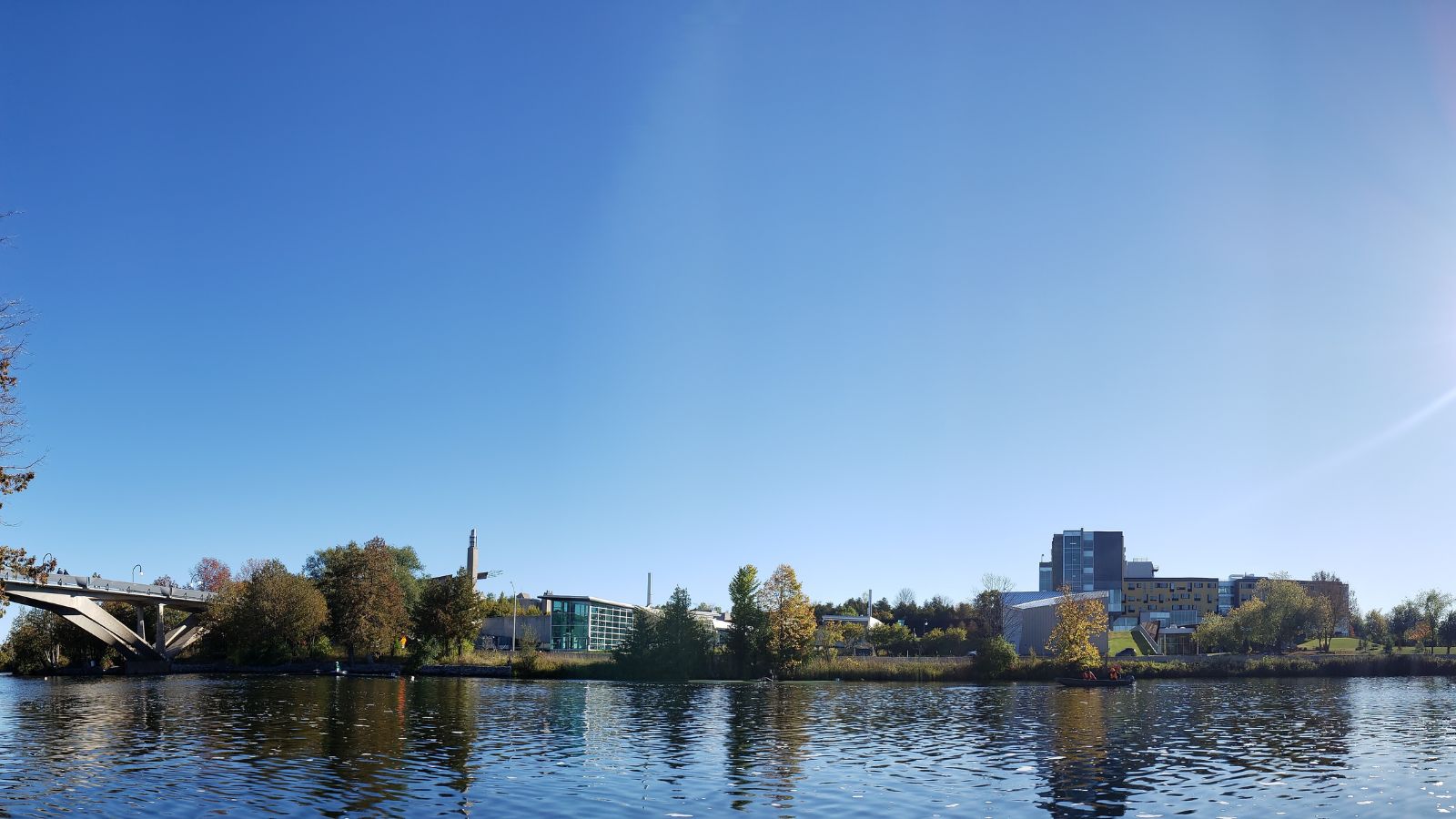
Peterborough draws people who want Ontario access without the full cost and congestion of the Greater Toronto Area. Its location near cottage country, Trent University, Fleming College, and the Kawarthas gives it a mix of education, outdoor recreation, and small-city practicality. For buyers leaving the GTA, the promise of a house, a yard, and nearby lakes has been a major part of the city’s appeal.
The city’s recent growth reflects a broader movement toward Ontario’s smaller urban centres. Peterborough is close enough to Toronto to remain connected, but far enough away to offer a different pace. That balance can reduce stress for households that no longer need a five-day office commute. The trade-off is rising demand: affordability has tightened, and services must keep up. Still, Peterborough remains a classic “more space, less pressure” destination.
London, Ontario

London has long been a landing place for people who want a full-service Ontario city without Toronto’s price and density. It has a major university, hospitals, manufacturing, insurance, technology, and a growing regional economy. Its neighbourhoods range from older central streets to newer suburban developments where families can find more space, garages, and yards. For many movers, London feels large enough for opportunity but still manageable.
The city’s growth has brought traffic, rent pressure, and visible strain on infrastructure, but it continues to appeal because it offers a practical relocation path. It is connected by highway and rail, close to other southwestern Ontario communities, and far less overwhelming than the GTA. People seeking less stress often respond to the everyday details: shorter errands, more residential choice, and a local economy that does not depend on one single employer.
Kitchener-Waterloo-Cambridge, Ontario

Kitchener-Waterloo-Cambridge is not a quiet escape in the traditional sense, but it attracts people who want more space while staying plugged into a strong economy. The region’s technology sector, universities, manufacturing base, and transit investments have made it one of Ontario’s most dynamic mid-sized urban areas. For people leaving Toronto, it can offer a better chance at a townhouse, semi-detached home, or suburban family property while preserving career options.
The region’s growth has been rapid, and that has reduced some of its affordability advantage. Traffic, construction, and housing competition are real concerns. Even so, many movers see it as less stressful than the GTA because commutes can be more contained and neighbourhoods feel more livable. Its biggest advantage is balance: serious jobs, strong education, and more physical room than Canada’s most expensive urban core typically allows.
Barrie, Ontario
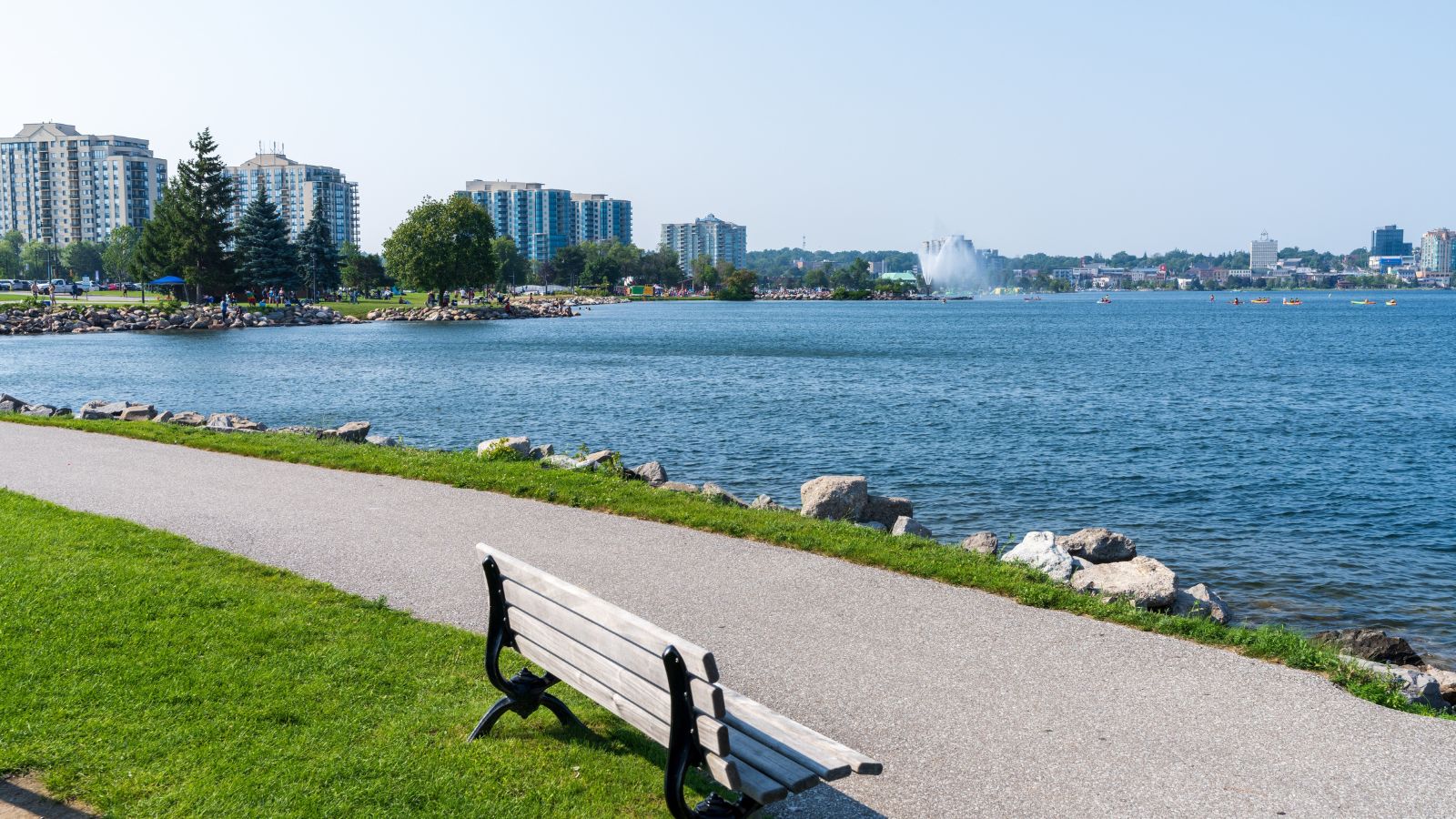
Barrie has become one of Ontario’s best-known relocation choices for people seeking more space while maintaining a connection to the Greater Toronto Area. Its waterfront on Kempenfelt Bay, suburban subdivisions, and proximity to cottage country give it a lifestyle pitch that is easy to understand. For hybrid workers, the occasional trip south can feel manageable compared with full-time GTA living.
The city’s popularity has made it more expensive, and traffic on Highway 400 can quickly erase the fantasy of effortless commuting. Still, Barrie continues to appeal because it offers what many Toronto-area households want: a larger home, more outdoor access, and a community that feels less compressed. The move is often less about leaving urban life entirely and more about shifting to a place where weekends, school routines, and neighbourhood life feel less crowded.
Belleville-Quinte West, Ontario

Belleville and Quinte West attract movers looking for eastern Ontario affordability, waterfront access, and a slower pace without complete isolation. The region sits along the Bay of Quinte and offers access to Prince Edward County, local trails, smaller communities, and Highway 401 connections. For retirees, remote workers, and families priced out of larger Ontario markets, the area can offer more house and more quiet.
The region has become more visible as people look beyond the GTA and Ottawa for livable alternatives. Its appeal is practical: smaller-city services, military and public-sector employment nearby, and enough retail and health care infrastructure to support daily life. Housing demand has risen, but the psychological benefit remains strong. People often move here for the feeling that life can stretch out a little, with water, countryside, and neighbourhood space close at hand.
Kelowna, British Columbia

Kelowna is one of Canada’s most desirable lifestyle cities, combining lake access, vineyards, outdoor recreation, and a growing urban economy. It appeals to people who want space and scenery without giving up restaurants, health services, an airport, and a university presence. For movers from Vancouver or the Lower Mainland, the Okanagan can feel like a release from coastal congestion, even if it is no longer a bargain.
The city’s growth has been significant, and that popularity has increased housing costs and traffic. Still, Kelowna remains attractive because its quality-of-life package is unusually strong. People are not simply moving there for cheaper housing; they are choosing a different daily backdrop. Morning lake walks, ski weekends, and suburban hillside homes all contribute to a feeling of lower stress, even as affordability challenges have become more serious.
Chilliwack, British Columbia

Chilliwack has drawn many people from Metro Vancouver who want more space while staying within reach of the Lower Mainland. Its mountain views, agricultural edges, and larger housing options create a strong contrast with the dense and costly urban core to the west. For families, the appeal often comes down to practical math: more bedrooms, a yard, and a quieter neighbourhood without leaving southwestern British Columbia.
The city’s growth has been rapid, and commuting can be difficult for those still tied to Vancouver-area jobs. But hybrid work has made the distance more workable for some households. Chilliwack’s stress-reduction appeal lies in its access to trails, lakes, rivers, and a residential pace that feels less compressed. It is not rural living, but it offers enough openness to make people feel they have regained physical and mental room.
Nanaimo, British Columbia

Nanaimo attracts people who want Vancouver Island life with more urban services than a small coastal town can provide. It has a ferry connection to the mainland, an airport, a university, a hospital, and a working harbour, while still offering trails, beaches, and quieter residential areas. For movers leaving Vancouver or Victoria, Nanaimo can feel like a more spacious version of coastal life.
The city’s growth has been strong, and housing has become more competitive as more people discover the central-island option. Even so, Nanaimo’s appeal remains clear. It offers access to nature without feeling remote, and it gives residents the chance to build routines around water, forests, and local neighbourhoods rather than long urban commutes. For many households, the stress relief comes from living in a city that still feels close to the outdoors.
Kamloops, British Columbia

Kamloops appeals to movers who want a drier climate, outdoor recreation, and more room than coastal British Columbia can easily provide. Its economy includes health care, education, transportation, tourism, and regional services, while its geography offers hills, rivers, trails, and nearby lakes. The city has enough amenities to support daily life but remains smaller and more navigable than Vancouver or Victoria.
Population growth has reflected its appeal as one of British Columbia’s strong mid-sized centres. Kamloops is not immune to housing pressure, wildfire smoke, or summer heat, but it offers a lifestyle many people find more spacious and less congested. For households leaving the Lower Mainland, the difference can be immediate: less density, more parking, more access to outdoor space, and a community where daily routines feel easier to manage.
19 Things Canadians Don’t Realize the CRA Can See About Their Online Income

Earning money online feels simple and informal for many Canadians. Freelancing, selling products, and digital services often start as side projects. The problem appears at tax time. Many people underestimate how much information the CRA can access. Online platforms, banks, and payment processors create detailed records automatically. These records do not disappear once money hits an account. Small gaps in reporting add up quickly.
Here are 19 things Canadians don’t realize the CRA can see about their online income.
This Options Discord Chat is The Real Deal
While the internet is scoured with trading chat rooms, many of which even charge upwards of thousands of dollars to join, this smaller options trading discord chatroom is the real deal and actually providing valuable trade setups, education, and community without the noise and spam of the larger more expensive rooms. With a incredibly low-cost monthly fee, Options Trading Club (click here to see their reviews) requires an application to join ensuring that every member is dedicated and serious about taking their trading to the next level. If you are looking for a change in your trading strategies, then click here to apply for a membership.