35,000+ smart investors are already getting financial news, market signals, and macro shifts in the economy that could impact their money next with our FREE weekly newsletter. Get ahead of what the crowd finds out too late. Click Here to Subscribe for FREE.
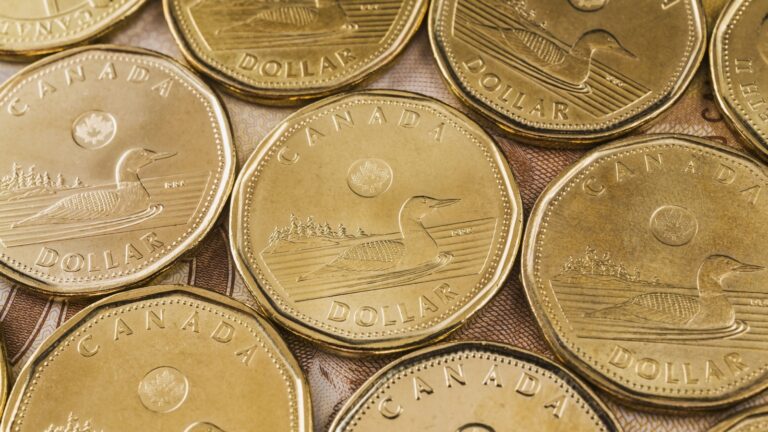
The loonie’s latest stumble is about more than a single bad trading day. On May 12, 2026, Canada’s currency slid to a nearly four-week low after hotter-than-expected U.S. inflation reinforced the appeal of the U.S. dollar and revived worries that North American interest rates could stay higher for longer. For Canada, that kind of move rarely stays confined to currency screens.
These ten themes explain why the drop matters, why it happened now, and where the pressure could spread next. Together, they show how one U.S. inflation report can ripple through oil, bond yields, trade expectations, consumer prices, and the day-to-day math facing Canadian households and businesses.
The Drop Was Real, and It Came in a Hurry
The Loonie Just Hit a Four-Week Low as U.S. Inflation Rattles Canada
- The Drop Was Real, and It Came in a Hurry
- U.S. Inflation Repriced the Entire Story
- The Fed Shadow Still Falls Over Canada
- Canada’s Own Numbers Didn’t Offer Much Support
- Oil Is Acting Like a Double-Edged Sword
- The Bank of Canada Has Less Room to Relax
- Canada Is Still Deeply Linked to the U.S.
- A Softer Loonie Can Creep Into Prices
- Households and Small Firms Tend to Feel It First
- What Could Turn the Loonie Around
The move itself was sharp enough to get attention. On May 12, the Canadian dollar traded around 1.3712 per U.S. dollar and touched an intraday low of 1.3724, its weakest level since April 16. That left the loonie near 72.9 U.S. cents, a noticeable retreat for a currency that had spent the prior stretch showing more resilience. Markets did not need a domestic crisis to push it lower. They only needed a stronger reason to buy U.S. dollars.
That reason arrived quickly. Investors reacted to a hotter U.S. inflation reading, a renewed wave of risk aversion, and rising geopolitical tension that helped push money toward the greenback. Currency markets often look calm until they suddenly do not. A loonie decline like this can feel abstract at first, but it tends to become more concrete once it starts affecting import costs, travel budgets, and rate expectations.
U.S. Inflation Repriced the Entire Story
The biggest immediate trigger was the April U.S. Consumer Price Index report. Inflation rose 0.6% in the month and 3.8% from a year earlier, the highest annual increase since May 2023. That mattered because traders had been looking for signs that U.S. price pressure was easing. Instead, they got a report suggesting inflation was still sticky enough to keep the Federal Reserve on guard.
When U.S. inflation comes in hot, the market usually makes a fast leap in logic. If inflation is firmer, the Fed has less reason to cut. If the Fed stays tougher for longer, U.S. yields remain attractive. And if U.S. yields look attractive, demand for the U.S. dollar rises. Canada does not need to be the source of the shock to feel the consequences. In this case, one American data release changed the tone for currencies across North America within hours.
The Fed Shadow Still Falls Over Canada
Canada has its own central bank and its own economic cycle, but the U.S. still casts the larger shadow in global currency markets. Reuters reported that the dollar index climbed after the inflation data, marking its biggest daily gain since early April. That broad U.S. dollar strength mattered because the loonie is rarely judged in isolation. It is constantly being measured against what investors can earn, fear, or hide in elsewhere.
That is why even a decent Canadian backdrop can get overwhelmed when the greenback catches a bid. A stronger U.S. dollar does not only reflect American confidence. Sometimes it reflects global nervousness. When investors grow more defensive, they often lean into U.S. assets first. Canada then gets pulled into a story it did not fully author. The loonie becomes, in part, a side character in a much bigger drama about inflation, rates, and global risk appetite.
Canada’s Own Numbers Didn’t Offer Much Support
If Canada had delivered strong domestic data at the same moment, the loonie might have found a better floor. Instead, the local backdrop was already looking softer. Statistics Canada said the country lost 17,700 jobs in April, while the unemployment rate rose to 6.9%. Full-time employment fell by 46,700, and the damage was concentrated in goods-producing industries, where trade uncertainty has been especially painful.
That matters because currencies are partly confidence scores on an economy’s near-term momentum. A softer labour market does not automatically crush a currency, but it can weaken the case for strength. When a U.S. inflation shock hits at the same time Canada is posting weaker employment numbers, the contrast gets harsher. One economy looks like it may need tighter policy for longer. The other looks more fragile. In foreign exchange, that relative comparison often matters more than any single domestic headline.
Oil Is Acting Like a Double-Edged Sword
Normally, stronger oil can help the Canadian dollar because energy remains one of Canada’s most important export strengths. On the same day the loonie fell, crude oil prices jumped more than 3%, with U.S. crude rising above $101 a barrel in Reuters reporting. In a simpler environment, that kind of oil move could have offered the loonie more support and even lifted it.
But this is not a simple environment. The same oil rally that helps Canada’s export value is also feeding inflation fears tied to the Middle East conflict. The Bank of Canada has already said higher gasoline prices linked to that war have pushed inflation up. So oil is now carrying two messages at once: better export income for Canada, but more inflation risk for central banks. That leaves the loonie caught in a tug-of-war, helped by Canada’s commodity profile and hurt by the broader rate shock oil is helping create.
The Bank of Canada Has Less Room to Relax
The Bank of Canada held its policy rate at 2.25% on April 29, but the tone around that decision was cautious rather than comfortable. The Bank said the Middle East conflict was increasing volatility and that U.S. trade policy remained a major uncertainty. It also projected that inflation would run higher in 2026 before easing back toward target in 2027. That is not the language of a central bank that feels free to ignore fresh price pressure.
The loonie’s weakness adds another layer to that challenge. A softer currency can raise the Canadian-dollar cost of imported finished goods and imported inputs used by domestic producers. That does not mean one down day forces a rate move. It does mean policymakers have more to watch. If growth looks weak but imported inflation risks are rising, the Bank ends up squeezed from both sides. That kind of tension rarely gives markets much confidence in an easy policy path.
Canada Is Still Deeply Linked to the U.S.
Canada has made progress diversifying trade, but the U.S. still dominates the picture. Statistics Canada reported that 71.7% of Canada’s merchandise exports went to the United States in 2025, while 58.8% of merchandise imports came from the U.S. Even after that share fell from 2024 levels, the relationship remained enormous. March 2026 data also showed exports to the U.S. rose 8.3%, driven in part by crude oil and passenger vehicles.
That trade reality explains why U.S. inflation matters so much to Canada’s currency. A hotter American economy or a tougher U.S. rate outlook does not stay on one side of the border. It changes financing conditions, trade expectations, and investor sentiment for Canada too. Even the recent push toward non-U.S. markets is happening against that backdrop, not outside it. The old line that Canada catches a cold when the U.S. sneezes may be overused, but the currency market keeps giving it fresh life.
A Softer Loonie Can Creep Into Prices
A weaker currency does not raise every Canadian price tag overnight, but the mechanism is well known. Bank of Canada research says exchange-rate pass-through works directly through more expensive imported consumer goods and through pricier imported inputs used by domestic producers. In other words, the effect can show up both on store shelves and deeper inside the supply chain. Some of it is immediate, and some of it arrives with a lag.
Recent tariff research from the Bank offers a useful reminder that foreign-cost shocks do reach consumers. In a May 2026 analysis, Bank researchers found that Canada’s 2025 counter-tariffs did push up prices for affected goods, though not fully and not uniformly. Currency weakness behaves differently than a tariff, but the lesson is similar: external cost shocks often leak into household budgets in incomplete but very real ways. That is why loonie drops matter even when they sound like technical market news.
Households and Small Firms Tend to Feel It First
For households, the clearest effects often appear in U.S.-priced spending. Travel, online purchases, software subscriptions, and goods bought through cross-border supply chains can all feel more expensive when the loonie weakens. Statistics Canada already reported that Canadian residents returned from 2.0 million trips to the United States in February 2026, down 12.5% from a year earlier. Politics played a role in that decline, but price sensitivity never disappears when the currency is under pressure.
Small businesses can feel the shift even faster. A local retailer or manufacturer may sell in Canadian dollars while paying suppliers, freight bills, or software vendors in U.S. dollars. That gap can compress margins quickly. The pressure is even harder when customers are already cautious. The Bank of Canada’s consumer expectations survey showed spending plans remained muted in early 2026 because households were still worried about prices and economic uncertainty. A weaker loonie lands hardest when confidence is already thin.
What Could Turn the Loonie Around
The loonie is down, but not trapped. Canada’s March trade report showed a swing back to a C$1.8 billion merchandise trade surplus, helped by stronger exports and lower imports. Exports to non-U.S. markets also hit a record high in March, and Global Affairs Canada has highlighted broader signs of diversification. Those trends matter because a currency usually finds support when export earnings stay solid and the economy shows it has more than one external growth engine.
The next move will likely depend on three things. First, whether U.S. inflation cools after this jolt. Second, whether oil stays high enough to help Canada more than it hurts global inflation expectations. Third, whether Canadian data can stabilize after a weak jobs report. Currency markets can reverse faster than they fall, but they need a reason. For now, the loonie looks less like a verdict on Canada alone and more like a warning that the U.S. inflation shock is still echoing north.
This Options Discord Chat is The Real Deal
While the internet is scoured with trading chat rooms, many of which even charge upwards of thousands of dollars to join, this smaller options trading discord chatroom is the real deal and actually providing valuable trade setups, education, and community without the noise and spam of the larger more expensive rooms. With a incredibly low-cost monthly fee, Options Trading Club (click here to see their reviews) requires an application to join ensuring that every member is dedicated and serious about taking their trading to the next level. If you are looking for a change in your trading strategies, then click here to apply for a membership.