35,000+ smart investors are already getting financial news, market signals, and macro shifts in the economy that could impact their money next with our FREE weekly newsletter. Get ahead of what the crowd finds out too late. Click Here to Subscribe for FREE.
Mark Carney’s answer to Trump-era trade pressure has been to make Canada less dependent on the United States and more capable of selling to the rest of the world. That ambition sounds strategic on paper. At the water’s edge, though, the story gets messier.
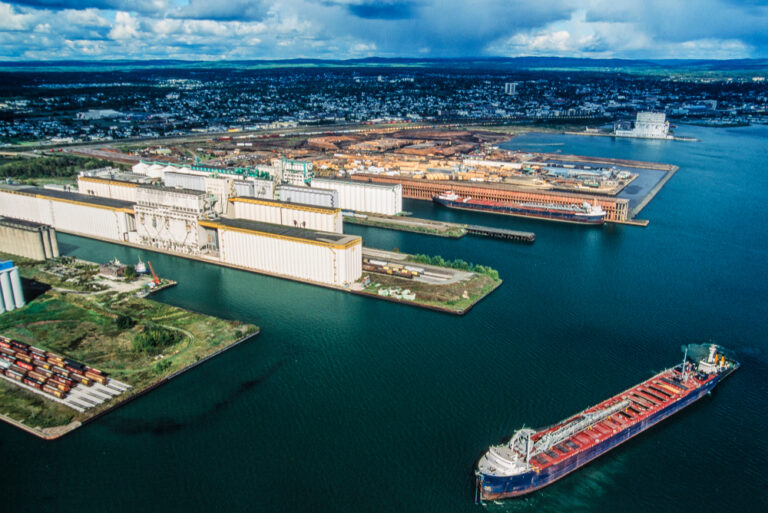
Canada can talk about new markets, new corridors, and new allies, but goods still need to move through terminals, onto trains, and across oceans on time. This piece looks at 12 pressure points showing why ports have become one of the biggest tests of whether Ottawa’s trade reset can actually work.
Diversification Starts at the Dock
Canada’s Ports Are Now a Threat to Carney’s Anti-Trump Trade Plan
- Diversification Starts at the Dock
- Vancouver Is Still the Giant in the Room
- Prince Rupert Helps, but It Is Not a Full Backup
- Labour Peace Is Still Fragile
- Rail Bottlenecks Turn Port Trouble Into National Trouble
- Montreal Shows How Quickly “Resilience” Can Fray
- Atlantic Ports Are Growing, Not Yet a Complete Release Valve
- The Auto Industry Cannot Afford Slow Gateways
- Capacity Projects Prove Ottawa Knows the System Is Tight
- Climate and Security Risks Have Moved to the Centre
- Canada’s Rivals Are Investing Too
- The Political Test Is Reliability, Not Rhetoric
Carney’s broader trade logic is easy to understand. If the United States has become a more volatile partner, Canada needs more room to sell into Europe, Asia, and other markets. The problem is that export diversification is not just a diplomatic exercise. It is a logistics exercise. Every promise to expand trade beyond the U.S. eventually runs into physical infrastructure: ports, rail spurs, container terminals, customs systems, and shipping schedules.
That is where the pressure builds. Canada still sends the bulk of its merchandise exports to the United States, even after that share eased in 2025. So the plan to reduce dependence on Washington requires a port network that can absorb more volume, more route changes, and more competition for vessel space. If those gateways are congested, unstable, or underbuilt, the strategy slows down long before any ministerial announcement turns into commercial reality.
Vancouver Is Still the Giant in the Room
Any serious conversation about Canada’s trade infrastructure starts with Vancouver. The port is so large, and so central, that it functions less like one gateway among many and more like a national pressure valve. When Vancouver runs smoothly, exporters and importers can believe Canada is built for global trade. When it stumbles, the whole country notices.
That concentration is both a strength and a vulnerability. Transport Canada says the Port of Vancouver handled 158 million tonnes of cargo and 3.5 million TEUs in 2024, while managing $240 billion in imports and exports. It also represented about one-third of Canada’s trade in goods outside North America. Numbers like that explain why Ottawa leans on Vancouver so heavily. They also explain the danger. A country trying to diversify away from one dominant trading partner should not be overly dependent on one dominant port at the same time.
Prince Rupert Helps, but It Is Not a Full Backup
Prince Rupert is often presented as proof that Canada has another serious Pacific option, and that is true up to a point. It has a strong strategic position, shorter sailing times to Asia, and a reputation for speed. In a diversification strategy built around reaching non-U.S. markets faster, that matters a great deal.
Still, Prince Rupert is not a magic spare tire. The port moved 26.3 million tonnes in 2025, and the port authority says roughly $60 billion in trade flows through it annually. That is impressive, but it does not erase the concentration risk on the West Coast. Prince Rupert remains part of the same broad western gateway system and still depends on inland transportation links working properly. In other words, it strengthens Canada’s hand, but it does not fully solve the national problem of redundancy. One extra lane is useful. It is not the same as a deep, fully diversified network.
Labour Peace Is Still Fragile
Canada’s port system does not only face capacity issues. It also faces reliability issues, and labour disputes have become one of the clearest examples. The 2024 disputes at Vancouver and Montreal were not small local disruptions. They were national warnings about how quickly trade confidence can erode when critical gateways become bargaining battlegrounds.
Reuters reported that Ottawa intervened in November 2024 to end disputes at the country’s two largest ports, citing economic damage and the risk of losing trading partners, with more than C$1.3 billion in goods a day affected. The deeper concern is that the issue did not disappear when work resumed. A federal Industrial Inquiry Commission delivered recommendations in 2025, and Ottawa launched consultations in April 2026 on how to strengthen labour relations after repeated West Coast disruptions. For exporters trying to win overseas customers, reliability is part of the sales pitch. Repeated labour shocks weaken that pitch fast.
Rail Bottlenecks Turn Port Trouble Into National Trouble
Ports never really operate alone. They are nodes in a much longer chain, and that makes rail performance just as important as quay space and crane capacity. A terminal can look productive from the shoreline while still underperforming in practice if containers cannot leave the port quickly or if inland shipments arrive late and miss sailing windows.
That interdependence is a major reason port weakness can frustrate Carney’s trade agenda. Transport Canada describes the Pacific corridor as an integrated marine, rail, road, and air network, and it notes that Prince Rupert’s advantage depends partly on its connection to Class I rail. The Atlantic corridor is described the same way, with Halifax and Saint John tied to Central Canada and the U.S. Northeast through highways and rail lines. That means port diversification is not just about adding berths. It is about making whole corridors dependable. If rail fluidity slips, the promise of new ocean trade routes can unravel inland.
Montreal Shows How Quickly “Resilience” Can Fray
Montreal offers a good example of how a port can look resilient in headline terms while still revealing deeper fragility underneath. In 2024, the port handled 35.41 million tonnes of goods, a slight increase overall. That sounds steady. But the container side told a more cautionary story.
The port says it handled 1,464,320 TEUs in 2024, down 4.8% from the year before, and directly linked that contraction to labour uncertainty. Then in 2025, Montreal handled 34.3 million tonnes of cargo, while the port pointed to a weaker economy, geopolitical pressures, and lower water levels on the St. Lawrence River. That is the real lesson. Resilience is not the same as slack. A port can keep moving and still be exposed to labour disputes, climate-related pressures, and fluctuating global demand. For a government trying to build confidence in non-U.S. trade routes, that distinction matters.
Atlantic Ports Are Growing, Not Yet a Complete Release Valve
One of the strongest arguments for Carney’s diversification plan is geography. Canada does have Atlantic access to Europe, the Mediterranean, and beyond. That gives Ottawa a real alternative to overreliance on U.S.-bound land trade and Pacific gateways alone. Halifax and Saint John matter more in that conversation than they did a decade ago.
But alternatives are not the same as full substitutes. The federal government itself has backed major expansion work because current capacity is not enough for the scale of ambition now being discussed. Saint John’s modernization project is intended to lift terminal capacity from 325,000 TEUs in 2023 to 900,000 TEUs over the medium to long term. That is a major jump, but it also shows why Canada is still in build mode. The Atlantic corridor can relieve pressure and open new lanes, yet Ottawa’s own investments suggest the system is still catching up to the strategy.
The Auto Industry Cannot Afford Slow Gateways
The auto sector is a useful way to understand why port reliability matters beyond the shoreline. Cars and auto parts move through a supply chain that is highly timed, highly integrated, and often unforgiving. A delayed container does not just inconvenience a shipper. It can affect inventory, production sequencing, dealer supply, and seasonal retail timing.
That helps explain why this issue matters politically for Carney. Statistics Canada reported that Canada’s total exports hit a record in the first quarter of 2025, with motor vehicles and parts up 13.2%. Even though the Canada-U.S. land border remains the industry’s core artery, Canadian auto manufacturing and retail still depend on overseas parts, machinery, finished vehicles, and shipping options that move through marine gateways. The industry has long warned that port disruptions can ripple into factories and suppliers far from the coast. For a government promising economic resilience under trade pressure, that kind of fragility is a major exposure.
Capacity Projects Prove Ottawa Knows the System Is Tight
One reason the port issue feels so urgent is that Ottawa has already begun acting like it understands the problem. Governments do not launch large corridor funds and major terminal expansions unless they believe the current system is too constrained for future needs. In that sense, the policy response is almost an admission.
The clearest example is Montreal’s Contrecœur expansion. The project is designed to add 1.15 million TEUs of annual capacity, roughly 60% of Montreal’s current container capacity, with full operation expected by 2030. In spring 2026, the federal government also announced a $5 billion Trade Diversification Corridors Fund as part of a broader $6 billion Trade Infrastructure Strategy. That is substantial. But it also reinforces the point behind the headline: Canada’s trade-diversification ambitions are running ahead of a port system that still needs years of construction, coordination, and modernization to fully support them.
Climate and Security Risks Have Moved to the Centre
A decade ago, many business discussions about ports focused mainly on congestion, labour, and cost. Those issues are still here, but the threat map has widened. Climate shocks, cyber risk, geopolitical disruptions, and infrastructure vulnerability now sit much closer to the centre of trade planning.
Transport Canada’s maritime security framework says the maritime supply chain must now be protected against natural disasters, cyberattacks, and geopolitical risks. Its 2024 network performance review also noted disruptions ranging from wildfires and labour disputes to Red Sea instability and the Baltimore bridge collapse. That broader risk picture matters because Carney’s trade pitch is built around reducing exposure to one geopolitical problem, namely dependence on the United States under Trump. Yet diversification only works if the replacement routes are secure and resilient. If ports become more exposed to cyber, climate, or global shipping shocks, Canada may simply be trading one vulnerability for several others.
Canada’s Rivals Are Investing Too
A trade strategy is never executed in a vacuum. Canada is not the only country trying to harden supply chains, modernize ports, and become a more attractive gateway. Competitors are moving as well, and in some cases faster. That changes the stakes for Ottawa.
The United States, for example, has continued pouring money into maritime resilience. The U.S. Department of Transportation’s FY2025 budget materials showed roughly $1.3 billion for MARAD when budget funding and infrastructure law support were combined, aimed at port jobs and more efficient, resilient operations. Canada is now responding with its own trade infrastructure push, but timing matters. Exporters choosing routes care about speed, reliability, and confidence as much as slogans about sovereignty. If overseas buyers or shipping lines see rival gateways as easier bets, Carney’s plan loses momentum not because the vision is wrong, but because the infrastructure race is real.
The Political Test Is Reliability, Not Rhetoric
In politics, trade plans are often announced through speeches, summits, and headline numbers. In commerce, they are judged by whether cargo actually moves. That is the uncomfortable truth behind the current port debate. Carney can frame a credible case for reducing dependence on Washington, boosting non-U.S. exports, and building a more sovereign economy. But the port network has to carry that argument in the real world.
That is why Canada’s ports now look less like background infrastructure and more like a political test. If they remain vulnerable to labour shocks, corridor bottlenecks, climate pressures, and slow-build capacity constraints, the diversification agenda will feel slower and smaller than promised. If Ottawa can turn expansions, modernization, and governance reform into a more reliable trade machine, the same ports could become proof that the strategy works. For now, they sit in the middle: essential, strained, and impossible to ignore.
This Options Discord Chat is The Real Deal
While the internet is scoured with trading chat rooms, many of which even charge upwards of thousands of dollars to join, this smaller options trading discord chatroom is the real deal and actually providing valuable trade setups, education, and community without the noise and spam of the larger more expensive rooms. With a incredibly low-cost monthly fee, Options Trading Club (click here to see their reviews) requires an application to join ensuring that every member is dedicated and serious about taking their trading to the next level. If you are looking for a change in your trading strategies, then click here to apply for a membership.