35,000+ smart investors are already getting financial news, market signals, and macro shifts in the economy that could impact their money next with our FREE weekly newsletter. Get ahead of what the crowd finds out too late. Click Here to Subscribe for FREE.
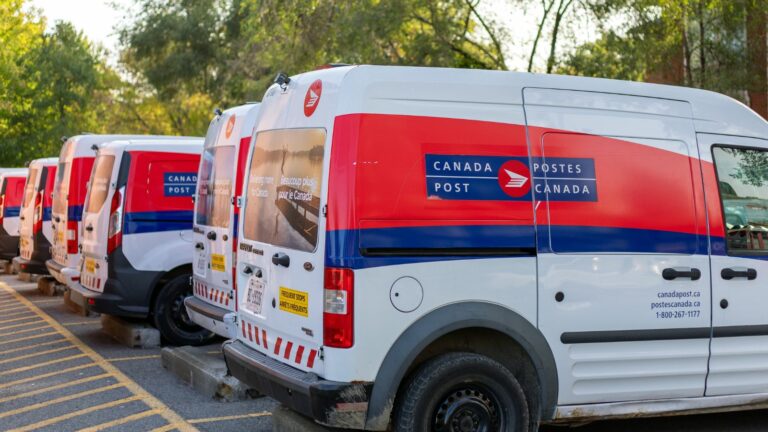
For millions of Canadians, getting mail at the front door has long felt like part of the country’s everyday rhythm. That rhythm is now changing. Canada Post has started the preliminary work for a national shift away from remaining door-to-door delivery, and households in the first affected areas are being notified that community mailboxes are on the way. The change is not happening overnight, but it is no longer theoretical either.
These 12 developments explain what is changing, why Canada Post says it must happen, which communities are first in line, and what the move could mean for households, workers, seniors, and neighbourhoods that still see the mail carrier at the doorstep today.
Doorstep Mail Is Becoming the Exception
Canada Post Is Now Warning Households Their Doorstep Mail Is Ending
- Doorstep Mail Is Becoming the Exception
- The First Warnings Are Already Reaching Communities
- Canada Post Says Its Financial Math Has Broken Down
- Canadians Get Far Less Mail Than They Used To
- The Replacement Is the Community Mailbox
- Accessibility Will Be One of the Toughest Tests
- Urban And Suburban Areas Are Going First
- This Is Also About Post Offices, Not Just Mailboxes
- Slower Letter-Mail Standards Are Part Of The Same Reset
- Workers Are Caught In The Middle Of The Transition
- Communities Are Likely To Push Back Hard
- What Households Should Expect Next
The biggest shift in this story is not that Canada Post is studying change. It is that the Crown corporation has already begun acting on it. Canada Post says roughly four million addresses that still receive door-to-door delivery are slated to move to community mailboxes over about five years. That makes the current warning feel different from earlier debates, because this is no longer just an idea raised in policy papers or labour talks.
What makes the move easier for Canada Post to defend is that front-door delivery is already the minority model. Nearly three out of every four Canadian addresses now receive mail through some form of centralized delivery, whether that means apartment lockboxes, postal boxes, or community mailboxes. In other words, the postal system most Canadians use today is already built around shared access points, not a carrier walking up every front path on the block.
The First Warnings Are Already Reaching Communities
What households are seeing now is the start of a process, not a sudden cutoff. Canada Post says it has begun discussions tied to the first phase of conversions and is notifying residents in the affected areas as it identifies mailbox locations and prepares local rollouts. The corporation says the initial phase covers approximately 136,000 addresses and is expected to begin in late 2026 and early 2027.
The first wave is spread across 13 communities, including parts of Ottawa, Etobicoke, Winnipeg, Moncton, Sept-Îles, Abbotsford, Mission, La Prairie, Candiac, and the North Shore area around North Vancouver. Ottawa alone accounts for about 30,000 addresses in the first round, while North Vancouver and surrounding areas represent about 23,000. That gives the warning letters added weight: for those neighbourhoods, this is not a distant national trend. It is a local planning exercise already starting to take shape.
Canada Post Says Its Financial Math Has Broken Down
The corporation’s argument is blunt: the old delivery model no longer matches the economics of the business. Canada Post reported a loss before tax of $841 million in 2024, then a much larger $1.57 billion loss before tax in 2025, the biggest such loss in its history. The company says its structural problems are not temporary and that operating the network as if the old mail economy still exists is no longer realistic.
That financial strain is one reason the federal government has already stepped in with repayable funding. Canada Post has said government cash support was needed to prevent insolvency, and official federal material stated the corporation would not have been able to meet payroll and other obligations in 2025 without access to that financing. That does not automatically make every proposed reform popular, but it explains why the latest warnings are arriving with far more urgency than earlier rounds of postal modernization talk.
Canadians Get Far Less Mail Than They Used To
The case for change becomes clearer when the mail numbers are laid out. Canada Post says letter-mail volume has fallen from 5.5 billion pieces in 2006 to 2.0 billion in 2024. Domestic letter-mail volume is down 63 per cent from that earlier peak, while associated revenue has fallen 30 per cent. The average household used to receive about seven letters a week; now it gets about two.
At the same time, the network itself kept expanding. Canada Post delivered to 14.3 million addresses in 2006 and 17.6 million in 2024, adding more than 3.3 million stops over that span. That combination is the heart of the problem: fewer letters, more addresses, and a delivery system that still has to reach every corner of the country. The front-door walk that once made sense when mail volume was high now looks, from management’s perspective, like an expensive legacy habit built for a different century.
The Replacement Is the Community Mailbox
For households losing doorstep delivery, the replacement is not vague. It is the familiar metal cluster mailbox already used in many subdivisions and communities. Canada Post says these boxes provide secure locked compartments for mail and parcels and have been part of the delivery network for more than 40 years. The corporation presents them as reliable, standardized, and available whenever residents want to check them.
The parcel angle matters because the front-door image can be misleading. Canada Post says more than 80 per cent of the parcels it delivers fit into either a customer’s individual mailbox compartment or a dedicated parcel space in the community box. When a parcel is too large or needs a signature, it is still either brought to the door or held for pickup at a nearby post office. That means the practical day-to-day change for many households may be less about parcels vanishing and more about regular letters no longer appearing in the home mailbox.
Accessibility Will Be One of the Toughest Tests
This is where the policy stops being abstract. For an older resident, a person with mobility limits, or someone managing chronic health issues, a walk to a shared mailbox is not a minor inconvenience. Canada Post says its Delivery Accommodation Program is designed to address that problem and that more than 17,000 households already receive some form of accommodation across the country.
The available measures range from sliding trays and easier-to-turn keys to compartment reassignments, Braille and raised lettering, and, in some cases, home delivery. Canada Post says approved customers may receive daily parcel delivery and weekly letter-mail delivery at home, typically on Wednesdays for mail. The existence of the program gives the corporation an answer when critics raise accessibility concerns. The harder question is whether the process will feel smooth and humane in real neighbourhoods, especially when large numbers of newly affected households begin asking for help at once.
Urban And Suburban Areas Are Going First
One important detail is who is not being targeted first. Canada Post says the early work is starting in urban and suburban areas and that most of the addresses chosen in the first phase sit beside neighbourhoods that already use community mailboxes. Dense downtown cores, which pose extra placement and planning challenges, are being left for later stages of the program.
That staging matters because it shows Canada Post is trying to start where the transition is easiest to absorb. The corporation has also said it intends to protect access to vital postal services in rural, remote, and Indigenous communities. New developments have already been built around centralized delivery for years, with Canada Post requiring centralized mail delivery for all new residential and commercial developments. In effect, the future model is not really new at all. It has already been the default for new growth; now the older neighbourhoods are being asked to catch up.
This Is Also About Post Offices, Not Just Mailboxes
The warning households are receiving is part of a broader transformation plan, not a single-service adjustment. Alongside community mailbox conversion, Canada Post is also reviewing its retail network. The corporation says retail revenue has fallen 30 per cent since 2021 as Canadians visit post offices less often and make fewer in-store purchases. Its stated goal is to modernize a network that no longer reflects how many customers use postal counters today.
That has major implications for urban and suburban areas the company considers over-served. Canada Post says it is conducting market reviews to assess where changes are most warranted while preserving services where they are needed most. For households, that means the conversation is bigger than whether the letter carrier still walks up the front step. In some communities, the long-term picture could also include fewer nearby post office locations, a more centralized network, and a postal service built around fewer physical touchpoints overall.
Slower Letter-Mail Standards Are Part Of The Same Reset
Another piece of the transformation is less visible than a mailbox installation but could affect households just as much: slower standards for non-urgent mail. Federal material released with the government’s restructuring direction said Canada Post would gain flexibility to move some non-urgent letter mail by ground instead of air, a change expected to save more than $20 million annually.
That may sound technical, but it fits the same logic driving the end of doorstep delivery. If the average household is getting only two letters a week, management and government now see less reason to preserve an expensive speed-and-frequency model built for a far heavier mail stream. For people waiting on time-sensitive personal documents, that possibility may feel unsettling. For policymakers looking at losses, it looks like another overdue modernization step. Either way, the warning arriving at some homes is part of a much bigger reset in how physical mail is expected to move through Canada.
Workers Are Caught In The Middle Of The Transition
No matter how Canada Post frames the plan, it lands in a labour environment that has already been bruising. Contract disputes with the Canadian Union of Postal Workers have stretched on since the prior agreements expired in 2023, and recent years have seen major strike action and repeated service disruptions. That history matters because it means every operational change is now filtered through mistrust.
Canada Post has said the shift away from door-to-door delivery would reduce the number of traditional letter-carrier roles but that affected employees would be reassigned rather than laid off. Critics remain skeptical. Union voices and labour reporting have warned that the broader transformation could reduce service quality, cut secure work, and push the organization toward a leaner, less community-based model. Households reading these warnings in their mailbox are therefore not just watching a logistics change. They are watching a long-running conflict over the future of a national institution play out on their own street.
Communities Are Likely To Push Back Hard
The first local fights are already easy to imagine because similar concerns surfaced years ago and are resurfacing now. In Toronto, a councillor’s April 2026 motion on Etobicoke North argued that many residents rely on doorstep delivery for access to healthcare, government income supports, and other essential services. It asked for a pause so the city and Canada Post could work through legal, planning, social, and accessibility implications before rollout.
That kind of response is likely to repeat elsewhere. Shared mailboxes need physical locations, and those locations can become flashpoints very quickly. Residents worry about snow clearing, lighting, traffic, aesthetics, and how far vulnerable people may have to walk. Municipal officials worry about consultation and site selection. What looks efficient on a national spreadsheet can feel much messier on a suburban street corner. Canada Post says it will consult and proceed thoughtfully, but the politics of putting a metal mailbox cluster in a real neighbourhood have always been more difficult than the spreadsheet makes them appear.
What Households Should Expect Next
For households in affected areas, the immediate takeaway is that change is coming in stages. Canada Post says conversion typically takes months, and a spokesperson told AP the process can run about six to nine months from start to finish. That means residents who receive notice are entering a planning window, not waking up to instant service loss the next morning.
In practice, households should expect more communication about location selection, timing, and how the new delivery point will work. People with mobility or accessibility concerns may need to apply for accommodation early rather than wait for the switch to happen. And residents outside the first 13 communities should not assume they are untouched forever, because Canada Post has made clear this is a national five-year program affecting the remaining four million door-to-door addresses. The warning now reaching some homes is best understood as the opening phase of a much larger national transition.
This Options Discord Chat is The Real Deal
While the internet is scoured with trading chat rooms, many of which even charge upwards of thousands of dollars to join, this smaller options trading discord chatroom is the real deal and actually providing valuable trade setups, education, and community without the noise and spam of the larger more expensive rooms. With a incredibly low-cost monthly fee, Options Trading Club (click here to see their reviews) requires an application to join ensuring that every member is dedicated and serious about taking their trading to the next level. If you are looking for a change in your trading strategies, then click here to apply for a membership.