
35,000+ smart investors are already getting financial news, market signals, and macro shifts in the economy that could impact their money next with our FREE weekly newsletter. Get ahead of what the crowd finds out too late. Click Here to Subscribe for FREE.
When markets get jumpy, investors often crowd into the same familiar stories and overlook businesses still delivering strong numbers underneath the noise. That is usually how underestimation happens in Canada: not because a company is unknown, but because an old narrative keeps getting repeated after the fundamentals have already improved.
This group of 17 TSX-listed names stands out for exactly that reason. Some are being discounted because of sector stereotypes. Others are being overshadowed by worries about oil prices, consumer fatigue, AI disruption, weather losses, or cross-border uncertainty. Yet across banking, energy, software, insurance, retail, rail, and utilities, the recent evidence still points to earnings power, durable assets, and more resilience than the market may be fully pricing in.
Royal Bank of Canada (TSX: RY)
17 TSX Stocks Canadians May Be Underestimating Right Now
- Royal Bank of Canada (TSX: RY)
- Canadian Natural Resources (TSX: CNQ)
- Enbridge (TSX: ENB)
- TC Energy (TSX: TRP)
- Cameco (TSX: CCO)
- Constellation Software (TSX: CSU)
- Thomson Reuters (TSX: TRI)
- Intact Financial (TSX: IFC)
- Fairfax Financial (TSX: FFH)
- Dollarama (TSX: DOL)
- Alimentation Couche-Tard (TSX: ATD)
- CGI (TSX: GIB.A)
- Canadian Pacific Kansas City (TSX: CP)
- Waste Connections (TSX: WCN)
- Sun Life Financial (TSX: SLF)
- Metro (TSX: MRU)
- Fortis (TSX: FTS)
- 19 Things Canadians Don’t Realize the CRA Can See About Their Online Income
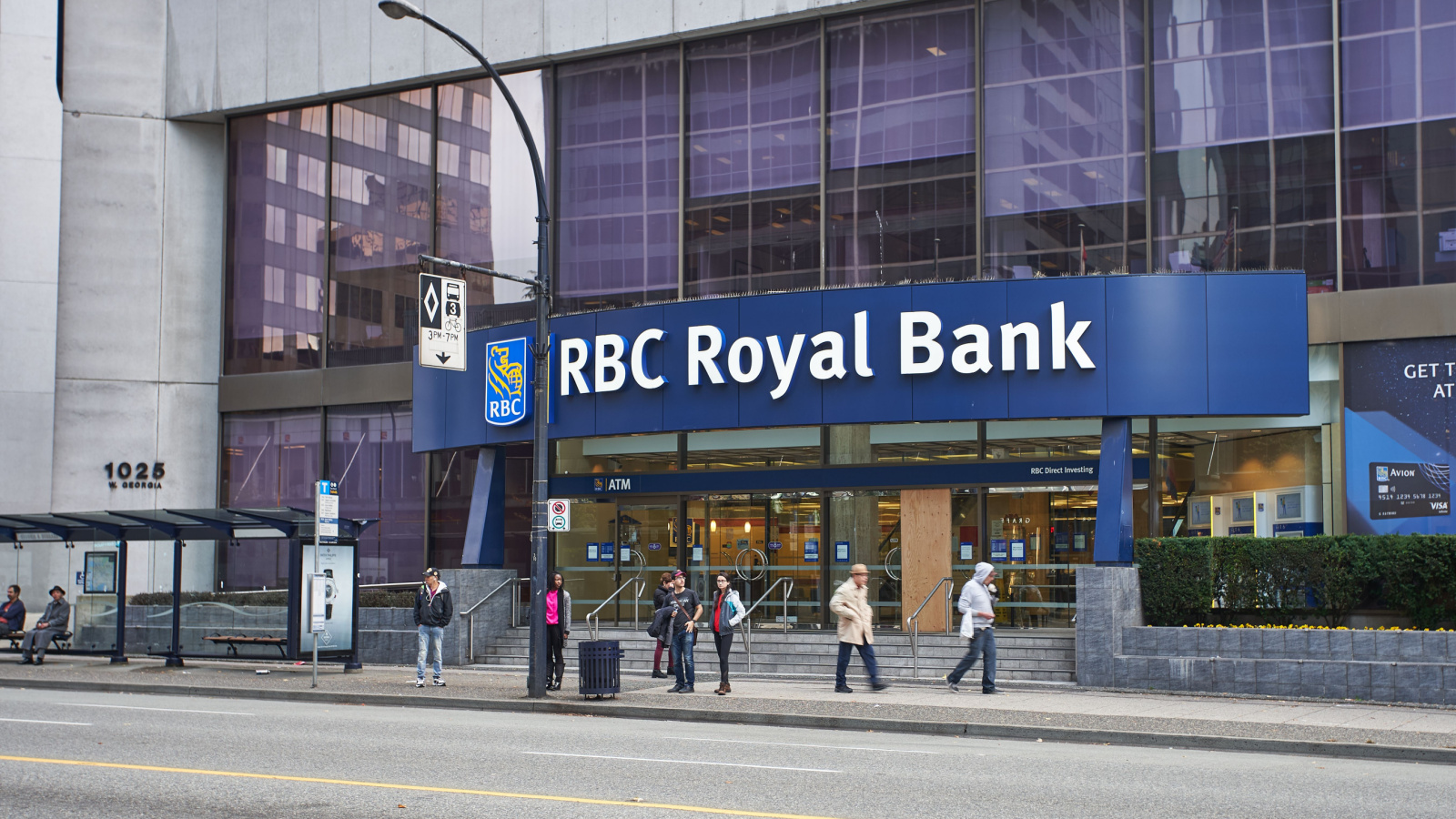
Royal Bank still gets treated like a plain-vanilla lender whenever investors start worrying about the economy, credit quality, or consumer strain. That framing misses what makes RBC harder to dismiss than the average bank stock. Its recent results showed that multiple engines are still working at once: personal banking, commercial banking, wealth management, and capital markets. In a market that often punishes anything tied to lending at the first sign of uncertainty, RBC looks more like a diversified earnings platform than a one-note bet on the Canadian household.
That matters because underestimation often starts with lazy categorization. RBC is still the country’s largest bank, but scale alone is not the whole story. Record quarterly profit, double-digit EPS growth, and a strong capital cushion suggest a company still generating room to defend its dividend, keep investing, and absorb shocks. For Canadians who assume the big banks are all moving together, RBC’s breadth is easy to underrate. It is less a rate-sensitive trade than a broad financial franchise with several ways to win at once.
Canadian Natural Resources (TSX: CNQ)

Canadian Natural is often discussed as if it were simply a levered call option on oil prices. That overlooks the part investors tend to appreciate only after a rough patch: the company’s low-cost, long-life asset base and its ability to keep throwing off cash in imperfect commodity conditions. Even when the energy tape gets noisy, CNQ’s case rests on durability more than drama. That distinction matters in Canada, where many investors say they want resource exposure but end up underestimating the operators built to survive a full cycle.
Its recent numbers reinforce that point. The company posted stronger-than-expected quarterly profit, finished 2025 with billions in net earnings and adjusted funds flow, and entered 2026 with significant liquidity. Management also pointed to higher expected production with lower spending, which is exactly the sort of combination that tends to age well if commodity prices wobble. A stock like CNQ can look “too obvious” until a volatile year reminds the market how valuable scale, diversification, and disciplined capital returns really are. Underestimation here comes from mistaking steadiness for stagnation.
Enbridge (TSX: ENB)

Enbridge is still widely filed away under the label of “slow dividend pipeline,” as if the entire story were income and nothing else. That old description increasingly looks incomplete. North American demand for natural gas infrastructure is being pulled by LNG exports, utility needs, and the surprising electricity hunger of data centers and AI-related power demand. Enbridge’s appeal right now is not only that it pays investors to wait, but that its backlog gives it multiple ways to turn new demand into visible cash flow.
That is why the stock may still be underestimated. The market often notices pipeline businesses only when rates move or commodity sentiment shifts, but Enbridge’s project slate is substantial, and part of it is already scheduled to enter service this year. When a company combines a huge regulated and contracted base with fresh growth tied to modern power demand, it deserves more than a “bond proxy” discount. In practical terms, Enbridge looks less like a sleepy utility cousin and more like a toll-road operator sitting near several of the continent’s most important long-term energy trends.
TC Energy (TSX: TRP)

TC Energy has spent years being discussed through the lens of headline risk, political friction, and restructuring fatigue. That has made it easy to miss what the business looks like after simplification. Its latest quarter showed stronger operating and financial momentum, including double-digit gains in comparable EBITDA and segmented earnings. That kind of improvement is not flashy, but it matters. Investors often underrate the value of a large, strategically placed gas network until demand becomes impossible to ignore.
The company’s recent approval of a major Columbia Gas expansion project is a useful example. It suggests management is leaning into areas where infrastructure remains essential and commercially justified, rather than chasing grand narratives. Add in the company’s operational records across North America, and the picture becomes more interesting than the market’s older memory of TC Energy. For Canadians scanning the TSX for underappreciated names, this is one where the discount may be tied more to legacy baggage than to present-day performance. In uncertain markets, that kind of mismatch can matter a lot.
Cameco (TSX: CCO)

Cameco is sometimes treated as if it were only a uranium price trade, which is a convenient story but an incomplete one. The more durable case is that Cameco sits inside a broader nuclear supply chain at a time when governments and utilities are again treating nuclear as a strategic asset. Its uranium business matters, of course, but so do fuel services and the Westinghouse interest. That broader positioning makes the company more than a single-commodity momentum name, even if the market still reacts to it that way.
Recent operating results support the idea that the story is getting deeper, not narrower. Cameco exceeded its revised uranium production guidance in 2025 and described strong contributions across its major segments. At the same time, governments in the United States are putting real money behind domestic uranium enrichment and fuel security, which adds credibility to the long-term demand backdrop. Investors who still view Cameco as a speculative trade may be underestimating how much strategic value is attached to dependable nuclear fuel supply. In a world obsessed with energy security, that is not a small distinction.
Constellation Software (TSX: CSU)

Constellation Software still suffers from a funny kind of neglect: everyone knows it is good, but many investors assume the best days must already be behind it. That assumption grew louder after founder Mark Leonard stepped down as president for health reasons, because the market tends to personalize great businesses. Yet Constellation was built to function through decentralized discipline, recurring revenue, and acquisitions of niche software companies that customers depend on. In other words, the machine matters as much as the mystique.
The company’s recent financial results suggest that machine is still running just fine. Operating cash flow and free cash flow remained very strong, while recurring revenue continued to grow. That is the sort of performance that matters more than temporary sentiment about succession. The market often underestimates businesses that do not fit the current AI glamour template, especially when they look conservative next to faster-talking software names. But Constellation’s style has long been to compound quietly through durable vertical software assets. For investors who think “old-school tech” automatically means lower quality, this may be one of the TSX’s easiest underestimation mistakes.
Thomson Reuters (TSX: TRI)

Thomson Reuters is another company the market can misread because its brand feels familiar. Familiarity can be dangerous in stocks; investors start to assume they already understand the business. What they may be missing is how much of Thomson Reuters now hinges on proprietary content, workflow software, and AI tools for professionals who cannot afford sloppy answers. This is not a broad consumer-AI experiment. It is a professional productivity business built around legal, tax, accounting, and corporate users who pay for accuracy, trust, and integration.
That distinction has become especially important as investors worry about AI challengers. Recent results showed solid revenue growth, a healthy 2026 growth outlook, and rising generative-AI contribution within contract value. Management has also laid out substantial acquisition firepower through 2028, which adds another layer to the case. The stock has been pressured by fears that newer AI players will eat into incumbents, but that fear may be too simplistic. In professional information markets, having the right archives, domain experts, and embedded workflows can matter more than having the loudest demo. That is exactly where Thomson Reuters still looks stronger than many assume.
Intact Financial (TSX: IFC)

Property-and-casualty insurance is an easy sector to distrust right now. Climate losses are climbing, catastrophe headlines are relentless, and many investors assume the whole group is becoming structurally harder to own. Intact Financial is a reminder that those headlines do not tell the full story. The company’s latest results showed strong underwriting, disciplined pricing, and healthy investment income. That combination is important because insurers do not need perfect weather to perform well; they need pricing power, risk selection, and capital discipline.
Intact’s recent quarter suggested those tools are still very much intact. A strong combined ratio and double-digit growth in operating income per share show that the business is not merely enduring pressure but managing through it with skill. The irony is that rising catastrophe awareness can actually make strong operators more valuable, not less, because weaker competitors struggle to keep up. Investors who look at the sector and see only rising claims may be underestimating the companies best positioned to reprice risk and keep earning through volatility. On the TSX, Intact still looks like one of the clearest examples of that dynamic.
Fairfax Financial (TSX: FFH)

Fairfax is one of those stocks that can remain underestimated simply because it is harder to summarize in one sentence. It is an insurer, an investment vehicle, a compounding story, and at times a contrarian balance-sheet play. That complexity can work in its favor, but it also means plenty of investors never do the work. When a company does not fit neatly into a sector box, the market often grants it less credit than the raw numbers deserve.
The latest results made that mismatch harder to ignore. Fairfax called 2025 the best year in its history, with strong net earnings and a sharp increase in book value per share. The company also continued buying back stock, which signals confidence in the gap between market price and underlying value. Add in supportive insurance pricing, even if no longer dramatically hardening, and the compounding logic remains attractive. This is not a stock that wins beauty contests in a momentum market, but that is partly the point. Fairfax can look unexciting right until the market remembers how powerful disciplined underwriting and patient capital allocation can be together.
Dollarama (TSX: DOL)

Dollarama is sometimes dismissed as a stock that already had its moment during the inflation shock. That view misses how the business has evolved. Yes, the company still benefits from households looking for value, but it is no longer just a short-term trade on stretched budgets. Its scale in Canada remains formidable, transaction trends have held up, and its expansion beyond Canada gives the story another leg. A retailer does not have to look glamorous to be underestimated; it only has to keep getting stronger after investors have mentally moved on.
Recent results underline that resilience. Fiscal 2026 sales rose at a double-digit pace, comparable sales in Canada were still healthy, and the company expanded its store base further. The Australian acquisition has pressured margins in the short run, but it also shows management is willing to build a broader discount platform rather than merely defend a domestic niche. Investors often punish retailers for any temporary integration or margin noise, yet that is sometimes where the longer-term opportunity sits. Dollarama looks underestimated not because the market ignores it, but because it may still be underappreciating how much runway remains.
Alimentation Couche-Tard (TSX: ATD)

Couche-Tard often gets dragged into debates about fuel demand, consumer softness, and whatever takeover rumor or abandoned deal is dominating the headlines. That can obscure the far simpler truth: this is still one of the most operationally disciplined convenience retailers on the TSX. Its stores are not just gas stations with snacks attached. They are highly optimized traffic hubs where fuel margins, foodservice, merchandise, and acquisitions all matter. When the narrative narrows to one issue, the company can start to look cheaper than its underlying quality.
That is why the latest quarter stood out. Earnings rose meaningfully, adjusted per-share profit climbed at a strong pace, and management pointed to positive organic convenience growth across all geographies. That is not the profile of a company merely waiting for a macro rebound. It is the profile of a business still executing. Investors who focus too much on last year’s Seven & i saga or on quarter-to-quarter fuel swings may be missing the sturdier operating story. Couche-Tard has spent years proving that disciplined convenience retail can compound globally. Right now, the market may still be giving too much weight to the distractions and not enough to the execution.
CGI (TSX: GIB.A)

CGI is easy to overlook in a market that rewards louder AI narratives and flashier software branding. It does not market itself as a moonshot. Instead, it tends to show up where governments, banks, insurers, telecom groups, and large enterprises need systems that actually work. That can sound boring until a choppy economy reminds investors how valuable trusted implementation partners can be. In many ways, CGI is the kind of company markets underappreciate precisely because it looks practical rather than futuristic.
Its latest annual results reinforce that practicality. Revenue rose strongly, adjusted operating profit improved, book-to-bill remained above 100%, and management explicitly tied recent momentum to AI-embedded managed services and client transformation work. That matters because the AI spending cycle will not be won only by model providers; it will also be won by firms that help large organizations deploy technology safely and at scale. CGI’s role in that layer can be easy to miss. For Canadians searching for an underestimated TSX stock, this one stands out as a business that may benefit from AI adoption without needing to be the noisiest name in the room.
Canadian Pacific Kansas City (TSX: CP)

CPKC is sometimes judged too narrowly through quarter-to-quarter freight volume or operating-ratio debates, even though its strategic value is bigger than one reporting period. The company now owns something no other railroad can replicate in quite the same way: a single-line network linking Canada, the United States, and Mexico. That geographic structure matters more than ever in a world where supply chains, industrial policy, and North American trade routes are being rethought in real time.
Even with a softer recent quarter, the broader case remains compelling. Freight revenue eased year over year, and the operating ratio was not pristine, but the network itself remains a rare moat. A rail franchise spanning roughly 20,000 miles across the three North American economies is not easy to duplicate, and that gives CPKC a long runway for cross-border industrial and intermodal relevance. Investors can underestimate railroads when growth looks incremental instead of explosive. Yet many of the best infrastructure businesses are exactly that: incremental, essential, and hard to replace. CPKC still fits that description unusually well.
Waste Connections (TSX: WCN)

Waste Connections rarely gets included in the most exciting TSX conversations, which is exactly why it can be easy to underestimate. Waste is not a fashionable theme, but it is one of the market’s most dependable combinations of recurring demand, local pricing power, and acquisition opportunity. In uncertain periods, investors often say they want defensiveness, then overlook businesses whose predictability looks too mundane. Waste Connections keeps making that mistake available.
Its latest quarter was another reminder. Revenue and adjusted EBITDA both moved higher, adjusted earnings improved, and management said the acquisition pipeline remains robust. The company also highlighted substantial share repurchases, which adds another layer of shareholder return. This is the sort of stock that can seem expensive until the market cycle turns and dependable cash generation becomes scarce again. Then the quality starts to look cheaper in hindsight. Waste Connections may be underestimated right now because it does not offer a dramatic turnaround story. What it offers instead is steadier compounding, and that can be more valuable than investors admit when the backdrop gets noisier.
Sun Life Financial (TSX: SLF)

Sun Life is often overshadowed by flashier financial names, but the company has been building a more balanced growth profile than many investors give it credit for. It is not only a life insurer. It is also a wealth, health, asset-management, and international growth story. That mix matters because it reduces reliance on any single market and gives Sun Life multiple ways to perform even when one region cools. In a nervous market, that kind of diversification tends to be more valuable than it first appears.
Recent results showed strong underlying profit, healthy earnings-per-share growth, and a strong return on equity, with the U.S. and Canada both contributing meaningfully. Just as important, Sun Life is still extending its reach internationally, including into Dubai as it targets globally mobile wealthy clients tied to Asia and the Middle East. That detail helps explain why the company can be underestimated on the TSX. Many investors still think of it primarily as a mature Canadian insurer, when the actual business is broader and more mobile than that label suggests. Sometimes the market discounts what it sees as familiar, even after the growth map has changed.
Metro (TSX: MRU)

Metro is not usually the first stock people mention when they talk about big upside on the TSX, and that may be exactly the problem. The business has a habit of looking ordinary while producing quietly strong operating results. Food retail is defensive, pharmacy adds another layer of resilience, and the company’s execution tends to be steadier than the headlines around consumers would imply. Investors often assume grocery is too mature to surprise on the upside, but mature businesses can still compound nicely when they are run with discipline.
The latest quarter fit that pattern. Sales rose, food same-store sales stayed positive, pharmacy same-store sales were stronger still, and adjusted earnings per share increased despite tougher comparisons. That blend of food and pharmacy is especially important in a market where investors worry about household budgets but still want businesses with recurring demand. Metro may not offer a thrilling story, but it offers something markets routinely relearn to respect: necessity-driven traffic and dependable cash generation. Underestimation here is less about neglect and more about a chronic tendency to mistake consistency for limited potential.
Fortis (TSX: FTS)

Fortis is often written off as a classic bond-substitute utility, the kind of stock investors buy for stability and then stop thinking about. That shorthand misses the scale of what the company is actually building. Utilities with visible capital plans, regulated returns, and long dividend histories can look dull until investors realize how much future growth is already mapped out. In Fortis’s case, that map is unusually clear, which makes the stock easier to underappreciate in a market chasing faster narratives.
Recent results and guidance help explain why. Quarterly earnings improved, and management laid out its largest five-year capital plan ever, alongside expected rate-base growth and dividend growth guidance extending through 2030. That is not a speculative promise. It is a regulated growth framework with numbers attached. Investors who treat Fortis as little more than a defensive parking place may be missing how valuable that visibility can become when the wider market is unstable. The company may not produce explosive upside in one burst, but it still looks like the kind of TSX name that can outperform expectations simply by doing exactly what it says it will do.
19 Things Canadians Don’t Realize the CRA Can See About Their Online Income

Earning money online feels simple and informal for many Canadians. Freelancing, selling products, and digital services often start as side projects. The problem appears at tax time. Many people underestimate how much information the CRA can access. Online platforms, banks, and payment processors create detailed records automatically. These records do not disappear once money hits an account. Small gaps in reporting add up quickly.
Here are 19 things Canadians don’t realize the CRA can see about their online income.
This Options Discord Chat is The Real Deal
While the internet is scoured with trading chat rooms, many of which even charge upwards of thousands of dollars to join, this smaller options trading discord chatroom is the real deal and actually providing valuable trade setups, education, and community without the noise and spam of the larger more expensive rooms. With a incredibly low-cost monthly fee, Options Trading Club (click here to see their reviews) requires an application to join ensuring that every member is dedicated and serious about taking their trading to the next level. If you are looking for a change in your trading strategies, then click here to apply for a membership.