
35,000+ smart investors are already getting financial news, market signals, and macro shifts in the economy that could impact their money next with our FREE weekly newsletter. Get ahead of what the crowd finds out too late. Click Here to Subscribe for FREE.
After the Bank of Canada left its policy rate unchanged at 2.25% on April 29, 2026, the conversation around Canadian equities shifted in an important way. The market is no longer fixated only on where rates might go next. It is also weighing which businesses can keep growing if borrowing costs stay steady for longer, consumer budgets remain tight, and income-focused investors keep comparing stocks to fixed-income alternatives.
That is why 17 TSX names stand out right now. Some are direct reads on household confidence and credit quality. Others are classic dividend plays whose appeal rises or falls with interest-rate expectations. A few sit at the center of infrastructure, housing, and private-capital themes that become easier to model when the central bank pauses. Together, they form a practical snapshot of what many Canadians are watching most closely in this steadier, but still cautious, rate environment.
Royal Bank of Canada (TSX: RY)
17 TSX Stocks Canadians Are Watching More Closely After the Latest Rate Hold
- Royal Bank of Canada (TSX: RY)
- Toronto-Dominion Bank (TSX: TD)
- Bank of Montreal (TSX: BMO)
- Scotiabank (TSX: BNS)
- CIBC (TSX: CM)
- National Bank of Canada (TSX: NA)
- Manulife Financial (TSX: MFC)
- Sun Life Financial (TSX: SLF)
- Brookfield Asset Management (TSX: BAM)
- Enbridge (TSX: ENB)
- Fortis (TSX: FTS)
- BCE (TSX: BCE)
- TELUS (TSX: T)
- Canadian Apartment Properties REIT (TSX: CAR.UN)
- Granite REIT (TSX: GRT.UN)
- Choice Properties REIT (TSX: CHP.UN)
- Aecon Group (TSX: ARE)
- 19 Things Canadians Don’t Realize the CRA Can See About Their Online Income
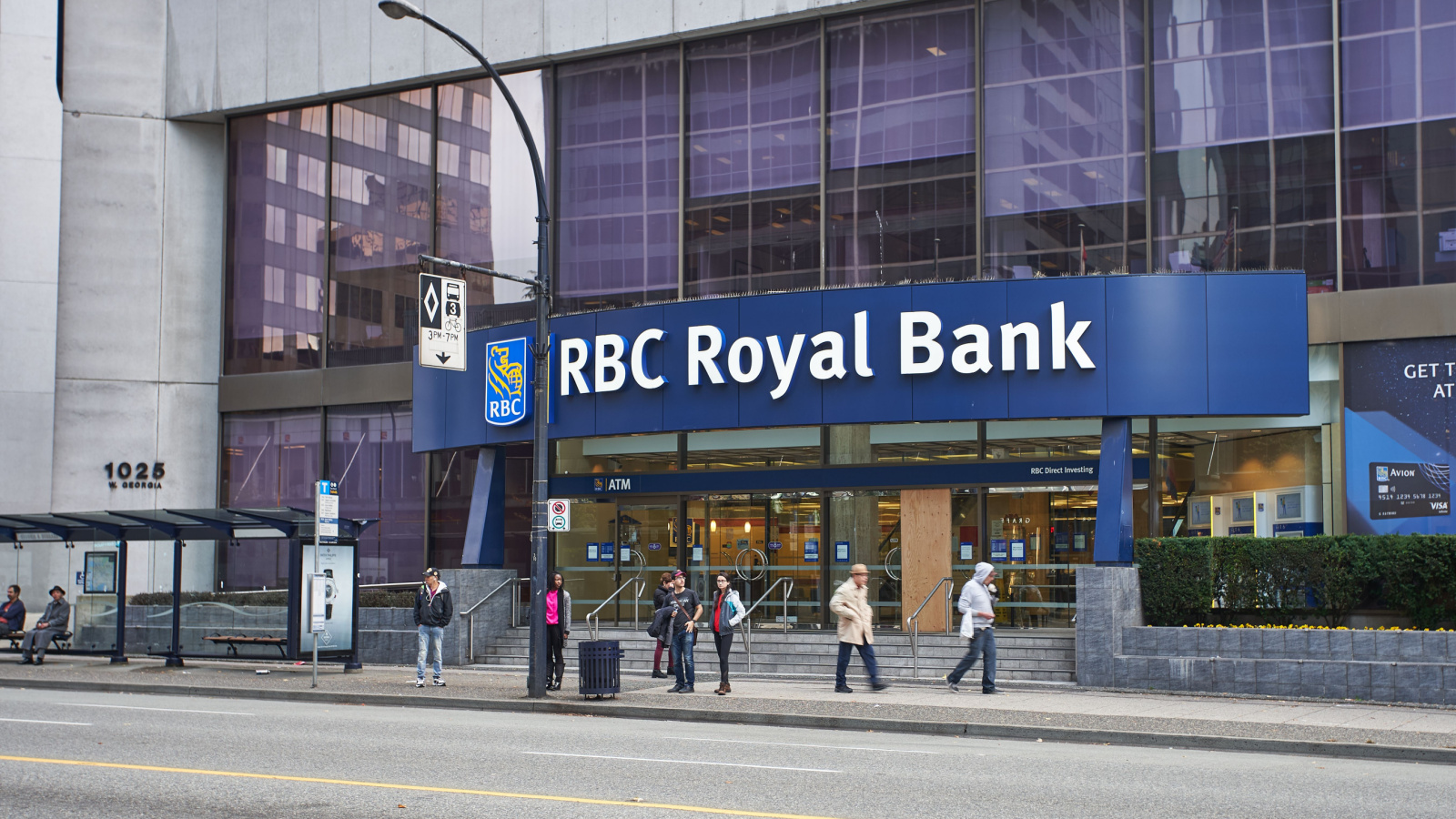
Royal Bank remains the first place many investors look when they want a read on the Canadian financial system as a whole. In its first quarter of 2026, RBC reported record net income of $5.8 billion, with diluted EPS up 14% year over year. The strength was broad rather than narrow, with better results in wealth management, personal banking, commercial banking, and capital markets. That matters after a rate hold because it suggests the bank is not leaning on a single tailwind to keep earnings moving.
There is also a second reason RY stays under the microscope: wealth. RBC’s wealth business has grown into a scale engine, with assets under management around $1.6 trillion and fresh client money still arriving in Canada and the United States. In a market where many households are still sorting out mortgage costs, savings choices, and retirement allocations, that kind of fee-rich diversification stands out. A rate pause does not remove economic risk, but it does make resilient franchises like RBC easier for the market to reward.
Toronto-Dominion Bank (TSX: TD)

TD has become one of the more closely watched big-bank stories because the market is trying to separate short-term headline noise from the core earnings power of the franchise. In the first quarter of 2026, TD reported $4.0 billion in earnings, up 45% from a year earlier, while adjusted earnings reached $4.2 billion. Reuters also noted adjusted net income of C$4.22 billion, underscoring that the quarter was strong enough to reset the conversation toward execution rather than simple damage control.
A rate hold is especially relevant for TD because its business mix spans retail banking, commercial lending, and large capital-markets operations, with meaningful exposure on both sides of the border. When rates stop moving, investors start asking a more demanding question: how much of the story is operating momentum, and how much was just the cycle? TD’s latest quarter suggests there is real traction underneath. That does not make the name simple, but it does explain why Canadians are watching it more closely again.
Bank of Montreal (TSX: BMO)

BMO is getting renewed attention because it combines classic Canadian bank traits with an ambitious North American expansion story. Its first-quarter 2026 results showed reported net income of $2.489 billion, up 16% from a year earlier, while provision for credit losses fell to $746 million from $1.011 billion. That is the kind of mix investors like to see after a rate hold: earnings up, credit costs cooler, and profitability moving the right way without relying on aggressive assumptions.
The bigger attraction is that BMO is not standing still. Reuters reported that the bank is targeting a return on equity above 15% by 2028 and plans to open more than 130 new California financial centers over the next five years, plus about 15 in Arizona. In other words, this is not just a domestic rate-sensitive bank stock. It is also a cross-border execution story. When central-bank policy becomes less dramatic, investors often move back toward management teams that still have visible room to build.
Scotiabank (TSX: BNS)

Scotiabank has been one of the more interesting turnaround-style bank stories on the TSX because the market has been waiting to see whether operational cleanup would start showing up in the numbers. In its first quarter of 2026, the bank reported adjusted EPS growth of 16% and adjusted return on equity of 13%. Reuters added that Scotiabank beat profit estimates, posted growth across segments, and now expects to hit a key target earlier than originally planned.
That combination is exactly why the stock is worth closer attention after a rate hold. A stable policy rate gives investors a cleaner backdrop to judge whether management is truly improving the bank rather than simply benefiting from macro volatility. Scotiabank still carries the complexity of international exposure, which can add both upside and uncertainty. But that same exposure, paired with better performance in Canadian banking, wealth, and capital markets, makes BNS more than a plain vanilla yield name. It is becoming a sharper test of whether bank turnarounds can still work in a slower-growth Canada.
CIBC (TSX: CM)

CIBC is often treated as the most domestic-feeling of the large Canadian banks, which makes it especially sensitive to the mood around rates, housing, and consumer balance sheets. That is part of why its first-quarter 2026 numbers drew attention. Revenue rose 15% year over year to $8.398 billion, while reported net income climbed 43% to $3.1 billion. Reuters also highlighted that capital-markets net income jumped 42% to $877 million, helping push the bank to record revenue across all business units.
Those results matter because CIBC is frequently judged through a narrow lens: mortgage exposure, household leverage, and what happens next in the Canadian consumer cycle. A rate hold does not erase those concerns, but it changes the tone. Instead of fixating only on who might get hurt by higher borrowing costs, the market can look at which institutions are still producing growth and fee income while conditions remain only moderately supportive. That makes CM a revealing name for anyone trying to gauge whether Canadian banking strength is broader than the usual suspects.
National Bank of Canada (TSX: NA)

National Bank has moved into a more prominent spot on investor watchlists because it is no longer just the quiet outlier among the big Canadian lenders. In the first quarter of 2026, it reported net income of $1.254 billion, up 26% from a year earlier, while diluted earnings per share rose to $3.08. The bank also said it had $606 billion in assets, and part of the earnings lift came from the inclusion of Canadian Western Bank results.
That last detail is important. In a post-hold environment, investors start paying closer attention to integration stories because steady rates make it easier to model what acquired assets could contribute over time. National’s mix of Quebec strength, western exposure, and now added scale through CWB gives the stock a different profile than the traditional big-bank pack. It is still a financials name, but it also carries an expansion angle. For Canadians looking for a bank that might keep gaining relevance without needing a dramatic rate-cut cycle to do it, NA is becoming harder to ignore.
Manulife Financial (TSX: MFC)

Manulife belongs on any rate-watch list because insurers respond to policy stability in a more subtle way than banks. The company reported record core earnings and record insurance new-business results for full-year 2025, while fourth-quarter core earnings rose 5% year over year. It also increased its common-share dividend by 10.2%. Those are not small signals. They show that MFC is still generating growth across Asia, Global Wealth and Asset Management, and Canada, even without a fresh macro tailwind.
A rate hold helps bring those strengths into clearer focus. With policy steady, the market can spend less time guessing at valuation swings in insurers’ investment portfolios and more time judging distribution, asset gathering, and business mix. Manulife’s appeal is that it is not only a life insurer; it is also a savings, retirement, and wealth platform tied to long-duration financial habits. In a period when Canadians are balancing GIC yields, market exposure, and long-term planning, a diversified insurer with momentum can start looking like a steadier compounder than many people assume.
Sun Life Financial (TSX: SLF)

Sun Life is another insurer drawing closer attention because its earnings mix looks sturdier than the market sometimes gives it credit for. In the fourth quarter of 2025, Sun Life reported underlying net income of $1.1 billion, helped deliver 17% underlying EPS growth over the prior-year quarter, and posted underlying return on equity of 19.1%. Its asset management and wealth segment also delivered $534 million in underlying net income for the full year, showing that fee businesses remain a major part of the story.
That matters after a rate hold because stable rates tend to shift the spotlight toward quality of earnings rather than simple duration bets. Sun Life has exposure to insurance, asset management, retirement products, and benefits businesses, which gives the market multiple ways to value it. It is also a name that often appeals to Canadians who want financial-sector exposure without owning yet another bank. In a steadier-rate setting, that difference can become more valuable. SLF is not just a defensive holding; it is a reminder that financial strength in Canada does not stop at the big lenders.
Brookfield Asset Management (TSX: BAM)

Brookfield Asset Management is being watched more closely because a rate hold can be quietly helpful for one of the hardest things to revive in finance: transaction confidence. BAM reported record 2025 results, including $112 billion in fundraising for the year, quarterly fee-related earnings of $867 million, and distributable earnings of $767 million. Those numbers tell investors that the firm is still collecting capital at scale, even before any broad reacceleration in deal activity fully takes hold.
The broader appeal is that Brookfield sits at the intersection of several themes that feel very current in 2026: private credit, infrastructure, real assets, and AI-linked investment demand. Reuters reported that Brookfield is acquiring Peakstone Realty to deepen its industrial platform tied to data-center and logistics demand. When rates stop moving, asset managers with long-dated capital and real-asset expertise often become easier to underwrite. BAM is not a traditional rate play, but it benefits when uncertainty fades just enough for institutional money to keep flowing. That is why this name remains close to the front of the TSX conversation.
Enbridge (TSX: ENB)

Enbridge is one of the clearest examples of a stock that becomes more interesting when rate volatility cools down. The company reported record 2025 financial results, reaffirmed 2026 guidance, and said its secured backlog had grown to $39 billion. For income investors, that combination matters: a large pipeline and utility operator with visible projects tends to look more attractive when the market has a steadier sense of future financing conditions.
There is also a fresh catalyst beyond the usual dividend narrative. Reuters reported that Canada approved Enbridge’s roughly C$4 billion Sunrise Expansion Project, which is expected to add 300 million cubic feet per day of natural-gas capacity in British Columbia. That is a real-world example of how infrastructure demand, LNG-related growth, and regulatory timing are still shaping the story. After a rate hold, ENB is not merely a yield proxy. It becomes a test of whether investors want dependable cash flow, utility-like resilience, and an energy expansion angle in the same name.
Fortis (TSX: FTS)

Fortis tends to attract more attention whenever investors start comparing dividend stocks to bonds and GICs, and a rate hold makes that comparison feel more balanced. The company reported annual adjusted net earnings per share of $3.53 for 2025, up from $3.28 in 2024, while capital expenditures reached $5.6 billion and helped support 7% annual rate-base growth. Fortis also extended its remarkable dividend record to 52 consecutive years of common-share increases.
That record matters because FTS is one of the market’s classic reliability names. The question after a rate hold is not whether Fortis is exciting. It is whether a large regulated utility with visible capital plans becomes relatively more attractive when investors believe financing costs may stay range-bound. With first-quarter 2026 results scheduled for May 6, the stock is again in the part of the calendar where small updates on execution, rate-base growth, and funding assumptions can move sentiment. For many Canadians, Fortis remains the kind of stock that gets revisited whenever stability itself becomes a theme.
BCE (TSX: BCE)

BCE is being watched closely because it sits in one of the most rate-sensitive corners of the TSX: highly capital-intensive, income-oriented telecom. Its fourth-quarter 2025 results gave investors some real numbers to work with. Adjusted EBITDA rose 2.3%, margin expanded to 41.6%, postpaid churn improved to 1.49%, and internet revenue grew 16.6%, helped by the Ziply Fiber acquisition. That is not a perfect story, but it is a stronger operational snapshot than the market had become used to expecting.
A rate hold matters here because BCE is often judged through the lens of leverage, network investment, and dividend sustainability. When rates are no longer marching higher, the debate can move back toward customer trends, integration, and free-cash-flow discipline. That shift is important. BCE does not need a euphoric market to work; it needs enough calm for investors to focus on whether the business is stabilizing. The latest numbers suggest there is at least a firmer operating base than the stock’s reputation sometimes implies.
TELUS (TSX: T)

TELUS has regained some attention because its story is broader than a traditional telecom yield trade. In the fourth quarter of 2025, the company reported industry-leading total mobile and fixed customer net additions of 377,000. Its 2025 annual report said TELUS generated more than $20 billion in annual revenue and served more than 21 million customer connections. It also laid out a preliminary 2026 free-cash-flow target of $2.4 billion and reiterated a plan to grow free cash flow at a minimum 10% compound rate from 2026 through 2028.
Those targets make the stock unusually relevant after a rate hold. Investors are not just asking whether telecom multiples can recover. They are asking whether TELUS can keep growing while funding network investment, health-tech ambitions, and shareholder payouts. With first-quarter 2026 results scheduled for May 8, the next update matters. Stable rates do not solve every pressure facing telecom, but they do give the market a more predictable frame for judging debt, dividends, and execution. That is a good reason for T to stay near the top of Canadian watchlists.
Canadian Apartment Properties REIT (TSX: CAR.UN)

CAPREIT is one of the first real estate names many Canadians revisit when the Bank of Canada pauses, because apartment REITs are so closely tied to financing assumptions and property values. CAPREIT said it owned about 46,800 residential apartment suites and townhomes as of March 31, 2025, with a total fair value of roughly $14.9 billion. By year-end 2025, about 73% of occupied suites in its Canadian residential portfolio were held by residents who had stayed at least two years, and weighted average gross rent per square foot was about $2.05.
That profile makes CAR.UN look like more than a simple rate trade. It is a large-scale rental-housing operator with sticky tenants, visible rent growth, and active portfolio strategy. On May 1, 2026, European Residential REIT also announced completion of its going-private transaction with CAPREIT, giving the market another reason to pay attention. In a period when housing affordability remains strained but demand for rental accommodation stays firm, a rate hold helps investors focus on whether apartment landlords can translate operating stability into a cleaner valuation recovery.
Granite REIT (TSX: GRT.UN)

Granite REIT has become a closely watched industrial property name because industrial real estate often sits at an interesting crossroads: long leases, global tenants, and valuation sensitivity to financing conditions. Granite’s annual information form said occupancy stood at 98.0% at December 31, 2025, and its fourth-quarter 2025 results showed net income attributable to unitholders of $135.4 million. The trust also raised its distribution by 4.41% starting with the December 2025 payment, which signaled confidence in cash-flow durability.
What makes GRT.UN especially timely now is the calendar. Granite expects to report first-quarter 2026 results after markets close on May 6. That means investors are not only valuing the past quarter; they are preparing for the next update in an environment where the rate outlook has just been steadied again. For industrial REITs, the market tends to care about occupancy, rent escalators, development pacing, and funding costs all at once. A central-bank hold does not remove those questions, but it can make the answers easier to compare from one quarter to the next.
Choice Properties REIT (TSX: CHP.UN)

Choice Properties stays relevant because it offers something the market often craves after a rate hold: large-scale real estate exposure tied to everyday spending rather than office drama or luxury demand. The trust describes itself as Canada’s largest REIT, and its first-quarter 2026 report included a favourable adjustment of $79.0 million to the value of investment properties on a GAAP basis. It also maintained a monthly cash distribution of $0.065 per unit, equal to $0.78 on an annualized basis.
That combination helps explain why CHP.UN keeps showing up in conversations about steadier-rate income ideas. Necessity-based retail and mixed-use properties are not glamorous, but they can be durable when household budgets are under pressure. Investors tend to look more kindly on that durability when the central bank is on hold and the search for dependable income resumes. Choice is also interesting because it combines scale with a relatively practical tenant mix, which makes it easier to model than many smaller real-estate plays. In uncertain times, that kind of simplicity can be an advantage.
Aecon Group (TSX: ARE)

Aecon is not the first stock people name when they talk about rate sensitivity, but it may be one of the more revealing ones right now. The company reported first-quarter 2026 revenue of $1.257 billion and a record backlog of $10.854 billion, the highest in its history. New contract awards totaled $1.397 billion in the quarter. Those numbers matter because they show a real pipeline of work rather than a purely theoretical growth story.
A rate hold makes Aecon more interesting because construction and infrastructure names live in a world where financing, project timing, and confidence all interact. If borrowing costs stop rising and governments and utilities keep pushing major builds, contractors with proven scale can attract a second look. Aecon’s backlog is large enough that the story is no longer just about surviving old margin pressure; it is about converting work into better earnings quality. For investors trying to find a less obvious Canadian beneficiary of steadier policy, ARE deserves more attention than it usually gets.
19 Things Canadians Don’t Realize the CRA Can See About Their Online Income

Earning money online feels simple and informal for many Canadians. Freelancing, selling products, and digital services often start as side projects. The problem appears at tax time. Many people underestimate how much information the CRA can access. Online platforms, banks, and payment processors create detailed records automatically. These records do not disappear once money hits an account. Small gaps in reporting add up quickly.
Here are 19 things Canadians don’t realize the CRA can see about their online income.
This Options Discord Chat is The Real Deal
While the internet is scoured with trading chat rooms, many of which even charge upwards of thousands of dollars to join, this smaller options trading discord chatroom is the real deal and actually providing valuable trade setups, education, and community without the noise and spam of the larger more expensive rooms. With a incredibly low-cost monthly fee, Options Trading Club (click here to see their reviews) requires an application to join ensuring that every member is dedicated and serious about taking their trading to the next level. If you are looking for a change in your trading strategies, then click here to apply for a membership.