35,000+ smart investors are already getting financial news, market signals, and macro shifts in the economy that could impact their money next with our FREE weekly newsletter. Get ahead of what the crowd finds out too late. Click Here to Subscribe for FREE.
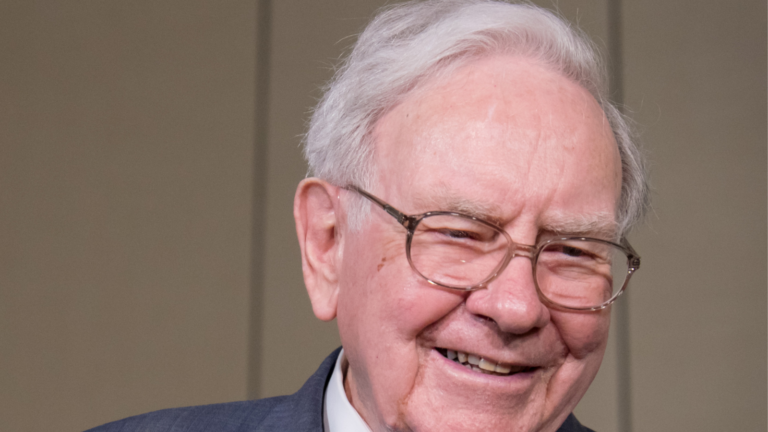
Warren Buffett has never needed flashy themes to build wealth. His playbook has long favoured businesses that are easy to understand, hard to displace, disciplined with capital, and built to keep earning through good years and bad ones. With that lens, the strongest Canadian candidates are not the loudest names on the market, but the ones with durable cash flow, sensible leadership, and advantages that tend to deepen over time.
These 10 Canadian stocks stand out as the kind of companies that fit a Buffett-style checklist in March 2026. This is best viewed as a “Buffett-like” ranking rather than a prediction of Berkshire Hathaway’s literal next buys, but each name reflects qualities he has praised for decades: staying power, pricing power, and the ability to compound for years without needing a heroic macro call.
1. Royal Bank of Canada (TSX: RY)
10 Best Canadian Stocks that Warren Buffett Would Invest in Today
- 1. Royal Bank of Canada (TSX: RY)
- 2. Canadian National Railway (TSX: CNR)
- 3. Intact Financial (TSX: IFC)
- 4. Enbridge (TSX: ENB)
- 5. Fortis (TSX: FTS)
- 6. Alimentation Couche-Tard (TSX: ATD)
- 7. Thomson Reuters (TSX: TRI)
- 8. Loblaw Companies (TSX: L)
- 9. Toromont Industries (TSX: TIH)
- 10. Brookfield Corporation (TSX: BN)
Royal Bank of Canada looks like the kind of financial franchise Buffett has historically loved: huge scale, a low-cost funding base, and earnings power that does not depend on a single hot business line. RBC finished 2025 with net income of $20.4 billion and a CET1 ratio of 13.5%, then opened fiscal 2026 with another strong quarter, posting net income of $5.785 billion and a CET1 ratio of 13.7%. That combination matters. Buffett has usually preferred banks that can keep lending, buying back stock, and defending their dividend even when the economy gets noisy.
What makes RBC especially Buffett-like is not just size, but the shape of the business. Its core Canadian deposit franchise gives it a sticky, relatively low-cost pool of customer funding that would be extremely hard for a new entrant to replicate. In a country where trust and distribution still matter enormously in banking, that moat remains meaningful. RBC may never look “cheap” in a dramatic way, but great franchises rarely do. For a patient investor, this is the sort of stock that can keep compounding simply by being excellent at a very ordinary, essential business.
2. Canadian National Railway (TSX: CNR)
If there is one type of business that has repeatedly earned Buffett’s respect, it is the railroad. Canadian National fits that profile almost perfectly. CN operates a nearly 20,000-mile rail network, moves more than 300 million tons of goods a year, and in 2025 generated $17.3 billion in revenue and $4.72 billion in net income. Better still, no major customer accounted for more than 10% of total revenue, and its largest freight customer represented less than 3% of annual freight revenue. That kind of diversification is a quiet strength.
Rail is one of the clearest real-world moats in the market. No rival can casually recreate CN’s network, rights-of-way, and embedded role in continental trade. Grain, autos, intermodal containers, energy products, and industrial materials all need dependable long-haul movement, and CN sits in the middle of that system. Buffett has long admired businesses that can raise prices modestly, reinvest heavily, and still remain indispensable. CN checks those boxes. It is capital-intensive, but it is also infrastructure that keeps working year after year, which is exactly the kind of asset Buffett has often preferred when the economics are right.
3. Intact Financial (TSX: IFC)
Insurance has been the engine room of Buffett’s empire for decades, so a Buffett-style Canadian list without Intact would feel incomplete. Intact is the largest provider of property and casualty insurance in Canada, and its latest numbers show why that matters. In 2025, operating direct premiums written reached $25.1 billion, the full-year combined ratio improved to 88.2%, and operating return on equity rose to 19.5%. Those are not just respectable figures. They show underwriting discipline, scale, and the kind of operating consistency that separates strong insurers from merely large ones.
The real appeal is that Intact is not relying on a single lucky year or one soft catastrophe season. The company has built a broad platform across Canada, the U.K. and Ireland, and the U.S., while keeping debt and capital at levels that still look controlled. Buffett has always cared deeply about insurance businesses that understand risk rather than simply chase premium volume. Intact increasingly looks like that kind of operator. It also benefits from something very simple: insurance is not optional. Cars, homes, businesses, and supply chains still need protection in every economic cycle, which makes this one of the more durable compounders on the TSX.
4. Enbridge (TSX: ENB)
Buffett has often gravitated toward energy infrastructure when the cash flows are durable and the assets are difficult to replace. Enbridge fits that mould better than most Canadian companies. The business reported record 2025 financial results, has a secured growth backlog of about $39 billion, and has now raised its dividend for 31 consecutive years. For 2026, the annualized dividend moved up to $3.88 per share. That is the kind of shareholder return profile Buffett tends to appreciate when it is backed by real infrastructure instead of financial engineering.
There is also a scale advantage here that is easy to underestimate. Enbridge says its liquids business delivered roughly 30% of the crude oil produced in North America, and its Mainline remained full for most months while averaging record deliveries. That is not a niche position. It is a strategic one. While the market sometimes treats pipeline names like bond proxies, Buffett has usually looked deeper than that. He has preferred the businesses underneath the headline: toll-road-like assets, long-lived demand, and expansion opportunities funded over time by rising cash generation. Enbridge is not risk-free, but in a Buffett-style framework, it has many of the right qualities.
5. Fortis (TSX: FTS)
Fortis may be one of the most obvious Buffett-style stocks in Canada because it resembles the regulated utility assets Berkshire has long embraced. Fortis reported 2025 revenue of $12 billion, total assets of $75 billion, and annual net earnings of $1.7 billion. It also raised its dividend again, extending its streak to 52 consecutive years of dividend increases. That kind of record does not come from excitement. It comes from operating in essential markets, earning allowed returns, and allocating capital with unusual discipline over a very long stretch of time.
This is the kind of business that can look boring right up until investors need steadiness. Electricity and gas delivery remain essential services, and Fortis’s regulated footprint across five Canadian provinces, 10 U.S. states, and the Caribbean gives it geographic diversification without turning the story into something overly complex. In 2025 alone, capital expenditures reached $5.6 billion, helping drive 7% annual rate base growth. Buffett has consistently shown a willingness to own utilities because they combine resilience, scale, and reinvestment runways. Fortis does not offer a thrilling narrative, but it does offer something Buffett has repeatedly valued more: a long duration stream of predictable earnings.
6. Alimentation Couche-Tard (TSX: ATD)
Convenience retail is more Buffett-like than it first appears, especially when the operator has global scale, local pricing power, and a habit of improving margins over time. Couche-Tard’s network now stretches to close to 17,000 stores worldwide, with close to 2,500 more operated under the Circle K banner through licensing in 14 countries and territories. That kind of footprint is hard to replicate, but the more interesting point is how productive the network remains. In the first three quarters of fiscal 2026, merchandise and service revenues rose 6.7% and net earnings increased 6.5%.
The business also keeps acting like a disciplined compounder rather than a reckless empire builder. In fiscal 2025, it delivered 97 new-to-industry store openings, and management raised the annual dividend by 14.3%. Buffett has often preferred companies that take ordinary habits and turn them into repeatable cash generation. That is exactly what convenience retail can be when done well. Coffee, snacks, tobacco, prepared food, fuel adjacency, and quick-stop behaviour may not sound glamorous, but they are sticky and frequent. Couche-Tard sits on the route of everyday life, and that sort of habitual consumer traffic can be a very attractive foundation for long-term compounding.
7. Thomson Reuters (TSX: TRI)
Thomson Reuters has evolved into one of the better examples of a modern information moat on the Canadian market. In 2025, recurring revenue accounted for 88% of total revenue, organic recurring revenue grew 9%, adjusted EBITDA reached $2.936 billion, and free cash flow climbed to $1.95 billion. Those are Buffett-friendly numbers because they point to something deeper than a good quarter: this is a business built on embedded professional workflows, high switching costs, and subscription-like economics. Lawyers, tax professionals, compliance teams, and news clients do not casually rip out core systems once they trust them.
The more interesting twist is that Thomson Reuters is not just defending an old moat. It is also trying to widen it with AI-enhanced products across legal and tax workflows. That makes the business more relevant without changing its basic character. Buffett has usually preferred companies where technology strengthens an already strong franchise rather than businesses that rely on hype to justify their existence. Thomson Reuters fits that distinction well. It is understandable, cash generative, and deeply tied to decision-making in professional markets where accuracy and speed matter. For a Buffett-style investor, that is a far better combination than many higher-volatility tech names can offer.
8. Loblaw Companies (TSX: L)
Loblaw is the kind of consumer staple Buffett has often admired because it sells necessities at enormous scale while keeping customers inside a broader ecosystem of convenience, private label, loyalty, and pharmacy traffic. At the end of fiscal 2025, Loblaw had 2,504 stores and 73.3 million square feet of retail space. Revenue reached $63.9 billion, adjusted EBITDA rose to $7.53 billion, and net earnings attributable to shareholders came in at $2.67 billion. Those are the figures of a company with serious operating leverage and a central role in everyday Canadian spending.
There is also a human side to the moat. In tougher years, households trade down, compare flyers more closely, and lean harder on points, promotions, and trusted store brands. That behaviour can actually reinforce Loblaw’s scale advantages. The company also opened 77 new stores in 2025, showing that it is still investing in physical reach rather than merely harvesting mature assets. Buffett has long liked businesses that remain relevant in both strong and weak economies. Grocery, pharmacy, and value-oriented retail fit that pattern well. Loblaw will not appeal to investors chasing novelty, but it has the kind of durable demand base that can make long-term ownership surprisingly powerful.
9. Toromont Industries (TSX: TIH)
Toromont is not always the first name people mention in Canadian blue-chip conversations, which is part of what makes it interesting. This is a business tied to equipment distribution, servicing, rentals, and industrial refrigeration, not a fashionable narrative. Yet Buffett has frequently preferred companies exactly like that: understandable industrial franchises with entrenched positions, repeat customer relationships, and sensible capital allocation. Toromont is the exclusive Caterpillar dealer across a vast contiguous territory in Canada, and CIMCO gives it a second operating pillar in industrial-grade thermal management. Those are not easily replaced market positions.
The 2025 results were solid rather than flashy, which may be even more Buffett-like. Revenue rose to $5.20 billion, operating income reached $681.3 million, and year-end backlog increased to $1.5 billion from $1.1 billion. The company also lifted its dividend again, marking its 37th consecutive year of annual increases. Equipment sales can be cyclical, but the service, parts, rental, and installed-base elements add durability to the model. Buffett has often looked for businesses that quietly build wealth through competence instead of storytelling. Toromont fits that description. It is not the loudest stock on the board, but it may be one of the more quietly reliable compounders.
10. Brookfield Corporation (TSX: BN)
Brookfield is the most complex name on this list, but it still earns a place because the underlying playbook is so close to Buffett’s worldview. The company describes itself as focused on value creation and capital preservation, conservative financing, and owning high-quality assets that generate stable, inflation-linked, predictable, and growing cash flows. In 2025, Brookfield reported distributable earnings of $6.3 billion, roughly $188 billion of deployable capital, and about $91 billion of monetizations. It also highlighted more than $1 trillion in assets under management across its global platform. That is scale with real optionality.
The Buffett-like case comes from the assets, not the structure. Brookfield’s empire spans infrastructure, energy, credit, real estate, and wealth solutions, and it has decades of experience operating through cycles. The company notes that $1 million invested more than 30 years ago would have grown to $285 million by the end of 2025, a remarkable long-term record. Buffett has always respected management teams that recycle capital intelligently and stay opportunistic when markets get stressed. Brookfield does exactly that. It is not as simple as a bank or railroad, but for investors comfortable with a wider lens, it remains one of Canada’s strongest vehicles for long-run compounding.
This Options Discord Chat is The Real Deal
While the internet is scoured with trading chat rooms, many of which even charge upwards of thousands of dollars to join, this smaller options trading discord chatroom is the real deal and actually providing valuable trade setups, education, and community without the noise and spam of the larger more expensive rooms. With a incredibly low-cost monthly fee, Options Trading Club (click here to see their reviews) requires an application to join ensuring that every member is dedicated and serious about taking their trading to the next level. If you are looking for a change in your trading strategies, then click here to apply for a membership.