35,000+ smart investors are already getting financial news, market signals, and macro shifts in the economy that could impact their money next with our FREE weekly newsletter. Get ahead of what the crowd finds out too late. Click Here to Subscribe for FREE.
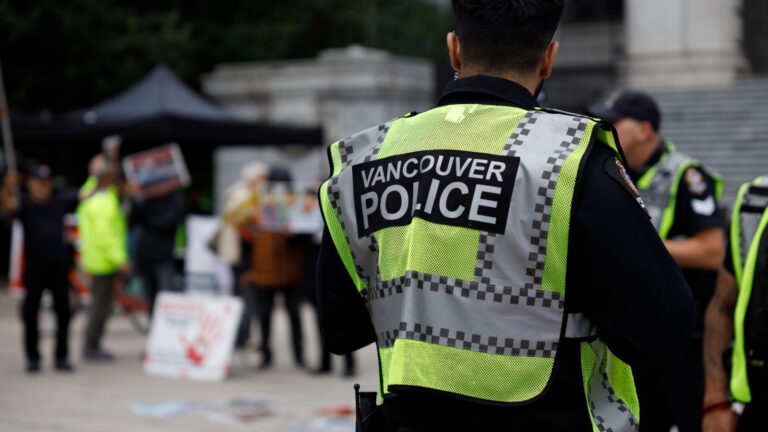
The World Cup is arriving in Canada with the usual promises of packed stadiums, full hotels and a rare chance to put Vancouver and Toronto in front of a global audience. But behind the celebration is a much harder public question: how much security is enough when the world’s largest soccer tournament lands in two major Canadian cities during a volatile political and public-health moment?
Security costs for Canada’s two host cities are now estimated at $336 million, with Vancouver accounting for most of the bill and Toronto carrying a smaller but still substantial share. Officials and experts are pointing to a changed risk environment shaped by international conflict, U.S. politics, infectious disease concerns and the sheer scale of a tournament that has grown bigger than any World Cup before it.
The Security Price Tag Has Become Its Own Story
World Cup Security Costs Hit $336M in Vancouver and Toronto as Officials Cite Trump, War and Disease Risks
- The Security Price Tag Has Become Its Own Story
- Vancouver’s Bill Is Much Larger Than Toronto’s
- Toronto’s Smaller Budget Still Carries Heavy Pressure
- Trump Has Become Part of the Security Conversation
- War and Global Instability Are Reshaping Threat Assessments
- Disease Risks Add a New Dimension to Public Safety
- Ottawa Is Helping Pay, but Local Costs Remain Politically Sensitive
- Final Costs Will Not Be Clear Until After the Tournament
- The Bigger Question Is What Canada Gets Back
The combined security estimate for Vancouver and Toronto now sits at $336 million, a figure that has turned the Canadian leg of the World Cup into a public-spending story as much as a sports story. British Columbia has estimated security costs of about $242 million for Vancouver’s seven matches, while Toronto’s security estimate is about $94 million for six matches. Together, those figures create a striking bill for just 13 Canadian games.
That number matters because it lands at a time when many residents are already sensitive to public costs, from policing and transit to housing and emergency services. The World Cup is being marketed as a global showcase, but the security budget shows the hidden machinery required to stage it. Fans may see jerseys, flags and national anthems. Governments see crowd control, emergency planning, dignitary protection, transportation corridors, public-health monitoring and unpredictable geopolitical risk.
Vancouver’s Bill Is Much Larger Than Toronto’s
Vancouver’s security estimate is more than two and a half times Toronto’s, even though Vancouver is hosting only one more match. That difference has become one of the biggest questions surrounding Canada’s World Cup spending. B.C. officials have said the combined local and provincial safety-and-security costs are about $242 million, with the federal government expected to contribute $100 million to help offset those costs.
The geography of Vancouver helps explain part of the gap. Experts have pointed to the city’s setting, its transportation chokepoints, the location of BC Place and the wider network of regional agencies involved in delivery. Vancouver is not just securing one stadium. It is also preparing for fan zones, transit movement, public gatherings, team logistics and emergency-response coverage across a city built around water, bridges and dense downtown streets. That kind of layout can make simple movement more expensive when every route must be planned, staffed and protected.
Toronto’s Smaller Budget Still Carries Heavy Pressure
Toronto’s $94 million security estimate may look modest beside Vancouver’s, but it is still a major public commitment for six matches. Toronto Stadium at Exhibition Place will host Canada’s first men’s World Cup match on home soil, along with five other fixtures, including a Round of 32 game. That means the city must manage not only international visitors but also intense local emotion around Canada’s opening game.
Toronto’s challenge is different from Vancouver’s. Exhibition Place sits within a dense urban area tied to the Gardiner Expressway, GO Transit, TTC routes, nearby neighbourhoods, hotels and downtown nightlife. On match days, security planning must account for stadium access, vehicle restrictions, pedestrian flows, visiting supporters, public celebrations and regular city life continuing around the event. A lower budget does not mean a lower-stakes operation. It means Toronto is trying to contain a global event inside one of the country’s busiest urban corridors.
Trump Has Become Part of the Security Conversation
The World Cup was awarded as a North American partnership among Canada, the United States and Mexico, but the political climate has changed sharply since that bid was first celebrated. Experts now point to U.S. President Donald Trump as one of the factors shaping the tournament’s risk environment. His immigration policies, trade disputes and polarizing global profile have created concerns that the event could draw political demonstrations or symbolic acts aimed at the United States or its allies.
That does not mean Canadian matches face the same pressures as U.S. venues. Canada is not hosting the majority of the tournament, and no major safety concerns have been publicly identified for Canadian stadiums. Still, Vancouver and Toronto are not isolated from the broader World Cup atmosphere. Fans, teams, media, sponsors and political messages will move across borders. A tournament spread across three countries can make one nation’s political turbulence part of another nation’s planning problem.
War and Global Instability Are Reshaping Threat Assessments
Former security officials and sports-economics experts have described a much more complicated world than the one Canada faced during previous major events. Conflicts in the Middle East and Europe, including the war involving Ukraine and Russia and the war involving Iran, have raised the temperature around international gatherings. When countries, fan bases and political grievances converge in one tournament, security plans must prepare for risks that may originate far beyond the host city.
The World Cup’s expansion adds another layer. This is the first men’s tournament with 48 teams and 104 matches, meaning more participating countries, more travelling supporters and more complicated scheduling across 16 host cities. Canada’s 13 matches are only a small part of the full event, but they are connected to a much larger system. A disruption elsewhere, whether political, logistical or security-related, can quickly influence operations in Vancouver or Toronto.
Disease Risks Add a New Dimension to Public Safety
Security is no longer only about policing and physical safety. Public-health risks have become part of the planning language for major events, especially one expected to draw millions of fans across North America. The Public Health Agency of Canada has assessed infectious-disease importation risks linked to the World Cup, including risks associated with matches and fan festivals in Toronto and Vancouver. The agency identified 14 infectious-disease pathogens that could pose some level of importation risk during the tournament.
The concern is not panic; it is preparedness. Public-health teams are watching for diseases such as measles, Ebola-related risks and other high-consequence pathogens, while experts in the United States are using wastewater monitoring, health data and public information signals to detect potential outbreaks early. For fans, this part of the security plan may be invisible. For hospitals, emergency managers and public-health officials, it is another reminder that mass gatherings now require medical surveillance as much as crowd management.
Ottawa Is Helping Pay, but Local Costs Remain Politically Sensitive
The federal government has announced up to $145 million for public safety and security tied to the World Cup in Toronto and Vancouver. That comes on top of earlier federal commitments to support host-city operations and infrastructure. In practical terms, Ottawa’s contribution helps reduce the pressure on provinces and municipalities, but it does not erase the public debate over whether the event is worth the cost.
The political sensitivity is easy to understand. Governments are defending World Cup spending by pointing to tourism, jobs, international exposure and long-term economic benefits. B.C. has projected major gains from Vancouver’s seven matches, including hundreds of thousands of spectators at BC Place and a broader economic lift during and after the tournament. Critics, meanwhile, tend to focus on the upfront bill, the uncertainty of final costs and whether ordinary taxpayers will see enough benefit once the last match ends.
Final Costs Will Not Be Clear Until After the Tournament
One of the most important details is that final security costs will not be known until the tournament is over. Current estimates are based on planning assumptions, risk assessments, staffing needs and expected event conditions. But major events are fluid. Weather, crowd behaviour, team matchups, protest activity, health alerts, transportation disruptions and last-minute security requirements can all affect the final number.
That uncertainty is what makes the $336 million figure so politically powerful. It is large enough to spark criticism before the tournament begins, but not final enough to settle the debate. If the matches run smoothly, governments will argue the spending protected fans, athletes, workers and the national reputation. If costs rise or disruptions occur, critics will ask why taxpayers were left carrying so much risk for an event owned by one of the most powerful sports organizations in the world.
The Bigger Question Is What Canada Gets Back
World Cup organizers and governments often speak in the language of legacy. Vancouver points to tourism, infrastructure, global branding and future business opportunities. Toronto can point to stadium improvements, international exposure and a once-in-a-generation moment for Canadian soccer. Those benefits are real possibilities, especially for cities competing for visitors, investment and cultural attention.
But legacy can be hard to measure, while security costs are immediate and concrete. The public sees the bill before it sees the payoff. That is why this story will likely remain alive long after the final whistle. The World Cup may bring unforgettable scenes to Vancouver and Toronto, but it is also forcing a difficult civic calculation: in a world shaped by political tension, war and disease risk, hosting the world now means paying heavily to protect it.
This Options Discord Chat is The Real Deal
While the internet is scoured with trading chat rooms, many of which even charge upwards of thousands of dollars to join, this smaller options trading discord chatroom is the real deal and actually providing valuable trade setups, education, and community without the noise and spam of the larger more expensive rooms. With a incredibly low-cost monthly fee, Options Trading Club (click here to see their reviews) requires an application to join ensuring that every member is dedicated and serious about taking their trading to the next level. If you are looking for a change in your trading strategies, then click here to apply for a membership.