35,000+ smart investors are already getting financial news, market signals, and macro shifts in the economy that could impact their money next with our FREE weekly newsletter. Get ahead of what the crowd finds out too late. Click Here to Subscribe for FREE.
The clock is running down on another escalation in the Canada-U.S. trade fight. U.S. import bans covering selected Canadian alcohol, dairy-related products and motor-vehicle products are scheduled to take effect at 12:01 a.m. Eastern on September 29, putting another layer of uncertainty over businesses already adjusting to tariffs. At almost the same moment, Prime Minister Mark Carney is emphasizing a different economic path: deeper commercial ties with Singapore and an accelerated free-trade agreement with Southeast Asia. Ottawa says a completed Canada-ASEAN deal could eventually add nearly $2 billion to Canadian GDP and support nearly 14,000 jobs. The timing captures Canada’s broader challenge — managing an indispensable but increasingly difficult U.S. relationship while trying to build meaningful alternatives elsewhere.
The U.S. Import Deadline Is No Longer Theoretical
With U.S. Import Bans Hours Away, Carney Pushes Singapore Ties and a 14,000-Job ASEAN Deal
- The U.S. Import Deadline Is No Longer Theoretical
- Carney Is Putting Singapore Near the Centre of the Diversification Push
- The Singapore Framework Goes Well Beyond Selling More Goods
- The 14,000-Job Number Comes From a Deal That Is Still Being Negotiated
- ASEAN Has Become Too Large a Market for Canada to Treat as Secondary
- Energy and AI Are Becoming the Most Concrete Parts of the Asia Strategy
- Diversification Is Growing, but the United States Still Dwarfs Other Markets
- The Next Few Weeks Could Move Both Trade Tracks at Once
The September 29 deadline comes from presidential proclamations signed by U.S. President Donald Trump on September 8. Using Section 338 of the Tariff Act of 1930, the administration ordered specified Canadian products excluded from the U.S. market beginning at 12:01 a.m. Eastern. Separate measures cover certain alcoholic beverages, dairy-related products and products connected to the motor-vehicle dispute. Washington has described the measures as a response to what it considers discriminatory Canadian treatment of U.S. commerce. Canada disputes the broader U.S. characterization of the trade relationship and has responded to previous American actions with countermeasures of its own.
For the companies caught directly in the restrictions, the distinction between a tariff and a ban is important. Covered goods imported on or after the deadline can be excluded rather than simply charged a higher duty. Merchandise imported earlier but not yet entered for consumption can remain subject to the previously imposed 50% duty under the proclamations. BMO chief economist Doug Porter estimated earlier in September that exports covered by the bans were worth roughly US$1 billion. That is relatively modest beside the enormous Canada-U.S. trading relationship, but the losses are highly concentrated. A distiller, dairy processor or motorcycle exporter can experience the shock far more sharply than the national GDP numbers suggest.
Carney Is Putting Singapore Near the Centre of the Diversification Push
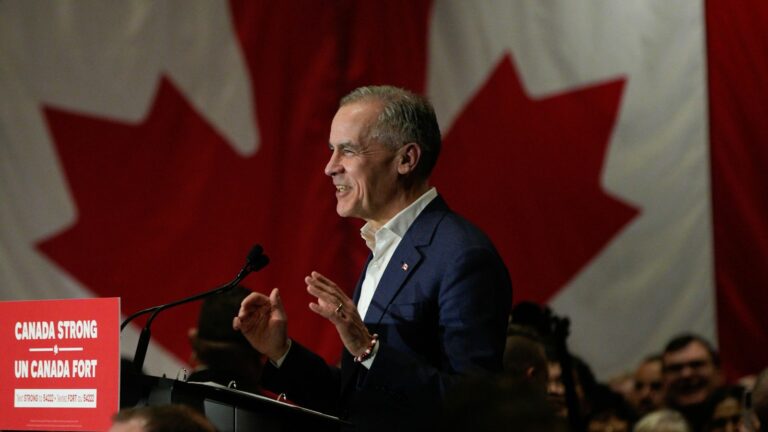
Against that backdrop, Carney spoke with Singapore Prime Minister Lawrence Wong on September 28. According to the Prime Minister’s Office, the two leaders discussed strengthening bilateral trade, advancing a new Canada-Singapore Economic Partnership Framework and intensifying efforts to complete the broader Canada-ASEAN free-trade agreement. Carney also raised the prospect of greater Singaporean investment in Canada’s artificial-intelligence and energy sectors. Wong is expected to visit Canada later in 2026, providing another opportunity to move those discussions forward.
Singapore is not being approached as an emerging relationship starting from scratch. Canada-Singapore merchandise trade reached $4.9 billion in 2025, according to Global Affairs Canada, up from $3.7 billion a year earlier. Canadian merchandise exports accounted for about $3.2 billion, while services trade between the countries reached $5.8 billion. Singapore was also Canada’s largest source of foreign direct investment from Southeast Asia, with $10.4 billion invested in Canada in 2025, while Canadian direct investment in Singapore stood at $34.7 billion. Those numbers help explain why Ottawa sees the city-state as both a market and a financial gateway into the wider region.
The Singapore Framework Goes Well Beyond Selling More Goods
The proposed economic framework with Singapore is broader than a conventional discussion about tariffs. Canada and Singapore announced their intention to establish the framework on September 18, identifying artificial intelligence, quantum technologies, cybersecurity, energy, critical minerals, food security and investment as priority areas. The governments also want greater cooperation on digital documentation, paperless trade, port modernization and resilient pharmaceutical and life-sciences supply chains. In energy, the framework explicitly refers to both conventional and clean energy, including liquefied natural gas and civil nuclear cooperation.
There is an important qualification. The September joint statement says the framework itself is not legally binding and does not create legal or financial commitments. Its immediate purpose is to build a practical structure through which governments, companies and academic institutions can develop projects and monitor progress. That makes it different from the ASEAN free-trade negotiation happening alongside it. For Canadian companies, however, such cooperation can still matter. A firm developing AI software, a critical-minerals producer or an energy exporter may care as much about investment relationships, digital rules, financing and supply-chain connections as about a tariff reduction at the border.
The 14,000-Job Number Comes From a Deal That Is Still Being Negotiated
The largest economic number attached to the current push is Ottawa’s estimate that a Canada-ASEAN free-trade agreement could add nearly $2 billion to Canadian GDP and create nearly 14,000 Canadian jobs, including employment in agriculture and manufacturing. Those numbers should be understood as projected benefits if an agreement is completed and brought into force — not employment already created by negotiations. Canadian government economic modelling has long suggested that reducing trade barriers with ASEAN could generate measurable gains in output and exports.
There has recently been significant negotiating progress. International Trade Minister Maninder Sidhu told Reuters on September 22 that negotiations with ASEAN were more than 90% complete and that Ottawa hoped to have the agreement ready around Carney’s expected visit to Manila in November. Canada and ASEAN formally agreed to launch FTA negotiations in November 2021, meaning the current push comes after several years of technical bargaining rather than a sudden diplomatic initiative. The final stretch can still involve difficult questions over market access, rules and implementation, so the government’s GDP and employment estimates remain forecasts until an agreement is finalized and businesses actually use it.
ASEAN Has Become Too Large a Market for Canada to Treat as Secondary
Canada’s interest is also being driven by the scale of Southeast Asia’s existing economic relationship with the country. Global Affairs Canada says two-way merchandise trade between Canada and ASEAN reached $52.5 billion in 2025, jumping 23.7% from $42.4 billion in 2024. The bloc now includes 11 member states, including major economies such as Indonesia, Vietnam, Singapore, Malaysia, Thailand and the Philippines. Canada already has preferential access to Singapore and Vietnam through the Comprehensive and Progressive Agreement for Trans-Pacific Partnership, but an ASEAN-wide deal would broaden the trade architecture considerably.
The commercial opportunities are also spread across industries. Agriculture and agri-food have historically been major Canadian exports to Southeast Asia, alongside fertilizer, machinery, energy products and forest products. Meanwhile, Canada imports substantial volumes of electronics, machinery, apparel and other manufactured goods from the region. The relationship therefore is not simply about finding buyers for Canadian commodities. It involves increasingly complicated two-way supply chains. For a Prairie agricultural exporter, a British Columbia energy project or an Ontario technology company, a regional agreement could potentially mean fewer barriers and more predictable rules across multiple markets rather than having to approach each country entirely separately.
Energy and AI Are Becoming the Most Concrete Parts of the Asia Strategy
Energy may offer one of the clearest examples of how Canada’s geography is changing its trade options. Sidhu told Reuters that Canada has more than five LNG projects in various stages of development on the British Columbia coast, with the projects oriented toward Asian markets. The Singapore framework similarly identifies LNG, critical minerals, clean energy and civil nuclear cooperation as potential areas for deeper work. Those priorities fit Southeast Asia’s need for large amounts of reliable energy as its economies and electricity demand expand.
There is already evidence that new export infrastructure can alter trade flows. Global Affairs Canada’s 2025 trade review found that Canadian merchandise exports to Singapore increased by $936 million, or 41.6%, to roughly $3.2 billion. The department said much of that increase reflected higher crude-oil shipments associated with the Trans Mountain pipeline expansion. At the same time, Ottawa is seeking Singaporean capital for Canada’s AI ecosystem, while the bilateral framework specifically calls for cooperation on AI, quantum technology and cybersecurity. The strategy therefore links Canada’s traditional resource strengths with sectors where governments are competing for technology investment, talent and commercialization opportunities.
Diversification Is Growing, but the United States Still Dwarfs Other Markets
Canada has already begun selling more outside the United States. Statistics Canada reported that merchandise exports to countries other than the U.S. increased 17.2% in 2025, while total merchandise trade with non-U.S. countries reached $553 billion, up 14.3%. At the same time, the proportion of Canadian merchandise exports destined for the United States declined from 75.9% in 2024 to 71.7% in 2025. The direction is unmistakable: non-American markets are accounting for a larger share of Canadian trade.
The scale comparison is equally important. Even after the decline, more than seven out of every 10 dollars of Canadian merchandise exports still went to the United States in 2025. An ASEAN market worth $52.5 billion in two-way merchandise trade is economically meaningful, but it cannot quickly reproduce the integrated factories, pipelines, highways, power networks and customer relationships developed across the Canada-U.S. border over decades. Diversification therefore does not mean replacing American trade. In practical terms, it means creating enough additional customers and investment channels that a disruption in one market does not carry quite the same national or regional consequences.
The Next Few Weeks Could Move Both Trade Tracks at Once
The unusual feature of Canada’s position is that the Southeast Asian push is advancing while the relationship with Washington remains unsettled. Trump said on September 28 that he believed a Canada-U.S. trade deal could still emerge within the next three or four weeks, even as the new import bans approached. Canada-U.S. negotiations had been suspended in August after Carney said the proposed terms at that time did not meet Canada’s objectives. That means the current restrictions do not necessarily mark the end of negotiations, but businesses have to operate according to the measures that are actually in force rather than assuming a later agreement will reverse them.
Meanwhile, the ASEAN timetable is becoming increasingly concrete. Sidhu has said the talks are more than 90% complete and Ottawa wants them ready around the November ASEAN meetings in Manila. Singapore provides another parallel track through investment, technology and energy cooperation. None of those relationships offers an instant substitute for U.S. market access, and the Singapore framework itself remains non-binding. What they show is a Canadian trade policy increasingly operating on several fronts at once: attempting to preserve valuable access to the United States while developing larger commercial relationships in Asia that could gradually reduce the economic consequences of future disruptions.
This Options Discord Chat is The Real Deal
While the internet is scoured with trading chat rooms, many of which even charge upwards of thousands of dollars to join, this smaller options trading discord chatroom is the real deal and actually providing valuable trade setups, education, and community without the noise and spam of the larger more expensive rooms. With a incredibly low-cost monthly fee, Options Trading Club (click here to see their reviews) requires an application to join ensuring that every member is dedicated and serious about taking their trading to the next level. If you are looking for a change in your trading strategies, then click here to apply for a membership.