35,000+ smart investors are already getting financial news, market signals, and macro shifts in the economy that could impact their money next with our FREE weekly newsletter. Get ahead of what the crowd finds out too late. Click Here to Subscribe for FREE.
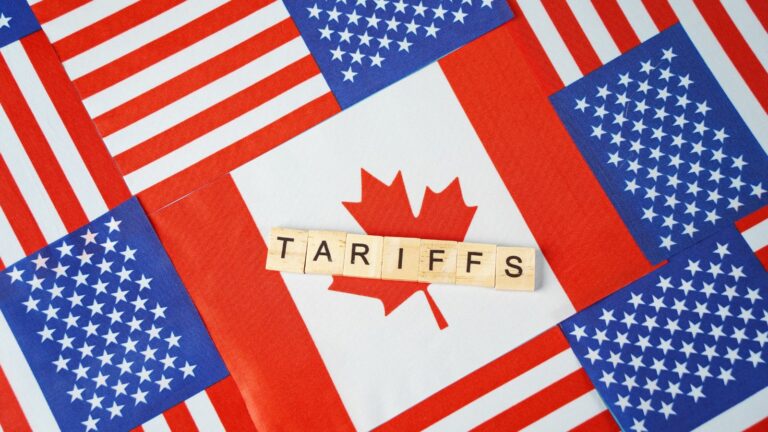
The latest escalation in Canada’s trade dispute with the United States is reaching far beyond the automotive industry. President Donald Trump’s revised tariff measures took effect on October 30, 2026, adding 100 Canadian product classifications to a punishing 50% import duty while removing 22 others.
The changes affect everything from carpets and construction materials to household appliances, industrial equipment, and packaging supplies. Some Canadian exporters are receiving much-needed relief, but others face significantly higher costs and difficult decisions about their American customers. With the new tariffs applying even to qualifying goods under the Canada-U.S.-Mexico Agreement, the revisions raise fresh questions about the future of cross-border trade, manufacturing jobs, consumer prices, and Canada’s economic relationship with its largest trading partner.
A Border Rule Change With a Precise Start Date
Trump’s Revised 50% Tariffs Hit 100 More Canadian Product Categories While 22 Get Relief
- A Border Rule Change With a Precise Start Date
- Why an Automotive Dispute Now Affects Everyday Products
- The 100 Additions Reach Store Shelves and Factory Floors
- Flooring and Forest Products Face a Split Decision
- The 22 Removals Offer Genuine but Limited Relief
- The Continental Trade Agreement Is Not a Shield
- Even the Entry Date Can Change a Shipment’s Cost
- Who Pays the Tariff, and Who Feels It?
- Canada’s Countertariffs Deepen the Pressure
- A Trade Agreement Still in Force, but Under Strain
On October 23, Trump signed a proclamation revising the range of Canadian imports covered by an additional 50% tariff. It became effective at 12:01 a.m. Eastern time on October 30, and U.S. Customs and Border Protection followed with filing guidance. The revision places 100 more Harmonized Tariff Schedule classifications under the duty while removing 22 covered classifications. Crucially, it changes product coverage rather than increasing the tariff rate itself.
That distinction can be easy to lose amid headlines about sweeping tariffs. A tariff classification is a specific customs category, not a company, a province, or necessarily an entire industry. A Canadian business might sell several products to the same American customer and discover that only some are newly affected. The proclamation also revises one portion of a larger Section 338 tariff system; other products targeted earlier remain covered. For exporters, checking the correct product code matters more than the headline.
Why an Automotive Dispute Now Affects Everyday Products
The White House calls the revised tariffs a response to Canada’s unfair treatment of American vehicles and parts. The legal tool is Section 338 of the Tariff Act of 1930, which permits additional duties of up to 50% when the president finds discrimination against U.S. commerce. Washington first announced related actions in July, then changed the affected product lists in September and again in October. The latest revision is tied specifically to the proclamation concerning motor vehicles.
Ottawa tells a very different story. Canadian government guidance says its vehicle counter-tariffs and restrictions on U.S. alcohol were responses to American trade measures introduced in 2025. Canada also maintains that its dairy tariff-rate quota administration complies with the continental trade agreement. Competing accounts help explain why a dispute involving cars now reaches shampoo, cocoa powder, and machinery. Governments are targeting wider baskets of trade, while businesses outside the original disagreement face consequences.
The 100 Additions Reach Store Shelves and Factory Floors
The new tariff list reads less like an automotive policy and more like a cross-section of a shopping cart and a factory inventory. It includes sweetened cocoa powder, shampoo, soap, paints, lubricants, waxes, diagnostic reagents, and some waste products. Other additions cover window air conditioners, chest freezers, handheld electric tools, iron or steel valves, canoes, and archery equipment. These examples appear in the proclamation’s official product annex.
For a Canadian manufacturer, the variety matters. A firm selling valves may face a different competitive problem from one shipping packaged consumer goods, yet both could confront the same additional 50% duty. American distributors may ask for lower prices, smaller orders, or substitute suppliers. None of those outcomes is guaranteed; actual sales effects depend on demand, contracts, and competing products. The important limitation is that the tariff targets particular classifications, not every item carrying a familiar product label such as soap or equipment.
Flooring and Forest Products Face a Split Decision
A striking cluster of new tariff codes concerns floor coverings. The annex lists numerous types of carpets and rugs, from hand-knotted wool products to woven, tufted, felt, and synthetic varieties. Vinyl flooring, rubber mats, artificial turf, and selected wood flooring panels also appear on the list. This concentration matters because flooring is purchased by homeowners, contractors, retailers, and commercial renovation projects on both sides of the border.
The forest-products picture is complicated. The additions include particular medium-density fibreboard, fibreboard, wood packaging, and finished wood items, while some thin plywood classifications are being removed. Two products that look interchangeable in a showroom or warehouse may therefore face very different border charges. For a Canadian supplier quoting a U.S. renovation project, a difference in material specifications can become a difference in profitability. The revision does not establish which businesses will lose orders, but it creates another reason for buyers to scrutinize sourcing.
The 22 Removals Offer Genuine but Limited Relief
For companies whose goods were removed, the revision brings a limited break. The 22 deleted classifications include certain thin plywood sheets, corrugated cartons, plastic boxes and bags, coated paper products, and edible seaweed. Selected refrigeration equipment, packing and wrapping machines, and machinery used to clean or sort agricultural produce also leave this particular 50% tariff list. The exclusions can materially change the cost of an affected shipment.
Consider a Canadian producer supplying packaging to an American food processor. If the packaging falls within a removed classification, the customer’s import bill may become easier to manage. But the relief does not automatically make every shipment duty-free, because other applicable U.S. customs charges can remain. Nor does it extend to every type of plywood, package, or industrial machine. The precise tariff code determines eligibility, and companies must confirm how their products are classified before assuming the savings can be passed to customers.
The Continental Trade Agreement Is Not a Shield
The Canada-U.S.-Mexico Agreement reduces barriers to qualifying North American trade, but does not cancel these charges. The White House states that the Section 338 duty applies to covered Canadian products even when they qualify as originating under the agreement. That makes a certificate demonstrating regional content insufficient, by itself, to avoid the extra 50%. Businesses that spent years organizing supply chains around preferential trade treatment have another rule to check.
There is a second complication: the proclamation says Section 338 duties can apply on top of Section 232 tariffs. Those measures cover products such as certain metals and their derivatives and operate under different U.S. legal authority. A shipment caught by both systems can therefore face more than one additional duty. Exceptions still matter, including qualifying civil aircraft articles identified in the annex and certain customs provisions. The correct answer is product-specific, not simply that trade agreements no longer exist.
Even the Entry Date Can Change a Shipment’s Cost
For an importer, the calendar can matter as much as the product. The October revision applies to goods entered for U.S. consumption, or withdrawn from a customs warehouse for consumption, beginning October 30. It is not simply based on the date a Canadian factory shipped an order. Freight already moving toward the border therefore required another check against the applicable tariff list, even if the sales contract had been signed weeks earlier.
Consider chest-type freezers, newly included under tariff classification 8418.30.00, while another refrigeration equipment classification, 8418.69.01, was removed. The distinction illustrates why product descriptions cannot replace customs codes. U.S. Customs and Border Protection’s October 29 guidance identifies the revised classifications and provides filing instructions for importers and brokers. Incorrect assumptions could produce unexpected duty payments or compliance problems. Businesses also need to review goods stored in bonded facilities, where withdrawal timing can determine which rules apply to a shipment.
Who Pays the Tariff, and Who Feels It?
Legally, the U.S. importer of record is responsible for declaring goods and paying duties at entry. A shipment assigned a customs value of $10,000 would incur $5,000 in additional Section 338 charges if the full 50% rate applies, before considering any other taxes or duties. That cost may land first on an American wholesaler or retailer rather than on a Canadian factory, but commercial contracts determine how much of the burden each participant ultimately bears.
Research on earlier U.S. tariffs suggests that importers often struggle to shift costs entirely back to foreign suppliers. An economic study published in 2026 found substantial pass-through of 2025 tariffs into American import prices, although retail effects differ by product and market. A U.S. hardware distributor could absorb part of the added cost, increase its selling price, or ask a Canadian supplier for concessions. For both sides, margins and customer loyalty may be at stake.
Canada’s Countertariffs Deepen the Pressure
Canada has responded to the broader Section 338 campaign. Ottawa’s September 8 countermeasures imposed additional duties of 15%, 25%, or 50% on specified American imports, generally matching the U.S. rates applied to the affected products. The federal government described roughly C$27.6 billion in U.S. imports as covered by that round. These measures were introduced before the October 30 changes, and there is no basis to assume the revision automatically triggered a new Canadian tariff package.
The stakes extend well beyond companies named in the annex. Statistics Canada reported that 71.7% of Canadian merchandise exports went to the United States in 2025, illustrating how closely the economies remain linked. A small business may ship components south and buy American equipment or materials in return. When both directions become costlier, management can face simultaneous pressure on sales and expenses. That does not mean every Canadian export is subject to these particular tariffs.
A Trade Agreement Still in Force, but Under Strain
The tariff revisions arrive as Canada and the United States debate the future of their continental trade arrangements. In July 2026, the U.S. Trade Representative said Washington was not prepared to extend the Canada-U.S.-Mexico Agreement during its joint review. That did not terminate the pact: it remains in force, with review opportunities and an eventual expiration mechanism if the countries never agree to extend it. U.S. officials have sought public comments for the 2027 review.
Recent discussions have explored possible reductions in American steel and automotive tariffs, but discussions are not a signed settlement. For Canadian exporters, this distinction matters more than predictions of a breakthrough. The October 30 additions and removals demonstrate that tariff coverage can change quickly, while factory equipment, distribution relationships, and hiring plans take much longer to adjust. Stability would require not merely another product-list revision, but rules businesses can price and plan around with confidence.
This Options Discord Chat is The Real Deal
While the internet is scoured with trading chat rooms, many of which even charge upwards of thousands of dollars to join, this smaller options trading discord chatroom is the real deal and actually providing valuable trade setups, education, and community without the noise and spam of the larger more expensive rooms. With a incredibly low-cost monthly fee, Options Trading Club (click here to see their reviews) requires an application to join ensuring that every member is dedicated and serious about taking their trading to the next level. If you are looking for a change in your trading strategies, then click here to apply for a membership.