35,000+ smart investors are already getting financial news, market signals, and macro shifts in the economy that could impact their money next with our FREE weekly newsletter. Get ahead of what the crowd finds out too late. Click Here to Subscribe for FREE.
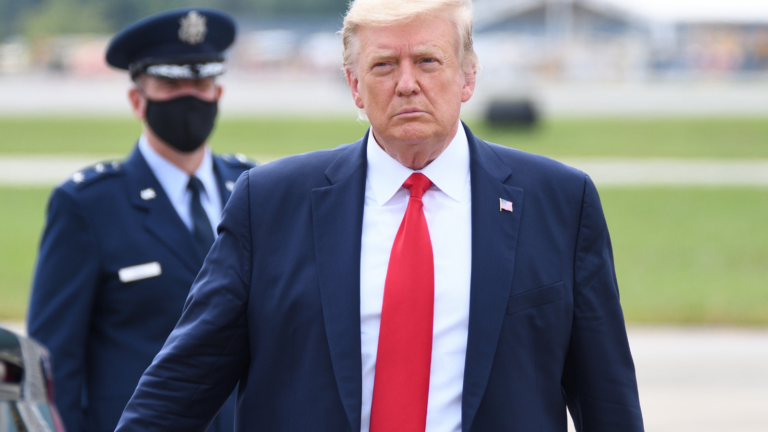
A deadline that had threatened to open another painful front in the Canada-U.S. trade fight has been pushed back—but only until the end of Friday, August 21. U.S. President Donald Trump announced a three-day pause on planned 50% tariffs covering nearly US$20 billion in Canadian goods, declaring that the two countries had a deal subject to final documentation. Prime Minister Mark Carney chose noticeably more cautious language, saying substantial progress had been made while stressing that important work remained.
That difference in tone captures the uncertainty surrounding the negotiations. The immediate tariff shock has been avoided, but major questions involving automobiles, dairy, alcohol, market access and the future shape of North American trade remain unsettled. For Canadian businesses that had been preparing for tariffs to arrive Wednesday morning, three extra days amount to relief—but not yet certainty.
Three Days of Breathing Room, Not a Final Settlement
Trump Gives Canada Three More Days as Carney Stops Short of Calling Trade Deal Finished
- Three Days of Breathing Room, Not a Final Settlement
- The Tariff Threat Was Narrower Than a Blanket 50% Duty—But Still Serious
- Carney’s Cautious Language Reflects What Is Still Unresolved
- Autos Remain One of the Most Consequential Pieces
- Dairy and Alcohol Have Become Symbols of a Much Broader Fight
- The Economic Relationship Is Too Large for Uncertainty to Stay Contained
- Trump’s Use of Section 338 Raised the Stakes
- Keystone XL Suddenly Returned to the Conversation
- A Deal This Week Would Not End the Larger USMCA Problem
- Canada Is Negotiating While Preparing for a Less U.S.-Dependent Economy
Trump announced the pause late Tuesday, less than two hours before the new duties were scheduled to begin. His position was emphatic: Canada and the United States had reached a deal, with the remaining task described as finalizing documents. Ottawa confirmed that the tariffs would not take effect as planned, but Carney deliberately avoided declaring the negotiations complete. Instead, his statement said discussions had produced substantial progress while leaving important work unfinished.
That distinction matters because the reprieve expires at the end of August 21. Negotiators therefore have only a narrow window to translate political understandings into terms both governments are prepared to defend. Canadian Trade Minister Dominic LeBlanc and chief negotiator Janice Charette had already spent days in Washington holding intensive discussions with senior U.S. officials. For companies making pricing, production or shipping decisions, the practical message is straightforward: Wednesday’s immediate crisis has passed, but Friday has simply become the new deadline.
The Tariff Threat Was Narrower Than a Blanket 50% Duty—But Still Serious
The threatened tariffs were not a 50% charge on every Canadian export entering the United States. Washington’s Section 338 measures covered nearly US$20 billion of Canadian imports, representing roughly 5.2% of the goods the United States imported from Canada in 2025. Energy, potash, fish, critical minerals and products already covered by certain Section 232 tariffs were among the categories excluded.
For the companies caught inside the tariff lists, however, that distinction offered little comfort. The White House said affected goods ranged from wine and hockey equipment to cement, while Reuters reported that furniture, clothing and other consumer and industrial products were also exposed. Unlike many earlier U.S. measures, the duties were designed to apply even when covered Canadian goods qualified for preferential treatment under USMCA. A smaller exporter with most of its customers south of the border could therefore face a much larger disruption than the headline percentage of overall Canadian trade suggests.
Carney’s Cautious Language Reflects What Is Still Unresolved
Only days before the pause, Canadian officials were describing significant gaps between the two negotiating teams. LeBlanc reportedly told an advisory group on August 14 that the countries remained far apart on a draft agreement. By Tuesday evening, the tone had improved dramatically, but Ottawa still declined to confirm the detailed substance of the arrangement described publicly by Washington.
That helps explain Carney’s restraint. The U.S. Trade Representative’s office has said the emerging package would involve comprehensive market access for American goods, economic-security commitments and digital-trade alignment. The White House also said Canada had committed to addressing U.S. concerns involving dairy, alcoholic beverages and motor vehicles. Ottawa has not publicly endorsed every element of that characterization. For Carney, calling the agreement finished before the text and implementation terms are settled could create political and negotiating problems if the two governments later discover they have different interpretations of what was promised.
Autos Remain One of the Most Consequential Pieces
Automobiles have emerged as perhaps the most economically important unresolved issue. The United States currently applies a 25% Section 232 tariff framework to Canadian vehicle imports, and negotiators have discussed reducing the headline rate to 15%. Even that proposal comes with a complicated argument over how much of a Canadian-built vehicle should ultimately be exposed to the tariff.
Washington has pushed to base deductions on U.S.-produced content, while Canadian negotiators have sought recognition for a broader pool of North American content that would include Canadian and Mexican parts. That difference reaches directly into an industry built around components crossing borders repeatedly before a finished vehicle reaches a dealership. Detroit automakers have also warned that tougher regional-content rules proposed during the broader USMCA negotiations could cost individual manufacturers billions of dollars annually. For Ontario plants and their suppliers, the final formula could matter as much as the advertised tariff rate itself.
Dairy and Alcohol Have Become Symbols of a Much Broader Fight
American complaints about Canadian dairy policy and provincial restrictions on U.S. alcohol have moved from long-running irritants to central bargaining issues. The White House says Canadian imports of U.S. motor vehicles fell about 22%, or US$5.6 billion, between April 2025 and March 2026 compared with the previous comparable period. It also says Canadian imports of American alcoholic beverages dropped roughly 81%, or US$582 million, between March 2025 and February 2026.
Alcohol is especially complicated because many of the decisions about what appears on liquor-store shelves are controlled provincially rather than directly by Ottawa. Several provinces stopped buying or selling American alcohol as part of Canada’s response to earlier U.S. tariffs. Dairy presents a different challenge, centred on Canada’s supply-management system and tariff-rate quotas. Washington argues that American producers face unfair barriers, while Canadian governments have historically treated supply management as a politically sensitive system worth protecting.
The Economic Relationship Is Too Large for Uncertainty to Stay Contained
The latest tariff package involves only a fraction of Canada-U.S. commerce, but the relationship surrounding it is enormous. The two countries exchanged roughly US$880 billion in goods and services last year, according to reporting by the Associated Press. U.S. Census Bureau data show that the United States imported approximately US$383 billion in Canadian goods in 2025 alone. Canada therefore remains deeply integrated into American industrial and consumer supply chains.
Ottawa also argues that the overall tariff picture is less severe than individual headline rates imply. Canada’s 2026 Spring Economic Update estimated that approximately 85% of Canadian goods trade was still tariff-free and put the average U.S. tariff on Canadian goods at roughly 5.2%, below the estimated global average of 11.4%. Yet averages can disguise concentrated damage. A lumber producer, winery, parts manufacturer or factory exposed to a particular tariff can experience a severe shock even when most bilateral commerce continues moving without additional duties.
Trump’s Use of Section 338 Raised the Stakes
The legal mechanism behind the threatened tariffs added another unusual dimension. Trump invoked Section 338 of the Tariff Act of 1930, which permits duties of up to 50% when a foreign country is judged to discriminate against U.S. commerce. USTR said the administration used three separate Section 338 actions dealing with Canadian measures involving motor vehicles, alcoholic beverages and dairy.
Reuters described the July action as the first known use of the provision in nearly a century. That made the dispute more than another adjustment to tariff schedules; it demonstrated the administration’s willingness to revive an obscure trade authority to increase pressure on Canada. The White House said the tariffs were intended to offset what it considers discriminatory Canadian practices. Canadian officials, meanwhile, have argued that some of their measures were responses to earlier U.S. tariffs. The three-day pause suspends the immediate impact, but the Section 338 actions remain powerful leverage until a final settlement removes or modifies them.
Keystone XL Suddenly Returned to the Conversation
Trump added an unexpected energy component when he suggested that the long-defunct Keystone XL pipeline could be revived. The project had been intended to expand the movement of Canadian crude into the United States, but TC Energy terminated it in 2021 after President Joe Biden revoked its presidential permit. Earlier versions of the project were designed around capacity of as much as 830,000 barrels per day.
The idea is not entirely new to the current Canada-U.S. relationship. Reuters reported in 2025 that Carney had raised the possibility of a Keystone XL revival during discussions with Trump, although it was unclear then whether any company would actually rebuild the original project. Energy infrastructure has continued evolving since that cancellation, including proposals involving existing Keystone XL assets and alternative pipeline routes. Trump’s latest remark therefore does not mean Keystone XL is automatically returning. It does, however, show how trade talks have expanded beyond tariffs into strategic energy and investment questions.
A Deal This Week Would Not End the Larger USMCA Problem
Even a successful agreement by Friday would not settle the future of the continental trade pact. The United States declined on July 1 to extend USMCA for another 16-year term. The agreement remains in force, but the decision moved it into annual reviews unless Canada, Mexico and the United States later agree to an extension. Without that agreement, USMCA can ultimately expire in 2036.
The negotiating process has also become unusually fragmented. Washington has held separate, more advanced discussions with Mexico while Canadian-U.S. talks have developed on their own track. Reuters reported that the three economies conduct about US$1.6 trillion in annual goods trade under USMCA, illustrating why companies dislike the prospect of incompatible bilateral rules. A short-term Canadian deal could lower immediate tariffs and resolve several disputes, but manufacturers will still want to know what rules of origin, market-access provisions and economic-security requirements will govern North American investment years from now.
Canada Is Negotiating While Preparing for a Less U.S.-Dependent Economy
Carney’s statement after the tariff delay ended with a broader message: Canada would continue building a stronger, more independent and competitive domestic economy. That language reflects a policy shift already visible in Ottawa’s economic plans. The federal government says Canada has preferential access to about 1.5 billion consumers through 15 free-trade agreements covering 51 countries and has set a goal of doubling non-U.S. goods and services exports over the next decade.
That does not mean the United States can simply be replaced. Canadian government briefing material has estimated that roughly one in five Canadian jobs is connected to trade with the U.S., underscoring how deeply the economies remain intertwined. Ottawa has also developed assistance for tariff-affected workers and industries while keeping contingency measures available if negotiations fail. The immediate objective remains a workable U.S. agreement. The longer-term objective is reducing the damage any future three-day deadline can inflict on Canada’s economy.
This Options Discord Chat is The Real Deal
While the internet is scoured with trading chat rooms, many of which even charge upwards of thousands of dollars to join, this smaller options trading discord chatroom is the real deal and actually providing valuable trade setups, education, and community without the noise and spam of the larger more expensive rooms. With a incredibly low-cost monthly fee, Options Trading Club (click here to see their reviews) requires an application to join ensuring that every member is dedicated and serious about taking their trading to the next level. If you are looking for a change in your trading strategies, then click here to apply for a membership.