35,000+ smart investors are already getting financial news, market signals, and macro shifts in the economy that could impact their money next with our FREE weekly newsletter. Get ahead of what the crowd finds out too late. Click Here to Subscribe for FREE.
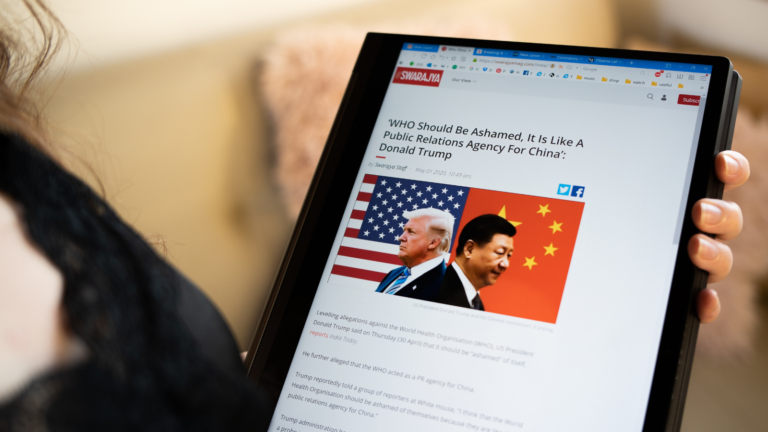
Trump and Xi may be talking about tariff relief, but for Ottawa the bigger story is what happens around the edges of that relief. A limited U.S.-China thaw would not erase the trade pressure already bearing down on Canada. It could even sharpen it by giving Washington a fresh opening in sectors where Canadian exporters are already vulnerable, while Ottawa is still trying to settle steel, aluminum, auto and CUSMA-related tensions with the United States.
These 10 pressure points explain why a seemingly positive turn between Washington and Beijing could still leave Canada in an awkward place. Some show where the risk is immediate, others reveal why the squeeze could last longer than a single summit headline.
The Tariff Thaw Is Smaller Than It Sounds
Trump and Xi Weigh New Tariff Cuts — and Ottawa Risks Getting Squeezed Again
- The Tariff Thaw Is Smaller Than It Sounds
- Canada Still Sells Into One Market First
- CUSMA Has Protected Canada — But Not Completely
- The July 1 Review Keeps Ottawa Boxed In
- Manufacturing Jobs Are the Real Vulnerability
- Metals and Machinery Remain Ground Zero
- The Labour Market Is Already Flashing Warning Signs
- Consumers Feel Tariff Fights on Store Shelves
- Diversification Is Happening — Just Not Fast Enough
- China Is Both a Relief Valve and a Pressure Point
What is under discussion between Trump and Xi looks less like a grand reset and more like a selective easing. Reuters reported that the two sides are weighing reciprocal tariff cuts on roughly $30 billion of non-sensitive goods, with discussions potentially covering a broader $30 billion to $50 billion range. Early candidates reportedly include energy and agricultural goods, while the U.S. is also considering reviving some expired product-specific exclusions and extending temporary breaks for certain industrial and medical items.
That matters because selective relief changes incentives without ending the larger rivalry. A partial opening can still redirect purchasing decisions, shipping flows and investment plans. For businesses, that is often enough to trigger real change. A grain buyer, refinery operator or manufacturer does not need a full peace treaty to start shifting orders. In trade politics, a narrow carve-out can move markets faster than a sweeping promise that never gets implemented.
Canada Still Sells Into One Market First
For all the talk of diversification, Canada remains overwhelmingly tied to the United States. Statistics Canada said 71.7% of Canadian merchandise exports went to the U.S. in 2025, down from 75.9% the year before. That decline is notable, but it still leaves the Canadian economy deeply exposed to any shift in American demand, policy or negotiating tactics. Canada’s merchandise trade surplus with the United States totaled $81.6 billion in 2025, which shows how much is still riding on that corridor.
That kind of dependence means Ottawa feels pressure even when Canada is not in the room. If Washington improves access to China for a slice of U.S. exports, or simply reallocates negotiating bandwidth away from Canada, the effects can spill north quickly. A country that sells most of its goods into one market has less room to shrug off policy turbulence. The headline may be about Trump and Xi, but the aftershocks still travel through Ontario factories, Prairie exporters and Quebec industrial hubs.
CUSMA Has Protected Canada — But Not Completely
Canada has not been fully exposed because CUSMA has acted as a shield. RBC Economics noted that almost 90% of Canadian exports to the United States stayed tariff-free in 2025 because trade-compliant goods retained an exemption. That helps explain why Canada avoided an even harsher blow when trade tensions escalated. But the same RBC analysis also showed that Canada’s share of the U.S. import market fell from 12.6% in 2024 to 11.2% in 2025, while steel exports dropped 30%.
That combination tells the real story. Protection on paper does not guarantee market share in practice. When tariffs hit targeted categories and uncertainty lingers, buyers start rethinking supply chains long before rules are fully rewritten. Steel is the clearest example, but the logic extends beyond metals. If U.S. importers perceive Canada as politically exposed or operationally uncertain, some business drifts elsewhere. Ottawa may have kept much of the formal access it needed, yet still lost ground where the pain is most concentrated.
The July 1 Review Keeps Ottawa Boxed In
The calendar matters almost as much as the tariffs. Reuters reported that Canada, the United States and Mexico must decide by July 1 whether to keep CUSMA as is, renegotiate it, or move into annual reviews until the agreement expires in 2036. Prime Minister Mark Carney has made clear that Canada wants relief from tariffs affecting steel, aluminum and autos, but Ottawa has also resisted making early concessions just to accelerate talks.
That creates a difficult posture. Canada cannot afford to look passive, but it also does not want to reward brinkmanship. The longer that review hangs over the system, the more it freezes investment decisions. A plant manager deciding on new tooling or a supplier considering a cross-border expansion does not only ask what the tariff is today. The bigger question is whether today’s rules will still exist after the next round of bargaining. That uncertainty is one reason even a U.S.-China thaw could leave Canada feeling cornered rather than relieved.
Manufacturing Jobs Are the Real Vulnerability
Trade stories often sound abstract until the employment numbers arrive. Statistics Canada said that in 2024, $113 billion of manufacturing value added was attributable to U.S. demand for Canadian manufacturing exports, supporting roughly 694,000 jobs. That represented 42.4% of total manufacturing value added and 41.0% of payroll jobs in the sector. In auto manufacturing, about 27,000 jobs were tied to U.S. demand, accounting for 76.4% of output and payroll jobs.
Those figures help explain why tariff disputes hit some communities harder than others. This is not just a matter of national GDP. It is about clustered local economies where assembly, stamping, parts, logistics and maintenance all sit on top of export demand. In places tied to transportation equipment or primary metals, a policy shock can spread well beyond the factory gate. The trade file becomes a payroll file, a housing file and a municipal tax file all at once. That is why Ottawa watches every U.S. trade move with a level of anxiety that outsiders sometimes underestimate.
Metals and Machinery Remain Ground Zero
If there is one place where the current fight is still hottest, it is in products containing steel, aluminum and copper. The Canadian government said the United States changed its Section 232 tariffs on those products and derivative goods effective April 6, 2026, and that the fallout has touched industries including steel fabrication, electrical grid infrastructure, mould making, and metalworking equipment and machinery. Washington framed the measures as a national-security move; Ottawa has treated them as a direct competitive threat to strategic industries.
The response from Canada shows how serious the damage is considered. Ottawa announced a new $1 billion BDC financing program and another $500 million for the Regional Tariff Response Initiative to help affected firms manage liquidity and adapt. That is not symbolic money. It is a sign that government sees these industries as under real strain. When emergency financing becomes part of trade policy, the issue has moved well beyond diplomatic theatre. It is now about keeping firms operational while policymakers try to prevent a deeper industrial slide.
The Labour Market Is Already Flashing Warning Signs
By early May, the labour data was already telling a more uncomfortable story. Reuters reported that Canada lost 17,700 jobs in April, the unemployment rate rose to 6.9%, and the entire monthly decline came from full-time work, which fell by 46,700 positions. Goods-producing industries shed 26,800 jobs. The Bank of Canada has also said the economy is operating on a lower path than before tariffs were imposed, with trade uncertainty still weighing on activity.
The vulnerability is broader than one bad month. Statistics Canada has estimated that around 1.8 million people, or 8.8% of all workers, were employed in industries dependent on U.S. demand for Canadian exports in 2024. Many of those jobs are well paid, which makes the risk economically and politically sensitive. When trade-dependent employment weakens, it tends to hit sectors that anchor entire regions. A slowdown in hiring or a pause in investment can therefore feel larger than the raw headline number suggests, especially in communities built around export-heavy industries.
Consumers Feel Tariff Fights on Store Shelves
Trade wars do not stay in boardrooms. The Bank of Canada’s recent research on Canada’s 2025 counter-tariffs showed that tariffed consumer goods became about 6% more expensive than comparable non-tariffed goods during the period those measures were in force. Canada had imposed 25% counter-tariffs on a broad range of U.S. imports in March 2025, covering products from groceries and appliances to electronics, furniture and household items, before lifting most of them six months later.
That research matters because it translates policy into daily life. Consumers do not always notice the diplomatic trigger, but they notice price tags. A toaster that costs more, a household item delayed by a supplier shift, or an appliance line adjusted by retailers is how tariff policy becomes ordinary frustration. The Bank also found those relative price increases returned to pre-tariff levels about three months after the measures were removed. That is a reminder that tariffs can be temporary in law and still persistent in experience, which is why governments worry about inflation pass-through whenever trade tensions flare.
Diversification Is Happening — Just Not Fast Enough
Canada has started to broaden its export map, but the pace still looks more evolutionary than transformational. Statistics Canada said there were 542 fewer Canadian enterprises exporting to the United States in 2025, while the number exporting to non-U.S. destinations increased by 292. The share of Canadian exporters selling into non-U.S. markets edged up from 34.1% to 34.8%. There were gains in Africa, the Middle East and Europe, even as the number of exporters to China fell for a sixth straight year.
That is progress, but it is not a clean escape hatch. A modest rise in non-U.S. exporting firms does not instantly replace the depth, proximity and scale of the American market. Many of the companies with real multi-market reach are larger exporters with existing infrastructure, not smaller firms suddenly making a seamless pivot abroad. In other words, diversification is real, but it is still incomplete and uneven. Ottawa can point to movement in the right direction, yet the underlying trade architecture remains U.S.-centric enough that American policy still sets the emotional temperature of the Canadian economy.
China Is Both a Relief Valve and a Pressure Point
Ottawa has been trying to reopen and deepen economic access to China for a reason. Global Affairs Canada said China was Canada’s second-largest single-country merchandise trading partner in 2025, with $124.8 billion in two-way merchandise trade. Canadian exports to China were valued at $34.1 billion, and Ottawa described China as an essential market for agriculture, agri-food, fish and seafood. Earlier this year, Canada also highlighted renewed market access with China as part of its broader trade strategy.
That is where the squeeze risk becomes clearest. Reuters reported that U.S.-China tariff relief under discussion may start with energy and agriculture, two areas where Canada also wants room to grow. So even if Ottawa benefits from calmer global sentiment, it could still face sharper competition in the very categories it has been working to rebuild. That is an inference from the sectors currently on the table, not a settled outcome. But it is a plausible one. A U.S.-China thaw would not automatically leave Canada behind, yet it could easily force Ottawa to fight harder to avoid exactly that.
This Options Discord Chat is The Real Deal
While the internet is scoured with trading chat rooms, many of which even charge upwards of thousands of dollars to join, this smaller options trading discord chatroom is the real deal and actually providing valuable trade setups, education, and community without the noise and spam of the larger more expensive rooms. With a incredibly low-cost monthly fee, Options Trading Club (click here to see their reviews) requires an application to join ensuring that every member is dedicated and serious about taking their trading to the next level. If you are looking for a change in your trading strategies, then click here to apply for a membership.