35,000+ smart investors are already getting financial news, market signals, and macro shifts in the economy that could impact their money next with our FREE weekly newsletter. Get ahead of what the crowd finds out too late. Click Here to Subscribe for FREE.
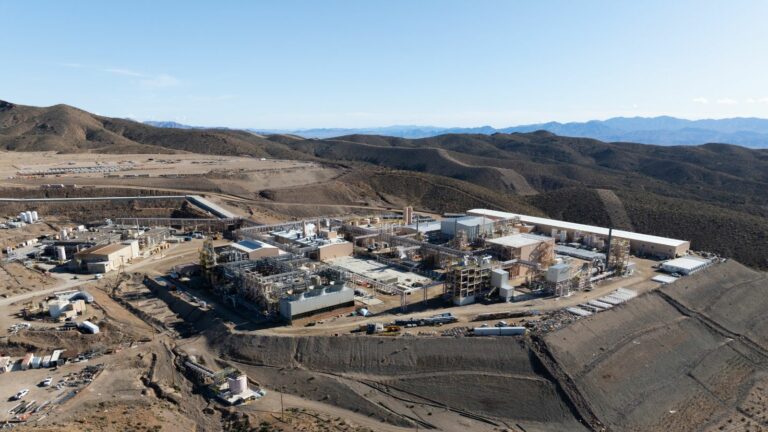
Northern Saskatchewan’s uranium story is returning to one of its oldest districts with a distinctly modern exploration playbook. Xcite Uranium has begun the first diamond-drilling program of its current partnership at the Don Lake project near Uranium City, where historical workings, old high-grade intercepts and newly collected geophysical data have been brought together into a fresh set of drill targets. The 2026 campaign calls for 1,500 metres of drilling in 14 holes from six pad locations, aimed at the Don and Midas target areas. The timing is notable. Saskatchewan remains one of the world’s most important uranium-producing jurisdictions, while governments and utilities are planning for more nuclear generation and the industry is warning that future reactor requirements will demand substantially more mined uranium. Don Lake is still an early-stage exploration story, but its restart captures why old uranium camps are receiving new attention.
The First Holes Will Test Two Carefully Defined Target Areas
Saskatchewan Uranium Project Launches First Diamond-Drilling Program as Nuclear Demand Drives New Exploration
- The First Holes Will Test Two Carefully Defined Target Areas
- Don Lake Carries a Uranium History Stretching Back Generations
- Modern Technology Is Rebuilding the Picture Beneath an Old Mining Camp
- The Partnership Shows How Junior Explorers Spread Cost and Risk
- Saskatchewan’s Uranium Sector Is Attracting More Capital
- Nuclear Expansion Is Changing the Long-Term Uranium Equation
- Drill Core, Not Market Excitement, Will Decide What Comes Next
The Don Lake program is designed to answer specific geological questions rather than simply drill around known historical occurrences. The companies say the 14 holes will total roughly 1,500 metres and test structurally controlled uranium mineralization at the Don and Midas targets. At Don, the drilling is intended to probe beneath the historical A, B and C zones and the Hawker trenches. At Midas, the focus is the source of a uranium geochemical anomaly that overlaps with a strong radiometric response. The holes are being oriented toward intersections between northeast- and northwest-trending structures, places where fault networks could have created pathways and traps for uranium-bearing fluids. Apex Drilling was contracted for the work, with crews based out of Uranium City.
The 2026 Don Lake budget is approximately C$1.1 million, according to Eagle Plains. About C$200,000 went to fieldwork that has already been completed, while roughly C$900,000 was allocated to drilling. That sequencing matters because the drill campaign is not simply returning to old showings and hoping for a repeat. Soil sampling, structural mapping, prospecting, scintillometer work, airborne radiometrics, magnetics, LiDAR and interpretation of earlier electromagnetic data were used to narrow the target list before the rig arrived. In exploration terms, that is the moment when a geological idea becomes testable. The holes will now determine whether the surface and geophysical signals extend into coherent mineralized structures at depth, or whether the anomalies are smaller and less continuous than the pre-drilling model suggests.
Don Lake Carries a Uranium History Stretching Back Generations
Don Lake sits only a few kilometres from Uranium City in the Beaverlodge district, an area that helped establish Canada as a major uranium producer long before the modern Athabasca Basin exploration boom. Historical work on the property dates to the late 1940s and 1950s, and the present claim package covers the former Beta Gamma mine as well as numerous Saskatchewan Mineral Deposit Index occurrences. Government records show that Beta Gamma was explored with trenching, drilling and underground development in the 1950s. Small quantities of mineralized material were later shipped to the Lorado mill. The broader Beaverlodge camp produced uranium for decades, but much of the district has received comparatively limited uranium-focused exploration since the late twentieth century. That gap is one reason old maps and assessment files are again becoming valuable starting points.
The most eye-catching historical numbers at Don Lake come from the A Zone. Archived assessment work cited by Eagle Plains reports a 1969 drill intercept of 10.7% U3O8 over 0.3 metres and another of 2.14% U3O8 over 0.67 metres, along with high-grade trench results. Those widths are narrow, and the figures are historical rather than a modern resource estimate, so they should not be treated as evidence that an economic deposit has already been defined. Their importance is more practical: they demonstrate that high-grade uranium mineralization was encountered in the target area and give geologists specific structures to revisit. The new program is therefore less about rediscovering that uranium exists at Don Lake than about testing whether mineralization has enough continuity, geometry and scale to justify a larger campaign.
Modern Technology Is Rebuilding the Picture Beneath an Old Mining Camp
The biggest difference between the current campaign and work done several decades ago is the amount of geophysical and spatial data available before drilling. A 2025 VTEM Plus airborne program identified conductivity patterns at Don Lake, while later interpretation highlighted magnetic features aligned with the regional Black Bay Fault. In 2026, the partners added 682 line-kilometres of airborne radiometric and magnetic surveying and approximately 2.9 square kilometres of drone LiDAR. Condor Consulting was also engaged to interpret and model 72 line-kilometres of the earlier VTEM data. Together, those datasets allow geologists to compare conductivity, magnetics, surface radioactivity, topography and known structures instead of relying primarily on trenches, outcrops and widely spaced historical holes. The result is a more three-dimensional picture of where mineralizing structures may continue below surface.
Field crews then used that framework to collect ground-level evidence. Eagle Plains reported 282 soil samples east of the Black Bay Fault, with highly anomalous uranium values at the Midas target interpreted as possible structural splays from the main fault zone. At the Don target, LiDAR helped relocate historical trenches and workings so structural mapping and sampling could be tied more accurately to old exploration records. Airborne radiometrics also identified broad uranium responses over the historic A, B and C zones, the Hawker trench area and Midas, while another anomaly appeared near the former Beta Gamma mine. None of those signals guarantees mineralization underground. Radiometric and geochemical anomalies can have multiple causes. Their value is that several independent datasets now point toward the same areas, giving the drill program a more disciplined basis for choosing where to spend each metre.
The Partnership Shows How Junior Explorers Spread Cost and Risk
Don Lake is owned by Eagle Plains Resources, while Xcite Uranium is funding the current earn-in program under agreements covering six uranium properties around Uranium City. Under the disclosed terms, Xcite can earn an 80% interest in each property by completing C$3.2 million in exploration expenditures, issuing 750,000 Xcite shares and making C$55,000 in cash payments over four years. Across all six agreements, that would amount to C$19.2 million in exploration spending, 4.5 million shares and C$330,000 in cash. If an earn-in is completed, the structure calls for an 80/20 joint venture, with Eagle Plains retaining a carried interest through delivery of a bankable feasibility study. Eagle Plains also retains an underlying 2% net smelter return royalty on the properties.
That structure illustrates how junior exploration projects are often advanced: one company supplies the property portfolio and accumulated geological work, while a partner commits capital to test it. The arrangement can spread financial risk while allowing multiple targets to move forward, but it also means the project remains dependent on exploration results, financing and future spending decisions. Regulatory and community groundwork has also preceded the drilling. Eagle Plains said Saskatchewan’s Ministry of Environment issued permits for activities including diamond drilling, access clearing, prospecting and geophysics. The Uranium City projects are covered by a formal exploration agreement with the Ya’thi Néné Lands and Resource Office, which represents Athabasca Denesułiné First Nations and several northern communities. Those relationships are particularly important in a region where mineral development, employment and land use are closely connected.
Saskatchewan’s Uranium Sector Is Attracting More Capital
Don Lake is being drilled against a provincial backdrop that is far stronger than the uranium market of a decade ago. Saskatchewan reported record uranium sales of C$3.2 billion in 2025, up 24% from 2024, and the province accounted for more than 16% of Canadian mineral exploration spending that year. The provincial government expects total exploration spending in Saskatchewan to rise to about C$483 million in 2026, a 23% increase. Uranium is only part of that figure, but the direction is clear: more capital is being directed toward finding and advancing mineral deposits. Saskatchewan has also expanded its Targeted Mineral Exploration Incentive, which can reimburse eligible uranium explorers for 25% of certain drilling and geophysical costs up to C$50,000 per year.
The province’s significance extends well beyond exploration budgets. Federal data show that all of Canada’s current uranium mine production comes from Saskatchewan, while Canada accounted for roughly 24% of global uranium production in 2024. About 90% of Canadian output is exported, making northern Saskatchewan part of the fuel supply chain for reactors far beyond Canada. Development activity is also moving beyond the exploration stage. In 2026, federal regulators authorized construction of both Denison’s Wheeler River project and NexGen Energy’s Rook I project, the first Canadian uranium mines approved for construction since 2004. Rook I entered its construction phase this summer. For smaller programs such as Don Lake, those developments reinforce the province’s advantage as an established uranium jurisdiction with operating mines, advancing projects and an experienced service sector.
Nuclear Expansion Is Changing the Long-Term Uranium Equation
The renewed search for uranium is ultimately tied to expectations for nuclear power. The World Nuclear Association estimated global reactor uranium requirements at about 68,920 tonnes of uranium in 2025. In its reference scenario, requirements rise to just over 150,000 tonnes by 2040; its upper scenario exceeds 204,000 tonnes. The association also noted that mined supply covered about 90% of annual reactor requirements in 2024 and warned that depletion at existing operations increases the need for new primary supply during the next decade. Those projections are not guarantees, but they show why explorers are trying to establish future resources years before utilities may need them. A discovery made today could require a long sequence of drilling, engineering, environmental assessment, permitting, financing and construction before producing commercial uranium.
Independent nuclear-capacity projections point in the same broad direction. The International Atomic Energy Agency’s latest high case projects global operational nuclear capacity reaching roughly 992 gigawatts by 2050, about 2.6 times the 2024 level, while its lower case still anticipates substantial growth. More than 30 countries have backed a goal of tripling global nuclear capacity by 2050, and Canada launched a national nuclear energy strategy in 2026 that emphasizes domestic nuclear deployment and Canada’s role as a uranium supplier. The demand story is therefore not based on one reactor announcement or one commodity-price cycle. It rests on a larger combination of energy security, decarbonization, life extensions for existing plants and proposed new reactors. Whether all planned capacity is built remains uncertain, but the scale of the pipeline has materially changed the long-term conversation around uranium supply.
Drill Core, Not Market Excitement, Will Decide What Comes Next
For Don Lake, the next meaningful evidence will come from the core rather than the macro narrative. Investors and geologists will be looking for more than isolated radioactive intervals. Important questions include whether the targeted structures are present where predicted, whether alteration and uranium mineralization persist from hole to hole, and whether the widths and grades show repeatable patterns. The program’s six drill pads also allow several holes to test related structures from different orientations, which can improve understanding of geometry. At the Don target, successful holes could establish extensions beneath historical trenches. At Midas, the central test is whether the overlapping soil and radiometric anomalies can be tied to a mineralized bedrock source. Negative holes would also be informative by helping narrow or revise the geological model before additional money is committed.
The distinction between exploration success and a mine remains essential. Don Lake does not have a current mineral resource described in the August 20 drilling announcement, and historical grades cited by the companies have limitations. Eagle Plains has repeatedly cautioned that older results were collected by previous operators and have not all been independently verified to modern standards. Even a strong drill intercept would therefore represent another step in a much longer process, not proof of commercial viability. Still, the launch is significant because it puts a drill into a historically mineralized part of the Beaverlodge district after modern surveys rebuilt the target picture. In a uranium market increasingly focused on where future supply could come from, the 2026 holes will provide the first direct test of whether Don Lake deserves to move from revived historical prospect to sustained modern exploration project.
This Options Discord Chat is The Real Deal
While the internet is scoured with trading chat rooms, many of which even charge upwards of thousands of dollars to join, this smaller options trading discord chatroom is the real deal and actually providing valuable trade setups, education, and community without the noise and spam of the larger more expensive rooms. With a incredibly low-cost monthly fee, Options Trading Club (click here to see their reviews) requires an application to join ensuring that every member is dedicated and serious about taking their trading to the next level. If you are looking for a change in your trading strategies, then click here to apply for a membership.