35,000+ smart investors are already getting financial news, market signals, and macro shifts in the economy that could impact their money next with our FREE weekly newsletter. Get ahead of what the crowd finds out too late. Click Here to Subscribe for FREE.
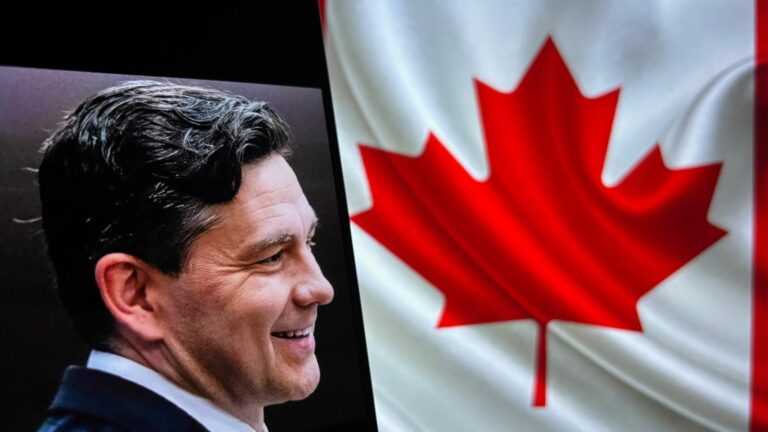
Pierre Poilievre is taking the national-unity fight straight into Alberta, where a renewed separatist push has moved from political fringe to referendum-year reality. His Calgary message is designed to walk a narrow line: validate Albertans’ frustration with Ottawa while arguing that separation would solve the wrong problem.
The Conservative leader’s pitch is not expected to centre on abstract patriotism alone. Instead, it frames unity as something that must be made practical through pipelines, resource development, provincial autonomy and lower taxes. With Alberta preparing to vote in October on whether to stay in Canada or begin a legal path toward a future separation referendum, Poilievre’s challenge is to convince angry voters that a stronger Alberta can still be built inside Confederation.
A Calgary Speech Built Around Frustration, Not Separation
Poilievre Heads to Calgary With Plan to Blunt Alberta Separatism
- A Calgary Speech Built Around Frustration, Not Separation
- Why Alberta’s October Vote Raises the Stakes
- Poilievre’s Policy Antidote: Pipelines, Autonomy and Taxes
- The Polling Shows a Warning, Not a Majority Revolt
- Calgary May Be the Right Place to Make the Case
- The Conservative Unity Campaign Has Already Begun
- Carney’s Federal Response Complicates the Conservative Pitch
- The Legal Reality Makes Separation More Complicated Than a Ballot Question
- A Test of Whether Federalism Can Still Deliver
Poilievre’s Calgary address is expected to argue that separatist sentiment in Alberta is less about hostility toward other Canadians than anger at federal policy. Prepared remarks shared with The Canadian Press say Alberta does not need a different country, but “different government policies in Ottawa.” That distinction is central to the Conservative strategy: meet discontent head-on, but redirect it toward federal political change rather than constitutional rupture.
The message also gives Poilievre room to sound sympathetic without endorsing the separatist premise. In Alberta, where energy workers, small-business owners and rural families often describe Ottawa as distant or dismissive, a simple rejection of separatism could land as scolding. His approach instead treats separation as a warning signal. The goal is to tell Albertans their grievances are real, while arguing the remedy is a new federal direction on development, taxation and provincial powers.
Why Alberta’s October Vote Raises the Stakes
Alberta’s referendum is scheduled for October 19, and Elections Alberta says voters will face a choice question asking whether the province should remain in Canada or whether the provincial government should begin the legal process required under the Canadian Constitution to hold a future binding referendum on separation. That means October’s vote is not a direct vote to leave Canada, but it could still become a powerful political signal.
The separation question was added after Premier Danielle Smith said she supported Alberta remaining in Canada but would not ignore hundreds of thousands of Albertans who had signed petitions demanding a vote on the province’s future. Elections Alberta lists ten referendum questions in total, with the separation-related question counted first at voting locations. That detail matters because it places national unity at the front of a ballot originally tied to immigration, constitutional reform and provincial autonomy.
Poilievre’s Policy Antidote: Pipelines, Autonomy and Taxes
Poilievre’s planned antidote to separatism is built around familiar Conservative themes: unblock resources, build pipelines, respect provincial autonomy and relieve taxpayers. The message is likely to resonate with voters who see Alberta’s economic potential as constrained by federal approval processes and environmental rules. It also links Alberta’s anger to a national pocketbook argument, rather than treating it as a purely regional grievance.
The strategy depends on making federalism feel useful again. A Calgary engineer waiting on energy investment, a tradesperson hoping for pipeline work, or a family facing higher household costs may not be moved by speeches about Confederation alone. Poilievre is betting they may be moved by a concrete claim: Alberta can get more of what it wants by changing Ottawa than by leaving Canada. That is the core political gamble behind the Calgary speech.
The Polling Shows a Warning, Not a Majority Revolt
Recent polling suggests Alberta separatism remains a serious political issue, but not yet a majority movement. An Ipsos poll for Global News found that 19 per cent of Albertans would vote in October to hold a future binding separation referendum, while 72 per cent would choose to remain in Canada. If a binding referendum were held, Ipsos found 18 per cent would vote to leave Canada, down from 28 per cent in January.
Angus Reid found a similar pattern, with 60 per cent saying they would vote against beginning the separation process on the official October question and 35 per cent saying they would vote yes. On a simpler stay-or-leave question, support for staying rose to 67 per cent. The same polling found that many Albertans considered the official wording confusing. For Poilievre, that creates opportunity and danger: the separatist side may be smaller, but confusion and frustration can still shape turnout, campaigns and headlines.
Calgary May Be the Right Place to Make the Case
Calgary gives Poilievre a useful stage because it sits at the intersection of Alberta’s energy economy, urban moderation and federal Conservative strength. Ipsos found support for separation was lower in Calgary than in the rest of Alberta, with 12 per cent of Calgary respondents saying they would vote to separate in a binding referendum. That makes the city a practical launch point for a unity pitch aimed at persuadable conservatives.
The symbolism is also hard to miss. Calgary is a city of head offices, engineers, trades, commuters and families who have lived through oil booms, layoffs, pipeline battles and affordability stress. In that setting, Poilievre can argue that Alberta’s prosperity depends on getting projects built and capital moving. His speech is not just about stopping a separatist vote. It is about convincing Albertans that staying in Canada can produce results they can see in paycheques, investment decisions and community confidence.
The Conservative Unity Campaign Has Already Begun
Poilievre has already said he and Conservative MPs will campaign across Alberta to encourage people to remain part of the Canadian family. That turns the party’s position into more than a statement from Ottawa. It suggests a summer-long effort to put federal Conservative voices in Alberta communities where separatist organizers are trying to turn frustration into a constitutional campaign.
The approach carries political risk. If Conservatives sound too soft on separatism, federalists may accuse them of indulging a dangerous movement. If they sound too harsh, they may alienate voters who feel Ottawa has ignored Alberta for years. Poilievre’s solution is to separate the emotion from the outcome: anger at Ottawa is understandable, but leaving Canada is the wrong destination. Whether that message holds under referendum pressure will depend on how disciplined the party remains.
Carney’s Federal Response Complicates the Conservative Pitch
Prime Minister Mark Carney has also moved to address Alberta’s grievances, including through an agreement with Alberta aimed at expanding energy exports, streamlining project reviews and tying new pipeline progress to emissions and carbon-capture conditions. That creates a more complicated political environment for Poilievre. He cannot simply say Ottawa is doing nothing if the federal government is already trying to show movement.
But Carney’s approach also gives Poilievre a target. Conservatives can argue that Alberta has heard promises before and that only a broader federal policy shift will restore investor confidence. The difference between the two federal leaders may come down to trust. Carney is offering co-operative federalism through negotiated agreements. Poilievre is offering a sharper break from the policies many Alberta conservatives blame for the current mood.
The Legal Reality Makes Separation More Complicated Than a Ballot Question
Even if Alberta voters eventually backed separation, Canada’s constitutional framework does not allow a province to leave unilaterally. The Supreme Court of Canada’s Quebec Secession Reference established that a clear vote on a clear question would create an obligation to negotiate, not an automatic exit. The federal Clarity Act also gives the House of Commons a role in determining whether a referendum question and majority are clear enough to trigger negotiations.
Indigenous treaty rights add another major layer. A judge quashed a separation petition after finding Alberta had a duty to consult First Nations because secession could affect treaty rights. Premier Smith has said her government will appeal, but the ruling underscores how separation would involve far more than a provincial campaign. It would raise questions about treaties, borders, federal obligations, constitutional amendments and the rights of people who were not parties to Alberta’s referendum politics.
A Test of Whether Federalism Can Still Deliver
Poilievre’s Calgary message is ultimately a test of practical federalism. His argument is that Alberta does not need to leave Canada to be respected, but Canada does need to change if it wants Alberta to remain confidently inside it. That is a harder sell than waving a flag, because it requires convincing people that political change is still possible through federal institutions many of them distrust.
The deeper challenge is emotional as much as constitutional. Western alienation has long been tied to perceptions of unfair treatment, lack of respect and distance from decision-makers in central Canada. Poilievre is trying to turn that feeling into a national Conservative argument: Alberta’s frustration should fuel a different government, not a different country. If he succeeds, separatism may remain loud but limited. If he fails, October could become more than a symbolic vote — it could become a measure of how many Albertans have stopped believing Confederation can work for them.
This Options Discord Chat is The Real Deal
While the internet is scoured with trading chat rooms, many of which even charge upwards of thousands of dollars to join, this smaller options trading discord chatroom is the real deal and actually providing valuable trade setups, education, and community without the noise and spam of the larger more expensive rooms. With a incredibly low-cost monthly fee, Options Trading Club (click here to see their reviews) requires an application to join ensuring that every member is dedicated and serious about taking their trading to the next level. If you are looking for a change in your trading strategies, then click here to apply for a membership.