35,000+ smart investors are already getting financial news, market signals, and macro shifts in the economy that could impact their money next with our FREE weekly newsletter. Get ahead of what the crowd finds out too late. Click Here to Subscribe for FREE.
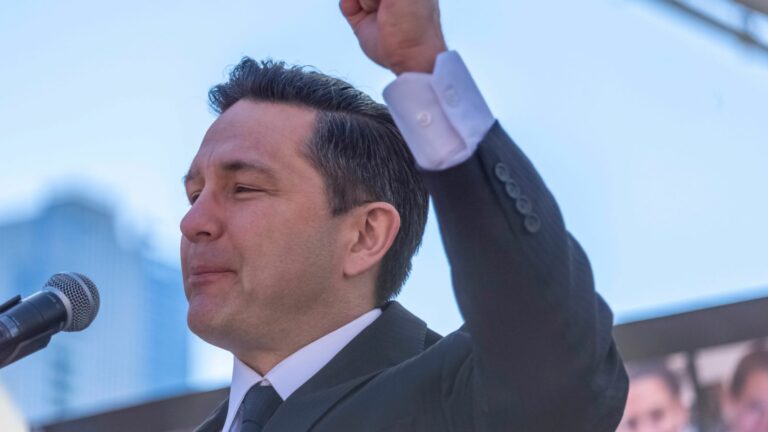
Air travel has a way of turning policy into something personal. A delayed connection, a long drive to Pearson, or the convenience of stepping off a plane minutes from downtown can shape how people think about infrastructure faster than any white paper ever could. That is why Pierre Poilievre’s latest attack on Toronto Pearson — paired with his support for expanding Billy Bishop Airport — landed with such force.
The debate is no longer just about one remark or one runway. It now reaches into 10 larger questions about competition, convenience, cost, local control, waterfront land, and what kind of airport system Canada’s biggest city should build next.
A Remark Meant to Sting
Poilievre Calls Pearson a “Disaster” and Backs Billy Bishop Expansion
- A Remark Meant to Sting
- Why Pearson Is Such an Easy Political Target
- Billy Bishop Already Has a Bigger Role Than Many Assume
- The Real Barrier Is Not Demand but the Rulebook
- Ontario’s Bill Changes the Ground Under the Debate
- The Competition Argument Is Not Just a Slogan
- Cheaper Flights Are Possible, Not Guaranteed
- The City Sees More Than an Airport Plan
- Pearson’s Story Is Not as Simple as “Disaster”
- What Happens Next Will Be About More Than Runways
Poilievre’s comment worked because it was designed to do more than criticize an airport. Calling Pearson a “disaster” instantly turned a long-running policy fight into a plain-language political contrast: one airport portrayed as bloated and frustrating, the other as underused and full of untapped potential. He tied that contrast directly to Billy Bishop, arguing that expanding the island airport would be better for the economy, better for convenience, and a way to force more competition into the market.
That framing also gave the story a sense of continuity rather than spontaneity. This was not a fresh idea invented on the spot. Poilievre had already pushed in 2022 for a runway expansion that could allow jets to operate from downtown Toronto. What changed now is the backdrop: Ontario has moved from discussing the concept to introducing legislation that could alter control of the lands and governance structure around Billy Bishop, making the old argument feel newly actionable.
Why Pearson Is Such an Easy Political Target
Pearson’s size is both its strength and its vulnerability. It handled 46.8 million passengers in 2024, making it by far the country’s busiest airport and one of the biggest transportation nodes in North America. It also sits at the centre of a system that layers on passenger charges, operational complexity, airline bottlenecks, security demands, and public frustration. When things go well, Pearson feels essential. When things go badly, it becomes a national symbol of travel stress.
That makes it perfect political material. Passengers do not experience airport systems as spreadsheets; they experience them as missed family dinners, early-morning traffic, and lineups that seem to move one person at a time. Pearson also charged an Airport Improvement Fee of $35 for originating passengers in 2024, a reminder that large hubs carry real cost burdens along with their scale. Even though Pearson has improved in several areas, the memory of disruption lingers. In politics, that memory often matters more than an annual report’s list of upgrades.
Billy Bishop Already Has a Bigger Role Than Many Assume
Billy Bishop is often discussed as if it were a niche convenience airport for a small slice of downtown travellers, but the numbers show it already punches above its footprint. PortsToronto says the airport serves roughly two million passengers a year, connects to more than 20 cities in Canada and the United States, and supports more than 4,400 jobs while generating over $2.1 billion in economic output. It is also far more than a commuter perk: it hosts critical medevac activity, with thousands of Ornge flights operating from the site.
Its appeal is easy to understand on a human level. For a business traveller heading to a same-day meeting, or a family trying to avoid a long trek across the GTA, proximity matters. Billy Bishop’s downtown location has always been its central selling point. The March 2026 opening of U.S. preclearance added another advantage, letting travellers complete American customs formalities before departure. That does not automatically make expansion simple or wise, but it explains why the airport has such loyal defenders whenever the conversation turns to capacity and convenience.
The Real Barrier Is Not Demand but the Rulebook
The core issue is not whether more people would use Billy Bishop if it offered more flights. The deeper problem is that the airport is governed by a very specific legal structure that sharply limits what “expansion” can mean. Transport Canada says the 1983 Tripartite Agreement among the federal government, the City of Toronto, and PortsToronto imposes noise limits, hours-of-operation limits, and prohibitions on runway extensions, landmass expansions, and jet aircraft. It also states that amendments require the consent of all three parties.
That framework is why this debate has dragged on for years. Toronto’s own archive shows that the last major push to allow jet-powered aircraft ran into a wall after the federal Liberals said in 2015 they would not reopen the agreement to remove the jet ban. In other words, the Billy Bishop fight has never really been about runway math alone. It has always been about whether governments are willing to rewrite a compromise that was designed precisely to stop the airport from evolving into something larger and louder.
Ontario’s Bill Changes the Ground Under the Debate
Ontario’s latest move matters because it is not merely rhetorical. Bill 110, the Building Billy Bishop Airport Act, 2026, would authorize the province to vest prescribed City-owned lands in the Crown, compensate the City based on appraised market value, and remove Toronto from the Tripartite Agreement on a prescribed date, substituting the Crown in its place. That is a major escalation. Instead of asking the City to cooperate, the province is trying to change the institutional map around the airport.
That is why the discussion suddenly feels less theoretical. The province has framed the bill as a way to support long-term modernization and expansion, meet future demand in southern Ontario, reduce pressure on Pearson, and improve competition. But the legal mechanics are as politically explosive as the aviation policy itself. When a provincial government starts talking about taking municipal land and stepping into a three-party airport agreement, the argument stops being only about flights and starts becoming a power struggle over who gets to shape Toronto’s waterfront future.
The Competition Argument Is Not Just a Slogan
Poilievre’s claim that Billy Bishop expansion could improve competition is not coming out of thin air. The Competition Bureau’s 2025 airline market study concluded that stronger competition would save Canadians money, expand access to flights, and improve service quality. It also found that when just one new airline begins serving a route between two cities, fares fall by 9% on average. That is a powerful statistic in a country where travellers frequently complain about limited choices and high domestic prices.
The bureau also made a point that fits neatly into the Billy Bishop debate: secondary airports matter. Its recommendations explicitly included enhancing the ability of secondary airports to compete. That does not prove every expansion is automatically pro-consumer, and it certainly does not erase concerns about noise or land use. But it does explain why politicians keep returning to the “competition” case. In a highly concentrated market where Air Canada and WestJet still account for a large share of domestic traffic at major airports, even modest shifts in access and slot availability can carry outsized symbolic and economic weight.
Cheaper Flights Are Possible, Not Guaranteed
This is where the politics gets ahead of the fine print. More competition can lower fares, but that does not mean every airport expansion leads directly to cheaper tickets. Canada’s aviation system is built around a user-pay model, and both airports and airlines pass many costs through to travellers. Pearson’s Airport Improvement Fee was $35 for originating passengers in 2024. Billy Bishop’s new U.S. preclearance model also comes with its own direct passenger cost: a Year One CBP user fee of $22.50 CAD for commercial passengers flying to the United States.
Parliamentary work on airline competition has repeatedly come back to the same theme: fees, rents, infrastructure costs, and regulatory burdens shape ticket prices just as much as marketing promises do. That means the public should be cautious with any simple claim that runway changes alone will make travel suddenly affordable. Expansion may create room for more carriers, more routes, or more pressure on incumbents. But if new infrastructure, governance battles, and operating costs pile up, the savings case becomes far more complicated than a campaign-style soundbite suggests.
The City Sees More Than an Airport Plan
Supporters of expansion talk about mobility, business access, and competition. Opponents see a precedent about land, local democracy, and the shape of the waterfront. Toronto Mayor Olivia Chow has argued that unilateral provincial seizure of City land is unacceptable, and recent reporting around council’s response shows the emotional centre of the backlash is not an abstract aviation clause but public space, especially Little Norway Park and nearby waterfront lands. In that sense, the airport debate has become a parks-and-power debate too.
Toronto’s own legal background report adds another wrinkle that makes the fight sharper. It states that the province’s announced takeover of airport lands is unrelated to Runway End Safety Area compliance, which is required for current airport operations. That matters because it undercuts any attempt to present the entire project as a simple safety necessity. Once that argument weakens, critics gain room to say this is fundamentally an expansion project with quality-of-life consequences — more noise, more air traffic, more skyline concerns, and less municipal say over how the waterfront evolves.
Pearson’s Story Is Not as Simple as “Disaster”
The political attack works because Pearson has been associated with delays and disruption, but the full picture is more complicated. Pearson’s own 2024 reporting shows the airport handled more passengers, improved technology and accessibility, regained the title of North America’s Best Airport Over 40 Million Passengers in ACI’s passenger survey, and continued a long-term capital plan called Pearson LIFT. The airport also described itself as North America’s most internationally connected airport, with 199 destinations on departure boards and seven new international airlines starting operations in 2024.
That does not erase passenger frustration or the real burden of a giant, expensive hub. But it does mean the “disaster” label is more politically effective than analytically complete. Pearson is not a failed asset sitting in neglect; it is a huge, expensive, still-improving airport trying to grow into future demand. The better interpretation may be that Toronto’s aviation system has two truths at once: Pearson remains indispensable, and Billy Bishop remains appealing precisely because it offers an experience Pearson, by sheer scale, can never fully replicate.
What Happens Next Will Be About More Than Runways
The next phase of this story will be decided in law and intergovernmental bargaining as much as in transportation policy. Bill 110 is only at First Reading and ordered for Second Reading, so the province’s ambition is clear but not yet complete. Public plans also remain vague in important ways. Recent reporting noted that key details, including how long a runway extension might need to be to accommodate jets and how quickly any work could proceed, have not been clearly laid out.
That uncertainty matters because the airport is still governed by a structure in which federal involvement remains central. Transport Canada says the Tripartite Agreement requires the consent of all three parties for amendments. So even if Ontario succeeds in changing provincial control over lands or trying to substitute itself for the City, the federal government’s stance will still be crucial. In practical terms, the headline fight is about Pearson versus Billy Bishop. In legal terms, the deeper contest is about whether Toronto’s airport future will be shaped by market competition, provincial power, municipal resistance, or some uneasy mix of all three.
This Options Discord Chat is The Real Deal
While the internet is scoured with trading chat rooms, many of which even charge upwards of thousands of dollars to join, this smaller options trading discord chatroom is the real deal and actually providing valuable trade setups, education, and community without the noise and spam of the larger more expensive rooms. With a incredibly low-cost monthly fee, Options Trading Club (click here to see their reviews) requires an application to join ensuring that every member is dedicated and serious about taking their trading to the next level. If you are looking for a change in your trading strategies, then click here to apply for a membership.