35,000+ smart investors are already getting financial news, market signals, and macro shifts in the economy that could impact their money next with our FREE weekly newsletter. Get ahead of what the crowd finds out too late. Click Here to Subscribe for FREE.
Canada’s push to reduce its economic dependence on the United States has reached a significant milestone, with Ottawa projecting nearly 14,000 new jobs from a proposed free trade agreement with Southeast Asia. Prime Minister Mark Carney announced on November 14, 2026, that negotiations with the Association of Southeast Asian Nations (ASEAN) had substantially concluded, bringing Canada closer to a trade pact covering nearly 700 million people.
The federal government estimates the agreement could add almost $2 billion to Canada’s economy, with agriculture and manufacturing among the expected beneficiaries. The announcement comes as Canadian businesses face continuing uncertainty over U.S. tariffs and cross-border trade.
However, the projected benefits depend on the agreement being finalized and implemented. The challenge is turning a major diplomatic breakthrough into lasting opportunities for Canadian workers and exporters.
Canada and ASEAN Reach a Major Trade Negotiating Milestone
Ottawa Projects Nearly 14,000 Canadian Jobs From ASEAN Trade Pact as It Seeks New Markets Beyond the U.S.
- Canada and ASEAN Reach a Major Trade Negotiating Milestone
- The Nearly 14,000 Jobs Are Projected, Not Guaranteed
- Southeast Asia Represents a Market of Nearly 700 Million Consumers
- Canada-ASEAN Trade Has Already Reached $52.5 Billion
- Canadian Farmers and Food Processors Could See New Opportunities
- Manufacturing Could Benefit From More Integrated Supply Chains
- Technology and Service Companies May Find Opportunities Beyond Physical Exports
- The U.S. Trade Dispute Is Accelerating Canada’s Search for Alternatives
- A Separate Philippines Trade Deal Could Open Additional Doors
- Turning a Trade Agreement Into Jobs Will Require More Than Signatures
The breakthrough came during the 49th ASEAN Summit in Manila, where Prime Minister Mark Carney represented Canada as Guest of the Chair. On November 14, Ottawa announced the substantial conclusion of negotiations toward the ASEAN-Canada Free Trade Agreement. Discussions began in November 2021, making this a milestone more than five years in the making. Negotiators have worked through issues ranging from tariffs and customs procedures to investment protections, technical standards, and trade in services. The announcement reflects considerable progress toward establishing a more comprehensive economic relationship between Canada and Southeast Asia.
However, substantial conclusion does not mean the agreement has entered into force. Ottawa hopes to complete the remaining steps and sign the pact in 2027. Formal approval and implementation would still be needed before its provisions could take effect. For a Canadian manufacturer preparing export contracts or a farmer considering new overseas customers, that distinction matters. The agreement provides a clearer direction for future planning, but businesses cannot yet assume that its proposed tariff reductions or other preferential terms are available. The announcement represents a significant negotiating achievement rather than an immediate change in trading conditions.
The Nearly 14,000 Jobs Are Projected, Not Guaranteed
The most attention-grabbing figure in Ottawa’s announcement is the expectation that the agreement could support nearly 14,000 Canadian jobs. The federal government also estimates an economic boost approaching $2 billion in gross domestic product once the agreement takes effect. Agriculture and manufacturing are identified as important beneficiaries, reflecting the potential for increased production, exports, and demand throughout Canadian supply chains. These gains could eventually extend beyond farms and factories to transportation providers, warehouses, equipment suppliers, and other businesses supporting international trade.
However, the employment figure should be understood as an economic projection rather than a confirmed hiring commitment. The November 14 announcement does not provide a province-by-province breakdown, specific job categories, or a timetable for when the positions might materialize. Earlier Canada-ASEAN economic research examined different trade liberalization scenarios, demonstrating how the estimated benefits depend on assumptions about tariffs, services, and investment. For Canadian workers, the real measure of success will be whether new export contracts produce additional employment and sustainable business growth. The forecast offers a reason for optimism, but achieving it will require companies to convert improved market access into actual sales.
Southeast Asia Represents a Market of Nearly 700 Million Consumers
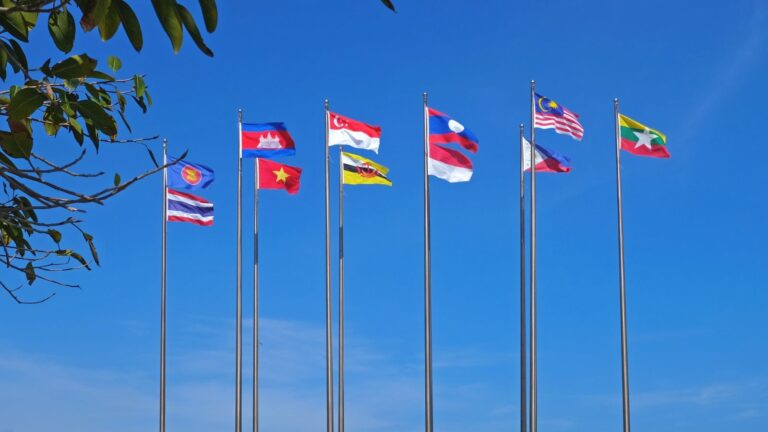
The scale of Southeast Asia helps explain why Ottawa considers the agreement strategically important. ASEAN now has 11 members, including Indonesia, Vietnam, Thailand, Singapore, Malaysia, the Philippines, Cambodia, Brunei, Laos, Myanmar, and Timor-Leste. Together, these countries had approximately 695 million residents and a combined nominal economy worth roughly $5.9 trillion in 2025, according to Canadian government figures. The International Monetary Fund projected regional economic growth of approximately 4.9% in 2026, highlighting the region’s importance to global trade and investment.
Yet ASEAN should not be mistaken for one uniform consumer market. Singapore is a sophisticated financial and technology hub, while Indonesia offers a much larger population and substantial demand for food, energy, and industrial products. Vietnam has become a major manufacturing centre, while other economies have different infrastructure needs and levels of household purchasing power. A Canadian company selling agricultural commodities may identify opportunities that look entirely different from those available to a software developer or engineering firm. A regional trade agreement could provide a stronger foundation for expansion, but successful exporters will still need strategies suited to individual countries.
Canada-ASEAN Trade Has Already Reached $52.5 Billion
Canada’s growing relationship with Southeast Asia is already visible in the trade statistics. In 2025, two-way merchandise trade between Canada and ASEAN reached approximately $52.5 billion, compared with roughly $42.4 billion in 2024. That made ASEAN Canada’s fifth-largest merchandise trading partner as a group. The increase demonstrates that Canadian businesses are expanding their commercial relationships with Southeast Asian economies even before the proposed regional agreement enters into force. It also suggests an established foundation of exporters, importers, and distributors that could benefit from more predictable trade rules.
Vietnam offers a particularly revealing example of how extensive these connections have become. Canadian government figures show that bilateral merchandise trade with Vietnam reached $20.6 billion in 2025, although imports into Canada accounted for most of that total. Canadian exports to Vietnam included agricultural products, metals, fertilizers, and wood products. Meanwhile, Canadian merchandise exports to Singapore and Indonesia reached approximately $3.2 billion and $3 billion, respectively. These figures illustrate both the opportunities and the challenges. Existing trade relationships provide a starting point, but Ottawa’s larger objective is to expand Canadian exports rather than simply increase the overall volume of goods moving in both directions.
Canadian Farmers and Food Processors Could See New Opportunities
Agriculture stands among the sectors Ottawa expects to benefit from the proposed agreement, and Canadian producers already have a substantial presence in Southeast Asia. Agriculture and Agri-Food Canada reported that six major ASEAN economies imported approximately $3.3 billion in Canadian agri-food and seafood products in 2024. Wheat was particularly important, accounting for nearly $1.9 billion in imports from Canada. Soybeans, frozen pork, and beef were also significant categories. The figures demonstrate why improved market access matters for Prairie grain producers, livestock operations, and food-processing companies.
The potential gains extend beyond simply reducing import duties. Agricultural exporters must navigate food safety rules, documentation requirements, transportation costs, and individual countries’ import regulations. A Saskatchewan wheat producer, for example, may depend on reliable shipping connections and overseas milling customers just as much as favourable tariff treatment. Canada’s trade negotiators have addressed sanitary and phytosanitary measures, which govern matters such as plant and animal health and food safety. More predictable procedures could help Canadian suppliers compete, although the actual benefits will depend on the final agreement’s provisions. For rural communities, additional export orders could support employment not only on farms but also in processing, transportation, and agricultural services.
Manufacturing Could Benefit From More Integrated Supply Chains
Canadian manufacturing is another major focus of the government’s employment projections. The proposed agreement could create opportunities for companies producing industrial machinery, specialized equipment, components, and other manufactured products. Modern manufacturing frequently depends on international supply chains in which raw materials, components, and finished goods cross several borders. Negotiations between Canada and ASEAN have addressed rules of origin, technical barriers to trade, investment, and customs procedures. These measures matter because they help determine which products qualify for preferential treatment and how efficiently goods can move between markets.
For Canadian manufacturers, the benefits could include improved access to overseas customers and more flexibility when sourcing components. Earlier joint economic research by Canada and ASEAN identified the potential for regional rules of origin to encourage more integrated production networks. However, expanded trade does not automatically translate into additional Canadian manufacturing employment. Businesses must decide where to locate production, whether increased sales justify new equipment, and how to compete against established suppliers. The agreement could strengthen Canada’s position in Asian supply chains, but realizing the projected benefits will depend on commercial investment and the final trade rules available to manufacturers.
Technology and Service Companies May Find Opportunities Beyond Physical Exports
Although agriculture and manufacturing dominate the government’s jobs forecast, the proposed agreement could also matter for Canada’s expanding services economy. Canada-ASEAN negotiations have covered cross-border services, telecommunications, financial services, investment, and electronic commerce. These areas influence how businesses deliver expertise and technology across international borders. Canadian software developers, engineering consultants, financial technology firms, and other professional service providers could potentially benefit from more transparent and predictable operating conditions in Southeast Asian markets.
The opportunity is supported by broader changes in Canada’s international trade. Global Affairs Canada’s State of Trade 2026 report found that digitally enabled services accounted for approximately 13% of Canadian exports in 2025. Their export value had increased by about 200% since 2010, substantially outpacing growth in goods exports. Digital delivery can allow businesses to serve international customers without establishing large physical operations abroad. However, local licensing requirements, privacy rules, professional qualifications, and market-specific regulations can still present barriers. The extent to which the ASEAN agreement addresses these challenges will become clearer when its final commitments are available. For smaller Canadian technology companies, predictable rules could be particularly valuable when evaluating unfamiliar overseas markets.
The U.S. Trade Dispute Is Accelerating Canada’s Search for Alternatives
Canada’s interest in Southeast Asia has developed over several years, but continuing trade tensions with Washington have increased the urgency of diversification. Statistics Canada reported that 71.7% of Canadian merchandise exports went to the United States in 2025, down from 75.9% in 2024. Although the American market remains Canada’s largest export destination, that concentration exposes Canadian businesses to significant risks when tariffs or trade rules change. Manufacturers operating across the border are particularly vulnerable because their supply chains and customers are deeply connected to the U.S. economy.
The political timing makes the ASEAN announcement especially significant. On November 14, Carney said Canada and the United States were making progress toward a possible bilateral trade agreement after earlier negotiations broke down, although no new deal had been reached. Meanwhile, Ottawa has established a broader objective of doubling Canadian exports to non-U.S. markets by 2035. The ASEAN agreement fits directly into that strategy. It is not intended to replace the American market, which remains essential to Canadian industry. Instead, the government wants businesses to develop additional customers and partnerships so that future disruptions in one market do not create equally severe consequences across the Canadian economy.
A Separate Philippines Trade Deal Could Open Additional Doors
Alongside the regional ASEAN breakthrough, Canada announced that negotiations for a separate free trade agreement with the Philippines had concluded. Both governments are working toward signing the bilateral agreement in 2027. The Philippines, with more than 110 million people, represents another important opportunity for Canadian exporters. Two-way merchandise trade reached approximately $3.4 billion in 2025, including $1.1 billion in Canadian exports. Ottawa estimates that the new bilateral agreement could help Canadian exports to the Philippines grow to as much as three times their current level by 2035.
Agriculture and forest products are among the sectors expected to benefit, alongside opportunities in technology, energy, and infrastructure. During the Manila visit, Canada also welcomed commercial cooperation involving Canadian drone technology, maritime operations, and renewable energy investment. These initiatives illustrate how closer diplomatic ties can encourage relationships between individual businesses. Because the Philippines is also an ASEAN member, the bilateral agreement could complement the broader regional framework by addressing country-specific opportunities. However, the two agreements remain separate, and their projected economic benefits should not automatically be added together without accounting for potential overlap.
Turning a Trade Agreement Into Jobs Will Require More Than Signatures
Even with substantial negotiations completed, the practical challenges of implementing a regional agreement remain considerable. Ottawa announced $5 million in assistance over three years, delivered through Cowater International, to help eligible ASEAN countries prepare for finalization, ratification, and implementation. The funding will support technical expertise, regulatory advice, training, and institutional capacity. These measures are intended to help participating economies understand and apply the agreement’s provisions. With 11 ASEAN members operating under different legal and economic systems, consistent implementation will be an important part of determining whether the agreement delivers its intended benefits.
For Canadian businesses, the next challenge will be identifying customers, establishing distribution networks, and competing effectively. Canada already maintains Trade Commissioner Service representation across 10 ASEAN countries and has expanded Export Development Canada’s regional presence. Such support can help businesses navigate unfamiliar markets, but commercial success will still depend on competitive pricing, reliable transportation, financing, and meeting local requirements. The agreement could eventually strengthen Canada’s economic resilience while supporting employment in export-oriented industries. Ultimately, the nearly 14,000-job projection will be judged not by the signing ceremony, but by the investments, contracts, and lasting employment opportunities that follow.
This Options Discord Chat is The Real Deal
While the internet is scoured with trading chat rooms, many of which even charge upwards of thousands of dollars to join, this smaller options trading discord chatroom is the real deal and actually providing valuable trade setups, education, and community without the noise and spam of the larger more expensive rooms. With a incredibly low-cost monthly fee, Options Trading Club (click here to see their reviews) requires an application to join ensuring that every member is dedicated and serious about taking their trading to the next level. If you are looking for a change in your trading strategies, then click here to apply for a membership.