35,000+ smart investors are already getting financial news, market signals, and macro shifts in the economy that could impact their money next with our FREE weekly newsletter. Get ahead of what the crowd finds out too late. Click Here to Subscribe for FREE.
A long-running Canadian energy bargain has finally moved from political promise to concrete terms. Ottawa, Alberta and the country’s biggest oil sands producers have reached an agreement to advance the Pathways carbon-capture project, a deal designed to make a new West Coast oil pipeline politically and commercially possible.
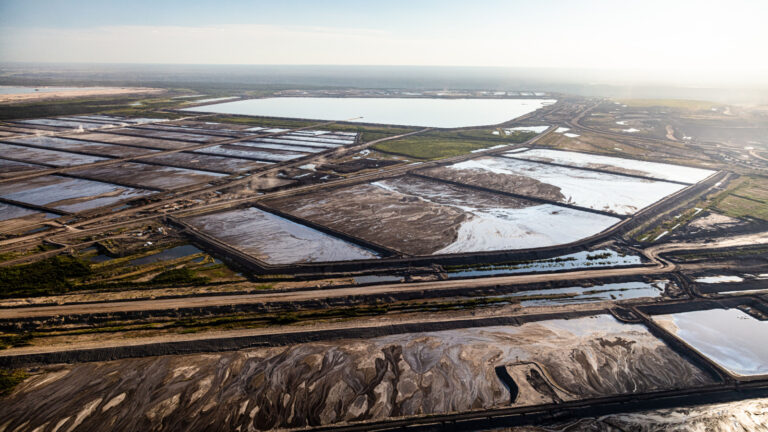
At the centre is a six-million-tonne annual carbon-capture target by the mid-2030s, part of a larger emissions-reduction framework tied to oil sands growth, export diversification and Indigenous participation. For Alberta, it is a path to Asian markets. For Ottawa, it is a way to support resource development while demanding cleaner production. For oil sands companies, it offers policy certainty after years of cost-sharing disputes, regulatory delays and public skepticism.
A Trilateral Deal Turns Carbon Capture Into the Ticket to a Pipeline
Ottawa, Alberta and Oil Sands Giants Unlock Pipeline Path With 6-Million-Tonne Carbon-Capture Deal
The new agreement matters because Ottawa had made the Pathways carbon-capture project a condition for moving forward with a new crude oil export pipeline to the West Coast. That linkage changes the politics. Alberta gets a clearer path to new export capacity, while the federal government can argue that production growth is being paired with a measurable emissions plan. The Oil Sands Alliance, representing Canadian Natural Resources, Cenovus, ConocoPhillips Canada, Imperial Oil and Suncor, now has a framework that connects climate commitments to market access.
The deal also ends months of uncertainty over whether the carbon-capture side of the bargain would keep pace with the pipeline side. The wider Canada-Alberta framework says the pipeline and Pathways are mutually dependent, meaning one is not supposed to move ahead without the other. That creates a practical pressure point: companies seeking more export capacity must also help build the infrastructure to capture and store carbon dioxide from oil sands facilities.
Why Six Million Tonnes Matters
The headline number is six million tonnes of captured carbon dioxide per year by the mid-2030s. In Canadian climate policy language, that is six Mtpa of CCUS capacity, large enough to be nationally significant but smaller than earlier oil sands decarbonization ambitions. The broader framework still points to a 16-million-tonne annual net emissions-reduction objective over later phases, with additional reductions expected by 2040 and 2045 through other technologies and projects.
That distinction is important. Six million tonnes is the first major in-service carbon-capture milestone, not the full climate promise. The project is expected to collect carbon dioxide from oil sands operations, move it through a dedicated network and store it underground in Alberta’s Cold Lake area. For communities in the oil sands region, the stakes are not abstract: construction work, maintenance contracts, engineering jobs and long-term monitoring would all flow from whether this infrastructure actually gets built.
The Pipeline Prize: Asia, Capacity and Canadian Leverage
The pipeline side of the bargain is about market power. Canada remains heavily dependent on the United States as the buyer for its crude oil exports, even though global energy demand growth is increasingly centred in Asia. A new West Coast pipeline would give Alberta producers another outlet, reduce reliance on U.S. refineries and potentially improve pricing for Canadian heavy crude by expanding the pool of buyers.
The proposed project would move about one million barrels of oil per day toward global markets. Federal documents say Alberta submitted the proposal to the Major Projects Office, with consultations to begin before a possible national-interest designation. The proposed route would largely follow the existing Trans Mountain corridor from the Bruderheim area toward southern British Columbia, avoiding a northern tanker-ban fight. That choice is strategic: using a familiar corridor may reduce political and permitting friction compared with a brand-new northern route.
Who Builds It—and Who Carries the Risk
The ownership and execution structure is designed to make the project look less like a speculative industry pitch and more like a nation-building infrastructure plan. Trans Mountain Corporation would lead development, construction and operations, while Alberta’s petroleum marketing arm and Pembina Pipeline would participate in the ownership group. Pembina’s role is smaller but important: it brings private-sector pipeline experience while limiting its exposure until more definitive agreements and investment decisions are reached.
Indigenous equity participation is also written into the framework, not treated as an afterthought. Federal materials say there will be a meaningful opportunity for Indigenous ownership, supported by loan-guarantee structures from Canada and Alberta. That does not remove consultation risk, legal risk or local opposition, but it shows the project is being built around a different political model than older pipelines. The unresolved question is whether affected communities see the process as genuine partnership or as a pre-packaged project seeking approval.
The Money Behind the Carbon Bargain
Carbon capture is expensive, and the deal relies heavily on policy support to make the economics work. Canada and Alberta agreed to long-term industrial carbon-pricing rules under Alberta’s TIER system, including scheduled increases in the headline carbon price and a framework for carbon contracts for difference. Those contracts are meant to give investors more confidence that future carbon credits will hold enough value to justify billion-dollar emissions-reduction projects.
Federal and provincial incentives are also central. Canada’s CCUS investment tax credit supports eligible carbon-capture, transportation and storage spending, while Alberta has committed to support Pathways through its carbon-capture incentive program. The logic is simple: without a predictable carbon price and public incentives, companies have little reason to commit massive capital to equipment that does not directly produce more oil. With those supports, carbon capture becomes part of the cost of unlocking new production and pipeline capacity.
The Hard Part: Trust, Timelines and Climate Math
The agreement gives all sides a story to tell, but it does not settle every argument. Supporters say Canada can produce lower-emissions heavy oil, diversify exports and preserve high-paying energy jobs while still cutting industrial emissions. Critics counter that carbon capture has often underdelivered globally, that earlier oil sands climate promises were more ambitious, and that capturing production emissions does not erase the emissions created when exported oil is eventually burned.
The credibility test will be execution. The project must move from memorandums and milestones to permits, financing, construction, capture equipment, pipeline rights-of-way, storage monitoring and transparent reporting. If the six-million-tonne target is met, Ottawa and Alberta will claim proof that economic expansion and emissions reduction can move together. If delays pile up, the deal could become another example of Canadian pipeline politics promising more than it delivers.
This Options Discord Chat is The Real Deal
While the internet is scoured with trading chat rooms, many of which even charge upwards of thousands of dollars to join, this smaller options trading discord chatroom is the real deal and actually providing valuable trade setups, education, and community without the noise and spam of the larger more expensive rooms. With a incredibly low-cost monthly fee, Options Trading Club (click here to see their reviews) requires an application to join ensuring that every member is dedicated and serious about taking their trading to the next level. If you are looking for a change in your trading strategies, then click here to apply for a membership.