35,000+ smart investors are already getting financial news, market signals, and macro shifts in the economy that could impact their money next with our FREE weekly newsletter. Get ahead of what the crowd finds out too late. Click Here to Subscribe for FREE.
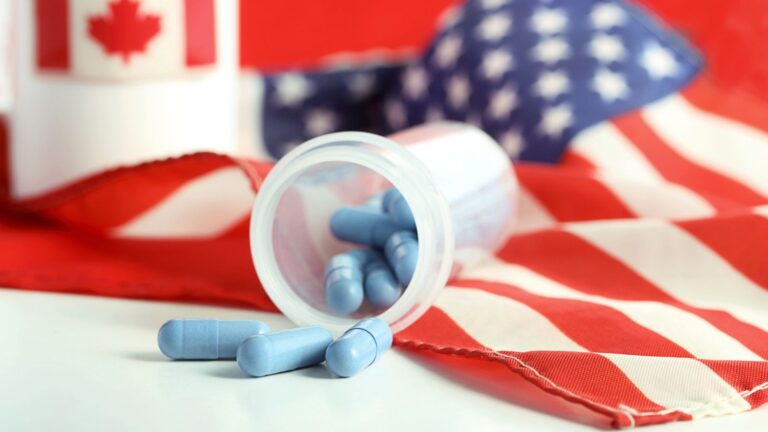
For millions of Americans struggling with prescription-drug costs, ordering medication from Canadian pharmacies has offered a way to make essential treatment more affordable. That option could become significantly harder to access later this month.
New U.S. Customs and Border Protection requirements scheduled for October 22, 2026, threaten to disrupt prescription medicines shipped through international postal networks. The changes introduce stricter customs-entry procedures, additional documentation and financial guarantees that could make routine deliveries difficult for pharmacies and shipping companies.
The rules do not explicitly ban Canadian prescription drugs. However, pharmacy organizations warn that existing delivery arrangements may no longer satisfy U.S. customs and drug-importation requirements.
With patients, pharmacies and members of Congress raising concerns, the approaching deadline has become another flashpoint in the debate over American drug prices and cross-border trade.
October 22 Marks a Major Change for Prescription Shipments
New U.S. Customs Rules Put Affordable Prescription-Drug Shipments From Canada at Risk Starting October 22
- October 22 Marks a Major Change for Prescription Shipments
- The $800 Import Exemption Has Already Been Suspended
- New Paperwork and Financial Guarantees Create Obstacles
- Existing FDA Restrictions Make the Situation More Complicated
- Canadian Pharmacies Warn Their Shipping Model Could Become Unworkable
- Research Suggests Millions of Americans Could Be Affected
- Prescription Prices Explain Canada’s Appeal to U.S. Patients
- One Ohio Patient Shows the Human Cost of Disrupted Access
- The Changes Extend Beyond Canadian Pharmacies
- Lawmakers From Both Parties Are Demanding Answers
- What Happens Next Will Depend on Enforcement and Available Alternatives
Americans who regularly receive prescriptions from Canadian pharmacies face a critical deadline on October 22, 2026. That is when additional compliance requirements under a U.S. Customs and Border Protection rule published June 24 become enforceable for certain international mail shipments. The changes affect packages subject to requirements from other federal agencies, including the Food and Drug Administration. While the rule applies to numerous imported products, prescription medications face particular difficulties because they must comply with both customs procedures and federal drug regulations.
The distinction between a new prohibition and stricter enforcement is important. The government has not announced that every Canadian prescription shipment will automatically be rejected after October 22. Instead, a delivery must satisfy the applicable entry requirements before it can clear customs, as well as any FDA conditions governing the medication. Industry representatives warn that this combination could effectively prevent many ordinary pharmacy orders from reaching American patients, even without an explicit ban. The outcome will depend on how the regulations are implemented and whether existing delivery services can adapt.
The $800 Import Exemption Has Already Been Suspended
For years, low-value international packages benefited from an American customs provision known as the de minimis exemption. Goods valued at $800 or less could generally enter through simplified procedures without the ordinary customs duties applied to larger commercial shipments. This arrangement helped international pharmacies and other overseas sellers handle relatively small individual orders without navigating the full customs-entry process used by major importers.
The Trump administration suspended that duty-free treatment for shipments from all countries beginning August 29, 2025. Customs authorities subsequently introduced revised postal procedures, with important provisions taking effect in July 2026. The October 22 deadline represents another implementation stage, rather than the initial removal of the $800 exemption. Under the new framework, postal shipments requiring additional government-agency information must follow more demanding entry procedures. For a patient ordering a modest supply of medicine, the package’s relatively small dollar value no longer guarantees simplified treatment at the border. What once involved comparatively limited customs processing can now require specialized filings and compliance checks.
New Paperwork and Financial Guarantees Create Obstacles
The customs changes introduce technical obligations that can be difficult to manage for individual prescription orders. Importers may need to provide more detailed product classifications, country-of-origin information, values and data required by regulatory agencies. Certain customs procedures also require a financial bond guaranteeing compliance and payment of applicable duties or fees. A licensed customs broker may be needed to handle the electronic filings. These requirements are familiar in commercial importing but can create considerable administrative costs when applied to individual packages containing relatively inexpensive medicines.
There is an alternative to the standard formal-entry process. Customs authorities introduced a voluntary electronic procedure called Entry Type 13 for eligible international mail shipments valued at $2,500 or less. The test began September 22 and permits qualifying importers or their brokers to submit information through the Automated Commercial Environment. However, eligibility for this procedure does not guarantee that a particular medicine may legally enter the country. The shipment must still satisfy FDA requirements. Pharmacy organizations argue that these additional responsibilities could make ordinary personal-use deliveries commercially or operationally impractical.
Existing FDA Restrictions Make the Situation More Complicated
The Food and Drug Administration already maintains strict rules concerning medicines imported by individual Americans. In most circumstances, purchasing prescription drugs from foreign countries for personal importation is not legal if the products have not received the necessary FDA approval. The agency nevertheless maintains a discretionary personal-importation policy that allows officials to consider certain exceptional circumstances. That flexibility has contributed to a system in which some patients historically received overseas medication shipments despite restrictions that would otherwise prevent their entry.
FDA guidance explains that exceptions for prescription medicines may be considered when a patient has a serious condition for which effective treatment is unavailable domestically. Other conditions include the absence of known promotion to American consumers, acceptable safety considerations, appropriate documentation and quantities generally not exceeding a three-month supply. These conditions do not create an automatic right to import. More detailed customs filings could bring additional shipments directly into FDA review processes. Consequently, medicines that previously reached consumers may face closer examination and possible refusal, even when the patient possesses a valid prescription.
Canadian Pharmacies Warn Their Shipping Model Could Become Unworkable
The Canadian International Pharmacy Association has issued an unusually strong warning about the approaching changes. The organization, which represents licensed Canadian pharmacies serving international customers, believes the combination of customs procedures and FDA import restrictions could prevent most routine personal prescription shipments from reaching the United States. Its concern centres partly on the customs brokers responsible for clearing packages entering through international postal networks. Without a qualified party willing to assume responsibility for an entry, the medication may have no workable delivery route.
CIPA identifies Zonos, a customs-processing company working with major postal systems, as especially important. According to the association, Zonos has confirmed that it will not act as importer of record for certain pharmaceutical shipments, including those involving medicines commercially available in the United States or supply chains marketing products to American consumers. Zonos’ published guidance also emphasizes restrictions on personal drug imports. CIPA’s forecast remains an industry assessment rather than an official government declaration that every shipment will stop. Nevertheless, it illustrates why the existence of an alternative electronic customs procedure may not be enough to preserve established pharmacy delivery services.
Research Suggests Millions of Americans Could Be Affected
International prescription purchases are not confined to a small group of border-town shoppers. A study published in JAMA Network Open in June 2020 examined information from 61,238 American adults taking prescription medication. Researchers estimated that approximately 1.5% of prescription users, representing 2.3 million American adults, had purchased medicines from other countries to save money. The underlying survey information came from 2015 through 2017, meaning the estimate should not be treated as a precise measurement of current Canadian pharmacy customers.
The researchers found that adults purchasing medicines abroad were more likely to have characteristics associated with financial or health-care barriers. Lower household income, lack of insurance and older age were among the factors linked with the behaviour. These findings help explain why advocates are concerned about the consequences of losing affordable international options. People already struggling to pay for prescriptions may have limited flexibility if a familiar supplier disappears. For those managing conditions requiring uninterrupted treatment, the problem involves more than finding another pharmacy. It can mean securing a medically appropriate alternative at a price their household can afford.
Prescription Prices Explain Canada’s Appeal to U.S. Patients
The attraction of Canadian pharmacies reflects substantial differences in prescription-drug prices. A RAND Corporation study commissioned by the U.S. Department of Health and Human Services found that American manufacturer-level prescription prices in 2022 averaged approximately 2.78 times those in 33 other high-income countries. Compared specifically with Canada, American prices were about 2.29 times higher. The differences were particularly pronounced for brand-name medicines, although unbranded generic drugs were generally cheaper in the United States than in the comparison countries.
Recent pharmacy-price comparisons illustrate why some Americans continue looking abroad. The Campaign for Personal Prescription Importation examined ten commonly purchased brand-name medications in August 2026. For Eliquis, a blood thinner used to prevent and treat blood clots, the organization reported approximately $565 for a three-month supply of 180 five-milligram tablets through a Canadian mail-order pharmacy. Comparable quoted prices were about $1,017 through Amazon Pharmacy and $1,029 through GoodRx. These figures represent specific purchasing arrangements rather than universal prices, and insurance coverage can substantially change what an individual pays. Still, the potential savings help explain the concern surrounding October 22.
One Ohio Patient Shows the Human Cost of Disrupted Access
For 75-year-old Susan Hooper of Toledo, Ohio, the possibility of losing Canadian prescription shipments is deeply personal. Hooper told the Associated Press that she had depended on supplemental oxygen for 14 years and used two medications obtained through a Canadian pharmacy. She also described serious drug allergies that complicate her treatment options. The approaching customs changes have therefore created uncertainty around medicines she considers essential to managing her respiratory condition.
Hooper reported that her prescription costs had already increased before the October deadline. According to her account, Theophylline, a medication used to relax the airways, rose from $85 to $141 including shipping. Her Foradil bronchodilator increased from $151 to $273. She attributed those increases to earlier tariff changes. The figures illustrate her experience rather than a verified nationwide pricing trend. Hooper told reporters she was attempting to secure additional medication while delivery remained possible. Her circumstances demonstrate why advocates are urging officials to consider continuity of care, particularly for patients who cannot easily substitute another treatment.
The Changes Extend Beyond Canadian Pharmacies
Although Canadian prescription shipments have attracted considerable attention, the new customs framework applies to international postal imports more broadly. Medicines sent from other countries may encounter similar difficulties, depending on their regulatory status and the entry procedures used. Some pharmacies operating under Canadian branding also work with licensed international partners, meaning a customer’s medication may be shipped from a country other than Canada. The physical origin of a package can affect customs classification, applicable duties and regulatory requirements.
Zonos estimated in September that approximately 40% to 50% of the U.S.-bound postal parcels it handles require additional product information not currently included in ordinary postal declarations. That estimate covers numerous product categories and should not be interpreted as a percentage of prescription shipments facing rejection. The company has explained that the revised electronic process gives federal regulators more complete information about imported goods. In principle, better information can improve enforcement and reduce mistakes. For pharmacy operators, however, implementing those systems involves staffing, technology and compliance responsibilities that may be difficult to justify for individual consumer orders.
Lawmakers From Both Parties Are Demanding Answers
The potential disruption has attracted attention from Democrats and Republicans in Congress. On October 2, Representatives Jan Schakowsky of Illinois and Mark Pocan of Wisconsin announced a letter signed by 71 members of Congress urging federal agencies to preserve access to legitimate, non-controlled prescription medicines imported for personal use. The lawmakers argued that Americans struggling with high drug prices should not automatically lose established purchasing options because customs authorities are collecting more information about international packages.
Republican concerns have also emerged. Florida Representatives Aaron Bean, Gus Bilirakis and C. Scott Franklin contacted the administration about the possible impact on residents who depend on Canadian medications. Their intervention is notable because Florida previously secured FDA authorization for a separate state-administered Canadian drug-importation program. That program has faced implementation delays and is different from individual mail-order purchasing. The White House, meanwhile, maintains that President Trump is committed to reducing prescription prices through pharmaceutical agreements and other initiatives. The dispute has created a difficult policy question: how to strengthen customs enforcement without abruptly restricting access to medicines that some Americans cannot readily afford through existing domestic options.
What Happens Next Will Depend on Enforcement and Available Alternatives
Customs and Border Protection says its broader reforms are intended to improve tariff collection, prevent unlawful importations and strengthen oversight of goods entering the United States. Those objectives are not necessarily incompatible with protecting access to prescription medicines, but the approaching deadline has exposed practical tensions between the two goals. The administration could revise implementation, provide additional guidance or adjust enforcement priorities. As of October 11, however, the October 22 compliance deadline remains in place, and the industry has not received assurances that routine Canadian mail-order prescriptions will continue reaching patients under existing arrangements.
Patients concerned about interrupted treatment have several matters to discuss promptly with their prescribers and pharmacists, including the status of pending shipments, FDA-approved alternatives, generic medicines and available assistance programs. Medicare beneficiaries may qualify for Extra Help, while the 2026 Medicare Part D out-of-pocket limit is $2,100 for covered medications. These options will not solve every affordability problem, and patients should not stop or change prescribed treatment without medical guidance. The next developments will determine whether October 22 becomes primarily an administrative transition or a much more serious interruption to affordable cross-border prescription access.
This Options Discord Chat is The Real Deal
While the internet is scoured with trading chat rooms, many of which even charge upwards of thousands of dollars to join, this smaller options trading discord chatroom is the real deal and actually providing valuable trade setups, education, and community without the noise and spam of the larger more expensive rooms. With a incredibly low-cost monthly fee, Options Trading Club (click here to see their reviews) requires an application to join ensuring that every member is dedicated and serious about taking their trading to the next level. If you are looking for a change in your trading strategies, then click here to apply for a membership.