35,000+ smart investors are already getting financial news, market signals, and macro shifts in the economy that could impact their money next with our FREE weekly newsletter. Get ahead of what the crowd finds out too late. Click Here to Subscribe for FREE.
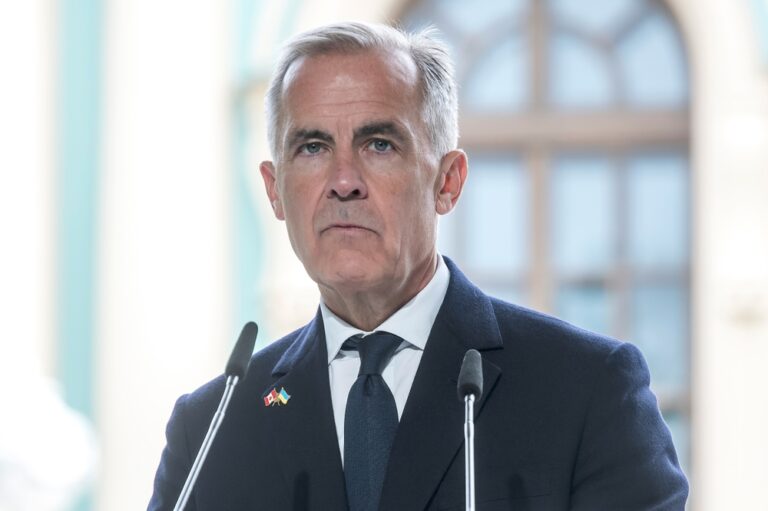
Prime Minister Mark Carney arrives at the NATO summit in Ankara with a message meant for both allies and skeptics: Canada is no longer trying to explain away its defence gap. It is trying to prove it can close it.
The timing is uncomfortable but revealing. U.S. President Donald Trump is again pressing NATO members to spend more, faster, and with fewer excuses. For Canada, the meeting is more than another diplomatic stop. It is a test of whether new spending promises, Arctic security plans, and major military purchases can convince Washington that Ottawa is finally moving from pledges to delivery.
Canada Walks Into Ankara With Less Room to Hide
NATO Summit Puts Carney Face-to-Face With Trump’s Defence-Spending Pressure
- Canada Walks Into Ankara With Less Room to Hide
- Trump’s Pressure Turns Spending Into the Main Event
- The 5% Target Changes the Scale of the Debate
- Canada’s New Pitch: Defence Spending as Industrial Strategy
- Submarines Give Carney a Concrete Talking Point
- The Arctic Is Becoming Canada’s Strongest Case
- Canada Is Also Trying to Build Around the U.S.
- The Real Test Comes After the Summit
For years, Canada’s NATO problem was simple to understand and difficult to defend. The country benefited from the alliance’s collective security umbrella while spending well below the benchmark allies had agreed to meet. That made Canada an easy target for U.S. criticism, especially from Trump, who has long argued that NATO partners rely too heavily on American military power.
Carney enters the summit in a stronger position than previous Canadian leaders. Ottawa says Canada has now reached NATO’s old 2% defence-spending target, after years of missing it. But the diplomatic celebration is short-lived because NATO’s goalposts have moved. The new pledge is 5% of GDP by 2035, split between core military spending and broader defence-related investments such as cyber, infrastructure, and industrial capacity. In Ankara, Canada is no longer being asked only whether it can reach 2%. It is being asked whether it has a believable path far beyond it.
Trump’s Pressure Turns Spending Into the Main Event
The summit’s central tension is not whether NATO members support collective defence in principle. Most do. The harder question is whether they are willing to reshape national budgets around it. Trump’s message has been blunt: allies must spend more and show urgency, not simply issue long-term promises. That approach has made defence spending a political loyalty test as much as a military planning exercise.
NATO Secretary-General Mark Rutte has added a more institutional version of the same pressure, calling for clear, concrete, and credible plans to reach the new targets. That phrase matters for Canada because it moves the conversation from announcements to proof. A country can promise billions, but allies want to know when equipment arrives, how personnel shortages are addressed, and whether money actually becomes usable military capability. For Carney, the face-to-face pressure from Trump is really pressure to show receipts.
The 5% Target Changes the Scale of the Debate
The new NATO pledge is much bigger than the old benchmark. Allies agreed at The Hague in 2025 to invest 5% of GDP annually by 2035, including at least 3.5% for core defence requirements and up to 1.5% for broader security-related needs. That design gives governments some flexibility, but it also makes the scale of the commitment harder to minimize.
For Canada, the fiscal challenge is enormous. The Parliamentary Budget Officer has estimated that moving core defence spending from 2% of GDP in 2025 to 3.5% by 2035 would require additional spending averaging about $33.5 billion per year over a decade. By 2035-36, the PBO scenario would add $63 billion to the budget deficit and lift the federal debt-to-GDP ratio by 6.3 percentage points. That does not mean the policy is impossible, but it does mean Carney’s promise will collide with domestic priorities, from housing to health care to tax competitiveness.
Canada’s New Pitch: Defence Spending as Industrial Strategy
Carney’s government is trying to frame defence not only as a military obligation, but as an economic strategy. Ottawa says its defence push is tied to jobs, shipbuilding, cyber capability, space, procurement, veterans’ support, and industrial resilience. That broader framing helps explain how Canada is counting spending across multiple departments, not only the Department of National Defence.
The government has pointed to billions in defence-related investments generating economic activity at home. One federal estimate says about $18.3 billion in 2025-26 defence-related spending tied to infrastructure, major capital acquisitions, and industrial strategy could support roughly 65,000 jobs and contribute $7.7 billion to GDP. That is politically useful because it gives defence spending a local story: dockyards, hangars, training centres, housing for military families, and supply chains. Still, NATO’s question is sharper. Jobs are helpful, but allies want deployable forces, modern equipment, and readiness.
Submarines Give Carney a Concrete Talking Point
Just before the summit, Canada named Germany’s ThyssenKrupp Marine Systems as the preferred supplier for up to 12 new submarines, a decision Carney described as the largest military procurement in Canadian history. The timing was no accident. If Trump and other allies are asking for concrete evidence of Canadian seriousness, a multibillion-dollar submarine plan gives Ottawa something more visible than a budget line.
The submarine decision also fits Canada’s Arctic argument. Canada has the world’s longest coastline and faces growing pressure to monitor three oceans, including northern waters where military and commercial activity are becoming more strategically important. The planned fleet would replace the aging Victoria-class submarines, which Canada acquired second-hand from the United Kingdom in the late 1990s. The fact that no U.S. company bid, because the United States builds nuclear-powered submarines while Canada sought conventionally powered vessels, also shows how defence procurement can reinforce European partnerships even while Canada tries to satisfy Washington.
The Arctic Is Becoming Canada’s Strongest Case
When Carney says Canada is “pulling its weight,” the Arctic is central to the argument. For years, Canadian governments could speak about northern sovereignty in broad terms while delaying expensive capabilities. That is becoming harder as NATO’s attention shifts toward resilience, undersea surveillance, air defence, cyber threats, and infrastructure that can support allied movement.
The Arctic gives Canada a way to connect national sovereignty with alliance burden-sharing. Investments in maritime sensors, search-and-rescue aircraft, satellite communications, cyber operations, and naval sustainment are not abstract commitments. They are the kinds of capabilities that matter in a country bounded by three oceans. Carney and Trump also discussed Arctic defence ahead of the summit, making it clear that northern security is becoming part of the Canada-U.S. defence conversation. For Ottawa, the challenge is turning geography into credibility: Canada cannot simply point to the Arctic; it must show it can defend it.
Canada Is Also Trying to Build Around the U.S.
Carney’s diplomacy contains another message beneath the surface: Canada wants to remain close to the United States while reducing dependence on it. Ottawa has joined the European Union’s Security Action for Europe initiative and is promoting a proposed Defence, Security and Resilience Bank designed to help allied countries finance defence and infrastructure needs. The bank proposal aims to raise up to £100 billion in low-cost financing, with Canada trying to gather founding members around the NATO summit.
That effort reflects a wider shift inside the alliance. European members and Canada are spending more, but they are also trying to build supply chains and financing tools that are not entirely dependent on Washington. This does not mean Canada is walking away from the U.S. security relationship. It means Carney is trying to adapt to a world where American support can no longer be treated as automatic, predictable, or politically cost-free. For a middle power, diversification is becoming a defence policy, not just a trade policy.
The Real Test Comes After the Summit
Summits reward announcements, but alliances are strengthened by delivery. Canada can leave Ankara with stronger language, new procurement headlines, and a more confident message about meeting NATO targets. The harder work comes later, when spending has to survive budgets, procurement delays, labour shortages, and public scrutiny. Defence plans often look cleaner in summit communiqués than they do in shipyards, hangars, and parliamentary estimates.
That is why Trump’s pressure, however disruptive, has changed the Canadian debate. Ottawa is no longer arguing about whether defence spending matters. It is arguing about how fast Canada can scale up, what counts toward NATO targets, and how much fiscal room the country is willing to devote to security. Carney’s task in Ankara is to convince allies that Canada’s shift is real. His task at home will be harder: proving that the country can afford the promise, manage the buildout, and deliver capability before the next crisis exposes the gap.
This Options Discord Chat is The Real Deal
While the internet is scoured with trading chat rooms, many of which even charge upwards of thousands of dollars to join, this smaller options trading discord chatroom is the real deal and actually providing valuable trade setups, education, and community without the noise and spam of the larger more expensive rooms. With a incredibly low-cost monthly fee, Options Trading Club (click here to see their reviews) requires an application to join ensuring that every member is dedicated and serious about taking their trading to the next level. If you are looking for a change in your trading strategies, then click here to apply for a membership.