35,000+ smart investors are already getting financial news, market signals, and macro shifts in the economy that could impact their money next with our FREE weekly newsletter. Get ahead of what the crowd finds out too late. Click Here to Subscribe for FREE.
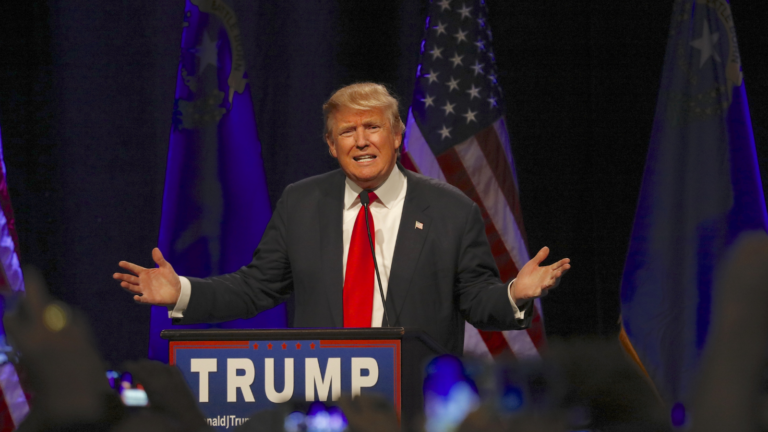
A few unguarded seconds at the G7 summit cut through months of trade warnings. With a microphone still live, U.S. President Donald Trump listened as Prime Minister Mark Carney described Canada’s limit on Chinese electric-vehicle imports: 49,000 vehicles, less than 3% of the national market, under what Carney called a “hard” cap. “That’s good, I like it,” Trump replied.
The exchange matters because Canada’s China policy has become a pressure point in its relationship with Washington. Ottawa has lowered the tariff applied within the quota, but it has not created unlimited access. Trump’s reaction offers Carney a useful argument: Canada can pursue cheaper vehicles and new export opportunities without abandoning managed trade or opening the North American market without limits.
The Hot Mic Moment Said More Than a Prepared Statement
Hot Mic Catches Trump Telling Carney He Likes Canada’s Chinese EV Cap
- The Hot Mic Moment Said More Than a Prepared Statement
- Canada Replaced a Wall With a Controlled Gate
- Why a Hard Cap Appeals to Trump
- Carney Traded EV Access for Relief on Canadian Farm Exports
- Ontario’s Auto Belt Still Has Reasons to Worry
- The Consumer Case Is Built Around Price and Choice
- Safety Standards Do Not End the Security Debate
- The Bigger Test Comes in the CUSMA Review
The brief conversation was striking because neither leader appeared to be delivering a polished public line. Carney emphasized the number, the market share and the firmness of the ceiling. Trump’s answer was equally direct. In a relationship dominated by tariff threats, annexation rhetoric and uncertainty over the future of continental trade, the approving response sounded almost ordinary—and that was precisely why it stood out.
It was not a complete reversal from Trump. When Canada announced its China arrangement in January, he publicly said Carney should pursue a deal if he could get one. Yet senior U.S. officials and North American auto interests remained wary of allowing Chinese-made vehicles deeper access to the continent. The live-microphone exchange therefore provided something more specific than Trump’s earlier general approval: he endorsed the structure Carney highlighted. The U.S. president appeared comfortable with limited entry because the volume was fixed, measurable and small relative to total Canadian sales.
Canada Replaced a Wall With a Controlled Gate
Canada’s policy is often described as a dramatic tariff cut, but that description misses the mechanism that Carney stressed. The former 100% surtax was removed for vehicles entering under a country-specific quota. Those vehicles face Canada’s normal 6.1% most-favoured-nation tariff, and each shipment requires an import permit. The first quota year runs from March 1, 2026, to the end of February 2027, with 49,000 vehicles available in total.
The limit is divided into two initial six-month periods of 24,500 vehicles. The first period is administered on a first-come, first-served basis, while Ottawa has consulted industry, labour and other stakeholders on the longer-term allocation system. The quota is scheduled to grow by 6.5% annually, bringing it to roughly 70,000 vehicles after five years. That is a meaningful opening, but not an unlimited one. A manufacturer cannot simply keep shipping at the lower tariff after the ceiling has been reached. The arrangement is designed to create competition while allowing Ottawa to control its pace.
Why a Hard Cap Appeals to Trump
Trump’s approval makes more sense when the policy is viewed through his preference for visible, enforceable limits. A 6.1% tariff alone would offer little assurance about how many vehicles could arrive. A numerical ceiling does. Carney’s emphasis on “less than three percent” framed the measure as a controlled exception rather than a broad surrender of the Canadian market to Chinese manufacturers.
That distinction also gives Trump political room. He can maintain a harder U.S. barrier while acknowledging that Canada’s approach is constrained. The United States has kept tariffs and connected-vehicle restrictions that make Chinese entry far more difficult, but Trump has also expressed openness to foreign automakers creating jobs through North American production. Canada’s quota could be presented in similar transactional terms if access eventually leads to joint ventures, plants or supply-chain investment. None of that is guaranteed. Still, a capped market opening fits Trump’s negotiating style better than an unrestricted tariff reduction, because the concession has a number attached to it and can be monitored.
Carney Traded EV Access for Relief on Canadian Farm Exports
The EV concession was only one side of the Canada–China arrangement. China lowered the combined tariff on Canadian canola seed from roughly 84% to about 15% beginning March 1. It also suspended anti-discrimination tariffs on Canadian canola meal, peas, lobster and crab through the end of 2026. Ottawa estimated that the measures could unlock close to $3 billion in export orders, while restoring access to a Chinese canola-seed market valued at about $4 billion annually.
For producers on the Prairies and harvesters on the Atlantic and Pacific coasts, those figures are not abstract. Tariffs can determine whether a shipment is competitive, whether a processor keeps buying and whether a season’s output finds a market. Carney’s government calculated that a limited opening for Chinese EVs could purchase relief for several politically and economically important Canadian sectors. Critics argue that automobiles and agricultural commodities are not equivalent because vehicle manufacturing supports dense networks of factories, suppliers and skilled jobs. Supporters counter that trade policy must account for farmers, seafood workers and consumers as well as assembly plants.
Ontario’s Auto Belt Still Has Reasons to Worry
Ontario Premier Doug Ford and major auto-industry voices have attacked the arrangement because even a limited quota introduces a powerful new source of competition. Canada’s automotive sector contributed about $16.8 billion to gross domestic product in 2024, directly employed more than 125,000 people and indirectly supported roughly 427,000 jobs. Federal labour-market data also show that Ontario accounts for the overwhelming majority of Canadian auto employment.
Those workers are concentrated in communities where one plant can anchor parts suppliers, transport companies, restaurants and municipal tax revenue. That helps explain why Ford called the deal lopsided and why General Motors chief executive Mary Barra warned that allowing lower-tariff Chinese EVs could become a “slippery slope.” The fear is not that 49,000 vehicles will immediately erase the domestic industry. It is that Chinese companies, backed by enormous scale and mature battery supply chains, could establish brands, dealerships and customer loyalty before Canadian and U.S. manufacturers close their cost gap. The cap limits the first wave, but it does not eliminate the strategic challenge.
The Consumer Case Is Built Around Price and Choice
Canada’s EV market has shown how quickly demand can weaken when affordability and incentives change. Zero-emission vehicles represented 9.4% of new registrations in the third quarter of 2025, down sharply from 15.7% one year earlier. At the same time, China’s manufacturers have developed a wide range of smaller and lower-priced electric models, while Chinese EV exports doubled in 2025 amid intense competition in their home market.
Ottawa has tried to connect the quota directly to affordability. Starting in the second year, part of the allocation must be reserved for vehicles with a free-on-board import value of $35,000 or less. That share is scheduled to rise from 10% in year two to 50% in year five. The threshold is not the final showroom price; shipping, distribution, taxes and dealer costs still matter. Even so, it creates pressure to use a growing portion of the quota for genuinely lower-cost products rather than only premium models. For households priced out of newer EVs, that could make the policy’s benefits more visible than its trade mechanics.
Safety Standards Do Not End the Security Debate
Chinese-made EVs admitted under the quota must still satisfy Canadian motor-vehicle safety requirements, and Ottawa has said it will work with manufacturers on certification. The permit system also gives the federal government a detailed view of who is importing vehicles and in what quantities. Those controls address physical market entry, but they do not settle concerns about connected-car software, location data, cameras, microphones and remote updates.
The United States has taken a much harder line, restricting most Chinese-developed or maintained software in connected vehicles beginning with 2027 model-year vehicles and applying hardware restrictions later. Canada’s quota rules do not themselves reproduce that framework. Its privacy commissioner has warned more broadly that drivers should be told when vehicle data may be transferred to jurisdictions where foreign courts, law-enforcement agencies or national-security authorities could access it. The policy challenge therefore extends beyond China. Modern vehicles from many countries collect large amounts of information. The arrival of Chinese models has simply forced Canada to confront whether its privacy, cybersecurity and disclosure rules are strong enough for an increasingly software-defined auto market.
The Bigger Test Comes in the CUSMA Review
The hot-mic approval arrives just before the July 1, 2026, joint review of the Canada–United States–Mexico Agreement. Trump has publicly questioned whether he wants to extend the pact, while Canadian officials say behind-the-scenes discussions have been productive. The distinction is important: failure to agree on an extension this year would not make the agreement vanish on July 1. CUSMA remains scheduled to run until 2036, with annual reviews if the three countries do not agree to extend its term.
That leaves plenty of room for pressure. Washington can connect Chinese EVs to demands on automotive content, supply chains, software and investment, while Ottawa can point to the hard cap as evidence that it is not providing unrestricted access. Trump’s private-sounding approval may help Carney defend the quota, but it does not erase U.S. tariffs on Canadian steel, aluminum or automobiles, nor does it settle the broader trade review. The moment is best understood as a narrow point of agreement inside a much larger negotiation. For Canada, the challenge is turning that small opening into durable room for an independent trade policy.
This Options Discord Chat is The Real Deal
While the internet is scoured with trading chat rooms, many of which even charge upwards of thousands of dollars to join, this smaller options trading discord chatroom is the real deal and actually providing valuable trade setups, education, and community without the noise and spam of the larger more expensive rooms. With a incredibly low-cost monthly fee, Options Trading Club (click here to see their reviews) requires an application to join ensuring that every member is dedicated and serious about taking their trading to the next level. If you are looking for a change in your trading strategies, then click here to apply for a membership.