35,000+ smart investors are already getting financial news, market signals, and macro shifts in the economy that could impact their money next with our FREE weekly newsletter. Get ahead of what the crowd finds out too late. Click Here to Subscribe for FREE.
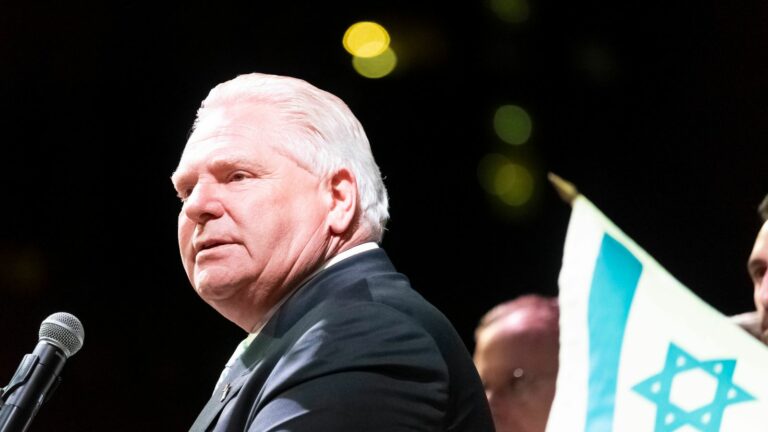
Ontario’s political map barely changed on Thursday night, but the three byelections still delivered a revealing snapshot of where the province’s parties stand. Premier Doug Ford’s Progressive Conservatives retained Hamilton East–Stoney Creek and York–Simcoe, while the New Democrats successfully defended Scarborough Southwest. The Ontario Liberals, despite competitive campaigns and the strength of their federal counterparts, failed to capture any of the three seats.
The September 3 votes unfolded against an unusually international backdrop. Donald Trump’s expanding tariffs on Canadian goods have placed Ontario’s manufacturing economy under renewed pressure, particularly in steel and automotive communities. Ford made that economic fight central to his message, while opposition candidates tried to keep affordability, health care, education and government spending in focus. In the end, every riding remained with the party that held it before the vacancies.
PCs Hold Both Seats They Needed to Defend
Ford’s PCs Win Two Ontario Byelections as Liberals Come Up Empty and Trump Tariffs Loom Over Vote
- PCs Hold Both Seats They Needed to Defend
- Hamilton Gives Ford the Night’s Most Valuable Win
- York–Simcoe Remains Reliably Conservative
- NDP Stops a Liberal Breakthrough in Scarborough
- Federal Liberal Momentum Failed to Transfer Provincially
- Trump’s Tariffs Became Part of Ford’s Campaign Argument
- Hamilton Shows Why the Trade Fight Feels Personal
- Affordability and Government Controversies Never Disappeared
- Low Turnout Calls for Caution
- The Political Map Stays Put, but the Lessons Are Clearer
For Ford, the simplest measure of the night was also the most important: his party lost nothing. Progressive Conservative Jeff Beattie won Hamilton East–Stoney Creek, while Susan Lahey carried York–Simcoe. The NDP’s Fatima Shaban won Scarborough Southwest, meaning none of the three vacancies produced a change in party control.
That gives the PCs a useful political victory after months in which government spending controversies and economic uncertainty offered opposition parties potential openings. Ford described the results as support for a government willing to defend Ontario workers against U.S. tariffs. The outcome does not significantly alter the balance of power at Queen’s Park, where the PCs already hold a commanding majority, but byelections can still expose vulnerabilities. This time, both PC-held seats survived, including one in Hamilton where the New Democrats mounted a serious challenge and where economic disruption from tariffs was far more than an abstract campaign issue.
Hamilton Gives Ford the Night’s Most Valuable Win
Hamilton East–Stoney Creek produced the closest and most politically significant PC victory. Beattie received 10,500 votes, or 38.87 per cent, according to Elections Ontario’s unofficial count. Former NDP MPP Monique Taylor finished second with 8,886 votes, or 32.90 per cent, while Liberal Heino Doessing placed third with 6,334 votes and 23.45 per cent.
The result mattered because the riding was genuinely competitive. In the 2025 provincial election, then-PC candidate Neil Lumsden won 42.1 per cent while Doessing took 31.6 per cent. Taylor, meanwhile, brought years of Queen’s Park experience after representing neighbouring Hamilton Mountain. Beattie entered with his own local profile as a Hamilton city councillor and former school-board trustee. With turnout at only 29.25 per cent, a relatively small group of voters ultimately decided the contest, but retaining a Hamilton seat under intense tariff pressure gives Ford a result his party can point to well beyond the riding’s boundaries.
York–Simcoe Remains Reliably Conservative
York–Simcoe offered fewer election-night surprises. Susan Lahey won 11,491 votes, representing 49.81 per cent of ballots cast. Liberal Naomi Davison finished a respectable second with 8,942 votes, or 38.76 per cent, while the NDP’s Bobby Nikmard received just over four per cent. The PC victory margin was 2,549 votes.
The riding had been represented since 2018 by Caroline Mulroney, the former cabinet minister who resigned from provincial politics in June, and conservatives have held York–Simcoe since the riding was created in 2007. Lahey entered the race with municipal experience as an East Gwillimbury councillor and campaigned on affordability, infrastructure, health care and growth. The Liberals substantially outperformed the NDP there, but they did not come close enough to overturn the riding’s longstanding conservative advantage. Turnout was only 21 per cent, the lowest of the three contests, underscoring how difficult it is to draw sweeping provincial conclusions from the result.
NDP Stops a Liberal Breakthrough in Scarborough
The night was not an unqualified Conservative sweep. Fatima Shaban won Scarborough Southwest for the NDP with 8,914 votes, or 40.47 per cent. Liberal Ahsanul Hafiz took 6,674 votes, representing 30.30 per cent, while PC candidate Noor Tarun finished third with 5,148 votes and 23.37 per cent. Shaban’s winning margin over the Liberals was 2,240 votes.
The victory was especially important because the riding’s recent political history created an obvious Liberal opportunity. Former NDP MPP Doly Begum resigned her provincial seat before successfully running federally for the Liberals. Shaban herself had competed against Begum in that April federal byelection, winning only 1,714 votes for the federal NDP. Months later, she returned under the provincial banner and secured the Queen’s Park seat. Shaban emphasized affordability in her victory remarks, while NDP Leader Marit Stiles portrayed the result as evidence that her party remains Ford’s principal provincial opposition.
Federal Liberal Momentum Failed to Transfer Provincially
Ontario Liberals entered the contests with one potentially valuable asset: the federal Liberal brand was enjoying a strong moment. Prime Minister Mark Carney’s Liberals had swept three federal byelections just days earlier, including a Conservative-held Quebec seat. Provincial candidates openly hoped some of that momentum would travel with voters into Thursday’s races.
It did not produce a seat. The Liberals finished second in Scarborough Southwest and York–Simcoe and third in Hamilton East–Stoney Creek. Their provincial organization is also operating through a leadership transition. Bonnie Crombie resigned as leader in January, John Fraser is serving on an interim basis, and party members are scheduled to select a permanent leader in November. That context makes the results frustrating rather than catastrophic: the Liberals demonstrated competitiveness in two ridings, but failed to turn federal popularity or dissatisfaction with Ford into an actual breakthrough. For a party trying to rebuild toward government, near-wins still leave the same empty chair at Queen’s Park.
Trump’s Tariffs Became Part of Ford’s Campaign Argument
Few provincial byelections are fought with a U.S. president looming so heavily over local politics. The United States imposed new tariffs of up to 50 per cent on $27.6 billion worth of Canadian goods in August, while existing U.S. measures continue to affect sectors including steel, aluminum, copper and automobiles. Canada has announced matching counter-tariffs scheduled to take effect September 8.
Ford turned that uncertainty into a governing argument. After the results, he said Ontario would continue fighting Trump and protecting workers, jobs and communities. Beattie similarly described anxiety over the future of the Canada-U.S. economic relationship as something he repeatedly encountered. That positioning gave the PCs an advantage normally available to incumbents during external crises: the opportunity to present government experience as a form of protection. The election results cannot prove tariffs determined individual votes, but candidates from multiple parties acknowledged that the trade conflict was repeatedly raised during the campaign.
Hamilton Shows Why the Trade Fight Feels Personal
The tariff debate carries particular weight in Hamilton because manufacturing and steel remain deeply connected to the region’s economy. Statistics Canada counted roughly 91,200 manufacturing jobs across the Hamilton–Niagara Peninsula economic region in early 2025, placing it among Canada’s largest manufacturing centres. The federal government also announced more than $12.5 million for nine Hamilton-area businesses on August 31 specifically to help companies respond to tariff-related pressures.
Ontario has described the broader exposure in stark terms. The province estimates about 285,000 Ontario jobs are linked to exports to the United States, while steel, automotive manufacturing and other trade-intensive sectors face heightened risk. Days before the vote, Ontario announced expanded access to its tariff financing program from Hamilton. Peter Graefe, a McMaster University political scientist, argued that the trade confrontation likely benefited Ford by encouraging voters to look toward an incumbent leader during uncertainty. In Hamilton East–Stoney Creek, that dynamic may have been especially difficult for the opposition to overcome.
Affordability and Government Controversies Never Disappeared
Tariffs were prominent, but candidates said voters continued raising familiar provincial frustrations: affordability, health care and education. Those issues gave opposition parties material to work with, particularly after a politically uncomfortable summer for Ford’s government. The premier faced criticism over the purchase of a government aircraft costing nearly $29 million, which was later sold after public backlash.
Hotel expenses created another controversy. Former tourism minister Stan Cho resigned from cabinet in July after billing taxpayers more than $16,000 for Toronto hotel stays since 2023 despite representing a Toronto riding. Ford subsequently called such spending unacceptable and directed members to reimburse expenses that did not meet the intended rules. Those controversies were available for opposition candidates to use during the byelections. Yet they failed to dislodge either PC incumbent seat. Graefe suggested the tariff dispute made it harder to turn the elections into a referendum on issues such as the aircraft purchase and expense accounts, particularly when economic security dominated the conversation.
Low Turnout Calls for Caution
The winning parties have reasons to celebrate, but the participation numbers provide an important qualification. Elections Ontario reported turnout of 29.25 per cent in Hamilton East–Stoney Creek, 26.50 per cent in Scarborough Southwest and only 21 per cent in York–Simcoe. Across the three ridings, turnout was just over one-quarter of registered voters.
That means these results should not automatically be treated as a province-wide forecast. Byelections typically operate under different conditions from general elections: campaigns are concentrated locally, governments are not being chosen, and voters who feel less strongly about the immediate contest may simply stay home. These races also landed immediately before the Labour Day weekend, another factor capable of suppressing participation. What the votes do demonstrate is organizational strength among the parties that successfully defended their territory. The PCs mobilized enough supporters to survive a close Hamilton contest, while the NDP protected a Scarborough seat despite the former incumbent’s move to the federal Liberals.
The Political Map Stays Put, but the Lessons Are Clearer
Once the new members take their seats, the fundamental balance at Queen’s Park will look much as it did before the vacancies. The PCs retain their overwhelming majority, the NDP remains the Official Opposition and the Liberals remain a distant third in seats. For Ford, avoiding losses allows him to argue that voters still trust his government during a volatile economic confrontation with Washington.
The opposition parties will read the night differently. Stiles can point to Scarborough Southwest as evidence that the NDP remains capable of defending urban territory against a determined Liberal challenge. Ontario Liberals, meanwhile, leave without the momentum-producing victory they wanted as their November leadership decision approaches. None of the three results guarantees what will happen in the next general election. They do, however, show how the political terrain has shifted: provincial controversies still matter, affordability remains potent, and Ontario politics is increasingly being shaped by events across the U.S. border. For now, Ford successfully turned that uncertainty into two defended seats.
This Options Discord Chat is The Real Deal
While the internet is scoured with trading chat rooms, many of which even charge upwards of thousands of dollars to join, this smaller options trading discord chatroom is the real deal and actually providing valuable trade setups, education, and community without the noise and spam of the larger more expensive rooms. With a incredibly low-cost monthly fee, Options Trading Club (click here to see their reviews) requires an application to join ensuring that every member is dedicated and serious about taking their trading to the next level. If you are looking for a change in your trading strategies, then click here to apply for a membership.