35,000+ smart investors are already getting financial news, market signals, and macro shifts in the economy that could impact their money next with our FREE weekly newsletter. Get ahead of what the crowd finds out too late. Click Here to Subscribe for FREE.
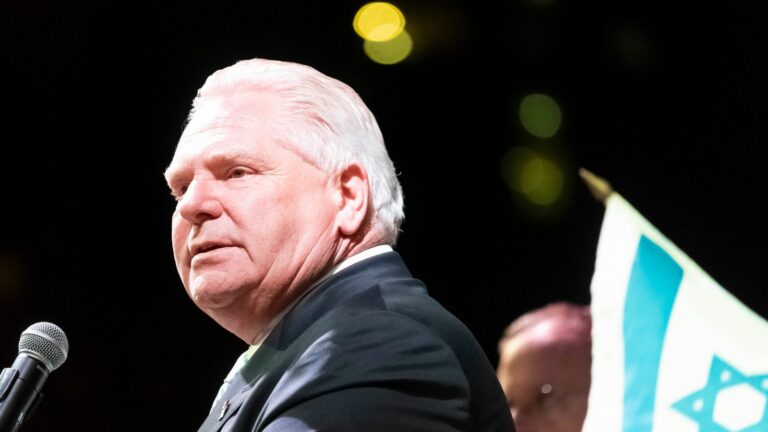
A new east-west oil corridor has entered Canada’s infrastructure debate with the kind of scale that immediately changes the conversation. Ontario Premier Doug Ford and Alberta Premier Danielle Smith are backing a proposed 3,300-kilometre route from Hardisty, Alberta, to Sarnia, Ontario, designed to move western Canadian crude entirely within Canada rather than relying on U.S. transit routes.
The pitch is being framed as a nation-building project: part energy security plan, part industrial strategy, and part political statement. With Canada still sending the vast majority of its crude exports south of the border, the proposal lands at a moment when premiers are under pressure to prove that domestic supply chains can be strengthened at home.
A Canada-Only Route With a Clear Political Message
Ford and Smith Pitch 3,300-Km Oil Corridor From Alberta to Sarnia—All Inside Canada
- A Canada-Only Route With a Clear Political Message
- Why Sarnia Sits at the Centre of the Pitch
- The Capacity Figure Makes This More Than a Regional Project
- The U.S. Reliance Problem Is the Political Fuel
- Canadian Steel Is Part of the Sales Pitch
- Ports Could Turn the Corridor Into an Export Strategy
- Indigenous Consultation Could Decide the Timeline
- The Climate Debate Will Not Stay on the Sidelines
- What It Could Mean for Ontario Energy Security
- The Biggest Question Is Whether the Proposal Becomes a Real Project
The proposed Northern Shield Energy Corridor would run roughly 3,300 kilometres from Hardisty, one of Alberta’s key crude oil hubs, to Sarnia, Ontario, a long-established refining and petrochemical centre. The route is significant not only because of its length, but because it is being sold as an all-Canadian corridor. That distinction matters in a country where major crude movements have often depended on infrastructure that crosses into the United States before returning to Canadian markets.
Ford and Smith are presenting the concept as a way to keep more control over Canada’s energy backbone. The proposed system would start with an estimated capacity of 500,000 barrels per day, with potential expansion to 800,000 barrels per day for domestic use and export markets. It is still a proposal, not a shovel-ready project, but the political branding is already clear: Canadian oil, Canadian steel, Canadian workers, and a Canadian route.
Why Sarnia Sits at the Centre of the Pitch
Sarnia is not a random endpoint. The city and surrounding Sarnia-Lambton region have been tied to Canada’s oil and chemical industries for generations, with refineries, petrochemical plants, storage, shipping links, and skilled trades clustered around the St. Clair River. That existing industrial base gives the proposal a practical landing point: a place where crude can be refined, blended, stored, or moved onward through established energy infrastructure.
The numbers help explain why Sarnia is central to the argument. Imperial says its Sarnia refinery processed about 113,000 barrels of crude per day in 2025. Suncor describes its Sarnia refinery as an 85,000-barrel-per-day operation that already receives most of its oil from western Canada, supplemented by U.S. purchases. Shell says its Sarnia Manufacturing Centre can process up to 85,000 barrels per day. Put together, the region has a scale and industrial familiarity that few Canadian communities can match.
The Capacity Figure Makes This More Than a Regional Project
A 500,000-barrel-per-day pipeline would be large enough to reshape supply patterns, even before any later expansion. At the upper estimate of 800,000 barrels per day, the proposed corridor would move volumes that compare with some of Canada’s major pipeline expansions. That is why the plan is being discussed less like a local infrastructure project and more like a national economic corridor.
The timing is also important. Canadian crude production has been climbing, with Statistics Canada reporting that crude oil and equivalent production hit another annual record in 2025. Alberta oil sands production remained the largest contributor, and the full first year of the expanded Trans Mountain pipeline helped reduce export bottlenecks. The Northern Shield pitch builds on that same logic: if Canada produces more than it can easily move to preferred markets, pipeline access becomes a central economic question.
The U.S. Reliance Problem Is the Political Fuel
The corridor’s strongest political selling point is Canada’s dependence on the American market. Canada exported 4.3 million barrels per day of crude oil in 2025, and 90.1 per cent of that volume went to the United States. The value story is just as striking: Canada’s crude exports were worth $140 billion in 2025, with $126.1 billion tied to U.S. buyers.
That reliance creates a powerful talking point for premiers who want to frame the project around sovereignty rather than just oil. If trade tensions rise, tariffs change, or U.S. policy becomes less predictable, Canada’s energy sector can look exposed. Ford and Smith are arguing that an east-west route would give Canadian producers and refiners more domestic flexibility. For workers in places like Fort McMurray, Regina, Thunder Bay, Sault Ste. Marie, Hamilton, and Sarnia, that message is meant to sound less abstract: more infrastructure could mean more industrial certainty.
Canadian Steel Is Part of the Sales Pitch
The corridor is also being tied directly to manufacturing. Ontario has previously said the broader east-west pipeline and energy corridor study would examine the use of Canadian steel to move western Canadian oil and gas to southern Ontario refineries and to possible port connections on James Bay, Hudson Bay, and the Great Lakes. That makes the project a bridge between Alberta’s energy sector and Ontario’s industrial base.
For Ford, that link is politically useful. It allows the pipeline to be pitched not only as an Alberta oil project, but as an Ontario jobs project. Steel mills, pipe fabricators, engineering firms, construction contractors, Indigenous businesses, environmental consultants, surveyors, rail suppliers, and port planners could all become part of the economic story. The challenge is that “jobs” is not the same as a business case. A project of this size would still need credible cost estimates, committed shippers, financing, and a regulatory path investors believe can survive political change.
Ports Could Turn the Corridor Into an Export Strategy
The Sarnia route is only one part of the broader vision. Ontario has also been exploring potential extensions to ports, including possible links involving Churchill, Manitoba, as well as ports on James Bay, Hudson Bay, and the Great Lakes. If built, those extensions could give Canadian oil new access points to global markets without relying as heavily on U.S. routes.
That idea is ambitious, but it is also complicated. Northern ports raise questions about marine conditions, seasonal access, rail connections, Indigenous rights, environmental protection, and commercial demand. Churchill, for example, has long been discussed as a northern trade gateway, but moving large-scale energy exports through northern infrastructure would require careful planning and major investment. The appeal is obvious: a route from Alberta to tidewater that remains inside Canada. The hard part is turning that geographic idea into a bankable, permitted, and publicly accepted project.
Indigenous Consultation Could Decide the Timeline
Any pipeline of this length would cross multiple territories, watersheds, communities, and rights-bearing Indigenous lands. Ontario has said the east-west corridor process will honour the duty to consult and will continue to advance economic reconciliation, including possible pathways to Indigenous equity participation. That language is now standard in major-project announcements, but the real test is whether consultation begins early enough and carries enough influence to shape the project.
The federal rules matter here. New interprovincial oil or gas pipelines longer than 75 kilometres in a new right of way can require an integrated impact assessment involving the Impact Assessment Agency of Canada and the Canada Energy Regulator. The Building Canada Act may also become relevant if Ottawa treats the corridor as a project of national interest. That could streamline parts of the federal approval process, but it would not erase the duty to consult. If governments move too quickly without durable Indigenous partnerships, court challenges could become as important as engineering plans.
The Climate Debate Will Not Stay on the Sidelines
Supporters will describe the corridor as a practical answer to energy security, market access, and domestic supply-chain weakness. Critics will almost certainly argue that a new long-distance oil corridor risks locking in fossil-fuel infrastructure at a time when governments are also promising emissions reductions. That conflict has shaped nearly every major Canadian pipeline fight of the past decade.
The environmental questions would go beyond greenhouse gases. A route from Alberta to Ontario could raise concerns about wetlands, rivers, farmland, boreal forest, spill response, construction disturbance, and cumulative effects. Regulators would likely examine route alternatives, emergency plans, habitat impacts, water crossings, Indigenous knowledge, and long-term monitoring. For the project to survive public scrutiny, its backers would need to explain not only why Canada needs the corridor, but how it would be built and operated safely over decades.
What It Could Mean for Ontario Energy Security
For Ontario, the pitch is partly about keeping fuel supply closer to home. Sarnia already plays a major role in producing gasoline, diesel, aviation fuel, petrochemical feedstock, and other refined products used across southern Ontario. If more western Canadian crude reached Sarnia through an all-Canadian route, backers argue the province would be less exposed to disruptions involving U.S. transit, border politics, or foreign supply shocks.
That does not mean gasoline prices would automatically fall. Fuel prices are shaped by crude markets, refining margins, taxes, distribution costs, global demand, and currency movements. But energy security is not only about price; it is also about reliability. A corridor that gives refiners more stable access to Canadian feedstock could be valuable during trade disputes or supply disruptions. For everyday households, the promise would be indirect but familiar: fewer weak links between the oilfield, the refinery, and the pump.
The Biggest Question Is Whether the Proposal Becomes a Real Project
The corridor now has political momentum, but political momentum is not the same as construction. The next stages would need to answer basic but difficult questions: who builds it, who pays for it, which exact route is chosen, which communities support or oppose it, which companies commit volumes, and whether Ottawa is prepared to treat it as a national-interest project.
Canada has seen large pipeline ideas collapse before when costs, politics, court rulings, or market doubts overtook the original pitch. That history will hang over Northern Shield from the start. Still, the proposal has landed in a different political environment: one shaped by trade anxiety, demand for domestic supply chains, rising interest in major-project fast-tracking, and record Canadian crude production. If Ford and Smith can turn those pressures into a credible coalition, the 3,300-kilometre corridor could become one of Canada’s most consequential infrastructure debates of the decade.
This Options Discord Chat is The Real Deal
While the internet is scoured with trading chat rooms, many of which even charge upwards of thousands of dollars to join, this smaller options trading discord chatroom is the real deal and actually providing valuable trade setups, education, and community without the noise and spam of the larger more expensive rooms. With a incredibly low-cost monthly fee, Options Trading Club (click here to see their reviews) requires an application to join ensuring that every member is dedicated and serious about taking their trading to the next level. If you are looking for a change in your trading strategies, then click here to apply for a membership.