35,000+ smart investors are already getting financial news, market signals, and macro shifts in the economy that could impact their money next with our FREE weekly newsletter. Get ahead of what the crowd finds out too late. Click Here to Subscribe for FREE.
For years, Indigenous communities along British Columbia’s energy corridors have watched major infrastructure projects promise jobs, investment and economic growth. Now, five First Nations are moving into a more permanent financial role in one of Canada’s most important natural gas pipelines.
On October 13, 2026, TC Energy announced the completion of an investment agreement giving five B.C. First Nations an economic interest connected to Coastal GasLink, the 670-kilometre pipeline supplying LNG Canada’s export terminal in Kitimat.
The agreement represents a significant development in Indigenous participation in Canada’s energy industry. It also arrives as the country expands its ability to sell liquefied natural gas to overseas markets rather than relying almost entirely on American customers. With a major expansion already approved, the partnership could create long-term financial opportunities for communities whose territories are closely connected to Canada’s growing LNG industry.
Five First Nations Become Economic Partners in Coastal GasLink
Five B.C. First Nations Secure Economic Stake in Coastal GasLink as Canada Expands LNG Trade Beyond the U.S.
- Five First Nations Become Economic Partners in Coastal GasLink
- Years of Indigenous Partnership Turn Into Long-Term Investment
- Coastal GasLink Is Opening Asian Markets to Canadian Natural Gas
- LNG Canada’s Expansion Could Increase the Value of the Partnership
- Economic Opportunity Still Comes With Environmental and Financial Challenges
The agreement involves the Haisla Nation, Halfway River First Nation, McLeod Lake Indian Band, Saulteau First Nations and West Moberly First Nations. Together, they participate through FN CGL Pipeline Limited Partnership, an Indigenous-led investment organization established specifically to pursue the opportunity. The partnership brings together the coastal Haisla Nation, centred around Kitamaat Village, and four Treaty 8 First Nations in northeastern British Columbia. Their participation connects communities across different parts of the province through a shared investment in energy infrastructure.
Under the completed transaction, the Nations obtain an economic interest in the entity holding TC Energy’s limited-partner interest in Coastal GasLink. That distinction matters because the agreement does not disclose a specific percentage of direct pipeline ownership for the five communities. The financial terms were also not released publicly. Nevertheless, TC Energy expects the arrangement to provide long-term financial returns associated with its pipeline investment. The announcement is the first of two planned Indigenous transactions, with another involving additional First Nations expected to close before the end of 2026.
Years of Indigenous Partnership Turn Into Long-Term Investment
The agreement builds on commitments made in March 2022, when TC Energy announced options for Indigenous communities to acquire a combined 10% equity interest in Coastal GasLink. At the time, 16 communities were represented through two investment partnerships. The latest transaction represents progress toward Indigenous economic participation, although the company has not disclosed how much of the original proposed ownership interest is represented by this specific deal. That distinction is important because the earlier options and the newly completed financial arrangement should not automatically be treated as identical.
Coastal GasLink estimates that construction generated more than C$1.8 billion in contracts for Indigenous and local businesses combined, alongside approximately 25,700 full-time-equivalent jobs across British Columbia. These figures describe broader economic activity, not payments to the five participating Nations. Long-term investment returns could potentially support priorities such as housing, education, infrastructure and cultural programs, depending on community decisions and actual financial performance. West Moberly Chief Roland Willson emphasized that the agreement would strengthen communities’ ability to make decisions about their economic futures. For participating Nations, the opportunity is to benefit financially after construction activity has ended.
Coastal GasLink Is Opening Asian Markets to Canadian Natural Gas
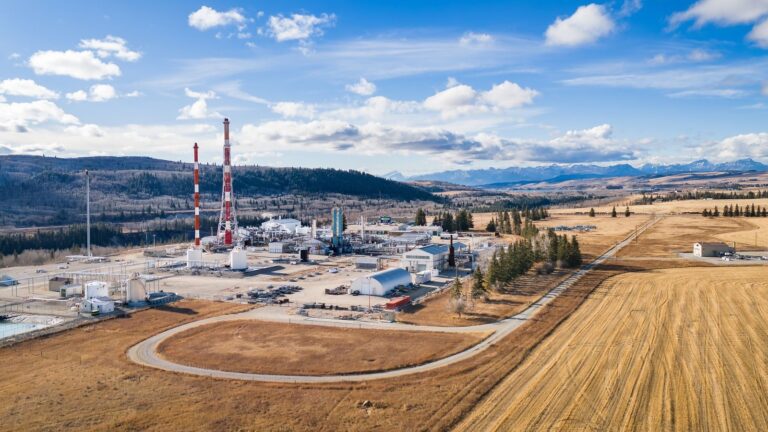
Coastal GasLink transports natural gas approximately 670 kilometres from northeastern British Columbia to the LNG Canada terminal in Kitimat. Its current transportation capacity is approximately 2.1 billion cubic feet per day. At the export facility, natural gas is cooled to roughly minus 162°C, transforming it into a liquid that occupies about 600 times less space. Specialized ships can then transport it across the Pacific to international customers. LNG Canada shipped its first cargo on June 30, 2025, marking a major milestone for Canada’s energy-export industry.
The importance of this route becomes clearer when examining Canada’s traditional reliance on the United States. According to the Canada Energy Regulator, Canada exported approximately 8.6 billion cubic feet of natural gas daily in 2025, excluding LNG Canada shipments, with nearly all going to American buyers. LNG Canada’s exports averaged another 0.295 billion cubic feet daily over the full year, entirely destined for East Asia, although shipments only began in June. Coastal GasLink therefore offers genuine export diversification without eliminating Canada’s dependence on American customers. Its importance lies in creating additional markets and giving Canadian producers more options over time.
LNG Canada’s Expansion Could Increase the Value of the Partnership
The timing of the investment is particularly significant. On September 28, 2026, LNG Canada’s five international shareholders approved a major expansion that will double the Kitimat facility’s annual production capacity from 14 million to 28 million tonnes. TC Energy subsequently confirmed that Coastal GasLink’s second phase would proceed, nearly doubling the pipeline’s transportation capacity. Instead of constructing an entirely new pipeline, the expansion will involve five additional compressor stations and upgrades along the existing route. This approach is designed to move significantly more natural gas through infrastructure already in place.
Construction on the pipeline expansion is expected to begin in early 2027, with service anticipated in the early 2030s. TC Energy estimates that up to 2,100 people could be employed during peak construction across five sites. A separate Indigenous investment opportunity also exists at LNG Canada: five First Nations have an option to invest up to C$1 billion in a planned LNG storage tank. That arrangement involves a different partnership, although the Haisla Nation participates in both. The C$1 billion figure does not represent the value of the newly completed Coastal GasLink transaction.
Economic Opportunity Still Comes With Environmental and Financial Challenges
The investment agreement does not erase longstanding disagreements surrounding Coastal GasLink. Although the project has agreements with 20 elected First Nations governments along its route, Wet’suwet’en hereditary chiefs have opposed the pipeline’s passage through traditional territory, raising concerns about Indigenous authority and environmental protection. Regulatory problems have also shaped the project’s history. In September 2024, British Columbia’s Environmental Assessment Office imposed C$590,000 in penalties for 10 environmental violations involving erosion and sediment-control measures identified during earlier inspections. Coastal GasLink said it had taken corrective action.
Financial uncertainty presents another challenge. Although TC Energy expects predictable long-term returns, the undisclosed transaction terms make it impossible to determine how much each participating Nation will receive. International energy demand is also subject to changing economic conditions. The International Energy Agency’s 2026 outlook projected a decline of approximately 0.5% in global natural gas demand amid supply disruptions and elevated prices. For participating communities, the lasting value of the partnership will depend on actual investment returns, responsible infrastructure operations and meaningful influence over their economic futures. The planned second Indigenous transaction could broaden participation, but its completion remains an expectation rather than a confirmed outcome.
This Options Discord Chat is The Real Deal
While the internet is scoured with trading chat rooms, many of which even charge upwards of thousands of dollars to join, this smaller options trading discord chatroom is the real deal and actually providing valuable trade setups, education, and community without the noise and spam of the larger more expensive rooms. With a incredibly low-cost monthly fee, Options Trading Club (click here to see their reviews) requires an application to join ensuring that every member is dedicated and serious about taking their trading to the next level. If you are looking for a change in your trading strategies, then click here to apply for a membership.