35,000+ smart investors are already getting financial news, market signals, and macro shifts in the economy that could impact their money next with our FREE weekly newsletter. Get ahead of what the crowd finds out too late. Click Here to Subscribe for FREE.
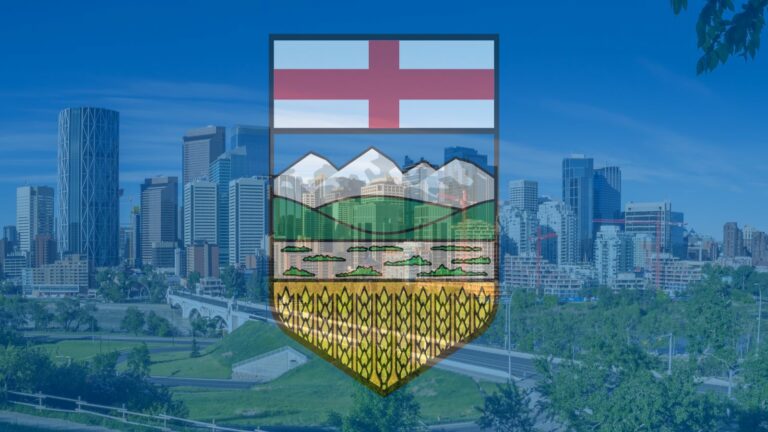
Alberta’s unity debate has moved from petitions and polling into organized federal campaigning. The federal Conservatives launched “Conservatives for Canada” on September 4, putting Parkland MP Dane Lloyd in charge of an effort to persuade Albertans to remain within Confederation in the October 19 referendum.
The intervention is politically significant because many of the voters Conservatives need to reach are normally part of their own base. Polls still give the remain side a substantial advantage, but separatist organizing, competing federalist campaigns and unusually intense interest in voting have raised the stakes. Crucially, October’s result cannot itself make Alberta independent. It will decide whether the province should remain in Canada or begin a constitutional process toward a later binding separation referendum.
Conservatives Put Their Own Brand Behind the Unity Campaign
Federal Conservatives Launch Campaign to Keep Alberta in Canada as Referendum Fight Escalates
- Conservatives Put Their Own Brand Behind the Unity Campaign
- October 19 Is Not a Direct Vote to Leave Canada
- The Conservatives Are Trying to Persuade Their Own Voters
- Polls Favour Remaining, but the Protest Vote Matters
- Competing Petitions Show Both Sides Can Mobilize
- Danielle Smith Supports Staying While Defending the Debate
- Turnout Could Make This an Exceptional Alberta Vote
- Even a Future Separation Victory Would Require Negotiations
- Alberta’s Economy Is Deeply Connected to the Rest of Canada
- The Campaign Is Really About Whether Grievance Can Stay Federalist
The new campaign gives the federal Conservative caucus a formal role in a debate Pierre Poilievre had already entered months earlier. Lloyd’s “Conservatives for Canada” operation is recruiting volunteers, collecting donations and directing supporters toward voting information under the message “Stronger Alberta Within a United Canada.” Rather than arguing that Alberta’s relationship with Ottawa is working well, the campaign accepts that substantial grievances exist and argues that those problems should be resolved without breaking up the country.
That distinction is central to the Conservatives’ strategy. Poilievre said in June that Alberta does not need a new country but different policies from Ottawa, and he committed Conservatives to campaigning for Canadian unity. Lloyd has similarly argued that many frustrated Albertans remain patriotic Canadians even while believing federal governments have failed to respect the province’s economic contribution and political priorities. That gives the campaign a delicate task: validate anger about Ottawa strongly enough to retain disaffected Conservatives while persuading those same voters that separation would be the wrong remedy.
October 19 Is Not a Direct Vote to Leave Canada
The wording of Alberta’s ballot makes the distinction especially important. Voters will choose between keeping Alberta as a Canadian province and directing the provincial government to commence the legal process required to hold a future binding referendum on separation. The result of this question has explicitly been designated non-binding. A victory for the second option would therefore start another political and legal process rather than create an independent Alberta the morning after the vote.
The separation-related choice is officially Question 10, although Elections Alberta says it will actually be handed to electors first and counted first. Nine other questions deal with immigration policy and proposed constitutional changes involving federal-provincial powers, judicial appointments and the Senate. Each question appears on its own numbered, colour-coded ballot. This unusually broad package means voters will be considering several disputes with Ottawa at once, but only the tenth question deals directly with whether Alberta should begin moving toward another referendum on its place in Canada.
The Conservatives Are Trying to Persuade Their Own Voters
For federal Conservatives, the referendum presents an unusually internal political challenge. More than 1.4 million Albertans voted for Conservative candidates in the 2025 federal election, helping elect 34 of the party’s 143 MPs. Lloyd has explicitly identified those voters as a crucial constituency for the remain campaign. The numbers make sense strategically: Alberta is one of the strongest federal Conservative regions in the country, yet some of the province’s most committed separatist sentiment also exists on the political right.
Polling illustrates that tension. A June Spark Advocacy study found 27 per cent of Alberta’s federal Conservative voters said they wanted the province to separate, while another 16 per cent were unsure. Fifty-eight per cent identified as committed federalists. The challenge for Poilievre is therefore different from simply campaigning against an opposing party. He must convince part of his own coalition that frustration with Liberal governments, federal regulation or perceived Western alienation should strengthen the case for changing Ottawa rather than abandoning Confederation.
Polls Favour Remaining, but the Protest Vote Matters
Recent polling consistently puts the remain position ahead, although the size of that advantage varies. Research Co. reported at the end of August that 74 per cent of likely Alberta voters planned to choose remaining in Canada, compared with 22 per cent who preferred beginning the legal process toward a binding separation referendum. Leger found a narrower but still decisive 65 per cent to 23 per cent split, with 10 per cent undecided. An August Angus Reid Institute study found 61 per cent for remaining and 33 per cent for proceeding toward another referendum.
Those differences matter because not everyone considering the second option necessarily wants independence. Angus Reid found 41 per cent of respondents on the pro-referendum side described their motivation as sending a message to Ottawa. That turns the October vote partly into a test of protest politics. Someone may believe separation would ultimately be too costly while still considering a vote for another referendum as bargaining leverage. The Conservative campaign is designed in part to stop that protest vote from becoming a larger political mandate.
Competing Petitions Show Both Sides Can Mobilize
The referendum debate did not suddenly appear in September. Alberta has already experienced large-scale citizen petition campaigns from both sides of the unity question. The pro-Canada “Alberta Forever Canada” initiative led by former deputy premier Thomas Lukaszuk was verified as successful in December 2025. Elections Alberta reported 438,568 valid signatures and an estimated 404,293 verified signatures after statistical sampling, comfortably above the threshold that applied to that initiative.
The independence movement subsequently demonstrated significant organization of its own. Elections Alberta reported in July that the “Referendum Relating to Alberta Independence” petition had 279,337 valid signatures, with 222,597 estimated verified signatures after statistical sampling, above the required 177,732. However, further steps remain on hold because the original approval of that petition was quashed by the Court of King’s Bench and the matter remains under appeal. The two petition totals are not directly comparable because they proceeded under different versions of Alberta’s initiative rules, but together they demonstrate why neither side is treating the debate as merely theoretical.
Danielle Smith Supports Staying While Defending the Debate
Premier Danielle Smith has publicly said she would vote for Alberta to remain in Canada and that remaining is the position of her government and caucus. At the same time, she has defended allowing Albertans to debate the province’s constitutional future and has argued against portraying separatist supporters as disloyal. In her May address announcing the referendum plan, Smith described many independence advocates as frustrated Canadians who had lost confidence that Alberta could flourish under the existing federal relationship.
That posture allows Smith to occupy an unusual middle ground. She can oppose actual separation while continuing to press Ottawa for more provincial autonomy, resource development and constitutional change. Recent federal-provincial agreements have also complicated claims that cooperation is impossible. Canada and Alberta have signed an implementation agreement covering energy development, emissions policy and a proposed West Coast oil pipeline. Smith has pointed to that energy agenda as an example of what she believes a renewed Canadian relationship could deliver, while still demanding further changes from Ottawa.
Turnout Could Make This an Exceptional Alberta Vote
The organizational battle is intensifying partly because voter interest appears exceptionally high. Elections Alberta said in early September that approximately 290,000 requests had already been made for mail-in ballots. That was almost five times the roughly 60,000 requested for Alberta’s 2023 provincial election. The agency has also said internal polling suggests turnout could reach 85 per cent, which would exceed the province’s historical record of 81.8 per cent set during the 1935 general election.
The surge forced an administrative change. Elections Alberta moved the deadline for requesting a special ballot from October 9 to September 25 to give voters enough time to receive and return their packages before the legislated October 16 receipt deadline. Advance voting is scheduled for October 13 through October 17, followed by referendum day on October 19. For Lloyd’s campaign, those numbers make turnout operations especially important. A comfortable polling lead does not eliminate the need to mobilize supporters when the ballot is being presented as a defining judgment on Alberta’s future.
Even a Future Separation Victory Would Require Negotiations
Canada’s constitutional framework makes clear that provincial secession cannot occur through a single unilateral vote. In the 1998 Reference re Secession of Quebec, the Supreme Court of Canada concluded that a province could not legally leave the federation on its own. A clear majority supporting secession on a clear question could create a constitutional obligation for governments to negotiate, but the vote itself would not automatically redraw borders or terminate the province’s place in Canada.
Parliament’s Clarity Act subsequently established another layer of federal scrutiny. If a provincial government sought secession negotiations after a future referendum, the House of Commons would determine whether the referendum question was sufficiently clear and whether the majority represented a clear expression of the population’s will. The law requires consideration of the size of the majority, voter participation and other relevant circumstances. That means October 19 is several steps removed from independence: even victory for the pro-referendum option would first require Alberta to pursue another, binding vote before Canada’s secession framework fully came into play.
Alberta’s Economy Is Deeply Connected to the Rest of Canada
The economic debate around separation quickly becomes complicated because Alberta’s markets, public finances and supply chains operate across provincial borders. Statistics Canada reported that Alberta-based wholesalers recorded approximately $141.8 billion in interprovincial exports in 2024 and about $93.2 billion in interprovincial imports. Alberta businesses are also among the country’s most active in internal commerce: Statistics Canada found 31.9 per cent had sold goods or services to customers in another province or territory during the period covered by its interprovincial trade study.
Federal fiscal relationships add another layer. Finance Canada estimates Alberta will receive roughly $9.2 billion in major federal transfers during 2026-27, including about $7.0 billion through the Canada Health Transfer and $2.2 billion through the Canada Social Transfer. Alberta receives no Equalization payment. Those figures do not settle arguments about Alberta’s overall fiscal contribution to Confederation, since federal transfers and net federal tax flows are different measures. They do show how many financial arrangements would need to be addressed in any serious separation process.
The Campaign Is Really About Whether Grievance Can Stay Federalist
The federal Conservatives’ intervention turns October’s referendum into a test of a political argument they have used for years: Alberta can be deeply dissatisfied with Ottawa while remaining committed to Canada. Poilievre and Lloyd are trying to separate anti-Liberal sentiment, demands for provincial autonomy and resource-development frustrations from the idea of an independent Alberta. Success would allow Conservatives to preserve both their Western protest credentials and their national federalist identity.
Recent developments provide material for that case. Canada and Alberta are already working through a formal energy agreement, while Alberta’s proposed West Coast Oil Pipeline has entered the federal Major Projects Office process. The proposal envisions a roughly 1,250-kilometre line capable of carrying one million barrels of crude oil per day from the Edmonton region toward a British Columbia deepwater port, although significant regulatory and Indigenous consultation work remains. The referendum fight therefore arrives while Ottawa and Edmonton are simultaneously disputing the federation’s structure and trying to build major projects together. That contradiction may ultimately define the campaign.
This Options Discord Chat is The Real Deal
While the internet is scoured with trading chat rooms, many of which even charge upwards of thousands of dollars to join, this smaller options trading discord chatroom is the real deal and actually providing valuable trade setups, education, and community without the noise and spam of the larger more expensive rooms. With a incredibly low-cost monthly fee, Options Trading Club (click here to see their reviews) requires an application to join ensuring that every member is dedicated and serious about taking their trading to the next level. If you are looking for a change in your trading strategies, then click here to apply for a membership.