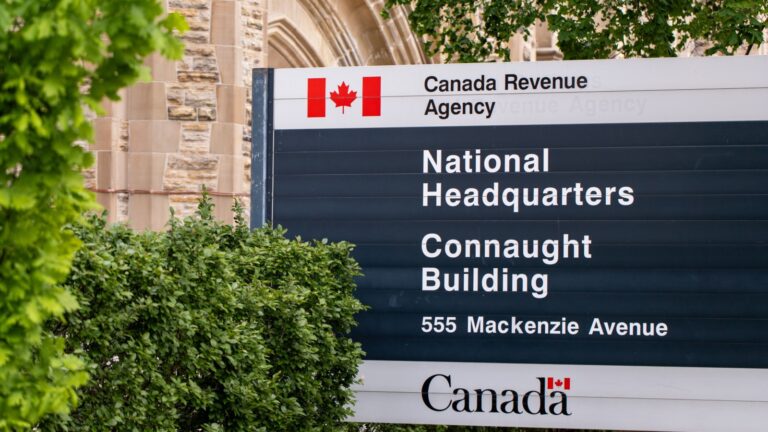
The number alone is enough to stop Canadians cold: more than 42,000 privacy breaches tied to CRA tax accounts since 2020. But the real story is even more unsettling than the headline suggests. These incidents were not just technical glitches or isolated login mix-ups. According to Canada’s privacy watchdog, many involved bad actors gaining access to taxpayer information, changing account details, and in some cases redirecting money or filing fraudulent benefit requests.
This piece breaks the story into 10 key angles, from how the breaches happened to why the CRA’s own tracking systems became part of the problem. It also looks at what the privacy commissioner found, what the agency has agreed to change, and why this issue matters well beyond tax season.
A Number Big Enough to Shake Confidence
CRA Tax Accounts Hit by More Than 42,000 Privacy Breaches
- A Number Big Enough to Shake Confidence
- This Was Not One Single Hack
- What Attackers Could Actually Change
- Fraud Turned a Privacy Problem Into a Financial One
- The CRA’s Tracking Problem Became Part of the Story
- Multi-Factor Authentication Arrived, But the Watchdog Says It Was Late
- Phone Verification Was Another Weak Spot
- The CRA Has More Entry Points Than Most People Realize
- The Watchdog Wants a More Modern Security Philosophy
- Nine Recommendations, and a Clear Warning About Governance
- What Canadians Should Watch Next
More than 42,000 privacy breaches is not the kind of figure most people associate with a tax account. Tax filing is supposed to feel routine, even boring. That is precisely why this story lands so hard. The Office of the Privacy Commissioner says the CRA submitted six quarterly reports totaling 42,755 confirmed individual breaches, all tied to unauthorized access to or modification of taxpayer information dating back to 2020. For a system that relies on public trust, that number carries real weight.
What makes the figure more alarming is that it represents confirmed individual cases, not vague estimates or hypothetical risks. Behind every breach is a taxpayer whose information may have been viewed, changed, or used in ways that triggered stress, delays, financial disruption, or worse. A headline about data exposure can feel abstract until it is attached to the agency responsible for taxes, refunds, benefits, and direct deposits. At that point, it stops sounding like a cybersecurity story and starts sounding personal.
This Was Not One Single Hack
The image many readers may first picture is a dramatic one-time cyberattack that broke through a digital wall. The privacy commissioner’s findings describe something messier and more troubling. The problem was not framed as one clean event with a clear beginning and end. Instead, the CRA’s cases involved what it calls unauthorized use of taxpayer information by a third party, or UUTP, across multiple years and multiple entry points.
That matters because it suggests a broad vulnerability rather than a lone failure. Some breaches were linked to external bad actors using information they had obtained elsewhere. Others involved modifications to taxpayer files after access was gained. The report points back to exploitation dating as far back as March 2020 and notes earlier concerns around CERB-related fraud. In other words, this was not a short-lived episode that flared up and disappeared. It was a pattern that kept resurfacing while the system was still trying to understand its own weaknesses.
What Attackers Could Actually Change
The most unnerving part of the findings is not simply that someone could look at sensitive information. It is that an attacker who got into an account could potentially alter details that affect real money and real communication. The privacy commissioner’s report says information that may have been changed or created included direct deposit data, phone numbers, addresses, email addresses, notification preferences, authorized representation, and even benefits-related details.
That helps explain why these incidents could spiral so quickly for victims. A redirected deposit is not just a line item in a forensic report. It can mean waiting on money that never arrives, discovering a strange change in account settings, or learning that notices were sent somewhere else. Tax accounts are administrative by design, but once bad data enters them, the consequences become intensely human. A parent expecting a benefit payment, a senior waiting for a refund, or a self-employed worker relying on a deposit does not experience this as a privacy issue first. They experience it as disruption.
Fraud Turned a Privacy Problem Into a Financial One
The privacy commissioner did not describe these breaches as harmless exposures. The office said attackers were able to access or modify taxpayer information in ways that let them redirect or submit fraudulent requests for government benefits. That shifts the issue from privacy embarrassment to financial harm. Once a compromised account can be used to move money or trigger false claims, the fallout expands well beyond account security.
That is why the story resonates so strongly with a Canadian audience. The CRA is not just a tax collector. It is woven into how refunds, benefits, and payments move through households. A breach that touches those systems can mean delayed support, account freezes, phone calls, identity verification steps, and a lingering sense that a personal file is no longer fully under the taxpayer’s control. Even when money is restored or fraudulent activity is reversed, the process can take time and energy. For many people, the emotional cost of uncertainty becomes part of the damage.
The CRA’s Tracking Problem Became Part of the Story
One of the most striking findings was not about the attackers at all. It was about the agency’s difficulty explaining what happened in every case. The privacy commissioner said the CRA was unable to provide details for every confirmed breach because of limits in its tracking systems, the volume of incidents, and the effort required to piece the records together. Instead, the agency gave the watchdog a statistically representative sample for review.
That detail changes how the story should be read. It suggests the challenge was not only preventing breaches, but also seeing them clearly enough afterward to understand patterns, causes, and timelines. The report says the CRA only began tracking individual UUTP cases in 2022 and that some processes relied on multiple systems and manual inputs. In practical terms, that means investigators were dealing with a fragmented picture. For taxpayers, that kind of administrative weakness is frustrating in its own right. A government agency cannot fix what it cannot fully map.
Multi-Factor Authentication Arrived, But the Watchdog Says It Was Late
Security experts have been urging stronger account protection for years, so the report’s criticism of the CRA’s multi-factor authentication approach is especially notable. The privacy commissioner found that the CRA did not have MFA throughout the entire period under investigation. The report also said the agency did not implement mandatory MFA in a timely manner and did not always rely on methods considered best practice.
The CRA has since expanded MFA options, including an authenticator app, telephone-based codes, and other backup methods. That is progress, but the report makes clear that not all MFA is created equal. It specifically notes that SMS-based methods are more susceptible to attack than stronger alternatives and says the CRA should assess its implementation against international standards. This is where the story becomes less about whether security exists and more about whether it is strong enough. In a system handling tax records and benefits, “some protection” no longer sounds like a reassuring benchmark.
Phone Verification Was Another Weak Spot
For many Canadians, calling the CRA still feels like the old-fashioned, safer option. The commissioner’s findings complicate that assumption. One recommendation focused specifically on authentication over the phone, noting that knowledge-based methods such as security questions are increasingly seen as weak. The report points to 2025 guidance from NIST stating that knowledge-based authentication is obsolete and should not be used for identity verification.
That is a sharp conclusion, and it helps explain why attackers often target the human side of systems rather than just the digital front door. Information used in security questions can sometimes be guessed, pieced together, or found through other sources. The CRA told the watchdog it has already taken steps to strengthen phone-based authentication, including adding one-time passcodes for calls with agents and expanding that control to its interactive voice response system in 2026. Even so, the commissioner’s message is clear: if a security step depends too heavily on what someone knows, it may not be enough anymore.
The CRA Has More Entry Points Than Most People Realize
A tax account may seem like a single portal, but the report paints a much broader picture of how taxpayers interact with the CRA. The watchdog said the agency eventually organized its public-facing entry points into five categories: digital services, telephone services, paper mail and fax-based services, in-person services, and data sharing. The investigation then focused on the entry points most commonly used in the sample, including financial institutions, My Account, general enquiries phone calls, and tax returns.
That breadth matters because convenience and complexity often rise together. Every legitimate way for a taxpayer to access or update information can also create an avenue that has to be secured, monitored, and understood. The report even warns that the CRA’s security posture is only as strong as the weakest point in its own system or that of external stakeholders used to access accounts. That is a sobering way to frame a modern tax system. It means risk does not live in one doorway. It lives in the connections between many of them.
The Watchdog Wants a More Modern Security Philosophy
One of the most important recommendations in the report had less to do with a single tool and more to do with mindset. The privacy commissioner urged the CRA to review whether zero-trust principles are sufficiently integrated into its security measures. Zero trust is often summarized as “never trust, always verify,” but in practice it means reassessing risk continuously rather than assuming a user or device is safe once it gets through the front gate.
That recommendation signals that the watchdog sees the problem as structural, not cosmetic. The report says traditional perimeter-based defenses are no longer enough because attackers who get past those checks can move too freely inside a system. A zero-trust approach can require more re-authentication, more device checks, more behavior analysis, and more scrutiny even when credentials appear valid. The CRA accepted this recommendation, though with more time to implement it. That makes sense technically, but it also underscores how large the repair job may be. This is not just a matter of changing a password rule.
Nine Recommendations, and a Clear Warning About Governance
The report concludes that the CRA contravened parts of the Privacy Act and makes nine recommendations, eight accepted in full and one in part. That alone is a serious outcome, but the substance matters just as much. The recommendations cover stronger MFA, better phone authentication, fuller entry-point inventories, improved monitoring, better tracking and reporting systems, stronger staff vetting and awareness, and more coordinated governance across the agency.
Governance may sound like a bureaucratic word, but in stories like this it often determines whether fixes hold. The commissioner criticized a fragmented and reactive approach in which solutions were too isolated rather than systemic. In plain terms, that means different parts of the organization may have been responding to symptoms without building one coordinated defense. The final recommendation calls for governance changes that allow the agency to address these incidents in a comprehensive and efficient way regardless of where the compromise started. That is not a cosmetic tweak. It is a warning that scattered fixes will not be enough.
What Canadians Should Watch Next
For affected taxpayers, the next phase is not just about headlines. It is about whether the promised fixes take hold and whether victims see meaningful support. The report says the CRA’s Identity Protection Services is the main team handling cases tied to suspected identity theft, and it notes that people affected by fraud or identity theft should not be held liable for unauthorized claims, taxes tied to unauthorized activity, or money paid out to bad actors using their identity. There is also a proposed class-action settlement process tied to earlier Government of Canada online account breaches in 2020.
The practical takeaway is that this story is still developing. Canadians are now looking at two questions at once: how much damage has already been done, and whether the CRA can rebuild confidence quickly enough to prevent the next wave. The agency has accepted most of the commissioner’s recommendations, which is significant. But public trust is not restored by accepting recommendations on paper. It is restored when fewer people lose access, fewer deposits go astray, fewer accounts need emergency repair, and fewer taxpayers feel that a government login has become a risk.
This Options Discord Chat is The Real Deal
While the internet is scoured with trading chat rooms, many of which even charge upwards of thousands of dollars to join, this smaller options trading discord chatroom is the real deal and actually providing valuable trade setups, education, and community without the noise and spam of the larger more expensive rooms. With a incredibly low-cost monthly fee, Options Trading Club (click here to see their reviews) requires an application to join ensuring that every member is dedicated and serious about taking their trading to the next level. If you are looking for a change in your trading strategies, then click here to apply for a membership.