35,000+ smart investors are already getting financial news, market signals, and macro shifts in the economy that could impact their money next with our FREE weekly newsletter. Get ahead of what the crowd finds out too late. Click Here to Subscribe for FREE.
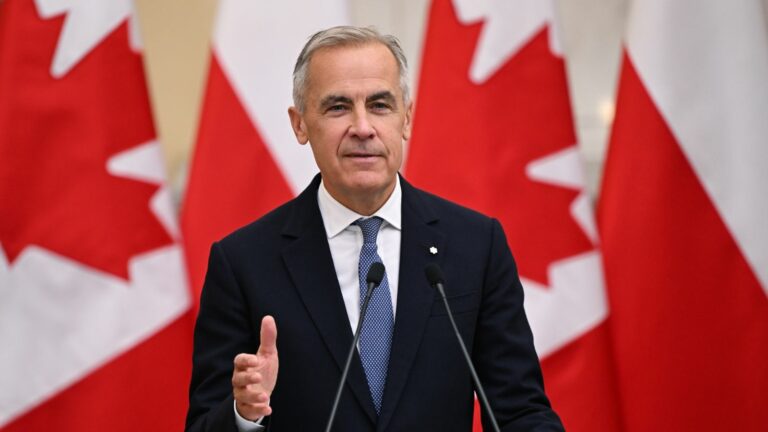
A growing dispute over Canada’s immigration targets has brought two opposition parties together, putting Prime Minister Mark Carney’s government under renewed political pressure. The Conservatives, led by Pierre Poilievre, are pushing Parliament to reject the government’s immigration plan, arguing that the proposed numbers could worsen pressures on housing, health care, employment and public services.
The Bloc Québécois has confirmed its support for the Conservative motion, although its objections reflect Quebec’s distinct concerns about immigration levels and provincial authority. At the centre of the dispute is a federal plan that maintains a target of 380,000 permanent residents annually while introducing additional measures for people already living in Canada. With a House of Commons vote scheduled for November 25, the disagreement has become a test of the government’s immigration policies and its ability to defend them.
Conservatives and Bloc Find Common Ground on Immigration
Conservatives and Bloc Join Forces Ahead of Vote on Carney’s Immigration Plan
- Conservatives and Bloc Find Common Ground on Immigration
- Conservatives Force a Parliamentary Test of Carney’s Plan
- The Dispute Over 380,000 Versus 662,000 Permanent Residents
- Additional Immigration Measures Could Affect 200,000 People
- Quebec’s Immigration Concerns Go Beyond National Numbers
- Temporary Immigration Targets Add Another Layer to the Debate
- Housing Shortages and Health Care Pressures Fuel Opposition
- Rising Unemployment Raises Questions About Labour Market Capacity
- Liberals Defend Immigration Plan as Population Growth Slows
- The Parliamentary Vote Could Shape Canada’s Immigration Debate
The Conservatives and Bloc Québécois rarely approach national policy from identical perspectives, but Canada’s immigration targets have created an opportunity for cooperation. Conservative immigration critic Michelle Rempel Garner has called for lower immigration levels, warning that the country is struggling to provide sufficient housing, health care and employment opportunities. Alongside Conservative Quebec lieutenant Pierre Paul-Hus, she urged MPs from other parties to support the opposition motion. Their central argument is that immigration targets should reflect the country’s ability to accommodate population growth without placing additional pressure on essential services.
The Bloc’s support comes from a somewhat different position. The party has consistently advocated greater provincial control over immigration, particularly for Quebec, where French-language integration and demographic considerations play an important role. Bloc immigration critic Alexis Brunelle-Duceppe has questioned whether Ottawa’s approach respects Quebec’s capacity to welcome newcomers. Although both parties oppose the federal plan, their cooperation does not necessarily represent a broader political alliance. Instead, it demonstrates how different concerns can lead opposition parties toward the same parliamentary position.
Conservatives Force a Parliamentary Test of Carney’s Plan
The Conservative motion calls on the House of Commons to reject the government’s proposed immigration approach because of concerns about housing, wages, employment, health care and other public services. Introduced during an opposition day, the motion gives MPs an opportunity to debate immigration policy outside the government’s preferred legislative agenda. Canada provides opposition parties with designated parliamentary days to bring forward such debates, allowing them to challenge government decisions and force recorded positions on issues they consider important. The immigration debate took place on November 24, with a vote scheduled for the afternoon of November 25.
However, the motion carries an important limitation. It is non-binding, meaning that even if enough MPs support it, the government would not automatically be required to abandon its immigration targets. The vote is also not inherently a confidence measure that could bring down the government. Its immediate significance is political rather than legislative, creating a public record of where MPs stand on a contentious national issue.
The Dispute Over 380,000 Versus 662,000 Permanent Residents
One of the biggest disagreements concerns the actual number of people expected to receive permanent residency in 2027. The government’s official immigration levels plan establishes a target of 380,000 permanent residents annually from 2027 through 2029, continuing the target already established for 2026. That figure is lower than the 483,655 permanent residents admitted in 2024. However, the Conservatives and Bloc argue that focusing exclusively on the headline target overlooks additional immigration measures that could substantially increase the total number of permanent residency approvals next year.
The higher estimate of approximately 662,000 comes from combining the regular 380,000 target with a new one-time initiative covering up to 200,000 people and outstanding admissions from earlier programs. Reporting has placed the remaining older-program admissions at roughly 77,000 to 82,000, explaining why estimates differ slightly. The distinction matters because permanent residency approvals do not necessarily represent people arriving in Canada for the first time. Many applicants already live in the country, making the relationship between immigration admissions and actual population growth more complicated than the headline figures suggest.
Additional Immigration Measures Could Affect 200,000 People
The most controversial component of Carney’s immigration approach is a temporary measure designed to provide permanent residency opportunities for up to 200,000 people in 2027. Immigration, Refugees and Citizenship Canada has divided the initiative into two groups. The first would help up to 100,000 workers and accompanying family members transition to permanent residency, with provincial and territorial governments helping identify individuals whose skills match regional employment needs. The government argues that retaining experienced workers can benefit communities where businesses are already struggling to fill specialized positions.
The second group covers up to 100,000 applications involving humanitarian commitments and family reunification. It includes people who arrived through special pathways connected to Hong Kong and Ukraine, alongside certain humanitarian applicants and family members of Canadian citizens or permanent residents. Some have faced years of uncertainty while awaiting decisions. Although Ottawa characterizes the measure as primarily supporting people already in Canada, reporting has indicated that some family-related applications could involve individuals outside the country. This distinction is central to determining how much additional population growth the initiative could actually produce.
Quebec’s Immigration Concerns Go Beyond National Numbers
For the Bloc Québécois, the dispute carries particular significance because immigration policy directly influences Quebec’s demographic composition, public services and French-language integration. The province’s previously established immigration framework called for approximately 45,000 permanent residents annually between 2026 and 2029. Quebec’s newly elected Parti Québécois government has also proposed reducing annual permanent admissions toward 35,000, although those proposed changes had not yet replaced the existing framework. Against that background, the Bloc argues that federal immigration decisions must account for Quebec’s distinct capacity to receive and integrate newcomers.
Alexis Brunelle-Duceppe has argued that Quebec would need to accept approximately 145,000 permanent residents in 2027 to maintain its relative demographic weight if national admissions reached the higher estimates. That figure represents the Bloc’s political calculation rather than a federally mandated provincial quota. The Canada–Quebec Accord already gives the province substantial authority over economic immigrant selection, while Ottawa retains responsibility for other aspects of immigration. The disagreement therefore extends beyond numbers to questions about jurisdiction, provincial consultation and how responsibility for settlement services should be shared.
Temporary Immigration Targets Add Another Layer to the Debate
Permanent residency is only one part of Canada’s immigration system. The federal government’s 2027–2029 plan also establishes an annual target of 370,000 new temporary resident arrivals. That includes 220,000 temporary workers and 150,000 international students. Within the worker category, 170,000 places are allocated to the International Mobility Program and 50,000 to the Temporary Foreign Worker Program. These figures refer to particular categories of new arrivals and do not include everyone already living in Canada who renews or changes an existing permit.
The government has committed to reducing temporary residents to less than five per cent of Canada’s population by the end of 2027. Statistics Canada estimated approximately 2.78 million non-permanent residents in July 2026, representing 6.7 per cent of the population. These figures help explain why temporary immigration remains a major political concern even as Ottawa maintains that admission levels are stabilizing. However, permanent residency conversions, new temporary arrivals and permit renewals measure different things. Treating all of them as newly arriving residents would produce a misleading picture of how many additional people Canada is actually accommodating.
Housing Shortages and Health Care Pressures Fuel Opposition
For households trying to find a rental or buy their first home, immigration debates often sound less abstract than they do in Parliament. Canada Mortgage and Housing Corporation estimated in September 2026 that annual housing starts would need to reach between 417,000 and 469,000 to restore pre-pandemic affordability by 2036. Its business-as-usual projection was approximately 231,000 starts a year. The agency also warned that weaker construction could undermine recent improvements in affordability, even as slower population growth temporarily eases demand. Those findings give weight to concerns about Canada’s ability to build quickly enough.
Yet the connection between immigration policy and housing is not as simple as equating every permanent residency approval with another household seeking accommodation. A worker who has rented the same apartment for several years does not require a second unit after gaining permanent status. At the same time, newcomers arriving from abroad do need somewhere to live, and existing housing shortages remain real. Hospitals, schools and local infrastructure face similar questions about staffing, funding and capacity that cannot be answered by immigration targets alone.
Rising Unemployment Raises Questions About Labour Market Capacity
The employment picture adds another difficult dimension. Statistics Canada’s October 2026 Labour Force Survey put national unemployment at 6.7 per cent, up from 6.5 per cent in September. Among people aged 15 to 24, the unemployment rate reached 13.7 per cent. Employment was essentially unchanged during October, and nearly one-quarter of unemployed people had been looking for work for at least 27 weeks. These figures help explain the Conservatives’ focus on young workers, wages and the risk of expanding the labour supply when many Canadians are struggling to find jobs.
The government’s case rests partly on a different problem: shortages of particular skills in particular places. Its 2027 plan allocates 244,700 permanent resident admissions to economic immigration, including 95,000 through the Provincial Nominee Program. A hospital looking for specialized staff or a rural employer struggling to recruit faces a different labour market from an urban student searching for an entry-level position. Neither experience cancels out the other. The central policy question is whether selection rules are sufficiently targeted to meet genuine shortages without weakening prospects for workers already in Canada.
Liberals Defend Immigration Plan as Population Growth Slows
Immigration Minister Lena Metlege Diab has defended the plan by arguing that a permanent residency approval is not necessarily a new arrival. The government expects roughly half of admissions under the regular 380,000 target to involve people already living in Canada, before accounting for the special measures. Diab has also said the additional 100,000 worker spaces depend on provincial and territorial participation; unused spaces would not automatically be filled. For someone who has spent years working, paying taxes and raising a family in Canada, permanent status may provide stability rather than represent a sudden increase in local population.
Ottawa also points to a sharp slowdown in demographic growth. Statistics Canada estimated that the population rose just 0.5 per cent between July 2025 and July 2026, its slowest annual percentage growth since 1915–1916. The country still faces an aging population and demand for skilled workers. Nevertheless, acknowledging that many applicants already live in Canada does not settle every question about future arrivals, family reunification or public-service capacity. It does show why status changes and population growth need to be evaluated separately.
The Parliamentary Vote Could Shape Canada’s Immigration Debate
The November 25 vote is expected to test political support more than determine the legal future of the immigration plan. The Bloc has committed to supporting the Conservatives, but reporting ahead of the vote indicated that the motion was unlikely to pass without Liberal MPs breaking with their government. Even a successful vote would express the House’s opposition rather than automatically cancel federal admission targets. That distinction matters for employers, applicants and families trying to understand whether an afternoon in Parliament could immediately change their immigration prospects.
For Carney, the greater challenge may be explaining the policy clearly long after the Commons debate ends. The government will need to show how many of the additional admissions involve people already present, how provinces use the temporary worker pathways and whether pressures on housing and public services ease as promised. The Conservatives will continue pressing the affordability argument, while the Bloc will scrutinize Quebec’s ability to determine its own immigration priorities. Whatever the outcome, the debate highlights a growing demand for transparent figures and policies that Canadians can assess against everyday conditions.
This Options Discord Chat is The Real Deal
While the internet is scoured with trading chat rooms, many of which even charge upwards of thousands of dollars to join, this smaller options trading discord chatroom is the real deal and actually providing valuable trade setups, education, and community without the noise and spam of the larger more expensive rooms. With a incredibly low-cost monthly fee, Options Trading Club (click here to see their reviews) requires an application to join ensuring that every member is dedicated and serious about taking their trading to the next level. If you are looking for a change in your trading strategies, then click here to apply for a membership.