35,000+ smart investors are already getting financial news, market signals, and macro shifts in the economy that could impact their money next with our FREE weekly newsletter. Get ahead of what the crowd finds out too late. Click Here to Subscribe for FREE.
China has secured another two months of breathing room in its trade dispute with the United States, even as Canada continues working toward a new agreement with President Donald Trump’s administration.
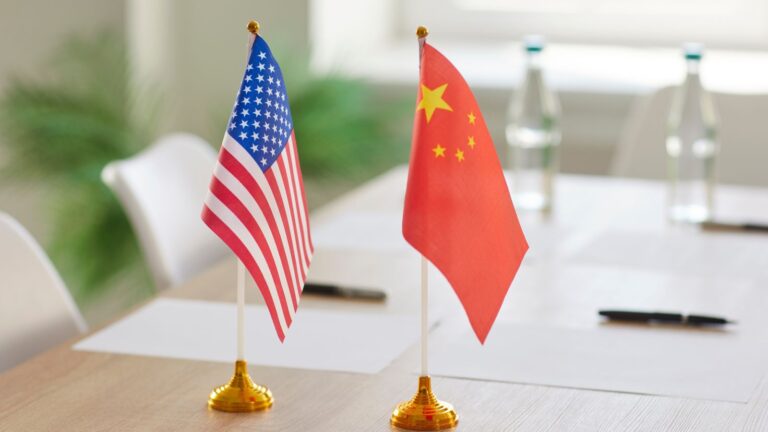
On November 9, Beijing announced that it would extend the suspension of an additional 24% tariff on American goods until January 2027. The move preserves a temporary understanding between the world’s two largest economies while their governments pursue broader negotiations.
For Canada, the announcement comes at a sensitive moment. Prime Minister Mark Carney has reported progress in discussions with Washington, but a comprehensive agreement addressing the countries’ tariff disputes remains unfinished.
The contrasting developments highlight a complicated reality of Trump’s trade strategy: Washington is maintaining negotiations with major trading partners simultaneously, but those discussions are moving at different speeds and producing different results.
China Extends Its 24% Tariff Suspension Until January 2027
China Extends U.S. Tariff Truce for Two More Months While Canada Still Waits for Trump Trade Deal
- China Extends Its 24% Tariff Suspension Until January 2027
- The Trade Truce Also Covers Shipping and Other Restrictions
- Beijing Has More Time to Negotiate, but No Final Deal Is Guaranteed
- Canada Is Still Working Toward a New Agreement With Trump
- Canada’s Earlier Trade Talks Collapsed Over Major Disagreements
- Canada Already Has CUSMA, but Important Tariff Disputes Remain
- Canadian Exporters Have Billions at Stake in the Negotiations
- China’s Temporary Relief Highlights Canada’s Push for Trade Diversification
- The Next Two Months Could Be Important for Both Trade Relationships
China announced on November 9 that it would maintain the suspension of an additional 24% tariff on imports from the United States for another two months, beginning November 10. The decision was approved by the Customs Tariff Commission of China’s State Council and extends an arrangement that was approaching expiration. Importantly, Beijing is not eliminating tariffs on American goods altogether. An additional 10% levy remains in place, meaning the announcement represents continued relief from a larger trade barrier rather than a return to unrestricted commerce.
The extension follows negotiations between President Donald Trump and Chinese President Xi Jinping, whose governments have been working to stabilize economic relations after repeated disputes over tariffs and market access. The existing arrangement was scheduled to expire on November 10, creating a deadline for both governments. By extending the pause into January 2027, Beijing has given businesses additional time to operate under more predictable conditions. For American exporters sending agricultural products, manufactured goods and other merchandise to China, avoiding the reinstatement of the suspended tariff reduces the immediate risk of another sudden increase in trade costs.
The Trade Truce Also Covers Shipping and Other Restrictions
China’s November 9 announcement extended beyond tariffs on imported merchandise. Beijing also prolonged its suspension of special port fees targeting American-linked vessels until January 10, 2027. Its Ministry of Transport confirmed that a related investigation concerning shipping, shipbuilding and supply-chain security would remain suspended during the same period. These decisions form part of a broader effort by the two governments to prevent additional trade restrictions from disrupting commercial activity while negotiations continue.
The shipping measures are significant because international commerce depends on much more than the tariff applied when goods cross a border. Port charges, shipping restrictions and uncertainty surrounding transportation rules can influence costs throughout an entire supply chain. A manufacturer importing components may face higher expenses if ocean transportation becomes more expensive, even when the tariff on those components remains unchanged. The United States has also pursued an extension of its suspension of certain maritime measures against China. Together, the actions demonstrate how the two governments are using temporary suspensions across several areas of trade to preserve room for further negotiations.
Beijing Has More Time to Negotiate, but No Final Deal Is Guaranteed
The extension provides China and the United States with additional negotiating time, but it does not settle their broader economic disagreements. The two governments have discussed further reciprocal tariff reductions, including measures affecting American agricultural exports and Chinese manufactured products. However, the larger package under discussion has not been finalized. The temporary suspension therefore protects the existing arrangement without guaranteeing what comes after it expires. Both governments retain the ability to reconsider their positions if negotiations deteriorate.
China has also signalled that it is monitoring Washington’s plans to use Section 301 trade measures after legal challenges affected tariffs imposed under the International Emergency Economic Powers Act. That introduces another source of uncertainty. Even if the current suspension remains intact through January, future American trade actions could prompt additional Chinese countermeasures. Trump and Xi are expected to have another opportunity for high-level discussions at the upcoming Asia-Pacific Economic Cooperation leaders’ summit in China. The meeting may create an opening for further progress, although diplomatic engagement alone does not establish that a comprehensive agreement will follow.
Canada Is Still Working Toward a New Agreement With Trump
Canada’s negotiations with Washington have followed a less predictable path. On November 3, Trump indicated that the United States was approaching a trade agreement with Canada, while Carney acknowledged progress but emphasized that outstanding issues remained. The two leaders had spoken earlier in the week about the possibility of reaching a mutually beneficial arrangement. Carney subsequently said that negotiations were becoming more intensive, suggesting that discussions had regained momentum after an earlier breakdown.
One notable development involved American demands that Canada had previously considered unacceptable. Carney indicated that Washington had withdrawn or softened certain proposals affecting Canada’s ability to negotiate trade agreements with other countries. Ottawa had also objected to demands involving Canadian language and cultural protections. Those changes may have improved the negotiating environment, but they did not resolve every disagreement. For Canadian businesses, the distinction matters. Political statements expressing optimism can improve expectations, yet companies generally need formal terms, implementation dates and clarity about applicable tariffs before they can confidently adjust investment decisions or long-term contracts.
Canada’s Earlier Trade Talks Collapsed Over Major Disagreements
The latest negotiations follow a significant breakdown in August 2026, when Canada suspended discussions after rejecting proposed American terms. Ottawa argued that Washington was demanding concessions that would undermine Canadian interests without offering sufficient benefits in return. The dispute intensified when the United States proceeded with additional tariffs of 50% on approximately C$27.6 billion worth of Canadian goods. The measures created immediate concerns for businesses already navigating other American trade restrictions and heightened uncertainty about future market access.
Canada responded with its own trade measures. The federal government announced counter-tariffs of 15%, 25% and 50% on selected American products, with the new duties taking effect on September 8. The targeted categories included goods associated with sectors such as steel, agricultural equipment, appliances, electronics and pulp and paper. Ottawa described the response as an attempt to protect Canadian businesses and maintain fair competitive conditions. However, retaliatory tariffs can also create costs for domestic importers that depend on American supplies. The resulting environment has made a negotiated settlement particularly important for companies operating across the border, even as both governments continue to defend their respective trade positions.
Canada Already Has CUSMA, but Important Tariff Disputes Remain
Canada’s position is more complicated than simply waiting for a trade agreement to exist. The Canada–United States–Mexico Agreement, commonly known as CUSMA, remains in force. The agreement entered into effect in July 2020 and underwent its scheduled six-year joint review in July 2026. Canadian officials have emphasized that it continues to operate through 2036 under its existing terms. That framework still provides important rules governing North American commerce, even while separate American tariffs affect particular Canadian products.
The unresolved problem is that CUSMA has not prevented Washington from introducing additional trade restrictions under other legal authorities. Canadian officials have continued seeking relief for industries including steel, aluminum, automobiles and softwood lumber. Those sectors are particularly sensitive because their production and supply chains frequently cross the Canada–U.S. border. Automotive components, for example, may move between Canadian and American facilities during manufacturing before a finished vehicle reaches a dealership. Tariff uncertainty can complicate those decisions by changing the cost of sourcing parts or locating production. A new bilateral understanding could address some of these disputes, but the details would determine whether it provides substantial relief.
Canadian Exporters Have Billions at Stake in the Negotiations
The size of Canada’s economic relationship with the United States explains why the unresolved negotiations matter so much. Statistics Canada’s merchandise trade figures show that Canadian exports to the United States reached approximately C$55.2 billion in September 2026. That represented about 70% of Canada’s total merchandise exports for the month. Imports from the United States amounted to approximately C$42.8 billion, illustrating the substantial movement of goods in both directions. Even relatively narrow changes to tariffs can therefore affect significant volumes of trade.
For businesses, tariff uncertainty creates practical problems that extend beyond government negotiations. An Ontario manufacturer considering a new production line must evaluate whether its future American sales will face additional duties. A Canadian exporter negotiating a multiyear supply agreement may need to account for trade costs that could change before the contract expires. Smaller businesses can face particular challenges because they may lack the financial resources or flexibility of larger international companies. The same uncertainty can affect hiring, purchasing and expansion decisions. This does not mean every Canadian exporter faces identical restrictions, but it helps explain why businesses are seeking clear, durable rules governing their most important foreign market.
China’s Temporary Relief Highlights Canada’s Push for Trade Diversification
The contrast between the Chinese extension and Canada’s unfinished negotiations also reinforces Ottawa’s interest in reducing dependence on a single trading partner. In its November 2026 federal budget, the Canadian government outlined plans to expand international trade opportunities while continuing to pursue a mutually beneficial agreement with Washington. Canada already participates in 15 free trade agreements that provide preferential access to approximately 1.5 billion consumers. The government has also reported progress on agreements involving Ecuador, Indonesia and the United Arab Emirates, alongside efforts to deepen economic ties with other markets.
Diversification, however, is a long-term strategy rather than an immediate substitute for American market access. Canada’s existing transportation networks, established business relationships and integrated manufacturing systems make the United States difficult to replace as a destination for exports. Developing new customers overseas can require additional investment, distribution arrangements and regulatory compliance. Ottawa’s strategy therefore involves two objectives: improving relations with Washington while creating more opportunities elsewhere. China’s temporary tariff extension does not directly improve Canada’s negotiating position, but it offers another example of how major economies are managing trade disputes through a combination of negotiations, temporary concessions and longer-term adjustments.
The Next Two Months Could Be Important for Both Trade Relationships
China’s decision establishes a clearer short-term timeline for its commercial relationship with Washington. The additional 24% tariff remains suspended for two more months, while the existing 10% levy continues. The pause on special port fees also runs until January 10, 2027. That creates an identifiable period during which negotiators can pursue further concessions without immediately reinstating the suspended measures. Whether they secure a broader agreement remains uncertain, particularly given the outstanding disagreements over American tariff policy.
Canada, meanwhile, has not announced a comparable two-month extension of a comprehensive tariff truce. Its immediate priority remains negotiating relief from the American measures affecting Canadian industries while preserving the protections and market access provided by CUSMA. Carney and Trump have both expressed optimism about reaching an agreement, but no completed settlement covering the outstanding disputes had been announced as of November 9. For Canadian exporters, workers and investors, the most meaningful development would be a formal agreement specifying which tariffs will be reduced or removed and when those changes will take effect.
China has gained additional time under its existing arrangement. Canada is still working to secure its own resolution. The difference does not necessarily indicate which country will ultimately obtain better trade terms, but it underscores the uncertainty Canadian businesses continue to face.
This Options Discord Chat is The Real Deal
While the internet is scoured with trading chat rooms, many of which even charge upwards of thousands of dollars to join, this smaller options trading discord chatroom is the real deal and actually providing valuable trade setups, education, and community without the noise and spam of the larger more expensive rooms. With a incredibly low-cost monthly fee, Options Trading Club (click here to see their reviews) requires an application to join ensuring that every member is dedicated and serious about taking their trading to the next level. If you are looking for a change in your trading strategies, then click here to apply for a membership.