35,000+ smart investors are already getting financial news, market signals, and macro shifts in the economy that could impact their money next with our FREE weekly newsletter. Get ahead of what the crowd finds out too late. Click Here to Subscribe for FREE.
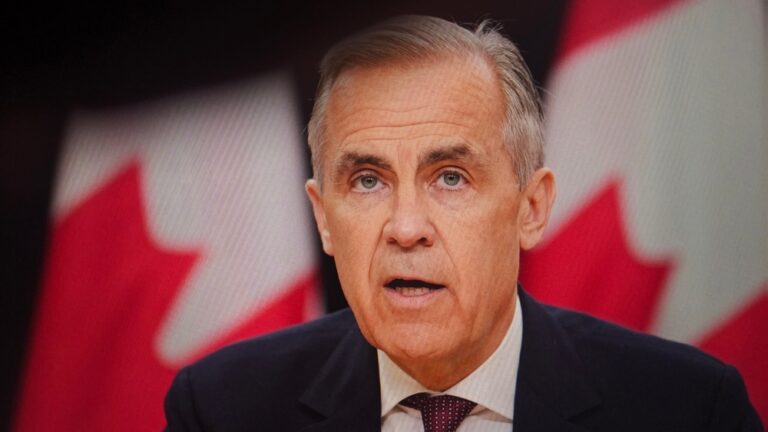
Prime Minister Mark Carney entered office with unusual climate credentials, yet two former members of Canada’s legislated net-zero advisory panel now say his government treated expert advice as an inconvenience. In June testimony before MPs, climate scientist Simon Donner and policy advocate Catherine Abreu described unanswered offers, cancelled meetings and major decisions made without their input.
Their complaint reaches beyond bruised relationships. Ottawa has replaced or sidelined several prominent climate rules while insisting that investment, technology and industrial carbon markets can still carry Canada toward net-zero emissions by 2050. Government projections and independent modelling, however, show a widening gap between that promise and the country’s current trajectory. The dispute has become a test of whether Canada’s climate accountability system can function when the advisers created to challenge government policy are kept outside the room.
The Testimony That Turned Frustration Into a Credibility Crisis
Carney’s Own Climate Advisers Say Ottawa Shut Them Out While ‘Shredding’ Environmental Rules
- The Testimony That Turned Frustration Into a Credibility Crisis
- A Watchdog Written Into Federal Law
- A Panel Reduced to a Fraction of Its Intended Strength
- Carney’s Shift From Regulation to Investment
- The Alberta Agreement Became the Breaking Point
- The Emissions Numbers Do Not Match the Promise
- The Economic Case Cuts Both Ways
- Ottawa Now Faces a Test It Cannot Rebrand
Donner and Abreu appeared before the House of Commons environment committee on June 9, 2026, to explain why they had left the Net-Zero Advisory Body. Their account was strikingly practical rather than abstract. Donner said the panel was not told about policy changes being developed and was not asked to assess them. He also described attempts to brief senior offices on industrial carbon pricing and federal-provincial equivalency agreements that produced no substantive response. A scheduled briefing with the environment minister’s office was cancelled shortly after Ottawa unveiled its energy agreement with Alberta.
For an advisory body, being disagreed with is normal; being bypassed is a deeper problem. Abreu argued that the government had weakened much of the policy architecture built over the previous decade without presenting an equally credible replacement pathway. Donner said the panel’s work had begun to feel performative. Their charge was not simply that Carney chose a different climate strategy, but that Ottawa continued to claim its decisions were compatible with net zero while withholding the analysis needed to prove it.
A Watchdog Written Into Federal Law
The Net-Zero Advisory Body is not an informal collection of activists invited to offer occasional opinions. Parliament established it under the Canadian Net-Zero Emissions Accountability Act, which made net-zero greenhouse-gas emissions by 2050 a legal national objective. The panel can have as many as 15 part-time members and is supposed to provide independent advice on emissions targets, reduction plans and sector-specific measures. Its expertise is meant to span climate science, economics, Indigenous knowledge, energy systems, technology and public policy.
The law also gives that advice a defined place in federal decision-making. When Ottawa sets or changes a national target, or establishes or amends an emissions-reduction plan, the minister must provide the advisory body an opportunity to make submissions and must consider its advice. Abreu told MPs that the government’s Climate Competitiveness Strategy was labelled a “strategy,” rather than a formal emissions plan, allowing it to avoid those specific consultation requirements. That is her interpretation, not a court ruling, but it exposes a serious accountability question: a government can preserve the machinery of oversight while routing its most consequential choices around it.
A Panel Reduced to a Fraction of Its Intended Strength
The advisory body’s membership decline gives the testimony added weight. Ottawa’s public roster listed only five current members in spring 2026, even though the statute allows up to 15. The government’s own page records six members as having departed in 2025, including Donner and Abreu. Donner told MPs the body had fallen to six members by the previous summer, making it increasingly difficult to complete useful work across the wide range of sectors the panel was expected to study.
This was not merely an administrative inconvenience. A climate council needs enough specialists to test assumptions about electricity, transportation, oil and gas, buildings, agriculture and industrial policy at the same time. When a panel shrinks, the remaining members face more work and the government loses a broader range of challenge and expertise. Environment Minister Julie Dabrusin acknowledged the departures in an April statement and promised changes to improve the body’s efficiency and function. Ottawa said the redesign would reflect a new focus on investment and low-carbon growth. The unresolved question is whether the panel will be rebuilt as an independent critic or reshaped to fit decisions already made.
Carney’s Shift From Regulation to Investment
Budget 2025 presented Carney’s Climate Competitiveness Strategy as a deliberate reset. Its language emphasized “driving investment, not prohibitions” and prioritizing emissions reductions that deliver economic benefits at the lowest cost. The government highlighted industrial carbon pricing, stronger methane rules, clean-economy tax credits, sustainable-investment guidelines and support for technologies such as carbon capture. From Ottawa’s perspective, climate policy should attract capital, accelerate major projects and protect Canadian firms facing intense competition from the United States and other markets.
That approach is not the same as abandoning climate action, and several of its tools can reduce emissions if designed and enforced well. The dispute concerns what disappeared or weakened during the transition. The proposed oil-and-gas emissions cap was effectively set aside, consumer carbon pricing ended, electric-vehicle requirements were delayed, and clean-electricity rules were suspended in Alberta. Former advisers argued that the government removed binding guardrails faster than it built reliable substitutes. The distinction matters: investment incentives reward companies that act, while regulations can compel laggards to change. A strategy depending heavily on investment must show that the resulting projects are large, fast and certain enough to replace reductions lost elsewhere.
The Alberta Agreement Became the Breaking Point
The November 2025 Canada-Alberta memorandum became the clearest symbol of the new direction. Ottawa agreed to suspend the federal Clean Electricity Regulations in Alberta and later place them in abeyance if a new provincial carbon-pricing arrangement met both governments’ conditions. The deal also shifted the methane timeline to a 75 per cent reduction from 2014 levels by 2035, supported streamlined impact assessments and opened a path for Alberta to submit a new bitumen pipeline proposal to the federal Major Projects Office.
A May 2026 implementation agreement added more detail. Alberta’s headline carbon price is scheduled to reach $115 per tonne in 2030, $130 in 2035 and $140 in 2040, while the effective price is expected to reach $130 by 2040. The two governments also promised carbon contracts covering 75 million tonnes of emissions and linked pipeline development to the Pathways carbon-capture project. Ottawa calls this a pragmatic bargain combining investment certainty, lower emissions and export diversification. The Canadian Climate Institute countered that the timelines and concessions are too weak, especially because Alberta’s industrial system covers roughly one-quarter of national emissions.
The Emissions Numbers Do Not Match the Promise
Canada’s own progress report shows why the former advisers are alarmed. The federal target for 2030 is a 40 to 45 per cent reduction below 2005 emissions. Yet Ottawa’s 2025 modelling projected only a 21 per cent reduction under measures already in place and 28 per cent if announced but not fully implemented policies were added. The same report put oil-and-gas emissions at 208 megatonnes in 2023, or 30 per cent of the national total, making the sector Canada’s largest source.
Independent modelling is even less reassuring. The Canadian Climate Institute estimated 2024 emissions at 694 megatonnes, just 8.5 per cent below 2005, and projected that Canada would reach only 18 to 22 per cent below 2005 by 2030, depending on final policy design. Different accounting methods explain some variation between government and institute estimates, but neither comes close to the minimum 40 per cent target. The institute also found oil-and-gas emissions about nine per cent above 2005 levels, offsetting deeper gains in electricity. The central issue is therefore measurable: Ottawa is removing or delaying rules while the remaining policy package is already projected to fall short.
The Economic Case Cuts Both Ways
Carney’s government argues that a climate policy unable to attract investment or maintain public support will not survive. That concern is legitimate. Heavy industry, electricity systems and resource projects require billions of dollars, long construction timelines and coordination across provinces. Stronger carbon markets, clean-technology credits and contracts that guarantee future carbon values can move private money toward lower-emission projects. Ottawa also points to growing electricity demand, energy security and the need to diversify exports away from an increasingly unpredictable United States.
But weakening near-term rules carries economic risks of its own. The Canadian Climate Institute warns that delayed action can leave Canada less competitive as major trading partners decarbonize and demand cleaner products. The sectoral record illustrates the contrast: the institute estimated electricity emissions had fallen 59 per cent since 2005, while oil-and-gas emissions had risen. Clear standards can create markets for grid upgrades, electric vehicles, heat pumps and low-carbon materials; uncertain or repeatedly delayed rules can freeze investment. For workers and households, the practical question is not regulation versus growth. It is which policy mix produces durable jobs, affordable energy and verifiable emissions reductions rather than promises that arrive after the target date.
Ottawa Now Faces a Test It Cannot Rebrand
The controversy has already spilled beyond the advisory panel. Former environment minister Steven Guilbeault left Carney’s cabinet in November 2025 after objecting to the Alberta agreement and announced in May 2026 that he planned to leave his parliamentary seat during the summer. His departure reinforced the impression of a widening split inside Liberal circles between the government’s energy-development agenda and the climate commitments many supporters expected Carney to defend.
Ottawa rejects the claim that it has abandoned those commitments. Dabrusin’s office says methane regulations, industrial carbon pricing, tax credits, critical-minerals policy and new nature, electricity and automotive strategies will continue driving reductions. The government has also promised to update the advisory body rather than eliminate it. Those assurances are now testable. Rebuilding the panel close to its intended strength, giving it timely access to policy proposals and publishing transparent modelling would demonstrate that independent advice still matters. Without those steps, the institution risks becoming a legal shell: present on government websites, required to file reports, but absent when the decisions with the greatest climate consequences are actually made.
This Options Discord Chat is The Real Deal
While the internet is scoured with trading chat rooms, many of which even charge upwards of thousands of dollars to join, this smaller options trading discord chatroom is the real deal and actually providing valuable trade setups, education, and community without the noise and spam of the larger more expensive rooms. With a incredibly low-cost monthly fee, Options Trading Club (click here to see their reviews) requires an application to join ensuring that every member is dedicated and serious about taking their trading to the next level. If you are looking for a change in your trading strategies, then click here to apply for a membership.