35,000+ smart investors are already getting financial news, market signals, and macro shifts in the economy that could impact their money next with our FREE weekly newsletter. Get ahead of what the crowd finds out too late. Click Here to Subscribe for FREE.
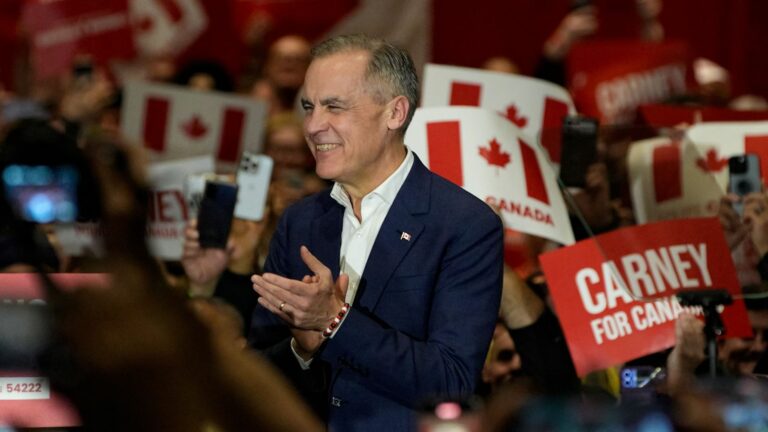
Canada is looking for partners that can buy its energy, strengthen its defence industry and give exporters more room to manoeuvre. Prime Minister Mark Carney’s visit to Turkey, beginning October 21, brings those ambitions together as Ottawa seeks to reduce its economic dependence on the United States.
The agenda spans nuclear technology, military cooperation and wider commercial ties. But diplomatic momentum is not the same as completed business: discussions about a deeper partnership do not yet amount to reactor orders, weapons purchases or energy contracts. The opportunity lies in turning an existing relationship between NATO allies into something more economically substantial.
An Expected Declaration, Not a Completed Deal
Carney Seeks Defence and Energy Pact With Turkey as Canada Looks Beyond U.S.
- An Expected Declaration, Not a Completed Deal
- Why Canada Wants More Than One Major Customer
- Free-Trade Negotiations Give the Visit a Commercial Foundation
- Defence Cooperation Is About More Than Buying Equipment
- A Canadian Sonar Project Shows What Cooperation Looks Like
- The Arms-Export Reset Still Comes With Safeguards
- CANDU Technology Gives Canada a Nuclear Opening
- LNG Creates an Opening, but Commercial Terms Will Decide
- The Relationship Extends Beyond Defence and Energy
- Contracts and Canadian Jobs Will Be the Real Test
Carney’s trip is intended to advance cooperation rather than celebrate a finished agreement. Reuters reported on October 20 that a joint declaration and implementation committees were expected. Canadian officials had not confirmed specific agreements. The official itinerary includes meetings with President Recep Tayyip Erdoğan in Ankara and business leaders in Istanbul, bringing political discussions and commercial opportunities into the same visit.
Ottawa describes this as the first dedicated bilateral visit to Turkey by a Canadian prime minister, not the first time a Canadian leader has travelled there. Carney attended the Ankara NATO summit in July. That distinction captures the change in emphasis: Turkey is becoming a destination for a broader Canadian economic strategy, rather than simply a venue for allied meetings. Any declaration should therefore be judged by what it enables next. An agreement can organize negotiations and assign responsibilities, but it cannot substitute for financing, regulatory approvals or binding purchase commitments.
Why Canada Wants More Than One Major Customer
The economic argument starts with Canada’s overwhelming exposure to one market. Statistics Canada reports that the United States received 71.7% of Canadian merchandise exports in 2025, down from 75.9% in 2024. Even after that decline, nearly three-quarters of exported goods went south. Ottawa has set an objective of doubling non-U.S. exports over a decade, making relationships beyond North America a central part of its economic planning rather than an occasional diplomatic exercise.
Turkey cannot replace the American market, nor does a stronger relationship require Canada to abandon it. The more realistic goal is to give businesses additional buyers, investment partners and supply options. For a manufacturer considering an expansion, another dependable customer could reduce the risk of relying on a single country’s policy decisions. The benefits would emerge company by company, not through one dramatic national switch. Carney’s visit is best understood in that context: an attempt to widen Canada’s choices while its largest trading relationship remains indispensable.
Free-Trade Negotiations Give the Visit a Commercial Foundation
The groundwork for closer commerce predates this visit. Carney and Erdoğan announced the launch of free-trade negotiations on July 7, 2026. Canada then held public consultations from July 31 to September 14 and tabled a notice of intent in Parliament on September 21. Global Affairs Canada lists the proposed agreement as being in negotiations. Those milestones show a formal process underway, but they do not mean businesses already have new tariff exemptions or guaranteed access.
Ottawa’s negotiating objectives include reducing tariff and non-tariff barriers, improving customs procedures and making commercial rules more predictable. For an agricultural exporter or machinery producer, clearer paperwork and fewer delays could matter alongside any reduction in duties. Canada has also stated that it will not provide additional access for supply-managed dairy, poultry and eggs. The talks therefore involve specific limits as well as ambitions. A successful outcome would have to turn broad political enthusiasm into practical rules that companies can understand and use, while accommodating the interests both governments intend to protect.
Defence Cooperation Is About More Than Buying Equipment
Canadian officials have already identified areas where Turkish expertise could complement domestic capabilities. In a May interview with Defense News at Istanbul’s SAHA defence exhibition, Secretary of State for Defence Procurement Stephen Fuhr discussed opportunities involving drones, counter-drone systems, ammunition and autonomous technologies. His emphasis was on cooperation between countries with compatible interests, including developing equipment together rather than simply expanding a shopping list of imported military products.
That approach fits Canada’s Defence Industrial Strategy, announced in February 2026. Its build–partner–buy approach prioritizes domestic capability where feasible, collaboration with trusted partners where useful, and purchases abroad when necessary. For Canadian companies, the important questions are where engineering and production happen, who can maintain the equipment, and what access Canada retains to essential technology. A partnership that includes Canadian development work could have a different economic value from a straightforward foreign purchase. The discussions with Turkey therefore matter most as a possible route to shared production and technical capability, not as evidence that Canada has selected particular weapons systems.
A Canadian Sonar Project Shows What Cooperation Looks Like
One example has already moved beyond ministerial meetings. During the first quarter of 2026, Newfoundland-based Kraken Robotics demonstrated its KATFISH sonar and autonomous launch-and-recovery system aboard a Turkish SEFINE RD-22 unmanned surface vessel near Istanbul. According to Kraken, the demonstration detected mine-like objects and underwater infrastructure while sending detailed seabed imagery to operators ashore. Canadian sensing equipment and a Turkish-built vessel were operating together, offering a tangible picture of what an industrial partnership can deliver.
On May 6, Kraken announced a memorandum of understanding with SEFINE’s SISAM research centre to deepen the collaboration. The work includes software integration and automatic target-recognition capabilities. These announcements are company-reported demonstrations and development arrangements, not proof of a large naval procurement award. Nevertheless, they illustrate how cooperation can begin with a specialized Canadian technology rather than an entire Canadian-built ship. For the engineers involved, the meaningful achievement was equipment functioning together at sea. For Ottawa, that existing relationship provides a more concrete starting point than a diplomatic promise alone.
The Arms-Export Reset Still Comes With Safeguards
Closer defence ties also carry the history of a serious dispute. In April 2021, Canada cancelled suspended export permits after a government review found credible evidence that Canadian technology exported to Turkey had been used in the Nagorno-Karabakh conflict, contrary to end-use assurances. The episode matters because military components can travel inside equipment assembled elsewhere. A Canadian-made sensor may be only one part of a larger system, but its eventual destination still raises questions about responsibility and export oversight.
Canada changed its approach in January 2024, ending a policy of presumptive denial and returning applications for controlled exports to case-by-case assessment. That was not a blanket removal of arms controls. Official rules require risk reviews and additional assurances for certain Turkish government or military purchases, including disclosure of intended onward transfers to specified destinations. Ministers retain the authority to suspend or cancel permits. Any expanded partnership must therefore work within those safeguards. Commercial opportunities and NATO membership do not erase the need to examine where Canadian technology could ultimately be used.
CANDU Technology Gives Canada a Nuclear Opening
The nuclear relationship already has a documented starting point. On March 3, 2026, Turkey’s nuclear energy company TÜNAŞ and Canada’s AtkinsRéalis signed a memorandum of understanding during the PDAC convention in Toronto. Turkey’s energy ministry said the arrangement covered exchanging technical information and assessing the applicability of CANDU technology. Energy ministers Alparslan Bayraktar and Tim Hodgson witnessed the signing. This was an agreement to investigate cooperation, not an award to construct a nuclear power station.
Reuters now reports that a working group is expected to assess CANDU for a planned Black Sea nuclear project. CANDU’s ability to use natural uranium offers a distinctive fuel-supply option, as Canada’s nuclear regulator explains. The commercial questions extend well beyond choosing reactor technology: financing, licensing, construction responsibilities and long-term operating arrangements would all need resolution. For Canadian engineers and suppliers, a successful project could create substantial work. For now, Canadian technology is being evaluated. That gives Canada an opportunity to compete, but it does not establish that Turkey has selected a Canadian reactor for construction.
LNG Creates an Opening, but Commercial Terms Will Decide
Liquefied natural gas is another potential strand of the discussions. Reuters reports that Turkish purchases of Canadian LNG could be explored. Canada now has a major new export facility: LNG Canada shipped its first cargo from Kitimat, British Columbia, on June 30, 2025. The facility’s first phase has a designed capacity of 14 million tonnes annually. That figure describes capacity, not the volume available for Turkey or a quantity already promised under a bilateral agreement.
The project’s commercial structure also matters. LNG Canada says each joint-venture participant supplies its own natural gas and markets its own share of the output. A political understanding cannot simply assign those privately marketed cargoes to a new destination. Buyers and sellers would still need acceptable prices, delivery arrangements and contract terms. For Canada, the facility makes overseas energy sales a practical possibility rather than merely a future aspiration. Whether Turkey becomes a significant customer would depend on actual transactions, not just its inclusion on a prime ministerial agenda or the signing of a broad cooperation statement.
The Relationship Extends Beyond Defence and Energy
The existing trade relationship is broader than its strategic industries suggest. Global Affairs Canada puts two-way merchandise trade at C$4.3 billion in 2025, comprising C$1.1 billion in Canadian exports and C$3.2 billion in imports from Turkey. Leading Canadian exports included C$287 million in agri-food products, C$273 million in aircraft and transportation equipment, and C$151 million in industrial machinery. Those figures show that agricultural producers and equipment manufacturers also have a stake in closer relations.
The connection is personal as well as commercial. Canada’s official bilateral profile identifies a Turkish diaspora of more than 76,000 people. In June, the governments also welcomed an expanded air transport agreement alongside their economic discussions. These links matter because stronger relations need more than a few high-profile defence or nuclear projects. Smaller exporters, investors and families have different priorities from defence ministries. Easier commercial connections could support a wider relationship, although any benefits would depend on how governments and businesses put the agreements into practice.
Contracts and Canadian Jobs Will Be the Real Test
Canada’s ambitions should be measured against results rather than the scale of an announcement. Its Defence Industrial Strategy sets a ten-year goal of raising the share of defence acquisitions awarded to Canadian firms to 70%. A partnership with Turkey would support that objective most clearly if it generated Canadian engineering, production and maintenance work. Simply buying more foreign equipment would not, by itself, demonstrate that the domestic industrial strategy was succeeding or that Canadian suppliers had gained lasting capabilities.
The wider commercial picture also calls for realism. Global Affairs Canada reports that the stock of Canadian direct investment in Turkey stood at C$3.3 billion in 2025, down 19.7% from 2024. A diplomatic visit cannot by itself reverse investment trends, and that decline does not establish why individual companies changed their exposure. The useful tests will be concrete: negotiated trade rules, financed energy projects, approved technology transfers and repeat orders for Canadian businesses. Carney is seeking more room for Canada to act. Whether this partnership provides it will depend on what survives beyond the meetings.
This Options Discord Chat is The Real Deal
While the internet is scoured with trading chat rooms, many of which even charge upwards of thousands of dollars to join, this smaller options trading discord chatroom is the real deal and actually providing valuable trade setups, education, and community without the noise and spam of the larger more expensive rooms. With a incredibly low-cost monthly fee, Options Trading Club (click here to see their reviews) requires an application to join ensuring that every member is dedicated and serious about taking their trading to the next level. If you are looking for a change in your trading strategies, then click here to apply for a membership.