35,000+ smart investors are already getting financial news, market signals, and macro shifts in the economy that could impact their money next with our FREE weekly newsletter. Get ahead of what the crowd finds out too late. Click Here to Subscribe for FREE.
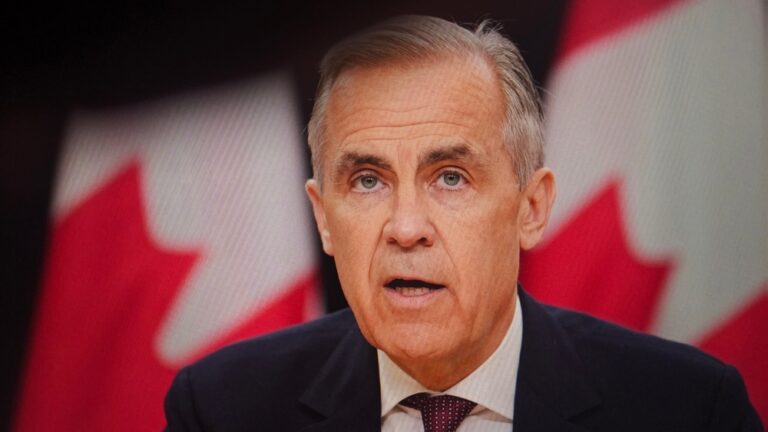
British Columbia has become the first major test of Prime Minister Mark Carney’s effort to reset Canada’s industrial carbon pricing system without reigniting the national carbon tax fight. In Vancouver, Carney’s meeting with Premier David Eby carried weight well beyond provincial politics: it touched pipelines, LNG expansion, port growth, First Nations consultation, coastal protection, and the future cost of cutting emissions in heavy industry.
The timing is delicate. Ottawa’s new direction follows a deal with Alberta that would lower the long-term federal carbon pricing trajectory for large emitters compared with the previous benchmark. For B.C., the question is whether a lower, slower path can still drive investment in cleaner technology while giving the province a fair shot at major projects and protecting its environmental red lines.
B.C. Becomes the First Test of Ottawa’s New Carbon Benchmark
Carney Opens Talks on Lower Carbon Pricing in High-Stakes B.C. Meeting
- B.C. Becomes the First Test of Ottawa’s New Carbon Benchmark
- The Alberta Deal Changed the Political Math
- Eby Wants Ottawa to Show B.C. the Same Urgency
- The North Coast Tanker Ban Remains a Flashpoint
- Industrial Pricing Is Now the Main Carbon Policy Battleground
- Price Certainty Could Make or Break Big Investments
- B.C.’s Climate Record Gives Eby Some Leverage
- Business Leaders Are Watching the Approval Clock
- First Nations Consultation Could Decide What Actually Gets Built
- Carney Must Sell “Lower” Without Looking Weaker
Carney’s Vancouver meeting with Eby marked the first consultation with a premier on Ottawa’s plan to revise the federal industrial carbon pricing benchmark. The federal government has already updated the national headline price path for industrial systems, moving from the previously expected $170 per tonne by 2030 to a lower schedule that reaches $115 in 2030, $130 in 2035 and $140 in 2040.
That shift matters because industrial carbon pricing is not the same as the old consumer carbon tax. It applies mainly to large emitters, using rules that reward facilities that beat emissions-performance standards and charge those that exceed them. For a pulp mill, cement plant, LNG facility or gas processor, the benchmark can influence whether a costly emissions-cutting project looks investable or too uncertain to finance.
The Alberta Deal Changed the Political Math
The B.C. talks came only days after Carney and Alberta Premier Danielle Smith signed a major agreement on industrial carbon pricing and energy infrastructure. That deal set Alberta on a lower carbon price trajectory and linked the broader energy bargain to a potential new crude pipeline to the B.C. coast, a project Ottawa and Alberta have framed as part of a national push to expand export options.
The Alberta agreement gave industry more predictability, but it also triggered immediate pushback. Oil companies remain concerned that Canadian carbon costs could weaken competitiveness against U.S. producers, while environmental groups argue that stretching the price path to 2040 weakens pressure to cut emissions quickly. For B.C., the deal landed like a warning: Alberta had secured attention, timelines and a possible pipeline path before other provinces had been fully brought into the conversation.
Eby Wants Ottawa to Show B.C. the Same Urgency
Eby entered the meeting arguing that British Columbia should not be treated as an afterthought in Ottawa’s nation-building agenda. His government has been promoting an $88-billion pipeline of proposed major projects, ranging from clean energy and mining to port infrastructure and LNG-linked development. B.C.’s pitch is that these are not abstract ideas; many have proponents, locations and near-term investment decisions attached.
That creates a political challenge for Carney. If Ottawa appears more enthusiastic about Alberta oil than B.C. projects, it risks deepening regional frustration. Eby’s message is essentially that British Columbia supports major development, but not at the cost of being steamrolled. The province wants federal backing for projects that fit its economy, its climate commitments and its coastal identity.
The North Coast Tanker Ban Remains a Flashpoint
The biggest collision point is the proposed route and export destination for any new Alberta-to-coast crude pipeline. Eby has made clear that B.C. continues to view the North Coast tanker ban as a core environmental protection. That law restricts large oil tankers carrying more than 12,500 metric tonnes of crude or persistent oil from stopping, loading or unloading along much of B.C.’s northern coast, including sensitive waters around Haida Gwaii.
For many British Columbians, the issue is not only carbon pricing. It is the risk of putting oil export infrastructure into coastal ecosystems where fisheries, tourism, Indigenous rights and marine safety all converge. That is why a lower industrial carbon price may be only one piece of the negotiation. Even if Ottawa can align the carbon rules, a pipeline still faces legal, political and public-consent hurdles.
Industrial Pricing Is Now the Main Carbon Policy Battleground
The consumer carbon tax fight largely ended in 2025, when Ottawa removed the federal fuel charge and B.C. dropped its provincial consumer carbon tax rate to zero. That changed what households saw at the pump or on heating bills, but it did not end carbon pricing for large industrial polluters. In B.C., the Output-Based Pricing System remains the mandatory carbon pricing framework for major industrial operations.
That distinction is crucial. The political anger around carbon taxes was often tied to household affordability, while industrial pricing is designed to target emissions from large facilities without forcing every consumer to pay directly at the point of purchase. The system gives companies flexibility: reduce emissions, use credits, buy offsets or make compliance payments. The fight now is over how strong that signal should be.
Price Certainty Could Make or Break Big Investments
For heavy industry, the actual posted carbon price is only part of the story. What matters just as much is whether companies believe the rules will last. Carbon capture, electrification, methane reduction, lower-carbon fuels and process upgrades can require large upfront spending, sometimes with paybacks measured over decades. A credible price floor or predictable benchmark can help companies justify those investments.
That is why Ottawa’s move cuts both ways. A lower price path may ease competitiveness concerns and make provincial alignment easier, especially in regions competing with U.S. producers. But if the price is seen as too weak, or if credit markets remain oversupplied, the incentive to invest in cleaner technology could fade. The policy challenge is not simply lowering costs; it is lowering uncertainty without lowering ambition too far.
B.C.’s Climate Record Gives Eby Some Leverage
B.C. can point to real climate progress, even though it is not yet on track for its 2030 target. The province’s 2025 Climate Change Accountability Report says net emissions fell nearly four per cent in 2023 compared with the previous year and were nine per cent below 2007 levels. It also reports that emissions intensity per unit of GDP is down substantially from 2007, while per-person emissions have also fallen.
Still, the gap remains large. B.C.’s legislated targets call for emissions reductions of 40 per cent by 2030, 60 per cent by 2040 and 80 per cent by 2050, all compared with 2007 levels. The province’s own modelling says existing and defined policies are not enough to hit the 2030 target. That makes the carbon pricing talks risky: B.C. wants economic growth, but it cannot afford a policy reset that makes the climate gap harder to close.
Business Leaders Are Watching the Approval Clock
The Vancouver meeting also unfolded against a broader push to move major projects faster. Carney has been emphasizing ports, exports and infrastructure as Canada looks to diversify trade beyond the United States. In B.C., that means port expansion, gas infrastructure, LNG projects, clean power and mining could all be part of the same economic conversation as carbon pricing.
Recent project decisions show why industry is watching closely. Ottawa approved Enbridge’s $4-billion Sunrise Expansion of the Westcoast natural gas system, which is expected to add 300 million cubic feet per day of capacity in B.C. LNG Canada is also expected to decide by the end of 2026 whether to proceed with a second phase in Kitimat. If Ottawa wants those projects to move, companies will be looking for faster approvals and clearer emissions rules.
First Nations Consultation Could Decide What Actually Gets Built
Any pipeline, LNG expansion, port buildout or major transmission project in British Columbia must confront the reality of Indigenous rights, title and economic participation. Carney has said future pipeline conversations would require consultation and benefits for British Columbians and First Nations. That is not a side issue; it is often the difference between a project that moves and one that stalls for years.
There are already examples of Indigenous participation becoming central to energy infrastructure. Enbridge previously sold a stake in its Westcoast pipeline system to the Stonlasec8 Indigenous Alliance, and those groups may have an option to participate in the expansion. That kind of ownership model could become more common if Ottawa and B.C. want major projects to proceed with stronger local legitimacy.
Carney Must Sell “Lower” Without Looking Weaker
Carney’s central challenge is political as much as technical. He has to convince industry that Canada is not pricing itself out of investment, convince provinces that Ottawa is not favouring Alberta, and convince climate-focused voters that lowering the benchmark does not amount to abandoning emissions targets. That is a narrow lane.
The evidence still supports well-designed carbon pricing as an effective emissions tool, especially for industrial sectors. Canadian modelling has identified industrial carbon pricing as one of the biggest drivers of emissions reductions through 2030, while broader academic research has found that carbon pricing has produced measurable emissions cuts in many jurisdictions. The B.C. meeting is therefore a test of whether Ottawa can make carbon pricing more durable by making it more politically survivable — without draining it of the power to change corporate behaviour.
This Options Discord Chat is The Real Deal
While the internet is scoured with trading chat rooms, many of which even charge upwards of thousands of dollars to join, this smaller options trading discord chatroom is the real deal and actually providing valuable trade setups, education, and community without the noise and spam of the larger more expensive rooms. With a incredibly low-cost monthly fee, Options Trading Club (click here to see their reviews) requires an application to join ensuring that every member is dedicated and serious about taking their trading to the next level. If you are looking for a change in your trading strategies, then click here to apply for a membership.