35,000+ smart investors are already getting financial news, market signals, and macro shifts in the economy that could impact their money next with our FREE weekly newsletter. Get ahead of what the crowd finds out too late. Click Here to Subscribe for FREE.
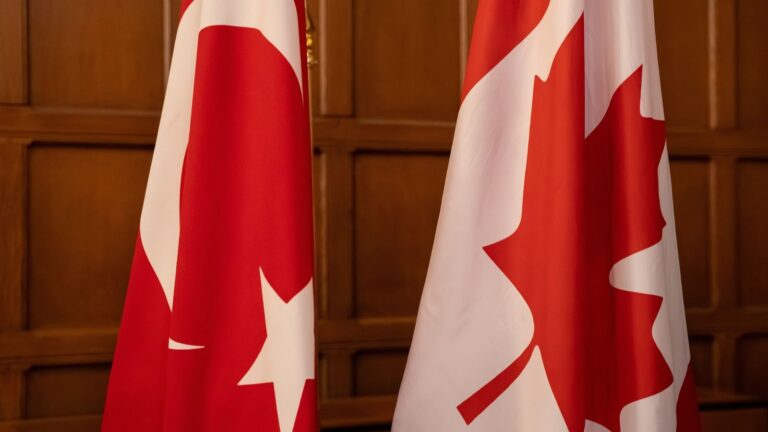
Prime Minister Mark Carney is heading to Türkiye on a trip that says as much about Canada’s changing economic strategy as it does about relations with Ankara. The journey marks the first dedicated bilateral visit to Türkiye by a Canadian prime minister, with stops in Ankara and Istanbul focused heavily on trade, investment, energy and defence.
Carney will meet President Recep Tayyip Erdoğan before turning his attention to Turkish executives and investors. The timing is significant. Canada is trying to reduce its exposure to the U.S. market while opening more doors for Canadian energy, aerospace, agricultural, mining and technology companies. Türkiye, a NATO ally and G20 economy where bilateral merchandise trade reached $4.3 billion in 2025, is emerging as one piece of that wider diversification strategy.
Why This Visit Is Historically Different
Carney Leaves for Turkey on First Dedicated PM Visit as Canada Hunts for Trade Beyond the U.S.
- Why This Visit Is Historically Different
- The Trade Relationship Is Growing, but There Is Plenty of Room to Expand
- Free-Trade Talks Have Moved From an Idea to a Real Negotiation
- Energy Could Become the Biggest Commercial Prize
- Defence Ties Are Reopening After Years of Friction
- Istanbul Will Test Whether Diplomacy Can Turn Into Investment
- Türkiye Fits a Much Bigger Plan to Reduce Canada’s U.S. Dependence
- Closer Ties Also Bring Difficult Political Questions
Canada and Türkiye have maintained diplomatic relations for more than eight decades, yet no Canadian prime minister before Carney had made a dedicated bilateral visit to the country. Türkiye opened its embassy in Ottawa in 1944, while Canada appointed its first ambassador to Türkiye in 1947. The countries have since worked alongside one another in NATO and numerous international institutions, but the economic relationship has generally remained secondary to Canada’s larger partnerships in Europe and North America. Carney’s trip is intended to move the relationship into a more prominent category.
It is also not his first meeting with Erdoğan. Carney travelled to Ankara for the NATO Summit in July, where the two leaders announced the launch of talks toward a comprehensive free-trade agreement. The Turkish presidency now says the countries envision elevating their relationship to a strategic partnership, with agreements in several areas expected around the visit. Foreign Affairs Minister Anita Anand and Energy and Natural Resources Minister Tim Hodgson are accompanying Carney, illustrating how closely foreign policy, energy policy and trade are being bundled together.
The Trade Relationship Is Growing, but There Is Plenty of Room to Expand
Canada-Türkiye trade is no longer insignificant, but it remains modest compared with the size of both economies. Two-way merchandise trade exceeded $4.3 billion in 2025, consisting of approximately $1.1 billion in Canadian exports and $3.2 billion in imports from Türkiye. Ottawa says bilateral trade has grown by almost 50% over the past five years. Canadian exports are already fairly diverse: agri-food products accounted for about $287 million in 2025, aircraft and transportation equipment reached $273 million, and industrial machinery contributed another $151 million.
The import side is considerably larger. Canada bought roughly $1.27 billion in consumer goods from Türkiye in 2025, alongside about $480 million in metal and non-metallic mineral products and $316 million in forestry, building and packaging materials. Investment figures show another challenge. The stock of Canadian direct investment in Türkiye stood at $3.3 billion in 2025, down 19.7% from the previous year. That combination — growing trade but weakening investment — helps explain why Carney’s itinerary includes direct meetings with Turkish business leaders rather than focusing exclusively on government diplomacy.
Free-Trade Talks Have Moved From an Idea to a Real Negotiation
The push for a Canada-Türkiye free-trade agreement has developed quickly. The two governments began exploratory discussions in June 2026, publicly announced their intention to pursue an agreement during Carney’s July meeting with Erdoğan, and then moved through Canadian public consultations between July 31 and September 14. On September 21, Ottawa formally tabled its notice of intent in Parliament. Canada’s official trade-agreement tracker now lists the Canada-Türkiye FTA as being in negotiations.
The existing trade mix offers a sense of what could be at stake. Canada exported about $173 million in lentils and $161 million in aircraft to Türkiye in 2025, while major Turkish exports to Canada included $179 million in pharmaceutical products, $79 million in fishing vessels, $73 million in rugs and textiles and $72 million in turbine-engine components. Canada’s negotiating objectives include reducing tariffs and non-tariff barriers, improving access to Turkish supply chains and creating more predictable rules for businesses and investors. Ottawa has also said it intends to preserve Canada’s supply-management system and include labour and environmental protections.
Energy Could Become the Biggest Commercial Prize
Energy is one of the areas where the relationship could shift from ordinary trade into major long-term projects. Earlier in 2026, Türkiye’s state nuclear development company, TÜNAŞ, signed a memorandum of understanding with Canadian engineering group AtkinsRéalis to assess the possible deployment of CANDU nuclear technology. The arrangement covers technical evaluations, regulatory and licensing requirements, potential financing and ownership structures, localization opportunities and workforce needs. Turkish officials have openly framed nuclear energy as part of the country’s effort to diversify its energy mix.
The Carney visit could push those discussions further. Nuclear power is expected to feature prominently in talks, and a working group could examine the feasibility of a Canadian CANDU proposal for a future nuclear plant on Türkiye’s Black Sea coast. Ankara is also interested in possible Canadian liquefied natural gas and critical-mineral supplies. Competition will be serious: Türkiye has also held discussions with South Korean and Chinese groups about future reactors, while Russia’s Rosatom is developing the country’s first nuclear station. Hodgson’s presence beside Carney therefore carries commercial significance well beyond diplomatic protocol.
Defence Ties Are Reopening After Years of Friction
Defence cooperation may be the most politically sensitive part of the visit because Canada and Türkiye have only recently emerged from a difficult period over military exports. Canada restricted exports following Türkiye’s military operations in Syria and later investigated reports that Canadian-made sensors installed on Turkish drones had been used in regional conflicts. In 2021, Ottawa cancelled export permits after finding credible evidence that Canadian technology exported to Türkiye had been used in Nagorno-Karabakh in a manner inconsistent with Canadian foreign policy and end-use assurances.
The relationship began thawing afterward. In January 2024, Canada removed its presumptive-denial policy for military exports to Türkiye. Applications are now assessed individually under Canada’s export-control framework and Arms Trade Treaty obligations, with additional end-use assurances required in certain cases. Current discussions are expected to explore areas including drones, naval systems, aerospace and defence manufacturing. Large contracts are not necessarily expected immediately, but the political environment has changed considerably. Two NATO allies that were recently arguing over military technology are now examining where their defence industries might work together.
Istanbul Will Test Whether Diplomacy Can Turn Into Investment
The Ankara portion of Carney’s visit carries the political symbolism, but Istanbul could provide the clearer test of whether warmer relations translate into business. The prime minister is expected to promote Canadian opportunities in energy, aerospace, advanced technology, mining and critical minerals while meeting Turkish executives and investors. Companies with significant energy and industrial interests, including major Turkish groups, have been identified in reporting around the meetings. Ottawa’s message is that Canada does not simply want to sell more products to Türkiye; it also wants capital flowing into Canadian projects.
There is already an institutional framework for expanding those links. Canada and Türkiye created their Joint Economic and Trade Committee, or JETCO, with an inaugural meeting in Istanbul in 2019. A second meeting was held in Ottawa in January 2026 to identify trade and investment opportunities. Air connectivity has also been expanded, making business and passenger travel easier. Those details matter because trade agreements alone rarely create commerce. Companies still need transportation links, financing, investors, regulatory familiarity and relationships on the ground. Carney’s Istanbul meetings are aimed directly at that practical layer of economic diplomacy.
Türkiye Fits a Much Bigger Plan to Reduce Canada’s U.S. Dependence
The larger story behind the trip is Canada’s exposure to the American economy. The United States remains overwhelmingly Canada’s most important export market, but the concentration has already begun to decline. Statistics Canada reported that the U.S. share of Canadian merchandise exports fell from 75.9% in 2024 to 71.7% in 2025. Canadian goods exports to the United States dropped 5.8% during the year, while exports to countries outside the United States jumped 17.2% to a record level. Total merchandise trade with non-U.S. countries climbed 14.3% to $553 billion.
Carney’s government wants to accelerate that shift rather than wait for market forces to do it gradually. Ottawa has set a target of doubling exports to non-U.S. markets over the next decade, which the government estimates could generate roughly $300 billion in additional trade. Türkiye is only one part of that effort. Canada is simultaneously advancing agreements or negotiations involving India, ASEAN, the Philippines and other economies. No individual market can replace the United States. The strategy is instead to build a much wider portfolio so that Canadian companies are less vulnerable when access to any single market becomes uncertain.
Closer Ties Also Bring Difficult Political Questions
Economic opportunity does not make the Canada-Türkiye relationship uncomplicated. Türkiye’s human-rights record remains a source of international criticism. United Nations experts raised concerns in October about a crackdown targeting LGBTI human-rights defenders and civil-society organizations, saying dozens of defenders had reportedly been detained or arrested since September. Human Rights Watch has separately documented coordinated raids on organizations and activists. The developments have increased pressure on foreign governments engaging Ankara to decide how prominently human-rights concerns should feature alongside commercial and security discussions.
That leaves Carney trying to demonstrate the pragmatic foreign policy his government has increasingly emphasized without suggesting that deeper trade ties remove every disagreement. The defence relationship provides one example of that balance. Canadian military exports to Türkiye may once again be considered, but they remain subject to case-by-case risk assessments, Arms Trade Treaty criteria and end-use requirements, and Ottawa retains the authority to suspend or cancel permits if credible evidence of misuse emerges. The same tension will hang over the broader partnership. The success of Carney’s trip will ultimately depend less on the symbolism of a historic visit than on whether Canada can produce durable trade, investment and security gains while preserving meaningful safeguards.
This Options Discord Chat is The Real Deal
While the internet is scoured with trading chat rooms, many of which even charge upwards of thousands of dollars to join, this smaller options trading discord chatroom is the real deal and actually providing valuable trade setups, education, and community without the noise and spam of the larger more expensive rooms. With a incredibly low-cost monthly fee, Options Trading Club (click here to see their reviews) requires an application to join ensuring that every member is dedicated and serious about taking their trading to the next level. If you are looking for a change in your trading strategies, then click here to apply for a membership.