35,000+ smart investors are already getting financial news, market signals, and macro shifts in the economy that could impact their money next with our FREE weekly newsletter. Get ahead of what the crowd finds out too late. Click Here to Subscribe for FREE.
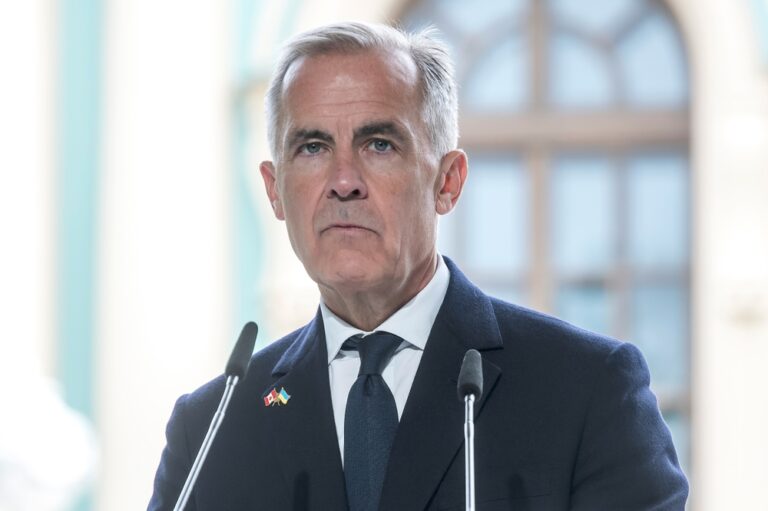
Canada’s effort to reduce its economic dependence on the United States has produced one of its fastest trade breakthroughs yet. Prime Minister Mark Carney and United Arab Emirates President Sheikh Mohamed bin Zayed Al Nahyan are celebrating the conclusion of negotiations on a new Comprehensive Economic Partnership Agreement, opening the door to lower tariffs and deeper commercial ties with the UAE’s roughly $700-billion economy.
The timing is difficult to ignore. Washington is threatening another round of 50% tariffs on selected Canadian products, while uncertainty continues to surround the future of North American trade. The UAE agreement will not replace the enormous U.S. market, but it gives Canadian exporters, investors and policymakers another route for growth at a moment when relying on a single dominant customer looks increasingly risky.
Canada Has Finished the Talks—but the Deal Is Not Yet in Force
Carney Lands UAE Trade Deal as Trump Pressure Pushes Canada Toward a $700B Market
- Canada Has Finished the Talks—but the Deal Is Not Yet in Force
- The 47-Day Negotiating Sprint Sends a Political Message
- The UAE Offers More Than Its Domestic Population Suggests
- Bilateral Trade Is Growing From a Modest but Solid Base
- Farmers and Food Exporters Could See Some of the Clearest Benefits
- Aerospace, Technology and Energy Could Drive the Next Wave
- The Bigger Prize May Be Emirati Investment in Canada
- Trump’s Tariffs Explain the Urgency
- Diversification Is Already Showing Up in Canada’s Trade Data
- The UAE Deal Is a Hedge, Not a Replacement for the U.S.
- The Fine Print Will Determine Whether Businesses Actually Benefit
Canadian and Emirati trade ministers announced the successful conclusion of CEPA negotiations in Toronto on July 24, 2026. Carney and Sheikh Mohamed celebrated the achievement during an August 5 call, describing it as the fastest agreement of its kind negotiated in either country’s history. The proposed pact is intended to reduce tariffs, remove administrative obstacles and improve access for companies selling goods and services in both markets.
However, businesses will not receive preferential tariff treatment immediately. Concluding negotiations means the two governments have settled the substance of the agreement, not that every legal and parliamentary step has been completed. The final text must undergo legal review, be formally signed and move through the required ratification and implementation procedures before its benefits take effect. Detailed tariff schedules had also not been publicly released as of August 5. The announcement is therefore a significant breakthrough, but exporters still need to see the final rules before calculating exactly how much the agreement could save them.
The 47-Day Negotiating Sprint Sends a Political Message
Canada and the UAE first announced their intention to pursue a CEPA during Carney’s November 2025 visit to Abu Dhabi. Carney later said the active negotiations were completed in a record 47 days, while Emirati officials described the process as the fastest conclusion under the UAE’s CEPA program. The political launch occurred months earlier, but the concentrated bargaining phase moved unusually quickly for an agreement covering goods, services, digital trade and regulatory issues.
That speed matters because trade negotiations often stretch across several years. Ottawa appears determined to show Canadian businesses that diversification can produce tangible results rather than remain a long-term slogan. It also suggests that Canada and the UAE entered the talks with relatively compatible objectives and strong support from political leaders. Speed, however, should not be confused with simplicity. Canada’s negotiating objectives covered rules of origin, customs procedures, services, government procurement, intellectual property, telecommunications, labour, environmental standards and dispute settlement. The real test will be whether the final text combines rapid market opening with enforceable and practical rules.
The UAE Offers More Than Its Domestic Population Suggests
The UAE has a population of roughly 11 million, but its economic importance extends well beyond the number of people living within its borders. Ottawa describes it as a $700-billion economy and Canada’s largest export market in the Middle East. Dubai and Abu Dhabi serve as major centres for finance, aviation, shipping, construction, technology and energy, giving foreign companies access to customers, investors and supply chains across several regions.
That position makes the UAE valuable as both a final destination and a regional platform. Canadian companies operating there can pursue opportunities across the broader Gulf, Africa, South Asia and parts of Europe. Canada’s Trade Commissioner Service describes the country as a global gateway supported by advanced ports, airports, digital infrastructure and access to capital. The UAE’s economy has also become more diversified than its reputation as an oil producer may suggest. Manufacturing, construction, financial services, tourism, trade and real estate have helped drive non-hydrocarbon growth, although regional conflict and transportation disruptions remain meaningful risks.
Bilateral Trade Is Growing From a Modest but Solid Base
Canada-UAE merchandise trade reached approximately $3.5 billion in 2025. Canada exported about $2.8 billion in goods to the Emirates while importing roughly $670 million, giving Canada a substantial merchandise surplus. Canadian exports increased by nearly 10% in 2025 after rising 24% between 2023 and 2024. Commercial services trade added another $445 million in 2024, demonstrating that the relationship already extends beyond physical products.
The product mix offers clues about where the agreement could have an early impact. Motor vehicles and parts represented approximately 15% of Canadian merchandise exports to the UAE, while machinery accounted for another 14%. Canadian imports were concentrated in iron, steel, steel products and aluminum. Ottawa has said agreements with South Korea and Chile helped bilateral trade double within a decade, and it believes Canada-UAE trade could potentially grow from roughly $3.4 billion to $7 billion over a similar period. That remains a government ambition rather than a guaranteed outcome, but recent growth provides a stronger starting point than a completely undeveloped market would.
Farmers and Food Exporters Could See Some of the Clearest Benefits
Agriculture and food products are among the most promising areas for Canadian exporters. The UAE imports a significant share of the food consumed by its residents, hotels, airlines and restaurant industry. Canadian producers can compete in categories such as pulses, grains, seafood and processed foods, particularly when lower tariffs are combined with clearer customs and food-safety procedures.
The pulse sector shows that this opportunity is already substantial. Canadian exporters shipped more than 300,000 tonnes of pulses worth approximately $268.6 million to the UAE in 2025. Lentils accounted for about $225.7 million, with peas, chickpeas and kidney beans making up much of the remainder. For a Prairie producer or processor, preferential treatment could help Canadian products compete against suppliers from countries that already enjoy favourable access. Tariff reductions alone will not guarantee new contracts, but stable rules can make pricing and long-term planning easier. Seafood exporters could benefit similarly, particularly when selling high-value products into the UAE’s hospitality, aviation and luxury food markets.
Aerospace, Technology and Energy Could Drive the Next Wave
Canada’s strongest opportunities are not limited to commodities. The UAE has developed one of the world’s most active aviation markets, anchored by Emirates, Etihad, major international airports and a growing aerospace manufacturing and maintenance network. Canada’s Trade Commissioner Service estimates that the UAE aerospace sector supports approximately 210,000 direct jobs and identifies aircraft manufacturing, simulators, maintenance, repair, training and space technology as areas where Canadian companies can compete.
Technology may offer an even broader opening. The UAE’s information and communications technology market was valued at nearly US$40 billion in 2023 and was projected to exceed US$67 billion by 2028. Demand is rising in artificial intelligence, cybersecurity, cloud computing, data centres and connected infrastructure. Energy cooperation could span conventional production, liquefied natural gas, carbon capture, hydrogen, renewable power and methane reduction. Canadian companies have relevant expertise, but they will face established global competitors and procurement processes that can require frequent travel, local partnerships, upfront investment and patience.
The Bigger Prize May Be Emirati Investment in Canada
The CEPA is only one part of a broader economic partnership. Canada and the UAE signed a Foreign Investment Promotion and Protection Agreement in November 2025, and that agreement entered into force on May 19, 2026. It provides legally binding protections and clearer rules for investors from both countries. The UAE also announced an intention to invest approximately $70 billion in Canada, targeting areas such as energy, ports, mining, critical minerals, data infrastructure and artificial intelligence.
Emirati sovereign wealth funds control enormous pools of long-term capital, making them potentially important partners for infrastructure projects that require billions of dollars and years of development. Yet attracting capital and deploying it are different tasks. The Financial Times reported in July that Canadian officials told an Emirati delegation there were not yet enough investment-ready projects available for the entire commitment. That highlights a persistent Canadian problem: major projects can remain trapped in lengthy regulatory, permitting and financing processes. The CEPA may improve investor confidence, but Canada must still produce credible, approved projects capable of absorbing the promised capital.
Trump’s Tariffs Explain the Urgency
The agreement arrives as Canada faces another direct trade threat from Washington. On July 20, the Trump administration announced 50% tariffs covering nearly US$20 billion in Canadian imports, including products such as wine, dairy goods, cement, furniture and hockey equipment. The measures are scheduled to take effect on August 19 and would apply to covered products even when they meet the normal rules of origin under the Canada-United States-Mexico Agreement.
Energy, potash, fish, critical minerals and products already covered by certain sectoral tariffs were excluded from the new measures. Nevertheless, Ottawa argues that the action violates Canada’s North American trade rights and has offered proposals aimed at resolving the broader dispute. The dispute illustrates why Carney is accelerating negotiations elsewhere. When a Canadian company can suddenly face a punitive tariff in its largest market, access to alternative customers becomes more valuable. The UAE agreement cannot redirect every affected shipment, but it may give some food, manufacturing, technology and service companies another place to pursue growth.
Diversification Is Already Showing Up in Canada’s Trade Data
The United States remains overwhelmingly important to the Canadian economy, but the balance shifted noticeably in 2025. The share of Canadian merchandise exports destined for the U.S. fell from 75.9% in 2024 to 71.7% in 2025. Exports to countries outside the United States increased by 17.2%, while total non-U.S. merchandise trade rose 14.3% to approximately $553 billion.
Carney’s government has set a target of doubling non-U.S. exports over the next decade, which Ottawa says would generate roughly $300 billion in additional trade. The UAE deal sits alongside efforts involving Europe, Asia, Latin America and other Gulf states. This is not simply a reaction to one tariff announcement; it reflects a broader attempt to build several commercial routes instead of depending on a single border. For Canadian companies, diversification can reduce exposure to country-specific political shocks. It also introduces new costs, including longer shipping distances, unfamiliar regulations, currency risk and the need to develop local distribution networks.
The UAE Deal Is a Hedge, Not a Replacement for the U.S.
The scale difference between the two relationships remains enormous. More than seven out of every 10 dollars in Canadian merchandise exports went to the United States in 2025, while total Canada-UAE merchandise trade was $3.5 billion. Geography, integrated supply chains and decades of investment mean the American market cannot be replaced by a collection of distant agreements in the foreseeable future.
The better way to view the UAE pact is as an economic hedge. Even modest increases in machinery, food, aerospace, technology and professional-service exports could support Canadian jobs and give companies more bargaining power when conditions deteriorate elsewhere. More than 150 Canadian companies already operate in the UAE, and an estimated 60,000 Canadians live and work there, providing an established commercial and personal network on which to build. A successful agreement would deepen that base while helping Canadian firms reach customers throughout the surrounding region.
The Fine Print Will Determine Whether Businesses Actually Benefit
Ottawa entered the negotiations seeking preferential access for goods and services, simplified origin procedures, more transparent customs systems and stronger rules covering digital trade, professional services and government procurement. Canada also said it would defend supply management for dairy, poultry and eggs while pursuing provisions related to labour rights, environmental protection, Indigenous peoples, women’s economic empowerment and small businesses.
Until the legal text and tariff schedules are published, it will be difficult to judge how fully those objectives were achieved. Exporters will need to know which products receive immediate tariff elimination, which duties are phased out, how origin will be certified and whether service providers gain meaningful access to contracts. Governments must then help smaller companies understand and use the agreement. Signing a trade pact creates an opportunity; it does not automatically create a customer. The ultimate measures of success will be higher exports, completed investments and Canadian companies winning contracts they could not secure before.
This Options Discord Chat is The Real Deal
While the internet is scoured with trading chat rooms, many of which even charge upwards of thousands of dollars to join, this smaller options trading discord chatroom is the real deal and actually providing valuable trade setups, education, and community without the noise and spam of the larger more expensive rooms. With a incredibly low-cost monthly fee, Options Trading Club (click here to see their reviews) requires an application to join ensuring that every member is dedicated and serious about taking their trading to the next level. If you are looking for a change in your trading strategies, then click here to apply for a membership.