35,000+ smart investors are already getting financial news, market signals, and macro shifts in the economy that could impact their money next with our FREE weekly newsletter. Get ahead of what the crowd finds out too late. Click Here to Subscribe for FREE.
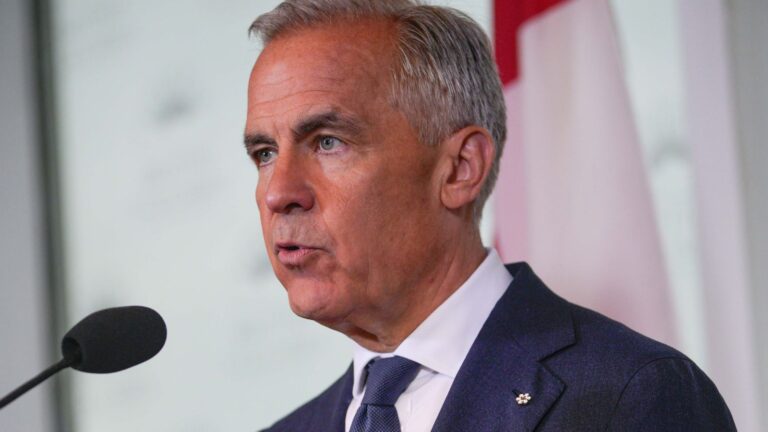
The political map in Washington has changed dramatically, but Ottawa is resisting the temptation to rewrite its trade playbook. Democrats won control of both chambers of the U.S. Congress in the November 3 midterm elections, dealing President Donald Trump a major political setback. Yet Prime Minister Mark Carney’s government says its approach to American tariffs and negotiations remains intact.
Trade Minister Dominic LeBlanc argues that Canada must keep working with the administration in office while strengthening its economy and finding customers beyond the United States. For businesses waiting on tariff relief, the election creates a possible opening, not an immediate resolution. The challenge now is deciding how much pressure a new Congress can exert on a president who still controls important trade decisions.
A Democratic Victory Changes Washington’s Political Landscape
Carney Government Refuses to Change Trump Trade Strategy Despite Democrats Winning Congress
- A Democratic Victory Changes Washington’s Political Landscape
- Ottawa Says Its Trade Priorities Have Not Changed
- The New Congress Will Not Take Office Until January
- Trump Retains Powerful Tools to Keep Tariffs in Place
- Negotiations With Washington Are Already Picking Up Again
- Canada’s Retaliatory Tariffs Remain Part of the Dispute
- Diversifying Trade Is Becoming an Economic Necessity
- The Future of CUSMA Is Still Unresolved
- The Economic Stakes Extend Far Beyond Politics
- Provincial Leaders See Opportunities, but Also Risks
- Poilievre Argues Canada Should Press Its Advantage
- A New Congress Could Apply Pressure Without Delivering a Deal
The November 3 election delivered Democrats control of the House of Representatives and Senate, ending Republican dominance of Congress. Their victories extended beyond familiar battlegrounds into states where Republicans had enjoyed longstanding advantages. For Canadians, the result is significant because Trump’s tariffs and economic policies have become sources of frustration on both sides of the border. A less accommodating Congress could ask harder questions about whether those policies are helping American workers or increasing costs for businesses and households.
Still, election-night celebrations do not amount to a new trade agreement. Democrats campaigned on several issues, including living costs, the war in Iran and government accountability; opposition to tariffs was only part of that larger debate. The incoming lawmakers will bring different priorities and regional interests to Washington. Some represent districts that depend heavily on manufacturing, agriculture or cross-border commerce, while others favour protecting domestic industries. That mix makes the election a meaningful political shift, rather than a guarantee of friendlier treatment for Canadian exporters.
Ottawa Says Its Trade Priorities Have Not Changed
Trade Minister Dominic LeBlanc was unusually clear when reporters asked whether the Democratic sweep would alter Canada’s approach. Speaking in Ottawa on November 4, he said the election would not have a significant effect on the government’s focus or its work. Instead of predicting what the new majority might do, he pointed to familiar priorities: affordability, major projects, a stronger domestic economy and more diversified trade relationships. The message was that Canada should not suspend its own plans while waiting for the political winds to shift in Washington.
That position is not the same as refusing to negotiate with Democrats. LeBlanc said Canada would continue dealing with the representatives Americans have elected, while keeping attention on its own economic interests. Justice Minister Sean Fraser expressed similar caution about predicting outcomes before meeting new partners. For a Canadian manufacturer deciding whether to hire staff, place equipment orders or expand into another market, uncertainty has immediate costs. Ottawa’s apparent calculation is that predictable priorities are more useful than an abrupt diplomatic pivot based on an election result.
The New Congress Will Not Take Office Until January
There is also a practical reason for Ottawa’s measured response: the people elected on November 3 will not begin their congressional terms until January 2027. The current Congress remains responsible for legislation and oversight in the meantime, while Trump’s administration continues negotiating on behalf of the United States. LeBlanc specifically warned against treating the incoming majority as though it could immediately change decisions made by the existing government. A dramatic electoral shift can dominate headlines long before it alters the machinery of policymaking.
For Canadian trade officials, those intervening weeks still matter. Exporters face duties now, not only after the next Congress is sworn in. Negotiators must also work through unresolved demands, exemptions and sector-specific rules before businesses can plan with confidence. Waiting for January could mean losing useful time at the bargaining table. It could also encourage companies to delay investments they would otherwise make. Ottawa’s decision to keep engaging the current administration therefore reflects a basic reality of diplomacy: governments must negotiate with the officials who hold authority today, even when the next political chapter is already taking shape.
Trump Retains Powerful Tools to Keep Tariffs in Place
The Democratic majority could challenge Trump more forcefully, but Congress cannot simply erase every tariff with a change in party control. Under U.S. law, Congress has the constitutional power to regulate foreign commerce, yet it has delegated significant tariff authority to the president. During his second term, Trump has used statutes covering national security, unfair trading practices and other grounds to impose duties. Congressional researchers note that the administration continued relying on several of these powers after a 2026 Supreme Court ruling invalidated its use of one emergency law for tariffs.
New Democratic leaders could introduce repeal bills, hold hearings and demand answers from cabinet officials. But Trump can veto ordinary legislation, and overcoming a presidential veto requires a two-thirds vote in both chambers. Trade specialists therefore caution that political resistance and actual tariff relief are different things. A Senate committee hearing might expose the cost of duties on Canadian steel or American car parts; it would not, by itself, remove the charge from an importer’s next shipment. Ottawa appears unwilling to build a strategy around powers the incoming majority may struggle to use.
Negotiations With Washington Are Already Picking Up Again
Despite the bitter atmosphere surrounding tariffs, there are signs that bilateral talks have regained momentum. On November 3, Carney said discussions had become more intense after a weekend conversation with Trump. He described progress on Canadian concerns about cultural policy, language and the country’s freedom to pursue trade agreements elsewhere. The prime minister also cautioned that important questions remained unresolved. His assessment was more restrained than Trump’s public suggestion that a new agreement could be reached very soon.
LeBlanc subsequently said he expected to speak with U.S. Commerce Secretary Howard Lutnick and Trade Representative Jamieson Greer in the coming days. Those contacts are crucial because a congressional election does not replace the officials currently setting Washington’s negotiating demands. The two governments had broken off formal discussions in August after failing to settle terms ahead of another tariff round. For businesses that have endured months of changing rules, renewed communication is encouraging. Nevertheless, no final deal had been announced as of the latest public statements, and progress on selected issues should not be mistaken for comprehensive relief across affected industries.
Canada’s Retaliatory Tariffs Remain Part of the Dispute
Ottawa has not relied on diplomacy alone. Following a new U.S. tariff package in August, Canada announced matching countermeasures on $27.6 billion worth of American imports, effective September 8. The Canadian surtaxes include rates of 15, 25 and 50 per cent on specified goods, with products such as steel, appliances, agricultural equipment and electronics among those covered. Federal officials argued that the response was necessary to protect Canadian producers against an uneven playing field as comparable goods faced heavy duties entering the United States.
Those measures have also produced political friction. During the summer, Industry Minister Mélanie Joly described using targeted countermeasures to apply pressure in particular U.S. states. After the midterms, LeBlanc emphasized the economic rather than electoral justification for Canada’s response. That distinction matters when Canadian representatives sit down with American counterparts who may be sensitive to claims of foreign political interference. Retaliatory tariffs can support domestic industries, but importers and customers also face extra costs. Any eventual compromise will therefore need to account for businesses on both sides of the border, not just headline tariff rates.
Diversifying Trade Is Becoming an Economic Necessity
Carney’s government has treated trade diversification as more than a temporary answer to Trump’s latest threat. The economic case is straightforward: reliance on one giant customer makes Canadian businesses vulnerable when that customer changes the rules. Statistics Canada reported that the United States received 71.7 per cent of Canadian merchandise exports in 2025, down from 75.9 per cent in 2024, using its balance-of-payments measure. Exports to destinations outside the United States increased during the same year. Those shifts show why Ottawa wants Canadian companies to deepen relationships in other regions.
Diversification is not as simple as replacing an American buyer with one across an ocean. Manufacturers must build distribution networks, meet different standards and absorb transportation costs; smaller firms may lack the capital to move quickly. The United States remains Canada’s overwhelmingly important nearby market. Still, LeBlanc’s post-election remarks linked more diversified exports with domestic investment and economic resilience. The policy is designed to reduce Canada’s exposure to a future trade shock, regardless of whether the next congressional majority is Republican or Democratic.
The Future of CUSMA Is Still Unresolved
The Canada-United States-Mexico Agreement remains another source of uncertainty. Its mandatory six-year joint review began on July 1, 2026, but Washington declined to renew the agreement in its existing form. That decision did not terminate the pact. U.S. and Canadian government material confirms that CUSMA continues operating, with its existing term extending to 2036 unless the countries reach a different outcome under the agreement’s provisions. The immediate question is whether the partners can negotiate changes that preserve reliable access for North American businesses.
For companies with production spread across several countries, the distinction between review and expiration is critical. An auto component might move between Canada, the United States and Mexico before reaching a finished vehicle. Firms need to know which rules of origin, tariff exemptions and investment assumptions will hold. A Democratic Congress could scrutinize the review and potentially influence legislation needed to implement changes, but it cannot resolve complex trilateral bargaining on its own. Ottawa’s insistence on continuing the existing strategy reflects how much is still unsettled beyond the outcome of one American election.
The Economic Stakes Extend Far Beyond Politics
Tariff uncertainty eventually reaches workplaces, not just negotiating rooms. Canada’s Parliamentary Budget Officer estimated in October that measures introduced since early 2025 would leave real Canadian GDP 1.4 per cent below a pre-tariff baseline after five years. In a scenario where the measures remain permanent, its analysis projected employment could fall by as many as 185,000 jobs. These are modelled impacts, not job losses already recorded, and the office stressed that companies may adapt differently as economic conditions change.
The pressure is concentrated in industries with deep cross-border ties. Steel, aluminum, vehicles and forestry products are among the sectors exposed to U.S. trade restrictions. A parts supplier in southern Ontario might face a higher cost at the border even while fulfilling an order for an American factory. A mill trying to maintain its export contracts has similar concerns about pricing and future demand. For workers in those communities, a Democratic majority offers little comfort unless policy changes ultimately translate into predictable orders, continued production and stronger employment prospects.
Provincial Leaders See Opportunities, but Also Risks
Provincial leaders reacted to the Democratic victory with a mixture of optimism and caution. Ontario Premier Doug Ford welcomed the result enthusiastically and said his ministers would reach out to newly elected American officials. Yet he also warned that the trade conflict was far from finished because Trump still held significant power. The distinction is especially important for Ontario, where auto manufacturing and related suppliers are connected to production south of the border. A friendly senator can open doors, but cannot personally lift a presidential tariff.
Other premiers emphasized the need to rebuild practical relationships. Alberta Premier Danielle Smith portrayed the result as support for her province’s opposition to tariffs, while Saskatchewan Premier Scott Moe described an opportunity to restore more open trade. Manitoba Premier Wab Kinew also welcomed prospects for cooperation on lowering costs. Their reactions reflect different provincial economies and political approaches, but they share a central interest: stable market access. Ottawa can retain its national strategy while provinces build channels to the incoming congressional majority and governors who influence regional trade debates.
Poilievre Argues Canada Should Press Its Advantage
Conservative Leader Pierre Poilievre sees a stronger opening than Ottawa’s cautious language suggests. After the election, he argued that American voters’ frustration with tariffs gave Canada leverage to push for tariff-free trade. He pointed to goodwill among U.S. workers, businesses and communities that depend on cross-border commerce. In his view, the election should prompt an energetic campaign to turn that sentiment into concrete concessions. He also indicated an intention to return to the United States to advocate for a better trading relationship.
The argument speaks to a genuine opportunity: legislators whose constituents face higher prices or disrupted supply chains may be more willing to question the White House. But translating sympathy into legislation or a negotiated settlement requires more than persuasive messaging. Democratic lawmakers can still favour protectionism, while Trump retains the presidency and important tariff powers. Carney’s government is betting on continuity and direct talks; Poilievre wants it to exploit a shifting political climate more visibly. The disagreement is mainly over urgency and tactics, rather than whether Canadian businesses would benefit from fewer trade barriers.
A New Congress Could Apply Pressure Without Delivering a Deal
When Democrats take office in January, the biggest immediate difference may be scrutiny rather than sweeping policy change. Control of congressional committees would let the party summon officials, investigate tariff exemptions and examine how import duties affect American families and employers. Reuters has reported that senior Democrats are interested in legislation challenging the statutes used to impose tariffs on Canada. Such initiatives could increase the political cost of keeping duties in place, especially where American manufacturers and agricultural exporters are also suffering.
Yet any durable breakthrough will still require a difficult combination of negotiation, political support and workable legal changes. U.S. tariff decisions are spread across several laws, while the North American trade pact has its own review process. Ottawa must therefore prepare for competing possibilities: new congressional pressure that helps produce concessions, or prolonged confrontation despite a Democratic majority. For Canadian businesses, the most meaningful signal will not be a committee speech or election slogan. It will be a signed agreement, a changed tariff schedule or reliable rules that allow companies to plan beyond the next political dispute.
This Options Discord Chat is The Real Deal
While the internet is scoured with trading chat rooms, many of which even charge upwards of thousands of dollars to join, this smaller options trading discord chatroom is the real deal and actually providing valuable trade setups, education, and community without the noise and spam of the larger more expensive rooms. With a incredibly low-cost monthly fee, Options Trading Club (click here to see their reviews) requires an application to join ensuring that every member is dedicated and serious about taking their trading to the next level. If you are looking for a change in your trading strategies, then click here to apply for a membership.