35,000+ smart investors are already getting financial news, market signals, and macro shifts in the economy that could impact their money next with our FREE weekly newsletter. Get ahead of what the crowd finds out too late. Click Here to Subscribe for FREE.
Keeping the lights on during a Yukon winter is becoming an increasingly difficult challenge as electricity demand grows faster than the territory’s ability to generate dependable power.
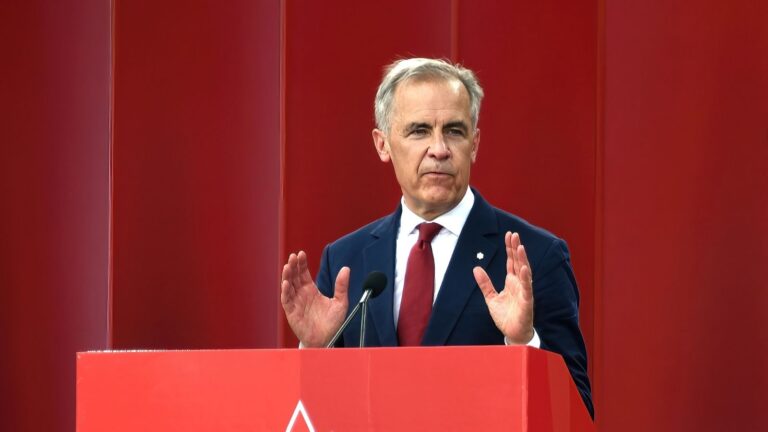
On November 26, 2026, Prime Minister Mark Carney announced up to $73 million in federal funding for the Whitehorse Power Centres project, a major infrastructure initiative intended to strengthen electricity reliability and support Northern Canada’s growing energy needs.
The investment comes after extreme winter conditions pushed Yukon’s electricity system dangerously close to its operating limits. With new housing, businesses and industrial developments expected to increase demand, the territory needs additional generation capacity before existing infrastructure becomes overwhelmed.
The proposed project represents an important step toward addressing those pressures, although questions remain about construction timelines, environmental considerations and the long-term cost of supplying reliable power.
Ottawa Commits Up to $73 Million to Strengthen Yukon’s Electricity System
Carney Announces Up to $73 Million for Yukon Power Project as Northern Canada’s Electricity Demand Outpaces Generation Capacity
- Ottawa Commits Up to $73 Million to Strengthen Yukon’s Electricity System
- Winter Electricity Demand Is Approaching the Yukon’s Generation Limits
- The Yukon’s Isolated Electricity Grid Creates Unique Challenges
- New Power Centres Could Eventually Add Up to 150 Megawatts of Capacity
- Recent Power Emergencies Show Why Additional Generation Cannot Be Delayed
- Diesel and Natural Gas Options Raise Questions About Environmental Impacts
- Yukon First Nations Could Become Major Partners in the Energy Expansion
- The Major Projects Office Will Help Advance Planning, but Regulatory Reviews Remain
- Growing Communities and Industrial Development Will Increase Electricity Requirements
- Ottawa Is Also Supporting Hydroelectric Projects to Protect Existing Supply
- Connecting Yukon to British Columbia Could Provide a Longer-Term Solution
Prime Minister Mark Carney announced the federal government’s support for the Whitehorse Power Centres project during a November 26 visit to the Yukon. The announcement includes up to $73 million through the Build Communities Strong Fund, specifically supporting the project’s initial phase. Ottawa also referred the development to the federal Major Projects Office, which coordinates work on infrastructure considered important to Canada’s long-term economic interests. The project aims to increase dependable electricity generation in Whitehorse, where population growth and rising energy consumption are putting additional pressure on the existing system.
The commitment provides an important financial opportunity for the territorial government, which faces substantial infrastructure costs relative to its comparatively small population. Yukon Premier Currie Dixon welcomed the announcement, emphasizing that territorial taxpayers cannot reasonably carry the entire financial burden of major electricity expansion. However, the funding should not be confused with approval or financing for every proposed future phase. Additional planning, regulatory reviews and investment decisions remain necessary before the project’s full potential can be realized.
Winter Electricity Demand Is Approaching the Yukon’s Generation Limits
The urgency behind the investment becomes clearer when examining how much electricity the Yukon consumes during winter. According to Yukon Energy, homes and businesses connected to the main grid, excluding mines, typically consume approximately 80% of available generation capacity during peak periods on an average winter day. During extreme cold, that figure can climb above 90%, leaving limited room for unexpected equipment failures or additional demand. For a northern electricity network operating without connections to neighbouring power systems, maintaining enough reserve capacity is particularly important.
The dangers became apparent in December 2025, when several weeks of temperatures between minus 30°C and minus 50°C drove electricity consumption to record levels. Territorial officials reported that peak demand reached 127 megawatts, with the grid operating at approximately 91% of its capacity at one point. Although widespread rotating outages were avoided, the experience demonstrated how quickly extreme weather could overwhelm available reserves. It also strengthened the argument for building additional dependable generation before another prolonged cold snap puts the system under similar pressure.
The Yukon’s Isolated Electricity Grid Creates Unique Challenges
Unlike most Canadian provinces, the Yukon cannot simply purchase additional electricity from neighbouring jurisdictions when its own generators struggle to meet demand. The Yukon Integrated System operates independently of the larger North American electricity network, without connections to British Columbia, Alaska or the Northwest Territories. This isolation makes local generation particularly important. When a major generator experiences mechanical problems or demand rises unexpectedly, utilities have fewer options for maintaining electricity supply. A failure that might be manageable within an interconnected provincial system can become considerably more serious in a remote northern network.
Hydroelectricity has historically been the foundation of Yukon’s electricity supply, with Yukon Energy reporting that renewable sources accounted for more than 90% of its generation on average over the previous 25 years in its 2025 electricity planning materials. However, winter conditions create additional complications. Electricity consumption increases substantially as residents heat homes, while hydroelectric output depends on available water resources. Solar generation is also constrained by limited daylight during northern winters. Consequently, dependable backup generation remains essential even as the territory works toward expanding renewable energy.
New Power Centres Could Eventually Add Up to 150 Megawatts of Capacity
The Whitehorse Power Centres project is designed to expand electricity generation gradually rather than introducing its maximum capacity immediately. Under Yukon Energy’s current schedule, construction of the first 15-megawatt power centre is targeted for completion in 2028. A second facility, initially providing 30 megawatts, is planned for winter 2030, alongside additional capacity at the first location. Further expansion could follow around 2035, depending on electricity demand and infrastructure requirements. The long-term proposal would allow the two facilities to provide approximately 150 megawatts of combined generation capacity, although the amount ultimately constructed remains uncertain.
The proposed northern facility would be located at Deep Creek, on Ta’an Kwäch’än Council settlement land, while the southern facility is planned for Copper Haul Road. A new electrical substation is proposed near Long Lake Road, supported by transmission infrastructure connecting the facilities to the existing grid. Yukon Energy is assessing up to 90 megawatts at the northern location and 60 megawatts at the southern site. These figures represent potential development capacity under environmental assessment rather than confirmed construction commitments. The phased approach is intended to provide flexibility as the territory’s energy requirements evolve.
Recent Power Emergencies Show Why Additional Generation Cannot Be Delayed
Yukon’s electricity challenges have already prompted unusual emergency preparations involving utilities, government agencies and major electricity consumers. During the December 2025 cold snap, Yukon Energy activated a mutual aid protocol that called on industrial customers to disconnect from the grid and generate their own electricity. ATCO Electric Yukon also brought additional diesel generators online. These measures were designed to preserve sufficient electricity for households and essential services while preventing rotating outages. The situation highlighted the vulnerability of a system operating with limited reserves during exceptionally cold weather.
Preparations have continued throughout 2026. On November 6, the territorial government and City of Whitehorse announced that participating public buildings could collectively reduce demand by 2.8 megawatts during emergencies, doubling the previous winter’s 1.4-megawatt capacity. Facilities including Yukon University, the Justice Centre and the Canada Games Centre were included in the expanded arrangements. A November 13 emergency exercise successfully tested the ability of selected buildings to switch to backup generators without interrupting services. Although these measures provide additional protection, they remain temporary safeguards rather than substitutes for building dependable new electricity infrastructure.
Diesel and Natural Gas Options Raise Questions About Environmental Impacts
One of the project’s most significant unresolved decisions concerns how the new electricity generators will be powered. Yukon Energy is evaluating diesel and liquefied natural gas as possible fuels for the proposed thermal generation facilities. Both options can provide dispatchable electricity, meaning their output can be increased when demand rises or renewable generation becomes insufficient. That capability is particularly valuable during prolonged winter cold snaps, when available electricity from other sources may not be enough to satisfy household and commercial needs.
However, expanding fossil fuel-based generation introduces environmental and financial considerations that cannot be ignored. Diesel and natural gas combustion produce greenhouse gas emissions, while nearby communities have raised concerns about air quality, noise and fuel security. Yukon Energy says the proposed generators would be newer, quieter and more efficient than its older diesel equipment. The utility is also conducting air-quality modelling, noise assessments and a human health risk assessment to evaluate potential impacts. Finding an acceptable balance between dependable winter generation, environmental protection and long-term operating costs will be an important part of deciding how the project ultimately proceeds.
Yukon First Nations Could Become Major Partners in the Energy Expansion
Indigenous participation is expected to play an important role in determining how the Whitehorse Power Centres project develops. The proposed facilities would be located within the traditional territories of the Kwanlin Dün First Nation and Ta’an Kwäch’än Council, making continued engagement with both governments essential. The northern Deep Creek site is particularly significant because it sits on Ta’an Kwäch’än Council settlement land. Yukon Energy has worked with the council on identifying the location and has committed to continuing discussions about project planning, procurement, contracting and potential investment opportunities.
In September 2026, Ta’an Kwäch’än Council Chief Ruth Massie confirmed that community engagement, including discussions involving the Elders Council and General Assembly, had supported allowing the Deep Creek location to proceed to further consideration. However, that decision did not constitute final regulatory approval or establish a completed financial partnership. Carney’s announcement also identified potential Indigenous equity ownership as one possible economic benefit. Meaningful participation could provide longer-term opportunities beyond construction employment, particularly if First Nations secure ownership interests or ongoing commercial roles. The outcome will depend on negotiations and development arrangements that have yet to be finalized.
The Major Projects Office Will Help Advance Planning, but Regulatory Reviews Remain
The decision to refer the Whitehorse Power Centres project to Canada’s Major Projects Office gives the development additional federal coordination, but it does not eliminate the requirement for environmental assessments or other necessary approvals. The office is intended to help major infrastructure proponents navigate complicated regulatory procedures, coordinate government agencies and identify financing opportunities. For the Yukon, this support could be particularly valuable because the electricity expansion involves multiple facilities, transmission upgrades, Indigenous partnerships and substantial capital requirements. The federal government will also help assess future residential and industrial electricity demand.
Environmental and socio-economic reviews remain an important part of the development process. Yukon Energy began working through the Yukon Environmental and Socio-economic Assessment Board process in 2025, and planning continues around generation sites, proposed transmission routes, equipment and fuel selection. The assessment process must consider potential effects on surrounding communities, wildlife, air quality and land use. Federal coordination may help reduce administrative delays, but the project’s success will also depend on addressing local concerns and meeting applicable regulatory requirements. The 2028 target for the initial facility therefore remains a projected completion date rather than a guarantee.
Growing Communities and Industrial Development Will Increase Electricity Requirements
The Yukon is experiencing structural changes in electricity consumption that extend beyond unusually cold winters. Yukon Energy’s 2025 planning forecast projected that non-industrial peak electricity demand would increase approximately 40% between 2020 and 2030, with growth reaching 50% by 2035. Population growth, additional housing construction and the increasing use of electricity for heating and transportation are among the factors contributing to that outlook. Whitehorse is particularly important because it accounts for approximately three-quarters of the electricity consumed through Yukon Energy’s system, making reliable generation near the territory’s largest population centre a priority.
Expanding electricity infrastructure also has implications for economic development. Businesses considering new facilities need confidence that dependable power will be available before committing substantial investment. Mining operations, commercial developments and new residential neighbourhoods can all increase pressure on existing generation and transmission networks. Carney’s announcement identifies local construction contracts and permanent operational employment as potential economic benefits, although specific employment figures have not been established. The challenge for policymakers will be ensuring that infrastructure costs remain manageable for a relatively small number of electricity customers while creating enough capacity to support future growth.
Ottawa Is Also Supporting Hydroelectric Projects to Protect Existing Supply
The Whitehorse Power Centres project is only one component of a broader effort to strengthen Yukon’s electricity network. Federal support is also being directed toward the Mayo Hydro Facility, which provides approximately 15 megawatts of dependable renewable generation. Aging infrastructure at the facility has created concerns about operational reliability and public safety, particularly around the Wareham Dam spillway. Ottawa has committed $50 million through the Smart Renewables and Electrification Pathways Program to support spillway repairs. Protecting this existing hydroelectric capacity is important because losing a major generating facility could worsen electricity shortages during periods of high demand.
Another important development is the proposed Atlin Hydro Expansion in northern British Columbia. Led by Tlingit Homeland Energy Limited Partnership, an organization owned by Taku River Tlingit First Nation citizens, the project would expand hydroelectric generation from approximately 2.1 to 10 megawatts. It has the potential to add eight megawatts of dependable capacity to Yukon’s grid and generate approximately 31 gigawatt-hours of electricity during winter, equivalent to the annual electricity consumption of about 2,500 Yukon homes. These investments would help preserve and expand renewable electricity supplies, complementing the proposed thermal generation facilities.
Connecting Yukon to British Columbia Could Provide a Longer-Term Solution
Beyond constructing additional local generators, the Yukon is exploring a potentially transformative electricity connection with British Columbia. The proposed Yukon-B.C. Grid Connect project would establish a transmission link between two currently separate electricity networks, potentially allowing the Yukon to access additional electricity resources and improve long-term energy security. The initiative has received approximately $40 million in federal support for preliminary development work, alongside $13 million from the Yukon Development Corporation. However, the project remains in the feasibility stage, with potential transmission routes and technical requirements still being examined.
The Whitehorse Power Centres announcement also fits within a much larger federal electricity strategy. Budget 2026 proposes approximately $1.6 billion over 10 years, beginning in 2027–28, to improve northern electricity reliability, including investments in renewable energy development and aging infrastructure. For Yukon residents, the immediate priority remains securing enough dependable electricity to withstand another severe winter without widespread outages. Over the longer term, successful coordination between thermal generation, hydroelectric expansion, transmission connections and Indigenous investment could create a more resilient electricity system. Whether that vision becomes reality will depend on timely construction, responsible financing and sustained cooperation between governments, utilities and local communities.
This Options Discord Chat is The Real Deal
While the internet is scoured with trading chat rooms, many of which even charge upwards of thousands of dollars to join, this smaller options trading discord chatroom is the real deal and actually providing valuable trade setups, education, and community without the noise and spam of the larger more expensive rooms. With a incredibly low-cost monthly fee, Options Trading Club (click here to see their reviews) requires an application to join ensuring that every member is dedicated and serious about taking their trading to the next level. If you are looking for a change in your trading strategies, then click here to apply for a membership.