35,000+ smart investors are already getting financial news, market signals, and macro shifts in the economy that could impact their money next with our FREE weekly newsletter. Get ahead of what the crowd finds out too late. Click Here to Subscribe for FREE.
Canadian Tire Corporation is putting $200,000 into wildfire relief as another difficult summer forces families from their homes and stretches emergency resources across Canada. The company announced the donation to the Canadian Red Cross’s Canadian Wildfire Fund on August 8, while also opening a nationwide checkout campaign that allows customers to contribute.
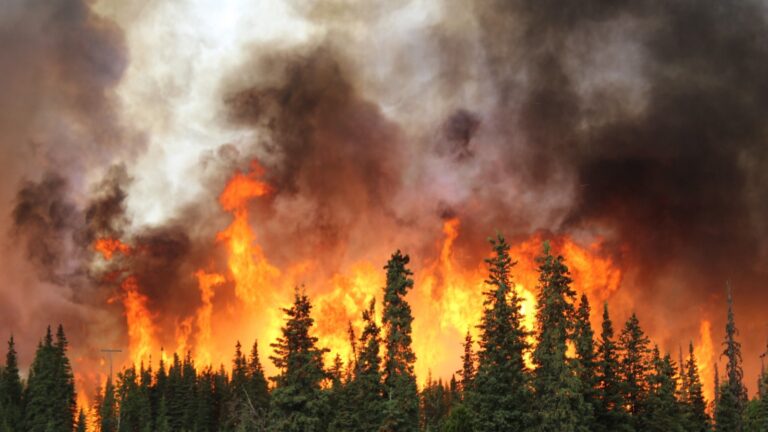
The announcement came during an especially tense weekend in British Columbia. The entire District of Summerland was ordered to evacuate as the Bald Range wildfire rapidly expanded, while other communities in the Okanagan were already dealing with destroyed homes and prolonged displacement. Nationally, roughly 3.9 million hectares had burned during the 2026 season by early August. Against that backdrop, Canadian Tire’s contribution is part of a much larger relief effort extending from emergency shelter and food to months or even years of recovery.
Canadian Tire Commits $200,000 to the Red Cross
Canadian Tire Puts $200,000 Into Wildfire Relief as Evacuations Intensify Across Canada
- Canadian Tire Commits $200,000 to the Red Cross
- Customers Are Being Asked to Join the Relief Effort
- Summerland’s Evacuation Shows How Quickly Conditions Can Change
- The Okanagan Was Already Reeling From Major Losses
- Nearly Four Million Hectares Have Already Burned
- First Nations Are Experiencing Significant Displacement
- Canada’s Fire Response Is Drawing Resources From Abroad
- Red Cross Support Can Continue Long After an Evacuation
- Wildfire Smoke Expands the Emergency Far Beyond Fire Zones
- Relief Is Growing as Canada Faces a Longer-Term Wildfire Challenge
Canadian Tire Corporation announced on August 8 that it would donate $200,000 to the Canadian Red Cross’s Canadian Wildfire Fund. The fund is intended to provide emergency assistance to people and communities affected by fires across the country, including help with urgent needs as well as longer-term recovery. Canadian Tire described the contribution as part of its continuing partnership with the Red Cross, rather than a donation limited to one province or one specific wildfire.
The national approach matters during a season when fire emergencies can shift quickly between regions. A community facing an evacuation today may need temporary accommodation and basic supplies immediately, while another that burned weeks earlier may already be dealing with insurance gaps, damaged businesses and the difficult process of returning home. Canadian Tire’s $200,000 alone cannot cover those enormous costs, but unrestricted or broadly targeted disaster funding can give relief organizations more flexibility to respond as needs develop rather than only during the first dramatic hours of an emergency.
Customers Are Being Asked to Join the Relief Effort
The corporate donation is only one part of Canadian Tire’s campaign. Beginning August 8, customers can contribute at checkout at participating Canadian Tire, Mark’s, SportChek, Pro Hockey Life and PartSource locations. Participating Gas+ locations are scheduled to begin accepting contributions on August 11. Canadian Tire says customer donations collected through the campaign will go directly to the Canadian Red Cross.
That creates a potentially large fundraising footprint. Canadian Tire Corporation says its broader network includes more than 1,600 retail and gasoline outlets, although not every location is necessarily participating in the wildfire campaign. The approach puts donation opportunities into places Canadians visit for ordinary errands—buying work clothes, sporting goods, automotive parts or household supplies. Small checkout contributions may appear modest compared with a six-figure corporate commitment, but large retail networks can aggregate thousands of individual donations. During a prolonged emergency season, that broad participation can also keep attention on communities whose needs continue after evacuation footage disappears from daily headlines.
Summerland’s Evacuation Shows How Quickly Conditions Can Change
The urgency surrounding the donation became particularly clear in British Columbia. Early on August 8, authorities ordered the entire District of Summerland to evacuate because of the Bald Range wildfire. EmergencyInfoBC warned that the fire posed a significant risk to life and instructed people in the affected area to leave immediately. Summerland has roughly 12,000 residents, turning the order into one of the most consequential evacuations of the current B.C. fire emergency.
The Bald Range fire had expanded to approximately 5,000 hectares after growing rapidly west of the community. Summerland also declared a state of emergency. The disruption extended beyond the flames themselves: the community lost power, and a boil-water notice was issued after the wildfire emergency affected normal water-treatment operations. Those details illustrate what an evacuation can actually mean for families. Leaving home is only the beginning. Residents may need somewhere to sleep, meals, transportation, medication and reliable information, while uncertainty about homes, pets, workplaces and utilities can continue long after everyone reaches safety.
The Okanagan Was Already Reeling From Major Losses
Summerland’s emergency arrived only days after another devastating wildfire struck the Okanagan Indian Band near Vernon. The Bradley Creek wildfire triggered escalating evacuation measures beginning August 1. An emergency alert eventually ordered people on Okanagan Indian Reservation 1 to leave, with authorities warning that the wildfire had crossed Westside Road and was creating an immediate threat to life.
Officials later estimated that approximately 230 homes had been destroyed in the community. Residents described an extraordinarily fast-moving emergency, with some having only a short period to escape as winds drove the flames. Despite the destruction, firefighting efforts helped protect important community infrastructure, including a school and daycare. The losses offer a reminder that hectares burned are only one way of measuring a wildfire season. Behind every destroyed residence is a household suddenly dealing with temporary housing, lost belongings, insurance claims and uncertainty over rebuilding. For Indigenous communities with deep cultural and family ties to the land, displacement can carry additional social and cultural consequences beyond the physical loss of buildings.
Nearly Four Million Hectares Have Already Burned
The 2026 wildfire season has developed into a national emergency rather than a collection of isolated local incidents. By early August, approximately 4,500 wildfires had been recorded across Canada and roughly 3.9 million hectares had burned. British Columbia alone was dealing with dozens of evacuation orders and alerts as hot, dry conditions increased the likelihood that existing fires would spread and new ones could become difficult to contain.
The situation deteriorated substantially as summer progressed. On July 9, the federal government reported 796 active wildfires nationally and 1.4 million hectares burned at that point in the season. Less than a month later, the national burned area had climbed sharply. That acceleration helps explain why additional donations and emergency resources remain important even after months of firefighting. Wildfire response does not end when a fire perimeter stops expanding. Governments, First Nations, charities and local organizations must continue supporting evacuees, restoring infrastructure and helping communities recover economically. For many households, those needs can last considerably longer than the fire itself.
First Nations Are Experiencing Significant Displacement
Indigenous communities have been especially affected by this year’s fires. Indigenous Services Canada reported that from April 1 through July 27, wildfires had affected 72 First Nations on reserve or communities eligible under its Emergency Management Assistance Program. More than 7,200 people had been evacuated over that period. As of July 27, 18 First Nations remained under wildfire-related evacuation, with 3,467 people still displaced.
Some evacuations require logistical operations far beyond simply driving down a highway. When Eabametoong First Nation in northern Ontario was threatened by a rapidly advancing wildfire in July, the Canadian Armed Forces deployed four CC-130 Hercules aircraft to help move residents. Federal officials later said the aircraft supported 13 evacuation flights. Remote communities can be particularly difficult to evacuate because road access may be limited or nonexistent and suitable host communities can be hundreds of kilometres away. When residents finally reach safety, they may also spend extended periods separated from their normal schools, jobs, medical providers and community services, increasing the importance of sustained relief rather than short-lived emergency assistance.
Canada’s Fire Response Is Drawing Resources From Abroad
Wildfires of this scale demand an enormous pool of people and equipment. By late July, federal officials said more than 5,300 firefighting personnel had been deployed across Canada during the season, supported by nearly 300 water bombers, helicopters, reconnaissance aircraft and evacuation aircraft. The federal Government Operations Centre had moved to Level 3 wildfire operations, reflecting increased national coordination as multiple jurisdictions dealt with major emergencies at the same time.
Canada has also relied on international assistance. Firefighters and specialists have arrived from countries including Mexico, Australia, New Zealand and France as domestic crews move between provinces and territories. Around the start of August, Canada had received personnel from Australia and New Zealand and significant reinforcements from Mexico, with additional Mexican firefighters expected. The movement of crews across borders shows why wildfire response increasingly functions as a shared system. When several regions experience extreme fire conditions simultaneously, individual provinces can exhaust available crews quickly. International agreements allow personnel to reinforce Canadian teams while local firefighters rotate, rest or reposition for new outbreaks.
Red Cross Support Can Continue Long After an Evacuation
The Canadian Red Cross says money raised through wildfire appeals can be used for immediate relief, ongoing assistance, recovery, resilience and preparation for future disasters. Those categories cover a wide range of needs. During an evacuation, assistance can include shelter, basic supplies, information and financial support. Later, attention can move toward returning home, replacing essential belongings, helping small businesses reopen and addressing expenses that may not be fully covered by insurance.
Previous wildfire responses demonstrate how extensive that work can become. Following the 2025 Newfoundland and Labrador fires, the Red Cross registered more than 7,400 people from affected households, distributed financial assistance to more than 2,500 eligible households and supplied thousands of emergency items. More than 150 households also received individualized recovery assistance. That past response does not indicate exactly how Canadian Tire’s 2026 contribution will be spent, but it illustrates the range of services disaster donations can ultimately support. Recovery often becomes less visible just as it becomes more complicated for the families involved.
Wildfire Smoke Expands the Emergency Far Beyond Fire Zones
Evacuation orders capture only part of wildfire exposure. Smoke can travel thousands of kilometres, degrading air quality in communities nowhere near an active fire. Health Canada identifies fine particulate matter, known as PM2.5, as one of the principal health concerns associated with wildfire smoke. Because these particles are extremely small, they can penetrate deep into the respiratory system and are associated with cardiovascular and respiratory health effects.
Canada has even adjusted the way its Air Quality Health Index is calculated during wildfire smoke events so that rapid changes in PM2.5 concentrations can be better reflected in hourly health-risk ratings. For most people, smoke may initially mean irritated eyes, coughing or headaches, but more serious effects can include severe breathing problems and cardiovascular complications, particularly among vulnerable populations. Smoke also disrupts outdoor work, recreation and transportation. That means the consequences of the wildfire season reach far beyond families standing under evacuation orders. Communities hundreds or thousands of kilometres away can experience another form of the same emergency through persistent poor air quality.
Relief Is Growing as Canada Faces a Longer-Term Wildfire Challenge
The immediate priority remains protecting people and supporting communities under evacuation, but Canada’s wildfire challenge increasingly extends beyond a single season. A World Weather Attribution analysis released in early August examined extreme fire weather in northwestern Ontario and the Northwest Territories and concluded that human-caused climate change had made the conditions studied at least twice as likely. The finding does not mean climate change causes every individual ignition; fires still begin through lightning and human activity. It does indicate that hotter and drier background conditions can make landscapes more conducive to severe fire.
Federal seasonal forecasts had already warned in July that above-average temperatures were expected across much of Canada through August, with southern interior British Columbia projected to face higher-than-normal fire danger as summer progressed. Those conditions make preparedness, prevention and rapid relief increasingly interconnected. Canadian Tire’s $200,000 contribution represents one immediate response. The wider challenge is ensuring that communities have the resources to evacuate safely, endure displacement, rebuild after losses and prepare for the next emergency before another column of smoke appears on the horizon.
This Options Discord Chat is The Real Deal
While the internet is scoured with trading chat rooms, many of which even charge upwards of thousands of dollars to join, this smaller options trading discord chatroom is the real deal and actually providing valuable trade setups, education, and community without the noise and spam of the larger more expensive rooms. With a incredibly low-cost monthly fee, Options Trading Club (click here to see their reviews) requires an application to join ensuring that every member is dedicated and serious about taking their trading to the next level. If you are looking for a change in your trading strategies, then click here to apply for a membership.