35,000+ smart investors are already getting financial news, market signals, and macro shifts in the economy that could impact their money next with our FREE weekly newsletter. Get ahead of what the crowd finds out too late. Click Here to Subscribe for FREE.
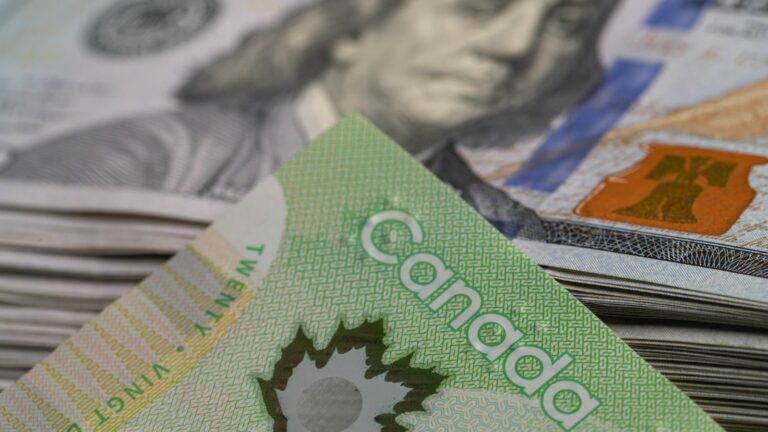
The Canadian dollar has found an unlikely pocket of strength just as the trade relationship with the United States is becoming more confrontational. On September 8, the loonie touched C$1.3760 per U.S. dollar, its strongest intraday level since August 21, before trading around C$1.3790, or 72.52 U.S. cents. The move came as Ottawa’s new counter-tariffs took effect and Washington prepared fresh restrictions on Canadian goods.
The currency’s resilience does not mean investors believe the dispute is harmless. Instead, markets are weighing a different set of forces at the same time: surging oil prices, a softer U.S. dollar, Canadian bond yields, and expectations for the Bank of Canada. For now, those factors have been powerful enough to outweigh some of the immediate fear surrounding the escalating trade fight.
The Loonie Is Defying the Trade-War Script
Canadian Dollar Hits Three-Week High Against U.S. Dollar Even as Trump Trade Fight Escalates
- The Loonie Is Defying the Trade-War Script
- Oil Is Doing Much of the Heavy Lifting
- Traders Are Discounting Some Tariff Headlines
- The Trade Fight Is Still Escalating in Concrete Ways
- The Bank of Canada Is Balancing Growth Against Inflation
- Canada’s Job Market Gives the Rally a Reality Check
- Trade Diversification Is Providing a Small Buffer
- The U.S. Dollar Side of the Pair Matters Too
- A Stronger Loonie Creates Winners and Losers at Home
- Oil, Tariffs and October’s Rate Decision Will Shape the Next Move
Currency markets did not respond to the latest Canada-U.S. confrontation in the way many might expect. The Canadian dollar strengthened 0.2% on September 8 to about C$1.3790 per U.S. dollar and briefly reached C$1.3760, its best intraday level in nearly three weeks. Because the exchange rate is quoted as Canadian dollars needed to buy one U.S. dollar, a lower number means a stronger loonie in practical market terms.
That move arrived on the same day Canada’s retaliatory tariffs took effect and after another round of threats from Washington. The contrast matters. A currency is not a simple referendum on one political development; traders continuously price energy, interest rates, growth, inflation and global demand for U.S. dollars. The loonie’s rise therefore says more about the balance of market forces than about confidence that the trade dispute will soon disappear. It is strength under pressure, not evidence that the pressure is gone.
Oil Is Doing Much of the Heavy Lifting
The biggest immediate support for the Canadian dollar has been oil. U.S. crude futures touched a three-month high of US$94.73 a barrel on September 8 after attacks on Saudi energy facilities intensified concern about Middle East supply. By September 9, Brent crude was trading close to US$100 a barrel as geopolitical risks stayed elevated. For a major energy exporter such as Canada, that move can improve export revenues and the country’s terms of trade.
The link is more than market folklore. Bank of Canada research has found that energy and other commodity prices help explain movements in the Canadian-U.S. exchange rate. When oil rises sharply, investors often reassess income flowing into Canada and the outlook for energy-producing provinces and companies. The same oil shock has a downside: expensive gasoline is already keeping Canadian inflation elevated. What helps the loonie through export income can simultaneously squeeze households and complicate monetary policy.
Traders Are Discounting Some Tariff Headlines
One reason the loonie has held up is that investors are separating dramatic headlines from the immediate economic hit. Reuters quoted currency analyst Adam Button saying markets were increasingly tuning out tariff threats and focusing more on oil. The Bank of Canada has also said the newest U.S. tariffs are not expected to have a large direct effect on the overall economy, although risks remain concentrated in exposed industries.
That distinction matters because much of Canada-U.S. trade still receives preferential treatment. Reuters reported that roughly 80% of Canadian exports to the United States this year continued to move duty-free because of USMCA exemptions. That does not make the conflict minor. It means markets may price the damage selectively, focusing on which sectors are hit, how long measures last and whether supply chains can adapt. In foreign exchange, the difference between a threat and a sustained cash-flow shock can be substantial.
The Trade Fight Is Still Escalating in Concrete Ways
The currency rally should not obscure how quickly the policy confrontation is widening. Canada’s Department of Finance says counter-tariffs effective September 8 cover C$27.6 billion of U.S. imports, with rates of 15%, 25% and 50% on products including steel, dairy, appliances, agricultural equipment, pulp and paper, plastics and electronics. The package matches U.S. measures imposed in August on a comparable value of Canadian goods.
Washington then went further. The White House announced import bans on certain Canadian alcoholic beverages, dairy products and motorcycles beginning September 29, while Trump also directed federal procurement officials to remove Canadian-origin products from major government purchasing schedules. A separate threat to raise tariffs on Canadian cars, trucks and automotive parts to 50% from January 1, 2027 remains in place. Those steps create real and immediate planning problems for manufacturers, exporters and suppliers, even if currency traders are not reacting violently to every new announcement.
The Bank of Canada Is Balancing Growth Against Inflation
The Bank of Canada adds another layer to the loonie’s resilience. On September 2, the central bank held its policy rate at 2.25%, saying growth and inflation had evolved broadly in line with its July outlook. Inflation has been hovering around 3%, largely because of gasoline prices, while inflation excluding gasoline was 2.2% in July and core measures remained close to 2%.
For currency markets, the message is mixed but important. Higher oil prices can support the Canadian dollar, yet they also raise the risk that inflation stays elevated longer. The Bank warned that prolonged energy costs and new tariffs could feed into broader consumer prices. That makes aggressive rate cuts harder to assume. Interest-rate expectations matter because investors compare returns available in Canadian and U.S. assets. The Bank is not targeting the exchange rate, but a policy path perceived as less dovish can still provide support for the loonie.
Canada’s Job Market Gives the Rally a Reality Check
The stronger currency is arriving alongside softer labour data. Statistics Canada reported that employment fell by about 42,000 in August, a 0.2% decline, while the unemployment rate remained at 6.4%. Youth unemployment was 12.9%, and average hourly wages were up 2.0% from a year earlier. Manufacturing was a notable exception to the weakness, adding roughly 22,000 jobs during the month.
Those numbers help explain why the loonie’s rise should not be mistaken for an all-clear signal on the domestic economy. Employment losses were concentrated in several service and public-sector categories, while trade-exposed industries remain vulnerable to further U.S. measures. Statistics Canada explicitly noted that industries dependent on American demand continue to face an uncertain environment. A currency can strengthen even while parts of the economy soften, especially when commodity prices and global capital flows dominate short-term trading. For households worried about jobs, that distinction is more than academic.
Trade Diversification Is Providing a Small Buffer
Recent trade data show why investors may see Canada as exposed to the United States but not completely trapped by it. In July, Canadian merchandise exports fell 2.3% while imports rose 2.2%, shrinking the goods trade surplus to C$769 million from C$4.2 billion in June. Exports to the United States dropped 6.6%, and the U.S. share of total Canadian exports fell to 66.35% from 72.64% a year earlier.
At the same time, exports to non-U.S. markets increased 7.4% in July. Reuters reported that the U.S. share of Canadian exports so far in 2026 was about 68%, down from roughly 73% a year earlier. That shift is meaningful because diversification is already visible in the data, even if geography still gives the American market enormous economic pull. For the loonie, broader export destinations can offer investors some reassurance that a U.S. shock is not the only force determining Canada’s external income.
The U.S. Dollar Side of the Pair Matters Too
Every CAD-USD move has two sides. The Canadian dollar can rise because Canada looks stronger, because the U.S. dollar looks weaker, or because both happen at once in markets. On September 9, the U.S. dollar index slipped to about 98.15, its lowest level in nearly two weeks, while the yen and several other currencies strengthened as investors reassessed global interest-rate expectations and geopolitical risks.
Bank of Canada research underscores this point. A study of the Canadian dollar found that commodity prices help explain exchange-rate movements, but a broad U.S.-dollar factor had even stronger predictive ability. That means the loonie’s latest advance cannot be attributed to oil alone. Changes in Federal Reserve expectations, global demand for safe assets and moves in other major currencies can all alter the U.S. dollar side of the equation. For Canadians watching the exchange rate, domestic economic news is only one half of the overall story.
A Stronger Loonie Creates Winners and Losers at Home
A firmer Canadian dollar can gradually reduce the cost of imported goods because each Canadian dollar buys more foreign currency. Bank of Canada research using Canadian retail data found that exchange-rate appreciations can have a deflationary effect on retail prices, although the amount and timing of pass-through vary. That can help importers of equipment, electronics and other U.S.-priced goods, particularly if currency strength lasts.
Exporters can face the opposite arithmetic. A Canadian company paid US$1 million receives C$1.376 million if the exchange rate is C$1.3760 per U.S. dollar, compared with C$1.400 million at C$1.40. That hypothetical difference is C$24,000 before hedging. Large firms often use currency contracts to smooth such swings, but smaller exporters may feel them more directly. The move is modest, yet it shows why a stronger loonie is not automatically good or bad. Its impact depends on who is buying, selling and invoicing in U.S. dollars.
Oil, Tariffs and October’s Rate Decision Will Shape the Next Move
The loonie’s next direction will likely depend on whether the forces supporting it remain stronger than the trade risks building around Canada. Oil is an obvious pressure point: a reversal from elevated levels would remove one of the currency’s clearest supports. At the same time, the U.S. import bans scheduled for September 29 and any further procurement or sector-specific restrictions could make the economic cost easier for markets to quantify.
Monetary policy will also return to the foreground. The Bank of Canada’s next scheduled rate decision and Monetary Policy Report are due October 28. Before then, traders will parse inflation, employment, trade and U.S. data for clues about the Canada-U.S. interest-rate gap. The threatened 50% U.S. tariff on Canadian autos from January 1, 2027 adds another major deadline. The latest rally shows the loonie can withstand bad political headlines, but it has not proven it can ignore sustained economic damage.
This Options Discord Chat is The Real Deal
While the internet is scoured with trading chat rooms, many of which even charge upwards of thousands of dollars to join, this smaller options trading discord chatroom is the real deal and actually providing valuable trade setups, education, and community without the noise and spam of the larger more expensive rooms. With a incredibly low-cost monthly fee, Options Trading Club (click here to see their reviews) requires an application to join ensuring that every member is dedicated and serious about taking their trading to the next level. If you are looking for a change in your trading strategies, then click here to apply for a membership.