35,000+ smart investors are already getting financial news, market signals, and macro shifts in the economy that could impact their money next with our FREE weekly newsletter. Get ahead of what the crowd finds out too late. Click Here to Subscribe for FREE.
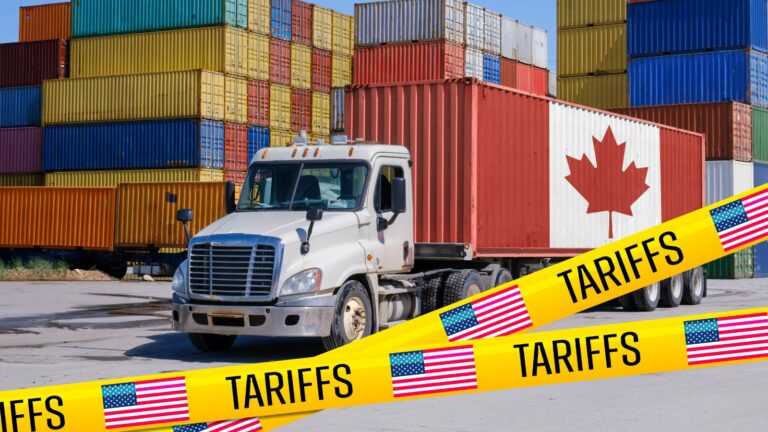
A trade deal that appeared close enough for both Ottawa and Washington to talk openly about progress unraveled in its final hours, with Ontario-made heavy trucks emerging as one of the decisive flashpoints. Canada wanted proposed U.S. tariff relief for automobiles to extend to medium- and heavy-duty vehicles, while American negotiators resisted. That distinction put Ford Super Duty production in Oakville and Chevrolet Silverado production in Oshawa directly in the line of fire.
The disagreement did not single-handedly kill the talks. Steel, aluminum, lumber, dairy, cultural policy and broader sovereignty concerns were also unresolved. But the truck dispute exposed the deeper conflict underneath the negotiations: Canada was trying to preserve an integrated North American auto industry, while the Trump administration was pushing harder to reward production and content inside the United States.
Heavy Trucks Became a Last-Minute Breaking Point
Canada’s Push to Protect Ontario-Made Heavy Trucks Helped Sink Trump Trade Deal
- Heavy Trucks Became a Last-Minute Breaking Point
- Ford’s Oakville Bet Raised the Stakes
- GM’s Oshawa Silverado Operation Was Exposed Too
- The Existing 25% Truck Tariff Made the Difference Bigger
- Ottawa Saw a Threat to the Wider Auto Industry
- Washington Says Canada Changed the Deal
- A Much Broader Package Had Been Taking Shape
- The Collapse Triggered a Much Wider Tariff Fight
- Ontario, Labour and the Opposition Backed the Walkout
- The Same Argument Could Return in the CUSMA Fight
The deal did not collapse because of trucks alone, but the treatment of larger vehicles became one of the late-stage breaking points. By Friday, August 21, Canadian and U.S. negotiators had spent days discussing a package that could have reduced tariffs on Canadian autos, steel, aluminum and lumber. Earlier reporting suggested the auto tariff might fall from 25% to 15%, giving Canadian assembly plants relief from a cost that had weakened their access to the U.S. market.
The dispute sharpened when Canada pressed for comparable treatment for medium- and heavy-duty vehicles. Bloomberg reported that Washington viewed this as a new Canadian demand, while Canadian industry representatives argued that U.S. negotiators had removed heavy trucks from the category eligible for relief. That disagreement mattered because it turned an abstract tariff negotiation into a direct question about whether Ontario truck programs would remain competitive in their largest export market.
Ford’s Oakville Bet Raised the Stakes
Ford’s Oakville Assembly Complex made the truck dispute sensitive for Ottawa. Ford announced in 2024 that it would shift the Ontario plant toward F-Series Super Duty production, replacing a plan to build three-row electric vehicles there. The company said the program could add capacity for as many as 100,000 Super Duty trucks annually and support about 1,800 jobs in Oakville, plus engine work in Windsor. Ottawa later approved a C$464.5-million contribution toward the retooling.
That investment changed the political meaning of a heavy-truck carveout. Prime Minister Mark Carney said the U.S. proposal would have excluded Oakville-built F-350, F-450 and F-550 trucks from the improved tariff treatment being discussed for other vehicles. For workers returning after a retooling period, the distinction was not technical. A higher tariff on the products meant to secure Oakville’s future could undermine the economics of the program before it reached production.
GM’s Oshawa Silverado Operation Was Exposed Too
General Motors gave Canada reason to resist a separate tariff category for larger pickups. GM’s Oshawa Assembly plant builds light-duty and heavy-duty Chevrolet Silverado trucks, making it the company’s only North American facility producing both versions on the same line. In June 2026, GM Canada said Oshawa had assembled more than 500,000 Silverados since production restarted in November 2021, underscoring how the plant is tied to the continental pickup market.
The company is preparing Oshawa for another generation of gasoline-powered full-size trucks. GM has said C$1.5 billion has been invested in the plant since 2020, including a C$343-million program supporting future truck production. Carney pointed to the Silverado when explaining which Canadian-made vehicles could have been disadvantaged. For Ottawa, accepting relief for some automobiles while leaving an established Ontario truck line under tougher treatment risked creating a policy incentive for manufacturers to put future capacity elsewhere.
The Existing 25% Truck Tariff Made the Difference Bigger
The disagreement was magnified by the way U.S. truck tariffs work. A White House proclamation imposed a 25% tariff on imported medium- and heavy-duty vehicles beginning November 1, 2025. For vehicles that qualify under the United States-Mexico-Canada Agreement, importers can seek to have that tariff applied only to non-U.S. content. That design rewards American content inside Canadian- or Mexican-assembled trucks and makes the calculation of origin important.
The tentative Canada-U.S. package reportedly contemplated lowering the regular tariff on Canadian-built automobiles from 25% to 15%. Canada wanted that treatment extended to medium- and heavy-duty vehicles as well. Without it, an Ontario-built Super Duty or Silverado could face a different tariff structure from a Canadian-built vehicle classified in the lighter category. The fight was about more than a customs code. It was about whether Washington would treat Canadian truck assembly as part of the same integrated automotive bargain.
Ottawa Saw a Threat to the Wider Auto Industry
Ottawa’s resistance reflected the broader structure of Canada’s auto industry. The federal government says more than 90% of Canadian-made vehicles and 60% of Canadian-made auto parts are exported to the United States. It estimates that automotive manufacturing supports 125,000 direct jobs nationally. In Ontario, regional-development data show that autos and parts exports to the U.S. totaled about C$60 billion in 2025, representing 96% of the province’s automotive exports.
Those numbers explain why a carveout affecting pickups carried outsized weight. Heavy trucks are not a niche business when they anchor assembly plants, engine operations, stamping facilities, parts suppliers and logistics networks. A tariff disadvantage can ripple beyond the assembly line, in an industry built around just-in-time production and cross-border sourcing. Canada’s position was defensive and strategic: Ottawa wanted to avoid signing a deal that eased pressure on one slice of auto manufacturing while leaving another Ontario base exposed.
Washington Says Canada Changed the Deal
Washington saw the hours differently. U.S. Trade Representative Jamieson Greer said Canada had declined to finalize terms agreed in the week, accusing Ottawa of adding new demands and walking back commitments. U.S. officials argued that their offer would have given Canada favorable treatment compared with other major exporters, while advancing cooperation on aerospace, critical minerals, forced-labour enforcement and North American trade negotiations.
That version conflicts with Canada’s account. Carney said the United States introduced last-minute terms that were unfair, uneconomic and unreliable. Automotive Parts Manufacturers’ Association president Flavio Volpe argued that U.S. negotiators had pulled Super Duty pickups out of the group that would receive a lower tariff. The distinction matters because it determines who changed the bargain at the eleventh hour. Public evidence confirms the disagreement, but not a negotiating record. The safest conclusion is that trucks became a late, unresolved test of both sides’ limits.
A Much Broader Package Had Been Taking Shape
The truck fight arrived after negotiators had narrowed gaps elsewhere. Reuters reported during the week that the emerging package could have reduced the U.S. auto tariff on Canadian vehicles from 25% to 15%. Steel and aluminum tariffs, then at 50%, were under discussion for a reduction to 25%, with a quota structure limiting the amount eligible for the lower rate. Lumber relief and changes to Canadian retaliation were part of the wider bargaining picture.
Canada, in turn, had signaled willingness to remove counter-tariffs on sectors if U.S. tariffs fell enough to make exports viable. Ottawa also said it was prepared to encourage provinces to restore American alcohol to store shelves and take administrative steps on dairy without dismantling supply management. That is why the collapse was striking. The heavy-truck dispute did not derail a blank-sheet negotiation; it emerged after both governments had identified a broad exchange of concessions.
The Collapse Triggered a Much Wider Tariff Fight
When the talks failed, the consequences followed. The United States moved ahead with 50% tariffs on roughly US$20 billion, or about C$28 billion, of Canadian goods. Canadian officials said the affected products ranged across consumer and industrial categories, while reporting estimated the new measure covered about 5% of Canada’s exports to the U.S. The move landed after Trump had granted negotiators a short extension earlier in the week because a deal appeared close.
Carney responded by promising dollar-for-dollar counter-tariffs, concentrated in areas such as steel, dairy, appliances, agricultural equipment, pulp and paper, and electronics. The Prime Minister’s Office said the measures would take effect on the Tuesday after Labour Day, September 8, 2026. Ottawa also said assistance for affected workers and businesses would be announced. A dispute centered partly on tariff classifications for trucks therefore spilled quickly into a broader confrontation affecting manufacturers, farmers, retailers and consumers.
Ontario, Labour and the Opposition Backed the Walkout
Carney’s decision to walk away drew support from voices that do not always agree on policy. Ontario Premier Doug Ford said the arrangement was a bad deal for Ontario, the auto sector, steel and manufacturing, and backed a dollar-for-dollar response. Conservative Leader Pierre Poilievre called for Canadians to stand together against U.S. measures, while business groups began preparing members for the impact of escalation in cross-border tariffs.
Labour leaders were focused on the precedent embedded in the truck dispute. Unifor president Lana Payne said Canada had to draw a line rather than accept terms that could weaken the competitiveness of auto production. The concern was not limited to the tariff bill. If one class of Canadian-built vehicles could be excluded from relief now, unions feared distinctions could become a template for future negotiations over parts, content rules and investment. That made Ontario trucks a symbol of an industrial-policy fight.
The Same Argument Could Return in the CUSMA Fight
The failed deal does not end CUSMA, but it makes the next phase of trade negotiations harder. On July 1, the United States declined to extend the agreement in its form during the joint review. That decision starts annual reviews while CUSMA remains in force, with the agreement continuing until 2036 unless the parties later agree to extend it. Washington is pressing for tougher automotive rules of origin and stronger incentives for U.S. production.
The heavy-truck dispute offers a preview of that argument. Canada wants an integrated auto industry in which Canadian assembly and components retain value. The Trump administration emphasizes reshoring and U.S.-centered manufacturing. Those positions can overlap, but they can collide over classification and content rules like those that surfaced in August. Protecting Ontario truck production may have helped sink one near-term deal; whether it becomes a recurring fault line will shape the next round.
This Options Discord Chat is The Real Deal
While the internet is scoured with trading chat rooms, many of which even charge upwards of thousands of dollars to join, this smaller options trading discord chatroom is the real deal and actually providing valuable trade setups, education, and community without the noise and spam of the larger more expensive rooms. With a incredibly low-cost monthly fee, Options Trading Club (click here to see their reviews) requires an application to join ensuring that every member is dedicated and serious about taking their trading to the next level. If you are looking for a change in your trading strategies, then click here to apply for a membership.