35,000+ smart investors are already getting financial news, market signals, and macro shifts in the economy that could impact their money next with our FREE weekly newsletter. Get ahead of what the crowd finds out too late. Click Here to Subscribe for FREE.
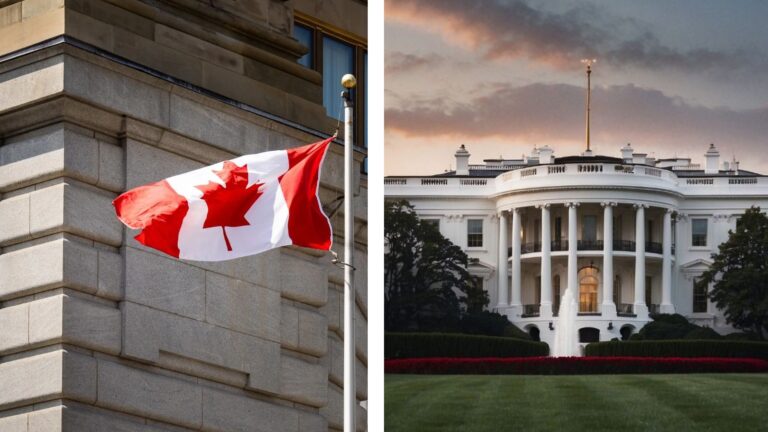
A growing dispute over who should pay to defend North America has turned into a much bigger argument about Canadian sovereignty. After the Pentagon publicly accused Ottawa of failing to meet its military obligations, Defence Minister David McGuinty delivered a pointed response on November 24, 2026: “We don’t report to the United States.”
The confrontation comes as Canada attempts to rebuild its armed forces, increase military spending and reconsider major American weapons purchases. Washington argues that Ottawa has relied too heavily on U.S. protection, while Canadian officials insist that defence cooperation does not give another country authority over Canada’s decisions. Behind the increasingly sharp exchanges lies a difficult question: Can two countries that depend on each other for continental security maintain their military partnership while disagreeing so publicly about its future?
Canada Draws a Firm Line on Its Sovereignty
Canada Tells Washington ‘We Don’t Report to the United States’ After Pentagon Accuses Ottawa of Failing to Defend North America
- Canada Draws a Firm Line on Its Sovereignty
- Pentagon Accuses Canada of Falling Short on Military Readiness
- NATO’s New 5% Spending Target Is at the Centre of the Dispute
- Canada’s Defence Budget Is Growing, but Important Questions Remain
- NORAD Cooperation Continues Despite the Political Confrontation
- The F-35 Fighter Jet Review Has Become Another Major Flashpoint
- Washington Has Already Restricted Some Military Engagements
- Canada’s Military Challenges Extend Beyond Its Defence Budget
- Trade Tensions Have Made the Defence Dispute More Complicated
- Canada’s Next Defence Decisions Will Matter More Than the Exchange of Words
Canadian Defence Minister David McGuinty delivered his response on November 24 while speaking to reporters in Ottawa ahead of a federal cabinet meeting. Questioned about Washington’s reaction to Canada’s military spending plans, McGuinty emphasized that decisions about national defence ultimately belong to the Canadian government. His declaration that Canada does not report to the United States was more than a diplomatic comeback. It established a distinction between cooperating closely with an ally and allowing that ally to dictate domestic policy. Canada has participated in joint continental defence arrangements with Washington for generations, but those agreements do not eliminate its independence over military spending, procurement or strategic priorities.
McGuinty also made clear that Ottawa was not abandoning its responsibilities. He pointed to ongoing military acquisitions, recruitment and retention efforts, and plans to rebuild 33 military bases. His comments reflected the government’s determination to demonstrate progress rather than engage in a prolonged rhetorical confrontation. Importantly, the minister maintained that military cooperation through NATO and the North American Aerospace Defense Command, commonly known as NORAD, remained unchanged. That distinction matters because Canadian and American forces continue to work together even when their political leaders disagree. Ottawa’s position is that defending North America is a shared responsibility, not a relationship in which Washington issues instructions and Canada is expected to comply.
Pentagon Accuses Canada of Falling Short on Military Readiness
The Pentagon’s November 23 criticism went considerably further than the familiar argument that Canada should spend more on defence. In an unusually direct public fact sheet, the U.S. Department of Defense questioned whether Ottawa was making the decisions necessary to become a credible partner in protecting the continent. The Pentagon argued that years of underinvestment had weakened the Canadian Armed Forces and left American taxpayers carrying a disproportionate share of the burden. It highlighted figures showing that just 41.9% of Canada’s key aerospace fleets and 53.9% of its key maritime fleets were serviceable during the 2025–26 fiscal year. Serviceability for key land equipment fleets stood at 48%.
Those numbers are particularly significant because they correspond to results published by Canada’s own Department of National Defence. The Canadian report also found that 61% of military force elements were ready for operations, below the department’s long-term objective of at least 90% by 2032. However, serviceability measures and operational readiness are not interchangeable, and neither means that every aircraft, ship or military unit outside the reported percentage is permanently unusable. Equipment maintenance, shortages of trained personnel and the demands of ongoing deployments all influence preparedness. Washington has therefore identified genuine weaknesses, but Ottawa disputes the suggestion that those weaknesses make Canada an unreliable ally or prove that its current modernization efforts are inadequate.
NATO’s New 5% Spending Target Is at the Centre of the Dispute
Much of the disagreement revolves around a NATO commitment established at the alliance’s June 2025 summit in The Hague. Members agreed to invest the equivalent of 5% of their gross domestic product in defence and related security priorities annually by 2035. However, the headline figure contains two distinct categories. At least 3.5% of GDP must support core military requirements, including personnel, equipment and operational capabilities. Up to another 1.5% can cover broader security investments, such as protecting critical infrastructure, strengthening cybersecurity, improving emergency preparedness and supporting defence industries. This distinction matters because spending on general security initiatives cannot simply replace the minimum investment required for military capabilities.
Canada had already accelerated spending to meet NATO’s previous 2% benchmark in the 2025–26 fiscal year, a milestone announced in March 2026. Nevertheless, the new commitment demands another substantial increase. McGuinty has emphasized that NATO members agreed to review the trajectory and balance of spending in 2029, taking changing security threats and military requirements into account. That review is a legitimate part of the agreement, but it does not automatically cancel the 2035 commitment. NATO also expects members to submit credible annual plans showing how they intend to reach their targets. The disagreement therefore concerns both the amount Canada promises to spend and the evidence that its future funding commitments can realistically be delivered.
Canada’s Defence Budget Is Growing, but Important Questions Remain
Ottawa’s November 2026 federal budget provides evidence that Canada’s military spending is increasing significantly. The government’s projections show combined defence and security-related investments reaching 4.1% of GDP in the 2027–28 fiscal year and remaining around that level through 2030–31. Core defence spending is projected to reach approximately $99.2 billion annually by 2030–31, equivalent to 2.6% of GDP. These figures represent a substantial departure from Canada’s previous spending levels and support the government’s argument that its military rebuilding program is more than a collection of political promises. However, they also reveal that a substantial portion of the overall spending total comes from security-related expenditures rather than core military funding.
The Parliamentary Budget Officer has identified an important limitation: Canada’s published fiscal projections do not yet provide a complete spending path to the 2035 target. In a November assessment, the watchdog calculated that core defence spending at 3.5% of GDP would amount to roughly $136 billion in 2030–31, approximately $37 billion above the government’s projected spending for that year. This comparison illustrates the financial scale of the remaining commitment, although Canada is not required to reach 3.5% until 2035. Ottawa may introduce additional investments after 2030, but those future decisions have not been fully reflected in its existing projections. The Pentagon’s concerns about funding certainty therefore have a measurable basis, even if its criticism overlooks the increases Canada has already undertaken.
NORAD Cooperation Continues Despite the Political Confrontation
For all the tension between Ottawa and Washington, the two countries remain deeply connected through NORAD, one of the world’s most established bilateral military partnerships. Formally established in 1958, NORAD is responsible for aerospace warning, aerospace control and maritime warning across North America. Its operations involve identifying potential threats, monitoring aircraft approaching continental airspace and coordinating defensive responses. The command’s structure reflects the sovereignty of both partners: its commander is accountable to the American president and Canadian prime minister. For military personnel stationed at locations such as Winnipeg, Manitoba, and Colorado Springs, Colorado, cooperation is a daily operational responsibility rather than simply a diplomatic commitment.
Canada is also pursuing a $38.6-billion modernization program spread over 20 years to strengthen its contribution to continental defence. Planned improvements include advanced Arctic radar systems, communications infrastructure, surveillance capabilities and equipment intended to respond to modern aerospace threats. These investments are particularly important as military planners assess the growing challenge of monitoring Canada’s northern approaches. The Pentagon has questioned whether Canadian readiness is sufficient, but both governments have maintained that NORAD operations and intelligence cooperation continue. That continuity is essential. A political disagreement cannot easily change the geography that makes the two countries dependent on one another for early warning and protection against threats approaching North America.
The F-35 Fighter Jet Review Has Become Another Major Flashpoint
Canada’s reconsideration of its planned purchase of 88 American-made F-35 fighter jets has introduced another layer of friction into the defence relationship. The original acquisition arrangement was finalized in December 2022, but Prime Minister Mark Carney ordered a review in March 2025 amid deteriorating relations with Washington. The government is examining whether the entire planned fleet remains the best option or whether alternatives could better serve Canadian military and economic interests. The review has not stopped all deliveries. In October 2026, the Royal Canadian Air Force received its first two F-35 aircraft at Luke Air Force Base in Arizona, where Canadian pilots are expected to train. Meanwhile, Ottawa continues to consider the Swedish-built Saab Gripen as a possible alternative.
The Pentagon argues that operating two different fighter types could create additional challenges for training, maintenance, staffing and integration with NORAD. Those concerns are particularly relevant because Canada’s existing CF-18 fleet is scheduled to retire by 2032. However, the decision carries substantial economic implications as well. Canada’s Auditor General reported that the estimated F-35 acquisition cost had increased from $19 billion in 2022 to $27.7 billion by 2024, excluding certain additional requirements. Swedish proposals could potentially provide more domestic manufacturing opportunities, while the F-35 program already supports Canadian aerospace companies. For Ottawa, the choice involves military effectiveness, procurement costs, industrial employment and strategic independence. For Washington, uncertainty about the final aircraft fleet adds another complication to long-term continental defence planning.
Washington Has Already Restricted Some Military Engagements
The latest disagreement did not begin with the Pentagon’s November 23 fact sheet. Days earlier, reports emerged that U.S. Defense Secretary Pete Hegseth had issued classified guidance restricting certain forms of military engagement with Canada. Republican Senator Mike Rounds, speaking at the Halifax International Security Forum on November 21, said the restrictions appeared to focus largely on participation in think-tank events, conferences and social engagements. He indicated that operational cooperation and intelligence sharing were not expected to change. Because the document remains classified, its full scope cannot be independently established from public reporting. The Pentagon has maintained that its guidance does not affect cooperation through NORAD or NATO.
Even if the practical restrictions are limited, their symbolism is significant. The Trump administration had already prevented Pentagon officials from participating in the Halifax forum under restrictions introduced in 2025. In May 2026, Pentagon policy chief Elbridge Colby also announced a pause in the Permanent Joint Board on Defence, an advisory body established in 1940 to facilitate high-level Canadian-American defence discussions. These developments have attracted criticism from American lawmakers as well as Canadians. Informal meetings and defence conferences may seem less important than military exercises, but they provide opportunities for officials to develop relationships and address disagreements before they escalate. Reducing those contacts risks making an already strained partnership harder to manage, even while formal military operations continue.
Canada’s Military Challenges Extend Beyond Its Defence Budget
Military spending increases will mean little unless Canada can turn additional funding into trained personnel, functioning equipment and dependable capabilities. Staffing remains one of the most pressing challenges. According to figures updated October 31, 2026, the Canadian Armed Forces had 69,582 Regular Force members, approximately 1,918 below its authorized strength. Recruitment has improved, with 7,310 people enrolled during the 2025–26 fiscal year compared with 6,706 the previous year. Nevertheless, the Defence Department’s latest performance report found that 58.5% of military occupations continued to experience critical personnel shortages. These figures illustrate why increasing military effectiveness requires more than approving additional purchases or announcing larger budgets.
Canada’s aging submarine fleet provides another example. Prime Minister Carney acknowledged in July that only one of Canada’s four Victoria-class submarines was seaworthy, limiting the country’s ability to maintain an effective underwater presence across its vast maritime territory. Ottawa subsequently selected Germany’s Thyssenkrupp Marine Systems as its preferred supplier for negotiations involving up to 12 replacement submarines. The first four are planned for delivery in 2034, subject to the procurement arrangements being finalized. Such investments could significantly improve Canada’s capabilities, but major military projects take years to deliver. In the meantime, existing equipment must remain operational, and personnel must be recruited, trained and retained. Those practical challenges will ultimately determine whether Canada’s modernization program produces the stronger military that Ottawa has promised.
Trade Tensions Have Made the Defence Dispute More Complicated
The defence confrontation is unfolding against a broader deterioration in Canada–U.S. relations under President Donald Trump. American tariffs on Canadian products, repeated suggestions that Canada should become the 51st state, and uncertainty surrounding the North American trade agreement have placed considerable pressure on the relationship. These developments have also influenced how Ottawa approaches military procurement and industrial policy. Canadian officials increasingly argue that national security requires greater domestic production capacity and more diversified international partnerships. That position carries economic consequences for Canadian manufacturers, workers and communities that depend on cross-border trade. Defence contracts are no longer viewed exclusively as military purchases; they are also becoming important decisions about national economic resilience.
The changing economic relationship is measurable. According to a September 2026 analysis by the U.S. Congressional Research Service, approximately 68% of Canadian goods exports went to the United States during the first half of 2026, compared with 77% during the corresponding period of 2024. Canada has also strengthened defence and security relationships with European partners while attempting to reduce certain dependencies on American suppliers. However, diversification does not eliminate the economic and military importance of the United States. Canadian and American automotive supply chains remain highly integrated, and continental defence still requires extensive coordination. The challenge for Ottawa is to establish greater strategic independence without undermining partnerships that remain essential to Canadian prosperity and security.
Canada’s Next Defence Decisions Will Matter More Than the Exchange of Words
The immediate confrontation may fade, but several difficult decisions remain unresolved. Ottawa must demonstrate that its spending increases produce meaningful improvements in operational readiness, clarify the future of its fighter fleet and provide a more complete financial plan for NATO’s 2035 commitments. Washington, meanwhile, must decide whether public criticism and restrictions on certain military engagements are effective ways to encourage greater Canadian investment. The two countries still share military responsibilities that extend beyond their own territory. Under Operation REASSURANCE, Canada contributes thousands of personnel throughout the year to NATO operations in Europe, including a Canadian-led multinational brigade in Latvia. Those commitments demonstrate why Canada’s contributions cannot be assessed solely through one spending percentage.
The next important milestones will involve budgets, procurement decisions and NATO’s scheduled 2029 review of defence investment commitments. Progress will also be measured by improvements in equipment availability, recruitment, military infrastructure and continental surveillance capabilities. A stronger Canadian military would benefit both countries, particularly as security threats become more technologically complex and geographically widespread. Yet achieving that objective does not require agreement on every diplomatic or economic question. McGuinty’s declaration has reinforced Ottawa’s insistence that Canada makes its own sovereign decisions. The longer-term test will be whether that independence can coexist with a dependable military partnership. For Canada and the United States, defending North America effectively will require more than forceful statements from either capital.
This Options Discord Chat is The Real Deal
While the internet is scoured with trading chat rooms, many of which even charge upwards of thousands of dollars to join, this smaller options trading discord chatroom is the real deal and actually providing valuable trade setups, education, and community without the noise and spam of the larger more expensive rooms. With a incredibly low-cost monthly fee, Options Trading Club (click here to see their reviews) requires an application to join ensuring that every member is dedicated and serious about taking their trading to the next level. If you are looking for a change in your trading strategies, then click here to apply for a membership.