35,000+ smart investors are already getting financial news, market signals, and macro shifts in the economy that could impact their money next with our FREE weekly newsletter. Get ahead of what the crowd finds out too late. Click Here to Subscribe for FREE.
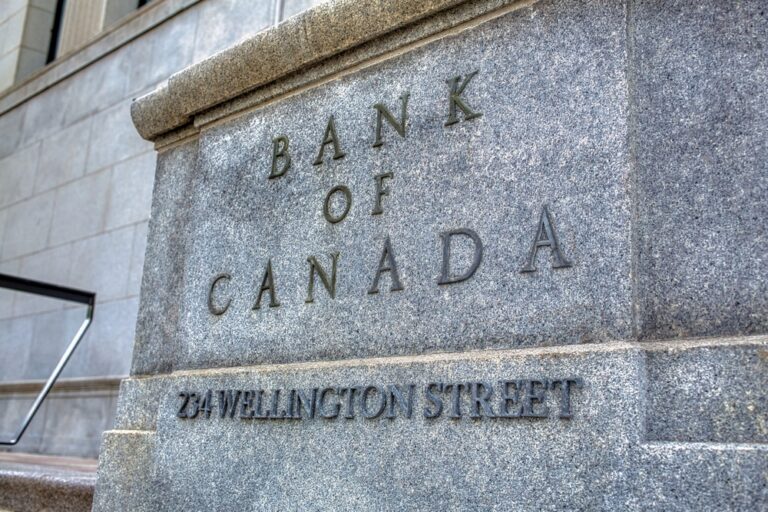
Canada’s central bank has chosen patience at a moment when patience feels uncomfortable. The Bank of Canada held its key interest rate steady as the economy deals with a strange mix of warning lights: recession talk, tariff pressure, higher fuel costs, and a labour market that refuses to send one clear signal. For households, the decision offers a little stability. For businesses, it does not erase the uncertainty sitting over hiring, investment, and trade.
The freeze is less a victory lap than a pause at a difficult intersection. Inflation is not fully beaten, growth has weakened, and the tariff fight with the United States continues to weigh on key sectors. That leaves policymakers trying to avoid two mistakes at once: cutting too early and feeding inflation, or tightening too hard and deepening the slowdown.
A Hold That Signals Caution, Not Comfort
Bank of Canada Freezes Rates as Canada Faces Recession Talk and Tariff Pain
- A Hold That Signals Caution, Not Comfort
- Recession Talk Is Back, But the Picture Is Uneven
- Tariffs Are No Longer Just Political Noise
- Inflation Is Complicated by Energy Prices
- The Labour Market Is Sending Mixed Messages
- Mortgages and Household Budgets Get a Breather
- What Comes Next Depends on Which Risk Wins
The Bank of Canada kept its policy rate at 2.25%, extending a run of unchanged decisions as officials wait for clearer evidence on inflation and growth. The decision was widely expected, but it still matters because it shows the central bank is not ready to declare the economy weak enough for cuts or hot enough for hikes. In plain terms, the Bank is choosing to watch rather than move.
That message lands differently depending on who hears it. A homeowner with a variable-rate mortgage may welcome the stability. A manufacturer facing tariff-related orders and delayed investment may see little immediate relief. The Bank’s position is that the current rate balances both sides of the risk: inflation could become more stubborn, but higher borrowing costs could also make a soft economy worse.
Recession Talk Is Back, But the Picture Is Uneven
Canada’s economy has entered the kind of murky territory that creates big headlines and careful footnotes. Real GDP was flat in the first quarter of 2026 after declining in the fourth quarter of 2025. On an annualized basis, Reuters reported that the first-quarter result amounted to a slight contraction after a larger fourth-quarter decline, prompting some economists to describe the situation as a technical recession.
Still, the weakness is not uniform. Household spending rose in the first quarter, helped by spending on financial services and food, while corporate income increased as energy producers benefited from higher global prices. The more troubling signs were in investment and trade-sensitive areas. Business capital investment fell for a fifth straight quarter, and exports edged lower, with fewer passenger car and light truck exports linked to U.S. tariff pressure.
Tariffs Are No Longer Just Political Noise
The tariff story has moved from diplomatic drama into balance sheets, factory schedules, and local job concerns. Canadian exporters are navigating a trade environment where steel, aluminum, autos, and parts remain under pressure. The federal government has noted that Canada removed some counter-tariffs on U.S. goods but kept measures in place on steel, aluminum, and automobiles, while trade officials continue to warn businesses about U.S. tariff exposure.
The pain is concentrated but important. Auto manufacturing, steel, aluminum, and other trade-exposed industries support communities where one plant slowdown can ripple through suppliers, truckers, restaurants, and household spending. A family in Windsor, Hamilton, or Oshawa does not experience tariffs as an abstract policy debate. It shows up as shorter shifts, delayed overtime, postponed equipment purchases, or a nervous conversation around the kitchen table.
Inflation Is Complicated by Energy Prices
Inflation has become harder to read because the pressure is not coming from one simple source. Canada’s consumer price index rose 2.8% year over year in April, up from 2.4% in March, with higher energy prices playing a major role. That leaves the Bank of Canada in a delicate position: headline inflation is moving higher, but officials have said there has been limited evidence so far that higher energy costs are spreading broadly through the rest of the price basket.
That distinction matters. Central banks often look through short-term energy spikes if they believe the shock will fade. But gasoline is also one of the most visible prices in daily life. When drivers see the cost of filling a tank jump, it can shape inflation expectations even if other prices are calmer. The Bank’s challenge is to prevent a temporary energy shock from becoming a lasting inflation problem.
The Labour Market Is Sending Mixed Messages
The jobs market gave policymakers another reason to avoid a dramatic move. Canada added 88,000 jobs in May, while the unemployment rate fell to 6.6%. That was a sharp improvement from April, when unemployment had climbed to 6.9% and employment was little changed. For a central bank watching whether the economy is sliding too quickly, that kind of rebound makes an immediate rate cut harder to justify.
But one strong month does not erase earlier softness. The labour market has been choppy, and tariff-sensitive sectors have faced layoffs, production cuts, and weaker hiring momentum. The better May numbers suggest households still have some support from employment income, but they also complicate the rate outlook. If hiring stays resilient while inflation remains near 3%, the Bank may feel more pressure to hold steady for longer.
Mortgages and Household Budgets Get a Breather
For borrowers, a rate freeze is not the same as relief, but it can slow the pressure. The Bank of Canada’s policy rate influences short-term borrowing costs, including the prime rates used for many variable-rate mortgages and lines of credit. That means a hold can help keep payments from rising again for households already dealing with groceries, fuel, insurance, rent, and renewal anxiety.
The problem is that many Canadians are still adjusting to years of higher borrowing costs. Even without another increase, mortgage renewals can be painful for households coming off older, cheaper terms. Renters are also squeezed, with national rent prices up sharply over the past five years. A frozen rate may calm the market for a few weeks, but it does not suddenly restore affordability in Toronto, Vancouver, Calgary, or smaller fast-growing cities.
What Comes Next Depends on Which Risk Wins
The next phase depends on whether tariff damage, weak investment, and recession fears outweigh inflation risks. If the U.S. trade fight worsens or new restrictions hit Canadian exports, the case for lower rates could strengthen. If energy prices keep pushing inflation expectations higher, or if price pressures spread beyond gasoline, the Bank may decide it has to stay firm or even consider tightening again.
That uncertainty leaves Canada with no easy policy lane. Ottawa can offer targeted support to tariff-hit industries, businesses can delay expansion plans, and households can become more cautious with spending. But the central bank’s job is narrower: protect price stability without causing unnecessary economic damage. For now, the freeze says the Bank of Canada sees danger on both sides and is waiting for the data to break the tie.
This Options Discord Chat is The Real Deal
While the internet is scoured with trading chat rooms, many of which even charge upwards of thousands of dollars to join, this smaller options trading discord chatroom is the real deal and actually providing valuable trade setups, education, and community without the noise and spam of the larger more expensive rooms. With a incredibly low-cost monthly fee, Options Trading Club (click here to see their reviews) requires an application to join ensuring that every member is dedicated and serious about taking their trading to the next level. If you are looking for a change in your trading strategies, then click here to apply for a membership.