35,000+ smart investors are already getting financial news, market signals, and macro shifts in the economy that could impact their money next with our FREE weekly newsletter. Get ahead of what the crowd finds out too late. Click Here to Subscribe for FREE.
The Bald Range wildfire has become more than another difficult entry in British Columbia’s fire season. After racing toward Okanagan communities with a speed that forced mass evacuations and challenged existing fire-behaviour expectations, the blaze has renewed a harder question: how much can be done before ignition to make communities safer? By August 17, the fire was estimated at 21,256 hectares, with roughly 500 personnel assigned to the response. At the same time, an Okanagan forestry-management contractor has publicly pushed for greater emphasis on proactive work that reduces combustible forest fuels. The debate is not as simple as prevention versus suppression. B.C. already funds thinning, prescribed burning and FireSmart programs, including work near Summerland before this fire. The scrutiny now centres on whether those efforts are happening at sufficient scale, speed and in the places where they can make the greatest difference.
A Fire That Moved Faster Than the Playbook
Bald Range Wildfire Puts B.C. Prevention Strategy Back Under Scrutiny as Okanagan Contractor Calls for More Fuel Reduction
- A Fire That Moved Faster Than the Playbook
- The Human Cost Makes Prevention More Than a Forestry Debate
- The Contractor’s Argument: Spend More Effort Before the Emergency
- Summerland Already Had Fuel-Reduction Work Underway
- B.C. Has Been Increasing Prevention Spending and Treatment
- B.C.’s Forestry Watchdog Had Already Identified Structural Gaps
- Research Supports Fuel Treatment—but Not as a Guarantee
- Extreme Drought Changes What Any Treatment Can Accomplish
- Prescribed and Cultural Fire Broaden the Prevention Toolkit
- The Real Test Is Whether Prevention Can Be Measured Against Outcomes
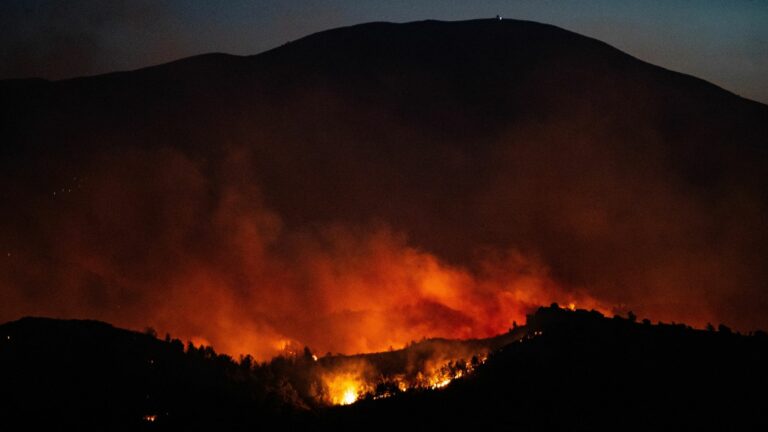
The Bald Range wildfire began on August 7 west of Summerland and rapidly became one of the most consequential fires of B.C.’s 2026 season. More than 20,000 people were forced from their homes across affected Okanagan communities during the emergency. Premier David Eby said the fire moved faster than wildfire modelling had anticipated, while officials described conditions so severe that some crews had to shift their attention from suppression toward helping people escape. The fire also generated intense convective behaviour, illustrating how quickly an already dangerous incident can become much harder to predict.
By August 17, BC Wildfire Service listed the fire at an estimated 21,256 hectares. Around 500 personnel were assigned as crews worked around the clock on control lines, structure protection and hotspots. Those numbers help explain why the prevention discussion has gained urgency. Once a wildfire reaches that scale and intensity, the options available to firefighters narrow dramatically. Prevention cannot eliminate wildfire, but the Bald Range experience has renewed interest in measures intended to influence how a fire behaves before emergency crews ever arrive.
The Human Cost Makes Prevention More Than a Forestry Debate
Behind every discussion about hectares treated or dollars invested are households that experienced the fire as an immediate personal emergency. An 80-year-old Meadow Valley resident died while evacuating with a family member, according to police. Residents of Faulder and other areas west of Summerland were left waiting for information about damaged properties while access remained dangerous. As conditions improved, authorities began gradually downgrading some evacuation orders, but warned returning residents that recovery crews, utility workers and active wildfire operations were still present.
The economic effects also spread through the Okanagan’s farms and vineyards. Lightning Rock Winery owner Ron Kubek told Reuters that smoke had made his grape crop unusable for wine, while a nearby peach grower faced hundreds of thousands of dollars in threatened fruit. Ranchers were also involved in moving livestock away from danger. These stories illustrate why wildfire prevention is increasingly viewed as infrastructure policy, agricultural policy and community planning—not simply forest management. When fire reaches populated valleys, damage can continue long after flames move elsewhere through lost crops, disrupted tourism, damaged utilities and prolonged displacement.
The Contractor’s Argument: Spend More Effort Before the Emergency
The prevention debate received fresh attention on August 16 when Global Okanagan reported on a forestry-management contractor in the region who wants the province to learn from fuel-reduction practices used by his team. The accompanying public description did not identify the contractor by name, so attributing additional comments or specific techniques to him would go beyond the available record. The broader argument, however, is familiar within wildfire management: reducing dense vegetation and accumulated combustible material can give communities and firefighters better conditions when a wildfire approaches.
That does not mean mechanically clearing forests would have stopped Bald Range. No credible evidence currently establishes that a particular uncompleted treatment caused the fire’s losses or that additional treatment would necessarily have contained an event displaying such extreme behaviour. Fuel management instead aims to change probabilities and fire intensity. Practices can include thinning smaller trees, pruning lower branches, removing surface fuels and dealing with woody debris. The contractor’s intervention therefore raises a legitimate policy question without providing a simple diagnosis: is B.C. treating enough strategically important land before severe fire weather arrives?
Summerland Already Had Fuel-Reduction Work Underway
Any assessment of B.C.’s prevention strategy has to acknowledge an important fact: wildfire-risk-reduction work was already taking place near Summerland and Faulder before Bald Range ignited. In April, BC Wildfire Service announced that an Okanagan Shuswap Natural Resource District project begun in 2023 covered 87 hectares roughly seven kilometres west of Summerland near Faulder and Fish Lake Road. A portion had received thinning, pruning, surface-fuel cleanup and pile burning during 2025.
BC Wildfire Service also announced plans for a prescribed burn covering up to 28 hectares of the treated area, describing it as the first such burn within the continuing project. The agency said timing depended on suitable weather, site conditions and smoke dispersion. Publicly available material reviewed for this piece confirms the plan but does not establish that the planned 2026 burn was ultimately completed, so it would be inaccurate to claim that it was. That distinction matters. Bald Range is not evidence that prevention was absent; rather, it raises questions about treatment coverage, timing, location and whether existing projects were sufficiently extensive to alter risk across the larger landscape.
B.C. Has Been Increasing Prevention Spending and Treatment
The province can also point to substantial investments beyond Summerland. In April 2025, B.C. said BC Wildfire Service was planning treatments across approximately 9,600 hectares during 2025-26, with more than 2,100 additional hectares planned through the Forest Enhancement Society of B.C. The province reported that $79.6 million had been invested in 201 community wildfire-risk-reduction projects through the society since its creation in 2016, while Budget 2024 provided another $60 million over three years for wildfire-risk reduction, fuel management and related forestry work.
BC Wildfire Service later reported that nearly 200 wildfire-risk-reduction projects had treated roughly 2,440 hectares during the 2024-25 period, alongside 16 prescribed burns covering another 790 hectares. FireSmart funding was allocated to 280 communities, including 132 First Nations and 148 local governments. Those figures show an established prevention system rather than a blank slate. Yet Bald Range exposes the policy challenge embedded in those numbers: funding and completed hectares matter, but effectiveness ultimately depends on whether treatments form strategically useful networks around communities, evacuation corridors and critical infrastructure before the next extreme event.
B.C.’s Forestry Watchdog Had Already Identified Structural Gaps
Long before Bald Range, the Forest Practices Board was questioning whether existing forestry rules were being used effectively enough for wildfire defence. A June 2025 special investigation examined forestry activities between 2019 and 2022 in high- and extreme-threat interface areas of the Sea to Sky, Cariboo-Chilcotin and Peace districts. Its conclusion was not that fuel treatments failed. In fact, more than 90 per cent of 22 wildfire-risk-reduction treatments examined in two of those districts achieved their fuel-reduction objectives.
The problems were often institutional. Only 23 per cent of the fire-hazard assessments reviewed had been completed on time, while 30 per cent failed to meet legal content requirements. The board also found that logging occurred at roughly 11 times the rate of dedicated wildfire-risk-reduction treatments within the interface, yet harvesting was rarely coordinated with community wildfire plans. Its recommendations included proactive fire-management objectives, faster hazard abatement, updated assessment guidance, publicly accessible community risk-reduction plans and a broader legal definition of the interface. Bald Range gives those previously technical recommendations a new immediacy.
Research Supports Fuel Treatment—but Not as a Guarantee
Scientific evidence provides substantial support for reducing fuels in appropriate forests, although it also cautions against treating the practice as a force field around communities. A 2025 study involving five community forests in seasonally dry interior British Columbia examined operational combinations of thinning, pruning and residue management. Researchers found that low-intensity thinning reduced modelled potential for passive crown fire, while higher-intensity thinning also reduced the potential for active crown fire. Chipping or pile burning leftover fuels provided additional reductions in modelled passive crown-fire potential.
Broader research points in the same direction. A meta-analysis summarized by the U.S. Forest Service found that mechanical thinning combined with prescribed burning, thinning combined with pile burning, and prescribed burning by itself were associated with 62 to 72 per cent lower subsequent wildfire severity than untreated areas in western U.S. conifer forests. But context matters. The B.C. research measured treatment efficacy largely through modelling rather than encounters with actual wildfire, and treatments can lose effectiveness over time. Fuel reduction is best understood as a tool for moderating fire behaviour—not a promise that extreme fire will stop at a treatment boundary.
Extreme Drought Changes What Any Treatment Can Accomplish
Bald Range also demonstrates why forest-fuel policy cannot be separated from weather and climate. During the response, emergency officials described extreme drought and exceptionally dry fuels in the fire area. Under those circumstances, living vegetation, dead wood and forest-floor material can become highly receptive to ignition and rapid spread. Wind shifts, unstable atmospheric conditions and convection can then move embers beyond individual treatment areas or control lines. A well-designed fuel break may create a safer suppression opportunity without guaranteeing that every ember remains behind it.
The longer-term climate record adds another layer. Peer-reviewed research published in Communications Earth & Environment found that B.C. wildfire activity began increasing sharply from around 2005 after a century-long decline, coinciding with a reversal in the province’s previous wetting trend and increasingly fire-conducive climate conditions. That does not make fuel management irrelevant; it makes the challenge harder. If severe fire weather is becoming more common, treatments designed around yesterday’s conditions may require different placement, maintenance cycles and scale. Bald Range therefore strengthens arguments for both climate adaptation and fuel management rather than presenting them as competing explanations.
Prescribed and Cultural Fire Broaden the Prevention Toolkit
Mechanical thinning is only one part of B.C.’s evolving approach. The province increasingly describes cultural and prescribed burning as important land-stewardship tools that can deliberately remove fuels under carefully selected conditions. Government figures show that 76 cultural and prescribed fire projects were completed during 2025, treating 6,351 hectares, while 144 burns were being planned for 2026. Such work is necessarily dependent on safe weather, appropriate atmospheric ventilation, trained personnel and partnerships with the communities and Indigenous governments involved.
The Okanagan already offers examples. Ntityix Resources, owned by Westbank First Nation, has conducted wildfire-mitigation work in its community forest and has used cultural prescribed fire with BC Wildfire Service support. Fuel management there has combined forestry treatments with fire rather than relying on a single intervention. This matters because removing smaller trees without adequately addressing surface fuels can leave combustible material behind. Research likewise indicates that combinations of thinning and surface-fuel treatment often perform better than thinning alone. The emerging lesson is not simply to clear more forest, but to apply the right treatment to the right ecosystem for a clearly defined objective.
The Real Test Is Whether Prevention Can Be Measured Against Outcomes
Bald Range is likely to intensify calls for more spending, more thinning and faster approvals, but a useful review will need to ask more precise questions. How much high-priority land near threatened communities had actually been treated? Where was it located relative to the fire’s path? Did any treated areas experience the fire, and if so, did fire intensity, crown involvement or suppression opportunities change? How old were those treatments? Were evacuation routes, utilities and neighbourhood edges given enough priority? Those are questions that can be answered through post-fire mapping and analysis rather than political assumptions.
Premier David Eby has already said the extraordinary speed of the fire requires lessons to be drawn, including examination of response strategies and building practices. The prevention side deserves equally transparent evaluation. The Forest Practices Board has previously recommended a centralized public repository for community wildfire-risk-reduction plans, which could make progress easier to assess. Bald Range should not be used to claim that fuel treatment always works—or that it does not. Its most valuable legacy may be a clearer standard: prevention spending should ultimately be judged by measurable changes in fire behaviour, community vulnerability and firefighters’ ability to defend people and property.
This Options Discord Chat is The Real Deal
While the internet is scoured with trading chat rooms, many of which even charge upwards of thousands of dollars to join, this smaller options trading discord chatroom is the real deal and actually providing valuable trade setups, education, and community without the noise and spam of the larger more expensive rooms. With a incredibly low-cost monthly fee, Options Trading Club (click here to see their reviews) requires an application to join ensuring that every member is dedicated and serious about taking their trading to the next level. If you are looking for a change in your trading strategies, then click here to apply for a membership.