35,000+ smart investors are already getting financial news, market signals, and macro shifts in the economy that could impact their money next with our FREE weekly newsletter. Get ahead of what the crowd finds out too late. Click Here to Subscribe for FREE.
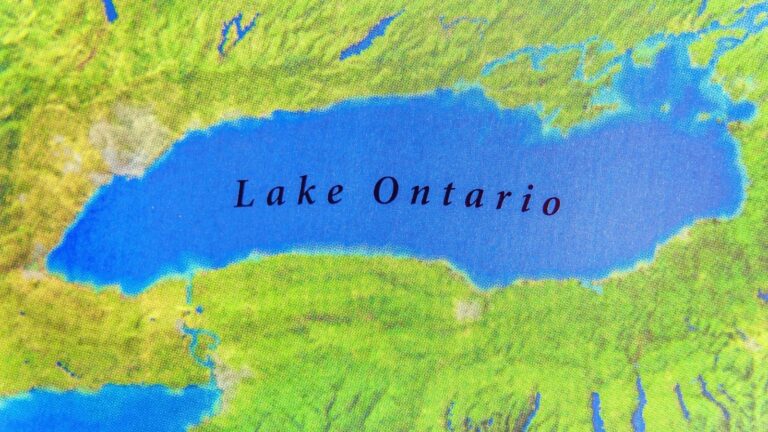
President Donald Trump’s decision to rename Lake Ontario “Lake America” has moved from a cross-border provocation into a fight on Capitol Hill. Michigan Democratic Rep. Debbie Dingell is moving to nullify the August 27 executive order through legislation aimed at restoring Lake Ontario’s name in U.S. federal usage.
The dispute is unfolding against a much larger rupture in U.S.-Canada relations, with new tariffs, retaliatory measures and increasingly hostile rhetoric reshaping a relationship built around deeply integrated economies and shared geography. Dingell has also pointed to broad Democratic opposition: she said more than 100 House Democrats had signed onto a push for a different approach toward Canada, although a subsequently released congressional letter identified a smaller group of lawmakers. What began as a dispute over a name is increasingly becoming a test of how far Washington’s confrontation with Canada should go.
Dingell Turns a Symbolic Fight Into Legislation
U.S. House Democrat Moves to Kill Trump’s ‘Lake America’ Order as 100+ Democrats Push Back
- Dingell Turns a Symbolic Fight Into Legislation
- What Trump’s Executive Order Actually Changes
- The “100+ Democrats” Pushback Comes With a Counting Caveat
- The Great Lakes Are a Binational System, Not a Domestic Landmark
- The Name Carries More Than Four Centuries of History
- Canada’s Response Has Been Deliberately Defiant
- Google Maps Made the Order Visible Almost Overnight
- The Naming Battle Is Riding on a Much Bigger Trade War
- Dingell’s Bill Faces a Steep Congressional Path
- Why the Fight Matters Beyond a Label on a Map
Dingell’s proposed “Hands Off Our Great Lakes Act” is unusually short for legislation carrying such a large diplomatic message. The measure is designed to declare Trump’s August 27 executive order null and without force, effectively reversing the federal government’s adoption of “Lake America.” As of August 31, Dingell was expected to introduce the proposal as House lawmakers returned to Washington. New York Democratic Rep. Tim Kennedy, a co-chair of the bipartisan Northern Border Caucus, has also been working on a legislative response to the president’s order.
For Dingell, the subject is personal as well as political. She has described growing up in St. Clair, Michigan, where Canada was visible across the water and cross-border connections were part of everyday life. That experience helps explain why she has framed the dispute as more than an argument about cartography. Her concern is that increasingly hostile rhetoric toward Canada could damage relationships between communities, employers and workers that have spent generations operating as neighbours. The proposed bill therefore serves two purposes: reversing the name and registering congressional opposition to the administration’s broader Canada strategy.
What Trump’s Executive Order Actually Changes
Trump’s order directs the U.S. secretary of the interior, working with the Board on Geographic Names, to replace “Lake Ontario” with “Lake America” in the Geographic Names Information System within 30 days. Federal agencies are then expected to use the new name on government maps, documents, contracts and official communications. The administration cited federal geographic-naming law, including provisions of Title 43 of the U.S. Code, as authority for implementing the change within the American government.
That distinction matters. Washington can standardize terminology used by U.S. federal agencies, but its geographic naming system has no international authority forcing Canada to adopt the same terminology. Lake Ontario physically straddles the international boundary between New York and Ontario, meaning one government cannot change how the other country identifies the lake. The U.S. Board on Geographic Names exists primarily to ensure consistency across federal agencies; its decisions do not automatically control what Canadian governments, private mapmakers or the international community call a shared feature. The order is therefore consequential inside U.S. federal systems while remaining far more limited internationally.
The “100+ Democrats” Pushback Comes With a Counting Caveat
Dingell said she had collected more than 100 signatures from fellow House Democrats for a letter urging Trump to rethink his administration’s approach toward Canada. The message argued that Canada should be treated as a close ally and economic partner rather than an adversary and warned that escalating tariffs and confrontational rhetoric were creating uncertainty for businesses, workers, farmers and consumers on both sides of the border. A three-digit Democratic response would represent a substantial share of the House Democratic caucus.
There is, however, an important distinction between Dingell’s reported signature count and the version of the letter subsequently publicized. An August 31 congressional release from Rep. Marcy Kaptur said she and Dingell were joined by 86 House colleagues, which would amount to 88 lawmakers including the two leaders. That does not necessarily invalidate Dingell’s earlier statement that she had accumulated more than 100 signatures, but it means the publicly released tally was smaller. For accuracy, the “100+” figure is best understood as Dingell’s reported collection of support during the organizing effort rather than the confirmed number identified in the later public release.
The Great Lakes Are a Binational System, Not a Domestic Landmark
Lake Ontario is the smallest of the five Great Lakes by surface area, covering roughly 7,340 square miles, but its importance is disproportionate to its size. The lake forms part of a freshwater system shared by the United States and Canada that contains roughly 21% of the world’s surface freshwater supply. Lake Ontario itself is approximately 193 miles long, reaches depths of more than 800 feet and empties into the St. Lawrence River, connecting the Great Lakes to the Atlantic Ocean.
Governance has also been binational for generations. The 1909 Boundary Waters Treaty created a framework for the United States and Canada to prevent and resolve disputes over shared waters, while the International Joint Commission continues to play a major role in managing issues involving the Lake Ontario-St. Lawrence River system. That history makes the renaming dispute unusual. Americans and Canadians have spent more than a century building mechanisms specifically designed to treat these waters as shared systems. Even seemingly symbolic decisions therefore arrive inside an established network of environmental regulation, shipping, hydropower, shoreline management and diplomatic cooperation.
The Name Carries More Than Four Centuries of History
The Canadian government traces “Ontario” to Indigenous linguistic origins and records use of the name as far back as 1641. Prime Minister Mark Carney has emphasized that the name predates both Canadian Confederation in 1867 and the U.S. Declaration of Independence in 1776. He linked it specifically to the Wendat term “Ontari’io,” while federal Canadian historical material also identifies Iroquoian origins connected with descriptions of water. Whatever the precise linguistic interpretation, the key historical point is clear: “Ontario” existed long before the modern U.S.-Canada border.
That history has made Indigenous criticism especially significant. Wendat Nation Grand Chief Pierre Picard condemned Trump’s decision as an attempt to erase Indigenous history. The controversy therefore reaches beyond nationalism between two modern states. Place names often preserve evidence of peoples and languages that existed before contemporary political boundaries were drawn. Natural Resources Canada maintains a database containing more than 20,000 official geographical names identified as having First Nations, Inuit or Métis origins, demonstrating how deeply Indigenous languages remain embedded in Canadian geography. Lake Ontario is part of that much older naming tradition.
Canada’s Response Has Been Deliberately Defiant
Canadian politicians have made clear that the executive order will not alter the lake’s name north of the border. Carney defended Lake Ontario’s historical and Indigenous identity almost immediately after Trump signed the order. Ontario Premier Doug Ford went further, unveiling an enormous bilingual sign near the lake declaring “Lake Ontario. Now and Always.” The display turned what might have remained a Washington administrative change into a highly visible piece of political theatre on the Canadian shoreline.
The backlash has not been exclusively Canadian. New York Gov. Kathy Hochul rejected the renaming, while Vermont’s Republican governor, Phil Scott, described Trump’s decision as petty and disappointing. Their objections illustrate why the issue does not divide neatly along an international border or even conventional U.S. partisan lines. States bordering Canada rely heavily on cross-border commerce and long-standing social ties. The dispute also lands differently in those communities than it might in Washington. For residents accustomed to seeing Canadian cities across rivers and lakes, Dingell’s description of Canada as a neighbour is literal, not diplomatic shorthand.
Google Maps Made the Order Visible Almost Overnight
The practical impact of federal naming decisions became obvious when Google Maps began displaying “Lake America” to users in the United States. Google said its approach follows changes made in the U.S. Geographic Names Information System. Canadian users continue to see “Lake Ontario,” while users elsewhere are shown both names. The result is a single body of water carrying different labels depending on where someone opens an app, turning an executive decision into a daily digital experience for millions of people.
Google is not legally required to copy every federal naming decision. The U.S. Geological Survey explicitly says the federal government is not responsible for how private mapmakers use or update geographic-name information. Apple had initially continued showing Lake Ontario, although Interior Secretary Doug Burgum said on August 31 that Trump had contacted Apple and suggested a change could come soon. Apple had not publicly confirmed such a move at the time. The episode demonstrates how a government database can quickly influence private platforms even when those companies retain their own discretion.
The Naming Battle Is Riding on a Much Bigger Trade War
The timing of the order cannot be separated from the collapse in U.S.-Canada trade relations. New American tariffs took effect August 22 after negotiations failed to produce an agreement. Canada says the U.S. measures cover C$27.6 billion worth of Canadian products, an amount widely described in U.S. reporting as roughly US$20 billion. Ottawa has announced matching counter-tariffs covering C$27.6 billion in American imports, with rates of 15%, 25% and 50% scheduled to take effect September 8 across products including steel, dairy, appliances, agricultural equipment and electronics.
Those measures are colliding with an enormous commercial relationship. U.S. Trade Representative data put total U.S. goods-and-services trade with Canada at an estimated US$872.3 billion in 2025. U.S. goods exports alone reached US$333.6 billion, while imports were US$381.9 billion. America consequently ran a US$48.3-billion goods deficit with Canada, but simultaneously recorded a US$27.7-billion services surplus. Those figures illustrate why lawmakers such as Dingell describe confrontation with Canada as economically risky: businesses on both sides are connected through trade flows vastly larger than the tariff packages currently dominating political debate.
Dingell’s Bill Faces a Steep Congressional Path
Introducing legislation is much easier than getting it onto the president’s desk. Republicans hold the House majority, meaning Democratic leaders cannot simply schedule Dingell’s measure for passage without Republican cooperation or an alternative procedural strategy. Republicans also hold 53 seats in the Senate. Axios has noted that those congressional realities make legislation reversing Trump’s order difficult to advance, regardless of how many Democrats sign letters criticizing the decision.
Even passage through Congress would create another obstacle because legislation directly overturning a Trump executive action would ultimately reach Trump himself unless Congress pursued another route. A presidential veto can be overridden only by two-thirds majorities in both chambers, a threshold that would require substantial Republican support. No such coalition has emerged around the Lake Ontario issue. The immediate value of Dingell’s proposal may therefore be political rather than legislative: it forces lawmakers to take a position, provides Democrats with a vehicle for attacking the administration’s Canada policy and establishes a ready-made reversal mechanism should control of Congress change after the 2026 midterm elections.
Why the Fight Matters Beyond a Label on a Map
The largest consequence may be what the episode says about the condition of the U.S.-Canada relationship. The Great Lakes region operates less like two isolated national economies than a tightly linked industrial system. The Great Lakes Commission estimates the broader regional economy at roughly US$6 trillion and says the lakes support more than 1.5 million jobs and provide drinking water to more than 40 million people in the United States and Canada. Decisions affecting trade, transportation or diplomacy around that system inevitably travel far beyond Washington and Ottawa.
That helps explain why Dingell and other border-state lawmakers are reacting so strongly to something that could otherwise be dismissed as symbolic politics. A map label does not stop trucks at Detroit-Windsor, alter factory supply chains or change water levels. But it can become a symbol of whether decades of cooperation are being replaced by confrontation. With tariffs already affecting businesses and Canada preparing additional retaliation, “Lake America” has become shorthand for a much bigger argument: whether the Trump administration views Canada primarily as an ally to negotiate with or an economic rival to pressure.
This Options Discord Chat is The Real Deal
While the internet is scoured with trading chat rooms, many of which even charge upwards of thousands of dollars to join, this smaller options trading discord chatroom is the real deal and actually providing valuable trade setups, education, and community without the noise and spam of the larger more expensive rooms. With a incredibly low-cost monthly fee, Options Trading Club (click here to see their reviews) requires an application to join ensuring that every member is dedicated and serious about taking their trading to the next level. If you are looking for a change in your trading strategies, then click here to apply for a membership.